
How to calculate fall clearance
Fall clearance is the distance from the anchor to the nearest thing below you that you must not hit. Add up five pieces: the free fall before the system engages (the lanyard length, plus the height of the anchor below your D-ring), the deceleration distance while the absorber tears out (up to 3.5 feet under OSHA, up to 4 feet under ANSI for a 6-foot lanyard), the harness stretch and D-ring shift (about 1 foot), the distance from your D-ring to your feet (about 5 feet), and a safety margin of 1.5 to 2 feet. A 6-foot shock-absorbing lanyard anchored at the D-ring comes to about 17 to 18 feet. An overhead SRL comes to about 10 feet. The same SRL anchored at the feet needs close to 19 feet.
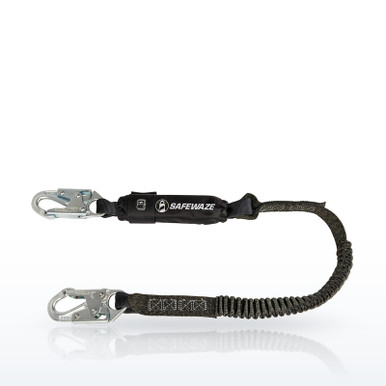
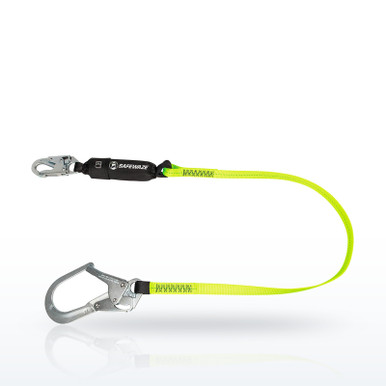 Safewaze PRO 6-foot energy-absorbing lanyardANSI Z359.13 energy-absorbing lanyard for a 6-foot free fall
Why does clearance get missed? Because the lanyard is 6 feet long and people think the fall is 6 feet. It is not. The absorber adds up to 4 feet, the harness stretches, the body hangs 5 feet below the D-ring, and if the anchor is at your feet you fall the length of the lanyard plus the height of your D-ring before anything happens. OSHA requires that the system never let the worker contact a lower level. On a 12-foot scaffold with a 6-foot lanyard anchored at foot level, the arithmetic says the worker hits the ground with the absorber still deploying. The calculation exists to catch that before the fall does.
What are the pieces of a fall clearance calculation?
Add them from the anchor down. Every figure comes from the label of the gear you are actually using; the numbers here are the common ones.
How do you run the calculation?
- Find the anchor height relative to your D-ring. Overhead, at the D-ring, or below it. This decides the free fall and whether the gear is even allowed: a lanyard or Class 1 SRL anchored below the D-ring is outside its rating.
- Write down the free fall. Lanyard at D-ring level: the lanyard length, 6 feet. Lanyard anchored at the feet: lanyard length plus D-ring height, about 11 to 12 feet, which requires a lanyard labeled for a 12-foot free fall. Overhead SRL: a few inches, which the chart folds into the arrest distance.
- Add the deceleration distance from the label. Up to 4 feet for a 6-foot free fall lanyard, 5 feet for a 12-foot free fall lanyard or a heavy user, 3.5 feet for an SRL under the 42-inch rule. The label and instructions give the actual number for that device and that weight; use it.
- Add the harness stretch and D-ring shift. 1 foot is the usual allowance.
- Add the D-ring-to-feet height. 5 feet for a typical worker. If the anchor is overhead and the SRL is the only connector, the chart may already include this.
- Add the safety margin. 1.5 to 2 feet.
- Compare the total with the drop. Measure from the anchor to the nearest level or obstruction below. If the drop is less than the total, you do not have clearance. Shorten the lanyard, raise the anchor, switch to an SRL, or use restraint so there is no fall at all.
Worked example, 6-foot lanyard anchored at the D-ring: 6 (free fall) + 4 (deployment) + 1 (stretch) + 5 (D-ring to feet) + 2 (margin) = 18 feet below the anchor. Anchored 1 foot overhead, 17 feet. Anchored at the feet with a 12-foot free fall lanyard: 12 + 5 + 1 + 5 + 2 = 25 feet. Overhead SRL from the manufacturer chart: about 10 feet. A 2-story drop is roughly 20 feet; a single-story scaffold is 6 to 12. The lanyard is the wrong tool for most of them.
Why does anchoring at the feet nearly double the clearance?
Two reasons. First, free fall. Anchored at the D-ring, a 6-foot lanyard lets you fall 6 feet before it tightens. Anchored at your feet, you fall the lanyard length plus the 5 feet from your D-ring to your feet before it tightens: about 11 to 12 feet of free fall, double the OSHA limit unless the lanyard is built and labeled for it. Second, deployment. A longer free fall puts more energy into the absorber, so it tears out farther, and the manufacturer’s chart adds about a foot. An SRL anchored at foot level behaves the same way: the line pays out past the edge before the brake sees a fall, which is why foot-level SRLs must be ANSI Z359.14 Class 2 and carry a clearance chart on the device.
29 CFR 1926.502(d)(16)(iii); 1910.140(d)(2)(ii) (free fall over 6 feet only where the manufacturer designed and tested the system for it); ANSI/ASSP Z359.13 labeling of 6-foot and 12-foot free fall lanyards; ANSI/ASSP Z359.14-2021 Class 2 anchorage up to 5 feet below the D-ring and the required clearance chart.What does OSHA actually require?
OSHA does not give a formula. It gives the result: the system must be rigged so the worker can neither free fall more than 6 feet nor contact any lower level, must stop the worker within 3.5 feet of deceleration distance, and must limit the force to 1,800 pounds. General industry allows a free fall over 6 feet only where the employer can show the manufacturer designed the system for it and tested it to stay under 1,800 pounds. The clearance calculation is how you prove the "cannot contact a lower level" part before anyone is tied off. The manufacturer’s chart for the exact device is the number OSHA will expect you to have used.
29 CFR 1926.502(d)(16)(ii) through (iv); 29 CFR 1910.140(d)(2)(ii); manufacturer user instructions for the devices listed below.What are the common mistakes?
- Counting the lanyard as the fall. The lanyard is the free fall; the fall is the lanyard plus deployment plus stretch plus your body.
- Using a 6-foot free fall lanyard at foot level. The free fall becomes 11 to 12 feet; the absorber was tested for 6. Only a lanyard labeled for 12-foot free fall is built for it, and it needs about 25 feet of clearance.
- Ignoring the D-ring extender. An 18-inch extender adds 18 inches of free fall and more deployment.
- Forgetting swing. Walking out to the side of an overhead anchor turns a vertical fall into a pendulum with a longer drop and a wall to hit.
- Reading the chart for the wrong weight. Deployment distance rises with user weight; the 310-pound column, or the 420-pound note, is the one to use for a worker with tools.
- Treating a Class 1 SRL as an overhead-only short fall when the anchor is below the D-ring. Below the D-ring is Class 2 territory with its own chart.
Lanyards and SRLs with manufacturer clearance figures
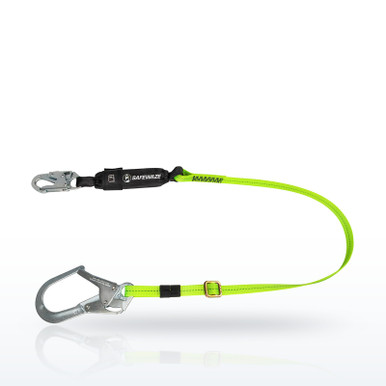
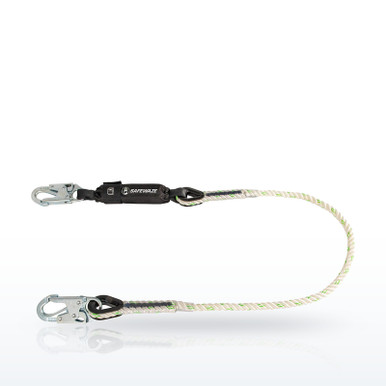
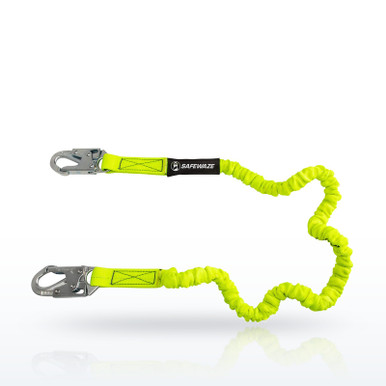
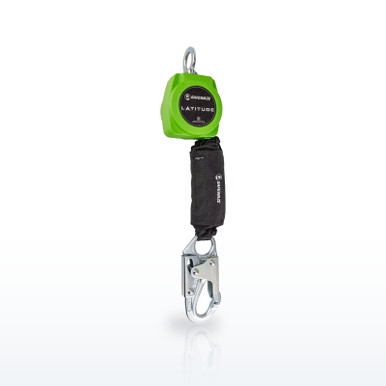
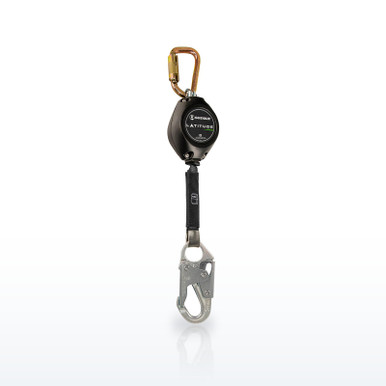
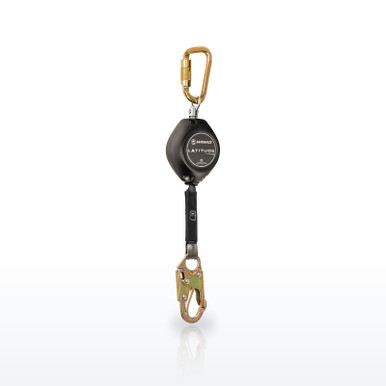
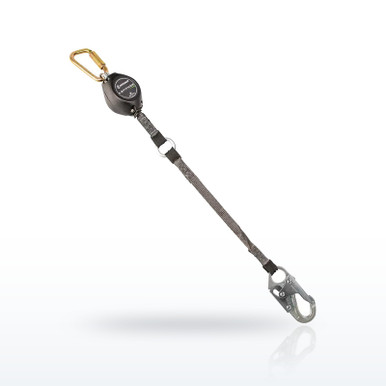
24 items · prices liveEach device is listed with the ANSI standard its manufacturer names; the deployment or arrest distance and the clearance chart are in that device’s instructions and on the product page. Use the figure for the device and the weight, not a generic number. Free shipping on orders over $199.
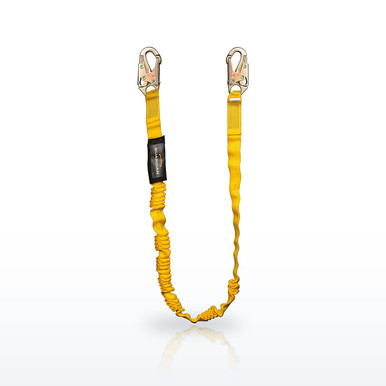
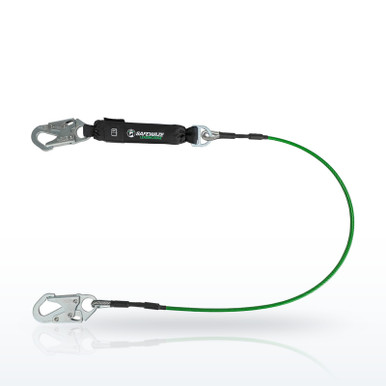
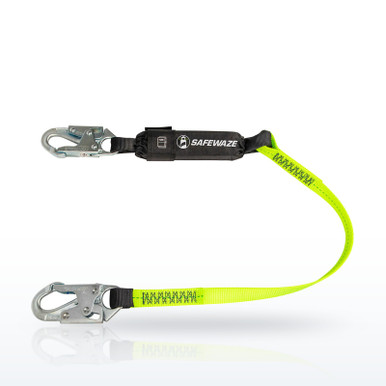
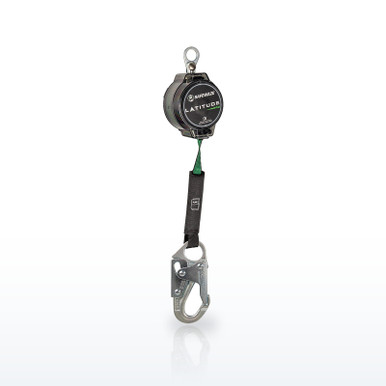
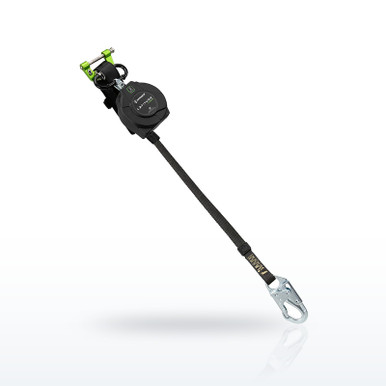
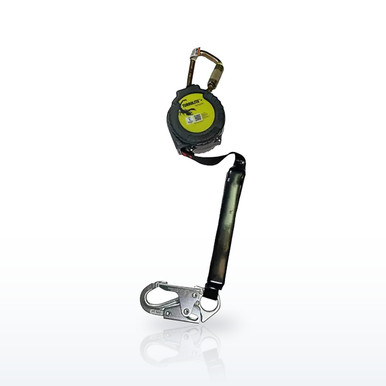
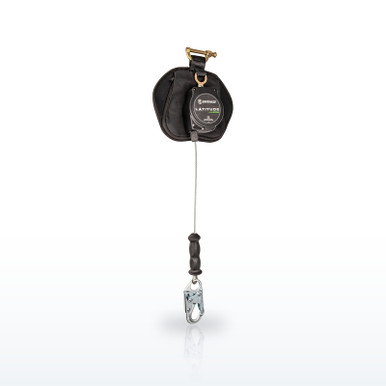
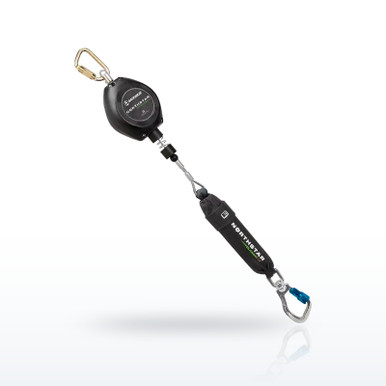
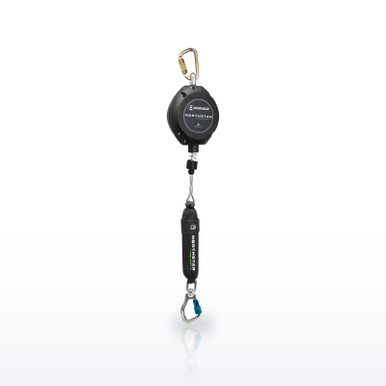
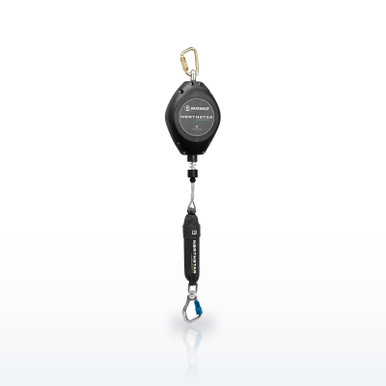
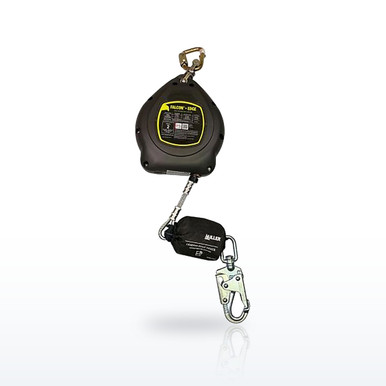
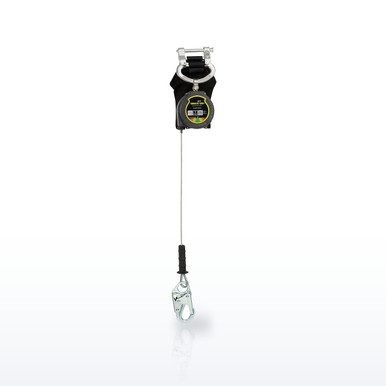
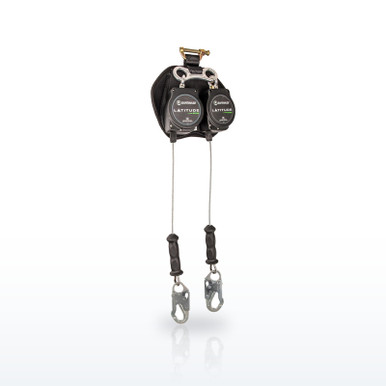
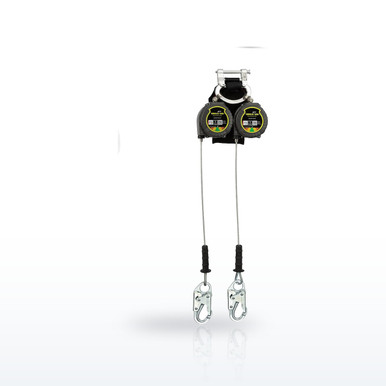
Twin-leg SRLs, tie-back lanyards and longer cable SRLs are on the fall protection finder.
Questions people ask
How do you calculate fall clearance?
Add the free fall, the deceleration distance from the label, about 1 foot of harness stretch, about 5 feet from D-ring to feet, and a 1.5-to-2-foot margin, then compare with the drop below the anchor.
How much clearance does a 6-foot lanyard need?
About 17 to 18 feet below the anchor when the anchor is at or just above the D-ring: 6 free fall, up to 4 deployment, 1 stretch, 5 body, 1.5 to 2 margin.
How much clearance does an SRL need?
About 10 feet from an overhead anchor per manufacturer charts: 3.5 feet of arrest, 1 foot of stretch, margin and swing. At foot level the same SRL needs close to 19 feet, and it must be a Class 2 device.
What is the OSHA maximum free fall?
6 feet, and the worker may never contact a lower level. General industry allows more only where the manufacturer designed and tested the system for it. (1926.502(d)(16)(iii); 1910.140(d)(2)(ii).)
What is the OSHA maximum deceleration distance?
3.5 feet. (1926.502(d)(16)(iv).)
Can I use a 6-foot lanyard on a 12-foot scaffold?
Not for fall arrest if the anchor is at the platform: the free fall alone would be 11 to 12 feet and the total clearance about 25. Use an overhead anchor with an SRL, or rig restraint so you cannot reach the edge.
What is a 12-foot free fall lanyard?
An energy-absorbing lanyard built and labeled under ANSI Z359.13 for a 12-foot free fall, for anchoring at foot level. It deploys farther, about 5 feet, and needs more clearance than a 6-foot free fall lanyard.
Does the clearance include swing fall?
Only if you add it. Manufacturer charts assume the anchor is straight above you; working to the side adds a pendulum drop and a possible collision. Stay under the anchor or use a horizontal lifeline.
Standards and ratings on this page are as published in the documents named and by the manufacturers named. The employer’s hazard assessment and written program decide what applies at a given workplace. Verify a rating on the product and its spec sheet before use.