
Flame-resistant hi-vis: when you need both ratings
You need both ratings when the same worker has a struck-by hazard from traffic or equipment and a burn hazard from an electric arc or a flash fire: utility line crews, electricians on roadside equipment, oil and gas crews near roads, refinery and plant workers who also direct trucks. A standard hi-vis vest is polyester, which melts and keeps burning; OSHA forbids clothing that could melt onto the skin or ignite and continue to burn for workers exposed to arcs or flames, and NFPA 70E requires any outer layer over arc-rated clothing to be arc-rated too. An FR hi-vis garment meets ANSI/ISEA 107 for visibility and carries an FR line on the same label naming the flame or arc standard it meets.
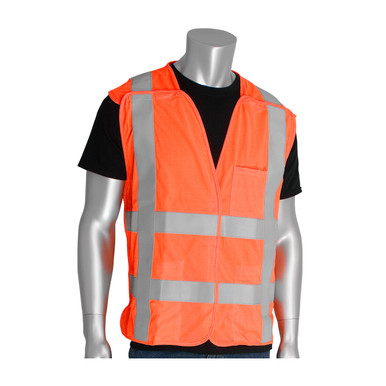 PIP 305-5PVFR Hi-Vis Vests, ANSI Type R Class 2 FR Treated Solid Breakaway VestType R Class 2 vest with an FR rating, as labeled by the manufacturer
Why is a regular hi-vis vest a problem over FR clothing? A standard safety vest is polyester mesh or solid polyester. In an arc flash or a flash fire the fire lasts a second or two; what causes the deep burns is clothing that catches, keeps burning, or melts into the skin. A lineman in a full arc-rated shirt and pants with a polyester vest over it has put the one meltable layer on the outside, where the arc hits first. The vest ignites, drips onto the FR shirt and the arms, and the protection underneath is beaten. That is why the electrical and FR rules talk about outer layers, and why FR hi-vis exists as a category.
Which rules call for both?
The rules that put an FR requirement on whatever is worn outermost, including the vest.
What does the FR line on an ANSI 107 label mean?
Every ANSI/ISEA 107-2020 label carries a flame-resistance statement, one way or the other. A garment that is FR shows “FR” followed by the standard its materials meet in full: ASTM F1506 (arc-rated clothing for electrical workers), ASTM F1891 (arc-rated rainwear), ASTM F2302 (flame resistance labeling), ASTM F2733 (flame-resistant rainwear for flash fire), NFPA 1977 (wildland fire) or NFPA 2112 (flash fire). A garment that is not FR must say so: “This garment is not flame resistant as defined by ANSI/ISEA 107-2020.” A label that names NFPA 701, the curtain and drapery flammability test, is not an FR garment under the standard.
ANSI/ISEA 107-2020 section 10.5 (flame resistance designations; required non-FR statement; NFPA 701 excluded), as summarized in the ML Kishigo and 3M guides to the 2020 edition.The FR line tells you the garment self-extinguishes; it does not by itself tell you the arc rating. For arc flash work the garment must be ASTM F1506 and carry an arc rating in cal/cm² (ATPV or EBT) on the label, and that rating must meet the incident energy or the NFPA 70E category for the task. Several FR hi-vis garments in the catalog publish a category and rating, such as CAT 2 at 8.9 cal/cm² or CAT 3 at 27 cal/cm²; the product page lists it where the manufacturer does. An FR vest labeled only to NFPA 2112 is rated for flash fire, not arc flash.
ASTM F1506 (arc rating on the label); NFPA 70E-2024 section 130.7(C) (selection of arc-rated clothing by incident energy or PPE category); manufacturer spec sheets for the garments below.FR treated vs inherently FR: does it matter on a vest?
Both appear on hi-vis labels. “FR treated” means a polyester or cotton fabric finished with a flame-retardant chemistry that bonds to the fiber; “inherent” means the fiber itself, such as a modacrylic or aramid blend, does not support combustion. The standards do not prefer one; they test the finished fabric after the stated number of launderings and either passes or does not. What matters on the label is which standard is named and whether the garment is rated as a system, since the tape, the thread and the closures all have to be FR for the garment to carry the line. Many FR vests are rated for fewer wash cycles than their non-FR twins; the care label gives the number.
ANSI/ISEA 107-2020 section 10.5 (materials must meet the named method in its entirety); ASTM F1506 and NFPA 2112 (flame resistance after laundering); manufacturer labels.Who needs FR hi-vis?
- Electric utility line crews and tree-trimming crews working near lines in a road right-of-way: 1910.269 and the MUTCD both apply at once.
- Electricians and technicians working energized equipment at the roadside: traffic signal cabinets, lighting, transit and rail power.
- Oil and gas drilling, well servicing and production crews near public roads or plant traffic, where OSHA enforces FR clothing for flash fire.
- Refinery, chemical and gas plant workers who also direct trucks, work loading racks, or work in yards with vehicle traffic.
- Welders and hot-work crews on bridges, pipelines and roadway structures, where sparks and slag ignite polyester vests.
- Firefighters and incident responders at roadway incidents who are not in turnout gear; the MUTCD requires hi-vis on them in the right-of-way outside of direct fire exposure.
How do you check a garment has both ratings?
- One label, two statements: the ANSI/ISEA 107 type and class pictogram, and the FR line naming the standard. If the FR line says the garment is not flame resistant, it is a visibility-only garment regardless of the fabric.
- For arc flash, an arc rating in cal/cm² and ASTM F1506 on the label or spec sheet. For flash fire, NFPA 2112 with a certification mark.
- The whole outfit. FR hi-vis over non-FR pants is still half fuel; the pants, rainwear and winter layers need their own FR line, and Class E FR rain pants exist for that reason.
- Wash cycles. FR hi-vis often carries a lower cycle count than standard hi-vis; replace at the count, not when it looks worn.
FR hi-vis garments
22 items · prices liveEvery garment here is labeled flame resistant by its manufacturer and is listed at the ANSI/ISEA 107 type and class the manufacturer publishes. The FR standard named, and the arc rating where there is one, are on the product page and the garment label. Free shipping on orders over $199.
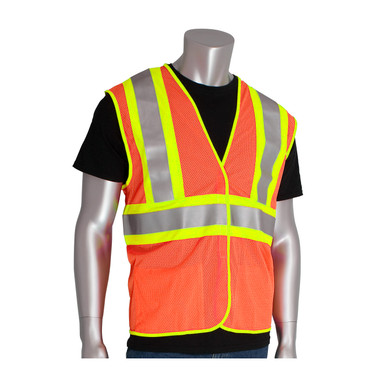
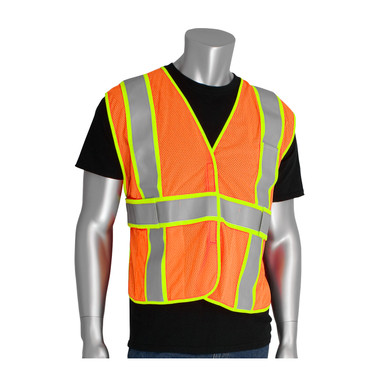
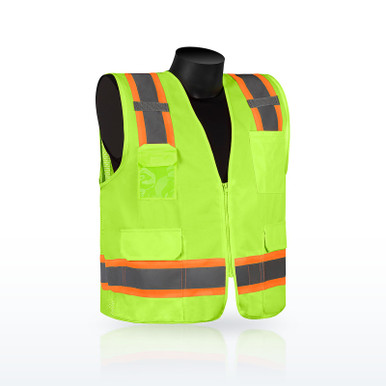
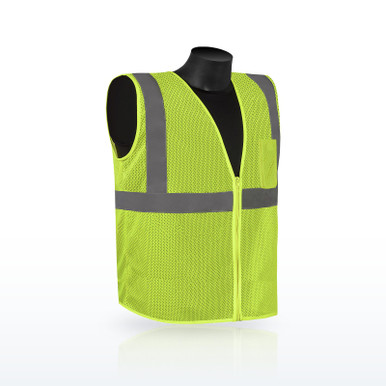
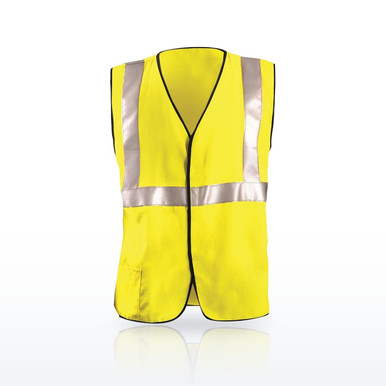
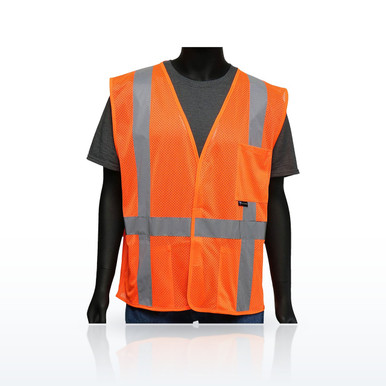
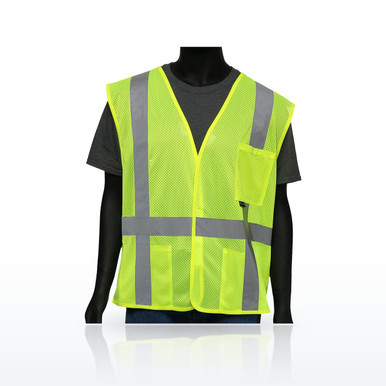


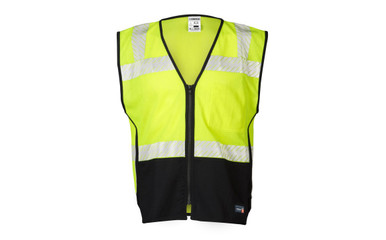
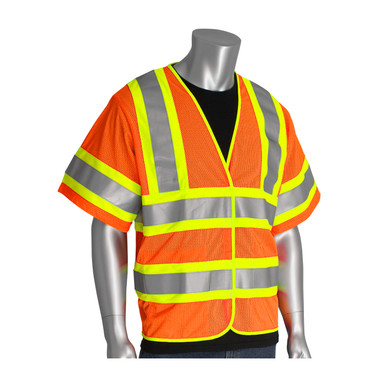
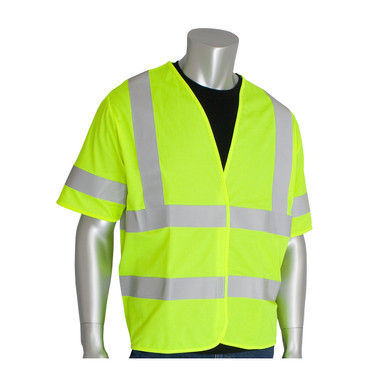
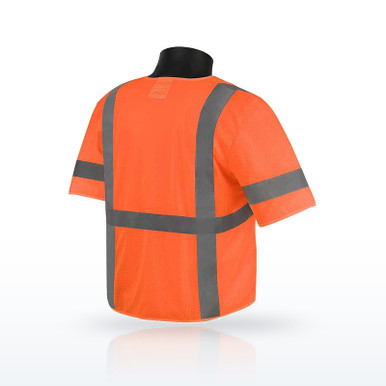
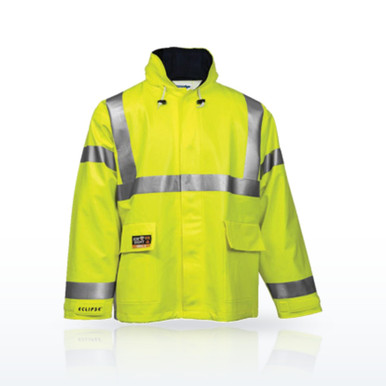
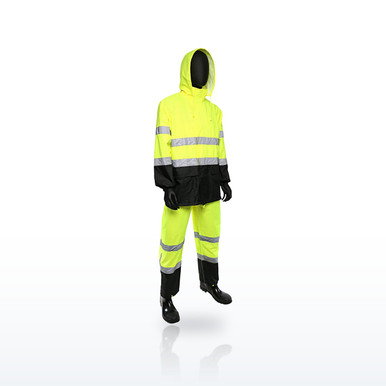

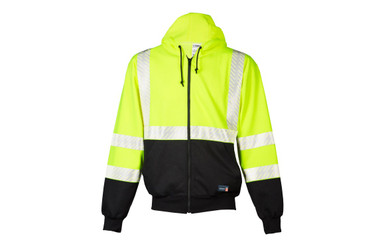
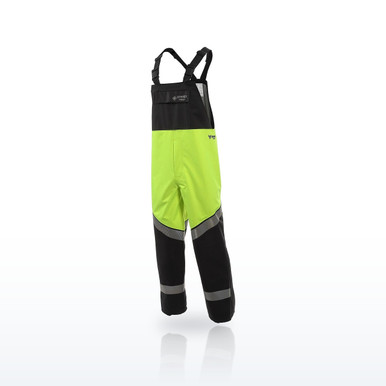
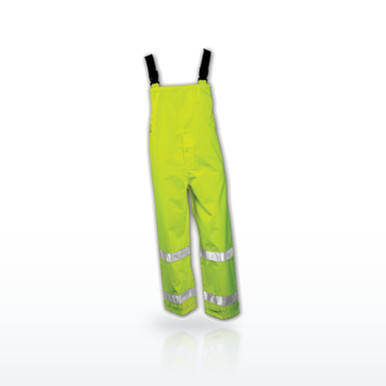
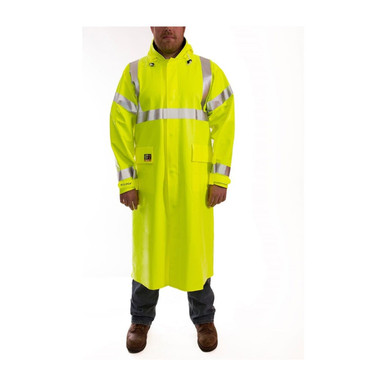
Arc-rated shirts, pants and coveralls by cal/cm² are in the arc flash finder; FR coveralls for flash fire are in the coverall finder.
Questions people ask
Can I wear a regular safety vest over FR clothing?
Not where 1910.269 or NFPA 70E applies. OSHA bans clothing that could melt onto the skin for workers exposed to arcs or flames, and NFPA 70E requires outer layers over arc-rated clothing to be arc-rated. A polyester vest fails both.
Is FR hi-vis arc rated?
Only if the label says ASTM F1506 and gives an arc rating in cal/cm². An FR line naming NFPA 2112 is a flash fire rating, not an arc rating.
What does the FR line on an ANSI 107 label say?
Either FR followed by the standard met (ASTM F1506, F1891, F2302, F2733, NFPA 1977 or NFPA 2112), or the statement that the garment is not flame resistant as defined by the standard.
Does an FR vest make my outfit arc rated?
No. The vest is one layer; the shirt and pants under it must carry their own arc rating for the exposure. The vest keeps the outer layer from becoming fuel.
Who needs FR hi-vis?
Workers with both a traffic or equipment struck-by hazard and an arc or flash fire hazard: utility line crews, roadside electrical work, oil and gas and plant crews near traffic.
Is FR treated as good as inherently FR?
The standards test the finished fabric after laundering and do not rank the two. The label naming the standard is what counts; FR treated garments often have a lower wash-cycle rating.
Does FR hi-vis still need to be Class 2 or 3?
Yes. The FR rules add to the visibility rule; they do not replace it. On a roadway the garment must carry an ANSI/ISEA 107 Class 2 or 3 rating as well as the FR line.
Standards and ratings on this page are as published in the documents named and by the manufacturers named. The employer’s hazard assessment and written program decide what applies at a given workplace. Verify a rating on the product and its spec sheet before use.