
What is a group lockout, and how do lockout hasps work?
A group lockout is how a crew, craft or department locks out one machine so that each person is as protected as if they had put their own lock on every isolating point. One authorized employee is responsible for the group. The isolating devices are locked, and then every worker adds a personal lock to a hasp or a group lock box when they start work and removes it when they stop. The machine cannot be re-energized until every personal lock is gone. A hasp is the piece of hardware that makes it possible: a hinged steel or nylon clamp that closes through the isolating device’s lock hole and has six or more holes of its own, one for each worker’s padlock.
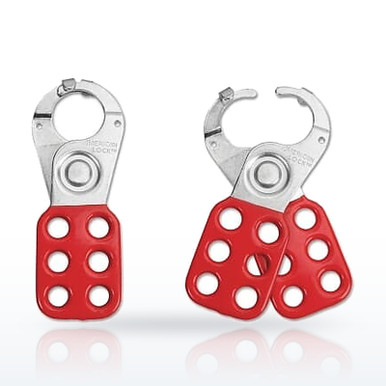
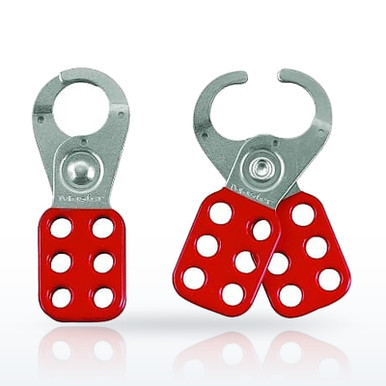 Master Lock 420 steel lockout hasp1-3/4 in wide, 4-1/2 in long; one lock hole per worker
Why can’t one lock cover the whole crew? Because the standard’s protection depends on one rule: the only person who can remove a lock is the person who put it on. If a foreman’s single lock protected six people, the foreman could remove it while one of them was still inside the machine. Group lockout keeps the rule intact by giving every worker their own lock on the job, so the equipment stays dead until the last person has walked away and taken their lock with them.
What does 1910.147(f)(3) require?
The group procedure must give each worker protection equivalent to a personal lockout device, and it must include at least these elements.
How does a lockout hasp work?
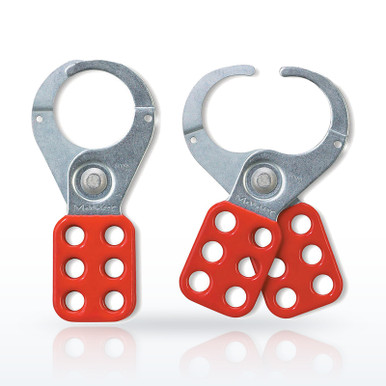
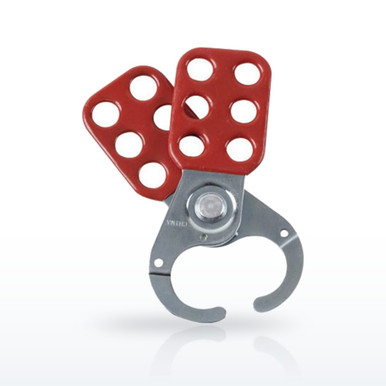
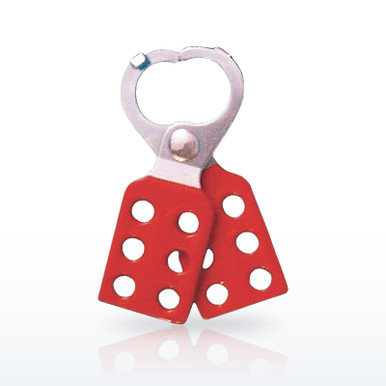
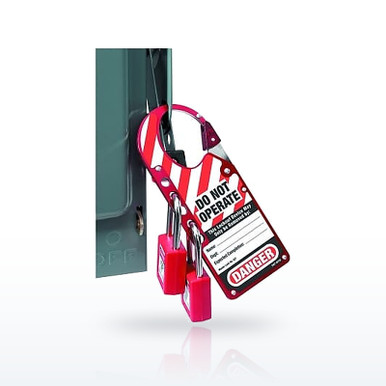
A hasp is a hinged clamp. Its jaw closes through the lock hole on the isolating device, a disconnect handle, a breaker lockout or a valve cover, and the hasp body carries a row of holes, typically six. As long as one padlock is through any hole, the hasp cannot open, and the isolating device cannot move. Each worker locks their personal padlock through a hole when they start and removes it when they finish. When the last lock comes off, the hasp opens and the responsible authorized employee can restore energy. Steel hasps are the common type; non-conductive nylon hasps exist for electrical work, and labeled hasps carry a Danger, Do Not Remove legend. A hasp is a lockout device under the standard, so it must be durable, standardized within the facility, substantial, and identify the person applying it, which in practice is done by the padlocks and tags on it.
1910.147(f)(3)(ii)(D): personal devices on the group lockout device; (c)(5)(ii): device requirements. Hasp construction as published by the manufacturers (Master Lock, Brady, American Lock).When six holes are not enough, hasps are chained: a padlock in the last hole of the first hasp goes through the first hole of a second. On a job with more isolating points than people, or more people than holes, the lock box is the better mechanism.
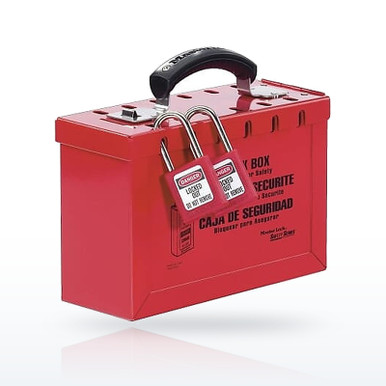
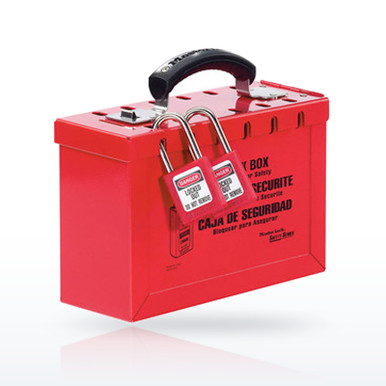
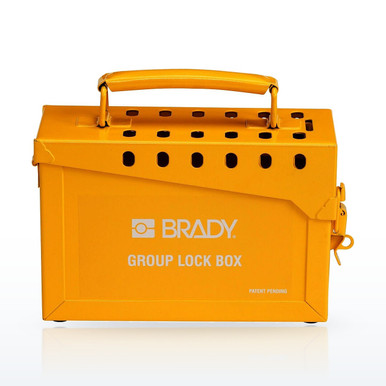
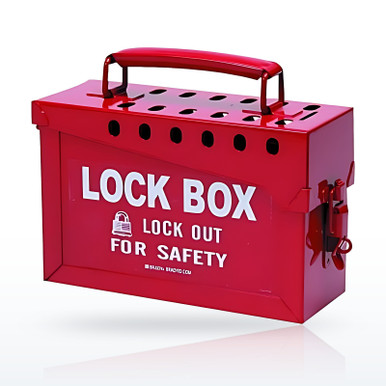
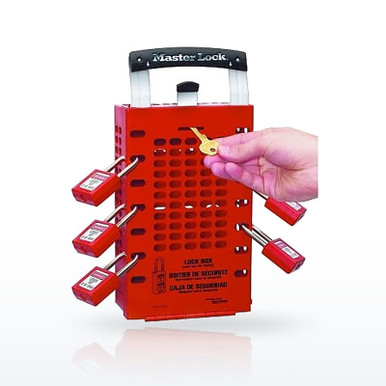
1910.147(f)(3)(ii)(D): group lockout device, group lockbox, or comparable mechanism.How does a group lock box work?
- The responsible authorized employee locks every isolating point. Each breaker, disconnect and valve gets a lockout device and a lock from a set used only for the job, following the written procedure for that machine.
- The keys go in the box. Every key to those job locks is placed in the group lock box and the lid is closed. Now nothing can be unlocked without opening the box.
- Each worker locks the box. When a worker begins, they put their personal padlock through one of the holes on the box lid. The box cannot open while any personal lock is on it.
- Workers remove their own locks when they stop. Going to lunch, going home, finishing the task: the lock comes off. Coming back, it goes on again. The responsible employee can see at a glance who is still on the job.
- The last lock off opens the box. When the box is clear, the responsible authorized employee retrieves the keys, confirms the area is clear and people are notified, removes the job locks, and re-energizes.
What happens at shift change?
The standard requires specific procedures for shift and personnel changes that keep lockout protection continuous, with an orderly transfer of devices between the off-going and oncoming employees. In practice the oncoming worker puts their lock on the hasp or box before the off-going worker takes theirs off, so there is never a moment when the machine is unlocked with someone exposed. Where the first shift’s worker has already left, the lock is removed only under the employer’s documented procedure for an absent employee.
1910.147(f)(4): shift or personnel changes; (e)(3) exception: removal when the employee who applied the device is not available.What about contractors on the same machine?
The on-site employer and the outside employer inform each other of their lockout procedures, and the on-site employer ensures its own employees understand and comply with the contractor’s program. On a shared machine that means the contractor’s workers lock the same hasp or box with their own padlocks, and the coordinating authorized employee tracks both work forces.
1910.147(f)(2)(i) and (ii); (f)(3)(ii)(C): coordination across more than one crew, craft or department.Hasps, lock boxes and padlocks for group lockout
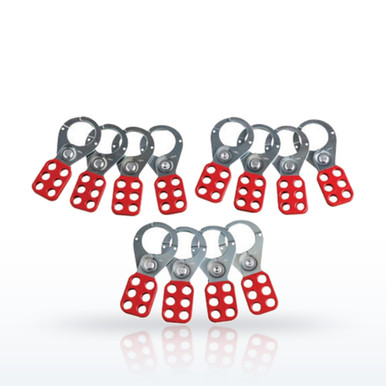
22 items · prices liveJaw sizes, lock capacities and materials are as published by the manufacturer; see each product page. Free shipping on orders over $199.
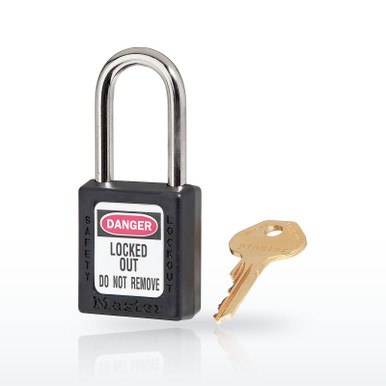
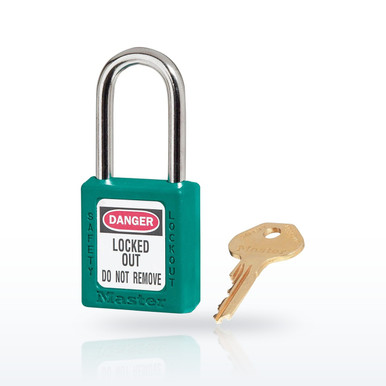
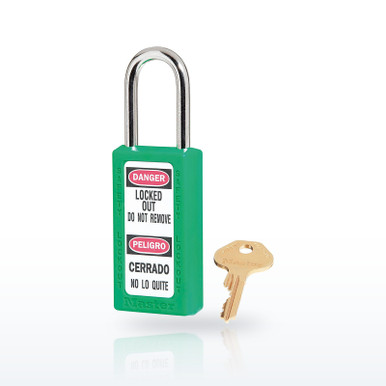
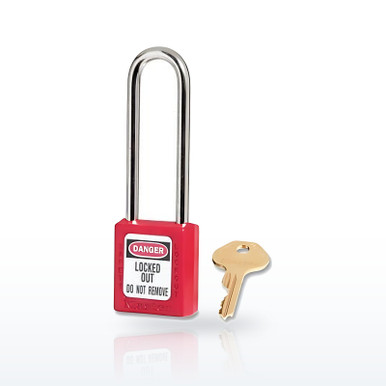
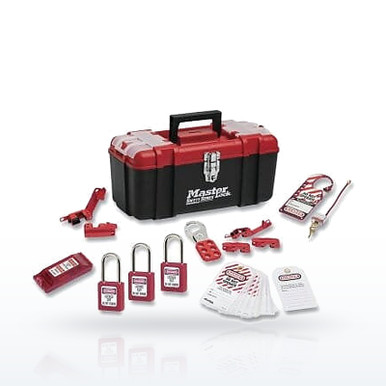
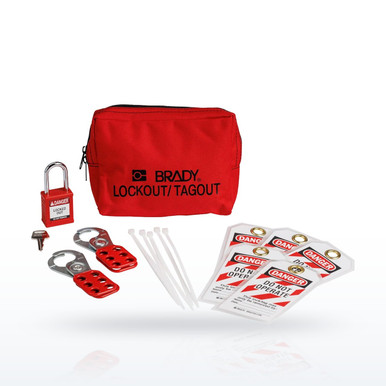
Keyed-different padlock sets sized to a crew, and keyed-alike job-lock sets for the box, are quoted on request: call (925) 215-7337.
Questions people ask
What is a group lockout?
A procedure for a crew, craft or department servicing one machine, giving each employee protection equivalent to a personal lockout device. One authorized employee is responsible, and every worker adds a personal lock to a group device or lock box. (1910.147(f)(3).)
What is a lockout hasp?
A hinged clamp that closes through the lock hole of an isolating device and carries several lock holes of its own, so more than one padlock can hold it closed. It cannot open until every padlock is removed.
How many locks fit on a hasp?
Commonly six; manufacturers publish the count for each hasp. Hasps can be chained through each other for more, or a group lock box used instead.
What is a group lock box for?
Holding the keys to the job locks on the isolating points. Each worker locks the box lid with a personal padlock, so the keys cannot be reached until the last worker removes their lock. (1910.147(f)(3)(ii)(D).)
Can a supervisor remove someone else’s lock?
Only under the employer’s documented procedure for an employee who is not available: verifying they are off site, making reasonable efforts to contact them, and ensuring they know before they return to work. (1910.147(e)(3).)
What happens to the locks at shift change?
The employer must have a procedure that keeps protection continuous, with an orderly transfer between off-going and oncoming workers. (1910.147(f)(4).)
Does each worker need their own padlock?
Yes. Each authorized employee affixes a personal lockout or tagout device to the group device when they begin work and removes it when they stop. (1910.147(f)(3)(ii)(D).)
Standards and ratings on this page are as published in the documents named and by the manufacturers named. The employer’s hazard assessment and written program decide what applies at a given workplace. Verify a rating on the product and its spec sheet before use.