
Lockout devices by energy type: breakers, valves, plugs and cables
A lockout device holds an energy-isolating device in the off or closed position so it cannot be operated until the lock comes off. The isolating point decides the device. A circuit breaker takes a breaker lockout that clamps over the toggle. A gate valve takes a cover that encloses the handwheel; a ball valve takes a clamp that blocks the lever. A cord-and-plug machine takes a plug lockout that encloses the plug. A cable lockout threads through several points at once, such as the handles on a bank of disconnects. Every one of them has to accept a padlock, and OSHA requires that the devices be durable, standardized, substantial and marked with the employee who applied them.
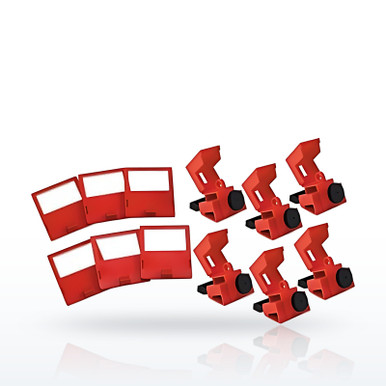
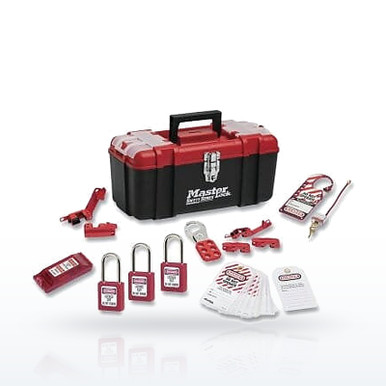
 Brady 153670 electrical lockout kit, 34 piecesBreaker lockouts, plug lockout, padlocks, hasps and tags for electrical isolation points
Why is there a different device for every point? OSHA does not name products. It defines the energy-isolating device, which is the breaker, disconnect, valve or block that physically stops energy, and it requires that the lock hold that device in the safe position. Breakers, valve handles and plugs are all different shapes, so a lock cannot go on them directly. The lockout device is the adapter between the isolating point and the padlock, and it has to be the right shape to hold that particular point so it cannot move.
What does OSHA require of every lockout device?
The hardware rules in 1910.147(c)(5) apply to every device, whatever energy it isolates.
What counts as an energy-isolating device, and what does not?
A mechanical device that physically prevents the transmission or release of energy: a manually operated circuit breaker, a disconnect switch, a manually operated switch that disconnects all ungrounded supply conductors with no pole operable on its own, a line valve, a block, and any similar device. Push buttons, selector switches and other control-circuit devices are not energy-isolating devices, so a lockout device on a stop button is not a lockout. The lock goes on the breaker or the valve, not on the control.
1910.147(b): definition of energy isolating device.A lockout device uses a positive means, a key or combination lock, to hold the isolating device in a safe position. Blank flanges and bolted slip blinds count as lockout devices. The device is attached so that it holds the isolating device in the safe or off position; a tag, by contrast, only indicates that moving it is prohibited.
1910.147(b): definition of lockout device; (d)(4)(ii) and (iii).Which device for which energy source?
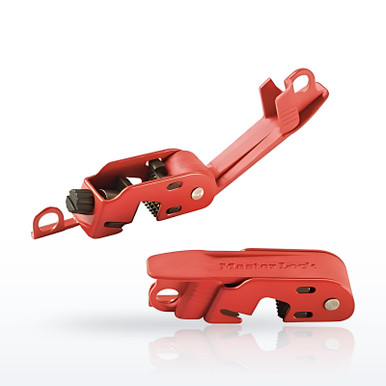
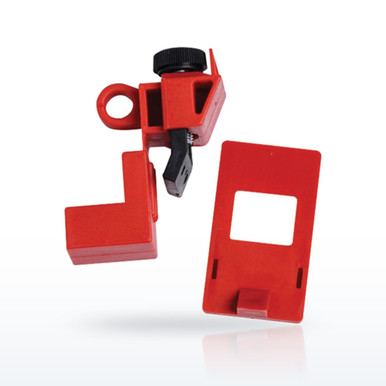
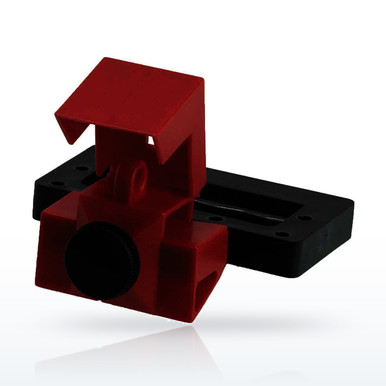
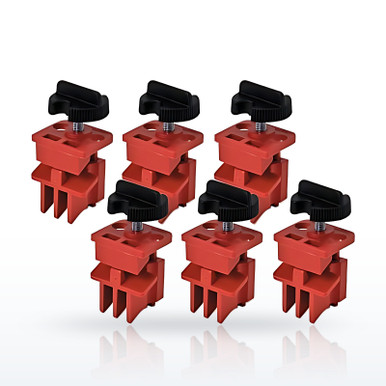
- Electrical, circuit breaker: a breaker lockout clamps over the toggle of a single-pole or multi-pole breaker, with or without a tool, and takes a padlock through its body. Sizes differ by breaker; oversized and universal versions cover large-frame and tie-bar breakers. A panel lockout locks the panel door closed when every breaker inside must be isolated at once.
- Electrical, disconnect switch: most disconnects built or overhauled since January 2, 1990 have a built-in hasp or locking tab, which OSHA requires on new and modified equipment. The padlock goes straight on; a multi-lock hasp is added when more than one person locks out.
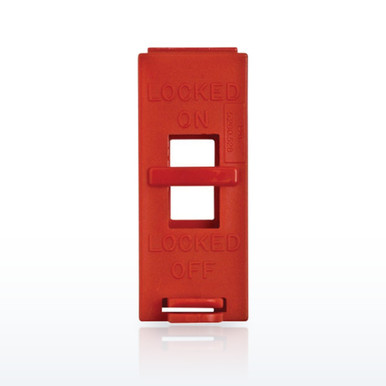
- Electrical, wall switch: a switch lockout covers a toggle or Decora switch and takes a padlock.
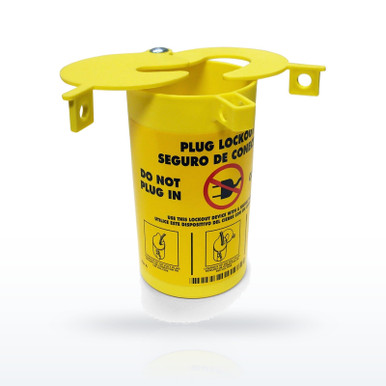
- Electrical, cord and plug: a plug lockout encloses the plug so it cannot be inserted. Note that the standard does not apply to cord-and-plug equipment at all when the plug is pulled and stays under the exclusive control of the person doing the work; the plug lockout is for when it does not, such as a plug out of sight or a long job.
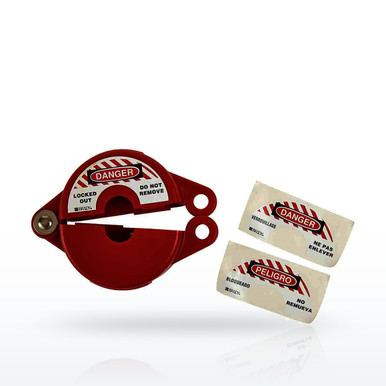
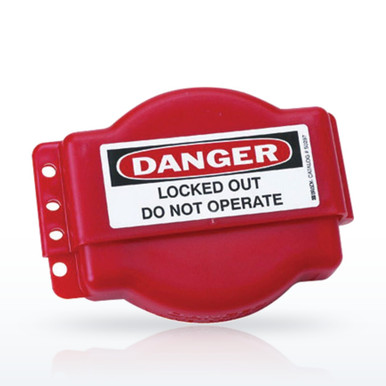
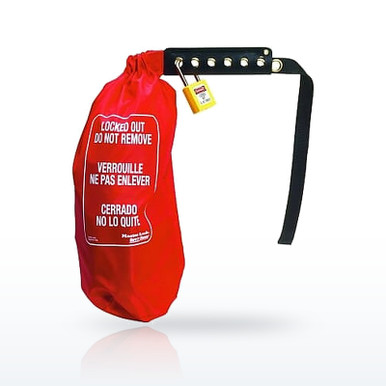
- Pneumatic and hydraulic, gate valve: a gate valve lockout is a cover that encloses the handwheel, sized by wheel diameter, so the wheel cannot be turned.
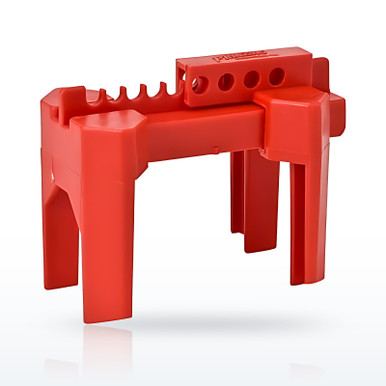
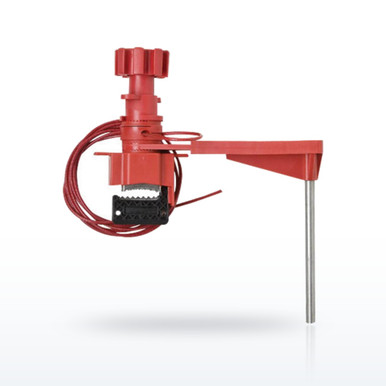
- Pneumatic, hydraulic and process, ball valve: a ball valve lockout clamps around the lever in the closed position, sized by pipe diameter. Universal or blocking-arm versions fit ball and butterfly valves with odd handle shapes.
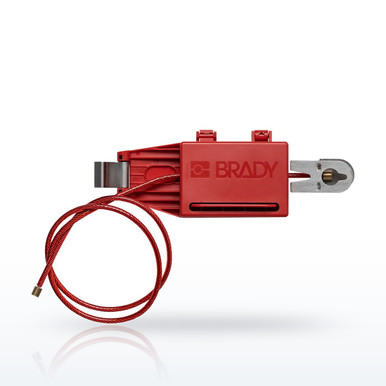
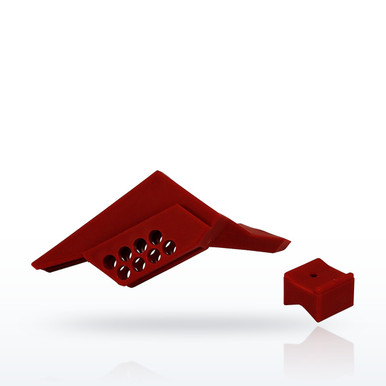
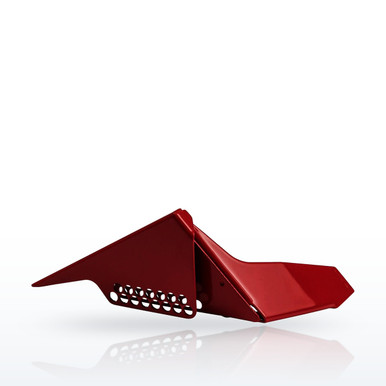
- Several points at once: a cable lockout runs a steel-core cable through several valve handles or disconnect handles and locks the cable in the body; it suits a group of small valves or a bank of switches where individual devices would be slow.
- Mechanical and gravity: blocks, pins and chains that hold a part from moving are lockout hardware too; the standard lists chains, wedges, key blocks and adapter pins. Stored energy is released or restrained after the lock goes on, not instead of it.
Does the electrical standard add anything?
Yes. The electrical installation standard requires that every disconnecting means it requires be capable of being locked in the open position. Work on de-energized electrical parts under 1910.333 requires a lock and a tag on each disconnecting means used to de-energize the circuit, attached so that operating the disconnect takes undue force or tools, with the tag stating that unauthorized operation and removal are prohibited. A lock without a tag is allowed only in narrow cases; a tag without a lock only where a lock cannot be applied or equivalent safety is shown, plus one additional measure.
1910.303(f)(4); 1910.333(b)(2)(iii)(A) through (E).How do you pick the size?
From the isolating point, not the machine. Measure the breaker toggle and note whether it is single-pole, multi-pole or a tie-bar; measure the gate valve handwheel across its outer diameter; note the pipe size at a ball valve and the handle shape; measure the plug body and cord diameter. Manufacturers publish the range each device fits on its spec sheet, and the ranges are what we list on each product page. A device that does not fit tight enough to hold the point in position is not a lockout.
1910.147(d)(4)(ii): lockout devices affixed so as to hold the energy isolating device in a safe or off position. Fit ranges as published by the manufacturers.Lockout devices by isolating point
19 items · prices liveFit ranges and device types are as published by the manufacturer; see each product page for the breaker, valve or plug sizes it covers. Free shipping on orders over $199.


Padlocks and hasps to go with the devices are in the lockout/tagout catalog; the kits above include both.
Questions people ask
What is a lockout device?
A device that uses a key or combination lock to hold an energy-isolating device in a safe position so the equipment cannot be energized. Blank flanges and bolted slip blinds count. (1910.147(b).)
Can I lock out a stop button?
No. Push buttons, selector switches and other control-circuit devices are not energy-isolating devices. The lock goes on the breaker, disconnect or valve. (1910.147(b).)
Do I need a plug lockout for a cord-and-plug tool?
Not when the plug is pulled and stays under your exclusive control; the standard does not apply then. A plug lockout is for when the plug is out of your control, such as across the room or during a long job. (1910.147(a)(2)(iii)(A).)
What is the difference between a gate valve lockout and a ball valve lockout?
A gate valve lockout is a cover sized to the handwheel diameter so it cannot be turned. A ball valve lockout clamps around the lever in the closed position and is sized to the pipe. The manufacturer publishes the range each fits.
What is a cable lockout for?
Locking several isolating points with one device: the cable passes through several valve handles or switch handles and locks in the body, which then takes one or more padlocks.
Does OSHA require lockout devices to be red?
No color is named. Devices must be standardized within the facility by color, shape or size, so a facility picks its own scheme and sticks to it. (1910.147(c)(5)(ii)(B).)
Does a new disconnect have to accept a lock?
Yes. Energy-isolating devices on equipment installed, replaced or majorly modified after January 2, 1990 must be designed to accept a lockout device, and the electrical standard requires disconnecting means to be lockable in the open position. (1910.147(c)(2)(iii); 1910.303(f)(4).)
Standards and ratings on this page are as published in the documents named and by the manufacturers named. The employer’s hazard assessment and written program decide what applies at a given workplace. Verify a rating on the product and its spec sheet before use.