
What is a LOTO lock, and what makes it different from a padlock?
A LOTO lock is a padlock built to meet the lockout standard: it is used only for lockout, every lock has a different key, it is marked with the name of the person who applied it, and it cannot be left open with the key out. A toolbox padlock fails on most of those points. Two locks from the same hardware-store pack open with the same key, nobody knows whose lock it is, and the standard says a lockout device may not be used for anything else. Safety padlocks also have a non-conductive plastic or nylon body for electrical work, a short shackle that fits lockout hasps and devices, and a label area for the user’s name.
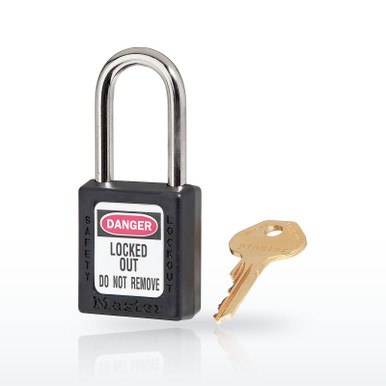 Master Lock 410 Zenex safety padlockNon-conductive thermoplastic body, 1/4 in shackle; one worker, one lock, one key
Why does the lock matter if the procedure is right? The lock is the procedure. Everything else in 1910.147, the written steps, the training, the inspection, exists so that a lock goes on a disconnect and only one person can take it off. If two people hold keys to the same lock, or a coworker can cut it with pliers, or nobody can tell whose it is, the written procedure is still fine on paper and the worker inside the machine is not protected. The hardware rules are what turn the paper into protection.
What does OSHA require of a lockout lock?
1910.147(c)(5) does not say padlock. It describes what the device must do, and a safety padlock is built to those points.
What is built into a safety padlock that a regular padlock lacks?
- Keyed different by default. Each lock in a safety padlock line has its own key code, so no other lock in the facility opens with your key. Hardware-store padlocks are often sold keyed alike in multi-packs, which would let a coworker open your lock.
- One key per lock. Safety padlocks ship with one key, or the spare is held by the employer under the documented procedure for removing a lock when the employee is absent. The standard allows that removal only under a specific written procedure.
- Key-retaining. The key cannot be withdrawn until the shackle is closed and locked, so the lock cannot be left open on a disconnect by mistake.
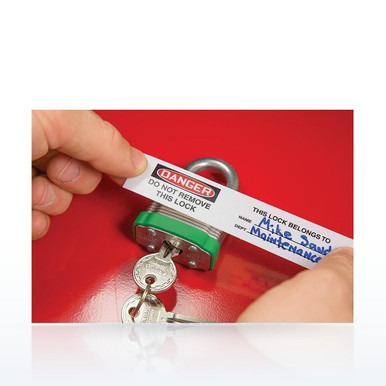
- A name label. The body has a space for a printed or engraved name, or a write-on label, so the lock identifies the employee who applied it, which the standard requires of every device.
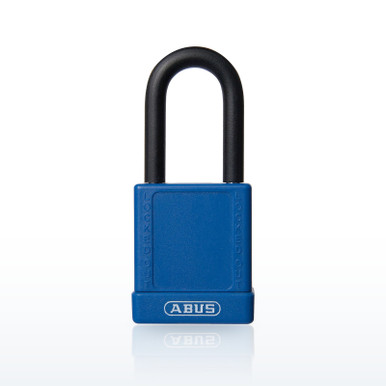
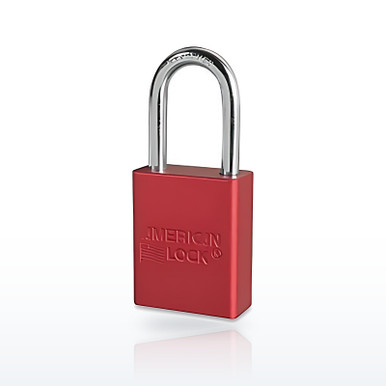
- Non-conductive body and shackle options. Thermoplastic, nylon or aluminum bodies, with nylon-covered or insulated shackles on some models, for use on electrical isolating devices.
- A short, narrow shackle. Lockout hasps and devices have small holes; a 1/4 in shackle with about 1-1/2 in clearance fits them, where a heavy security padlock will not.
- Standard colors. Lines come in red, blue, green, yellow, orange, purple and black so a facility can standardize by color, for example one color per department or one for job locks and another for personal locks.
- No bolt cutter is needed to make it a lockout. The standard asks for a device that cannot be removed without excessive force or tools; it does not ask for a high-security lock. A safety padlock is a tamper deterrent and an identification device, not a theft deterrent.
Keyed different, keyed alike or master keyed?
Keyed different is the default for personal locks: one worker, one lock, one key. Keyed alike means a set of locks opens with one key; it is used for job locks, where one authorized employee puts several locks on several isolating points of one machine and holds the one key, which then goes into a group lock box. It is not used for personal locks shared between people. Master keyed means every lock has its own key and a single master key also opens them all; the master is kept by the employer for the documented absent-employee removal procedure, not carried on the floor. Manufacturers register key codes and supply a chart so the facility can track which code belongs to whom.
1910.147(c)(5)(ii)(D): identification of the employee; (e)(3): removal by the employee who applied the device, with the documented exception; (f)(3)(ii)(D): group lock box. Keying systems as published by the manufacturers.Does the lock go on alone, or with a tag?
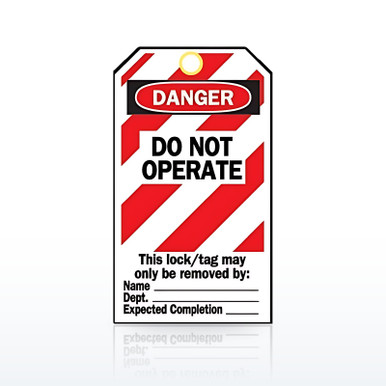
Under 1910.147 the lock identifies the employee, and a tag is required only where a lock cannot be used. In practice most employers hang a Do Not Operate tag with the name, date and reason on every lock, and the electrical work standard requires both a lock and a tag on each disconnecting means for work on de-energized electrical parts, except in narrow cases. A lock may be used without a tag only when one circuit or piece of equipment is de-energized, the lockout does not extend beyond the work shift, and the employees exposed are familiar with the procedure.
1910.147(c)(2)(i): tagout where a device is not capable of being locked out; 1910.333(b)(2)(iii)(A), (B) and (E): lock and tag on each disconnecting means, and the conditions for a lock without a tag.What should an employer buy for each authorized employee?
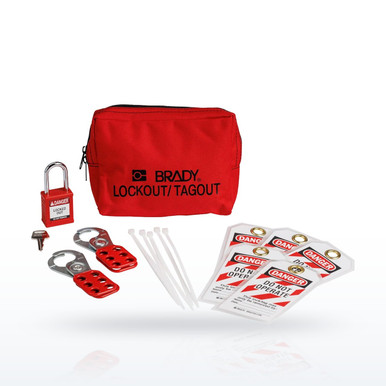
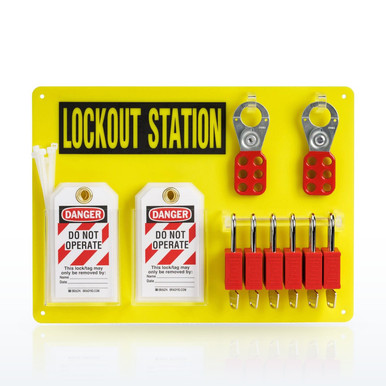
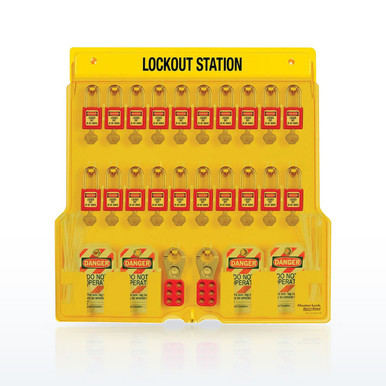
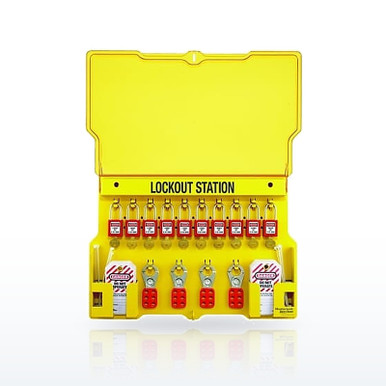
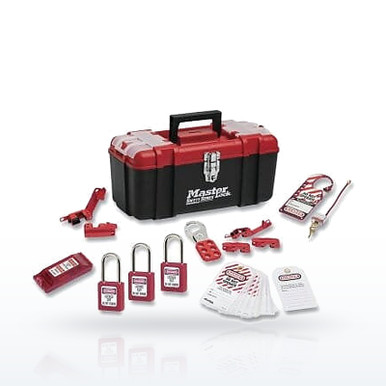
One keyed-different safety padlock, labeled with the employee’s name, in the facility’s standard color, plus tags. Personal kits bundle the padlock with a hasp, tags and ties in a pouch; stations hold a department’s locks and hasps on a board with a key registration card. The count is the number of authorized employees, not the number of machines; the isolating points are covered by the devices and job locks, and the people by their personal locks.
1910.147(c)(5)(i): hardware provided by the employer; (c)(7)(i)(A): authorized employees. Kit contents as published by the manufacturers.Safety padlocks and personal lockout kits
15 items · prices liveBody material, shackle size and keying are as published by the manufacturer; see each product page. Free shipping on orders over $199.
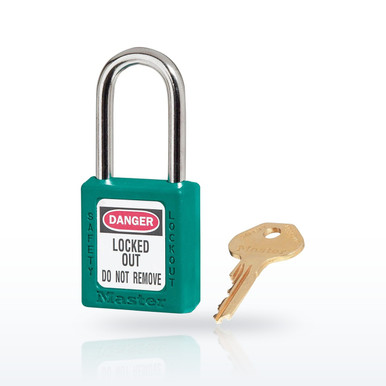
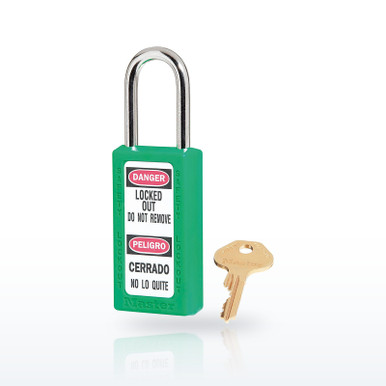
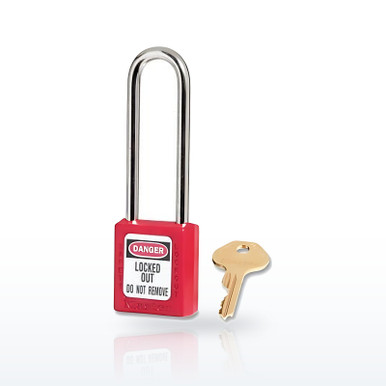


Keyed-alike job-lock sets, master-keyed systems and engraved name labels are quoted on request: call (925) 215-7337.
Questions people ask
What is a LOTO lock?
A padlock used only for lockout/tagout, keyed different from every other lock, marked with the employee’s name, and built to the device requirements of 1910.147(c)(5): durable, standardized, substantial and identifiable.
Can I use a regular padlock for lockout?
Only if it meets every requirement: used for nothing else, standardized within the facility, substantial, and marked with the user’s identity, with a key no one else holds. Most ordinary padlocks fail the single-purpose and keying points. (1910.147(c)(5)(ii).)
Does a lockout lock have to be red?
No color is named. Devices must be standardized within the facility by color, shape or size, so a facility picks its own scheme. (1910.147(c)(5)(ii)(B).)
Why are safety padlocks plastic?
A non-conductive body and shackle for use on electrical isolating devices. The standard does not require it; manufacturers build it in for electrical lockout.
Should every worker have their own key?
Yes. Each lockout device is removed by the employee who applied it, which only works if no one else can open it. (1910.147(e)(3).)
What is a key-retaining padlock?
One whose key cannot be removed until the shackle is locked. It prevents a lock being hung open on a disconnect and walked away from.
Do I need a tag with the lock?
Under 1910.147 the lock itself identifies the employee; a tag is required where a lock cannot be used. For electrical work on de-energized parts, 1910.333 requires a lock and a tag on each disconnecting means, with limited exceptions. (1910.147(c)(2); 1910.333(b)(2)(iii).)
Standards and ratings on this page are as published in the documents named and by the manufacturers named. The employer’s hazard assessment and written program decide what applies at a given workplace. Verify a rating on the product and its spec sheet before use.