
What is a half mask vs a full facepiece, and what protection factor does each give?
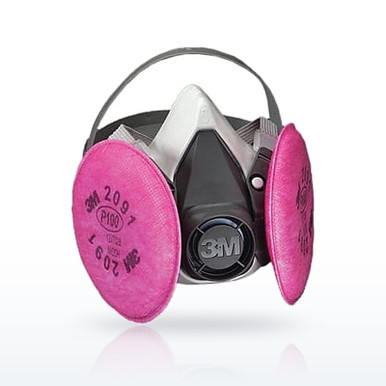
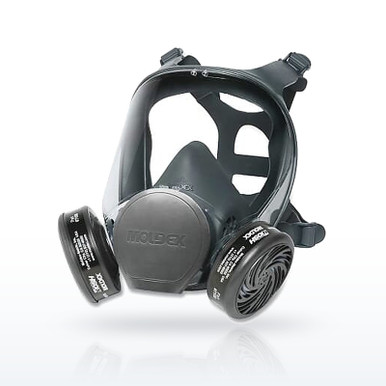
A half mask covers the nose and mouth and seals under the chin. A full facepiece covers the eyes too, sealing around the forehead, temples and chin behind a lens. Both are tight-fitting respirators that take the same kinds of filters and cartridges, and both must be fit tested. OSHA assigns a half mask a protection factor of 10 and a full facepiece 50 when used as plain air-purifying respirators, meaning the full facepiece may be used in air 5 times more contaminated for the same exposure limit. With a powered blower or an airline the numbers rise to 50 and 1,000. The full facepiece also protects the eyes from the contaminant, and it must pass a quantitative fit test at a fit factor of 500 to be used above APF 10.
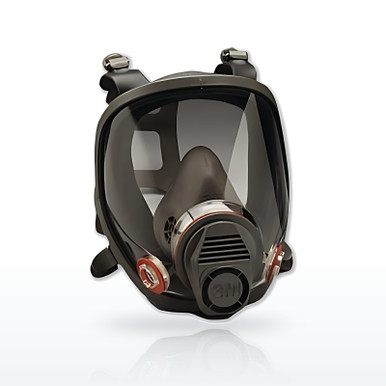
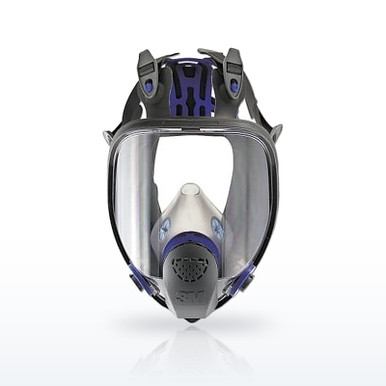
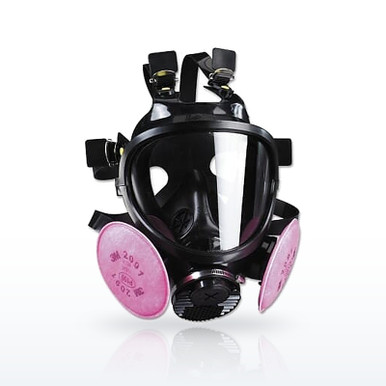 3M Full Facepiece RespiratorFull-facepiece air-purifying respirator, APF 50
Why is a full facepiece rated 5 times higher? The filter is the same; the seal is not. A half mask seals across the bridge of the nose and under the chin, where the face moves most when the wearer talks or turns. A full facepiece seals across the forehead and along the sides of the face, a longer and more stable line, and its larger body and head harness hold it more steadily. Workplace studies behind the 2006 APF table showed that difference in leakage, and the table reflects it: 10 for the half mask, 50 for the full facepiece. The higher number is only earned with the quantitative fit test the standard requires at that level.
How do the two differ in practice?
Six things change when you go from a half mask to a full facepiece.
Assigned protection factors: half mask vs full facepiece
| Type of respirator | Half mask | Full facepiece |
|---|---|---|
| Air-purifying respirator (negative pressure, filters or cartridges) | 10 | 50 |
| Powered air-purifying respirator (PAPR) | 50 | 1,000 |
| Supplied-air respirator, demand mode | 10 | 50 |
| Supplied-air respirator, continuous flow | 50 | 1,000 |
| Supplied-air respirator, pressure-demand or other positive pressure | 50 | 1,000 |
| SCBA, demand mode | 10 | 50 |
| SCBA, pressure-demand or other positive pressure | not listed | 10,000 |
The half-mask column includes filtering facepieces (N95 and similar) and elastomeric half masks. A quarter mask, which seals above the chin, is APF 5 and is rarely used. The APFs apply only when the employer runs a full program with training, fit testing, maintenance and use rules. They do not apply to respirators used solely for escape.
29 CFR 1910.134(d)(3)(i)(A) Table 1 and notes 2, 3 and 5.
What does the APF mean for the job?
The APF sets the maximum use concentration: APF times the exposure limit. For a substance with a PEL of 1 part per million, a half mask with the right cartridge may be used up to 10 ppm and a full facepiece up to 50 ppm. Above the respirator’s MUC, the employer must step up to a PAPR, an airline or an SCBA. Neither a half mask nor a full facepiece in air-purifying mode may be used in an IDLH atmosphere or where oxygen is below 19.5 percent, no matter the APF.
1910.134(b), definition of MUC; (d)(3)(i)(B); (d)(2)(i) and (iii).The APF does not change what the filter or cartridge can do. A P100 filter stops the same 99.97 percent on either mask; a cartridge breaks through at the same point. The difference is leakage around the face, and the full facepiece simply leaks less. That is also why the standard requires the stricter fit test before the higher number is used.
1910.134(f)(6) and (f)(7); 42 CFR 84.170(a)(3)(i).How does fit testing change with a full facepiece?
Both must be fit tested before first use, when the make, model, style or size changes, and at least annually. The pass mark is where they part: a quantitative test passes at a fit factor of 100 for a half mask and 500 for a full facepiece. Qualitative tests are permitted only for negative-pressure air-purifying respirators that must achieve a fit factor of 100 or less, so a full facepiece that will be used at APF 50 has to be tested on a quantitative instrument. A full facepiece used only where APF 10 is required may be tested qualitatively, because then it only needs the half-mask fit factor.
1910.134(f)(2), (f)(6) and (f)(7).The same fit-test rule follows the facepiece onto a PAPR or airline. A tight-fitting PAPR or supplied-air respirator is fit tested in negative-pressure mode, by fitting filters to the actual facepiece or using an identical air-purifying facepiece as a stand-in, regardless of how it will be operated.
1910.134(f)(8).When does a job need the full facepiece?
- Exposure above the half mask’s MUC (10 times the limit) but at or below 50 times the limit, with an air-purifying cartridge or filter that handles the contaminant.
- A contaminant that attacks the eyes: ammonia, chlorine, acid gases, formaldehyde, and many solvent vapors irritate at levels well below the respiratory limit, and goggles over a half mask tend to leak and fog.
- Dusts or mists at a level where goggles alone do not keep them out of the eyes.
- Substance-specific standards that call for it; for example several Subpart Z standards name a full facepiece at given concentration ranges. The employer checks the standard for the substance.
- Where the medical evaluation or the wearer’s eyeglasses rule out a full facepiece, a loose-fitting PAPR hood is often the alternative at APF 25, with no face seal to keep.
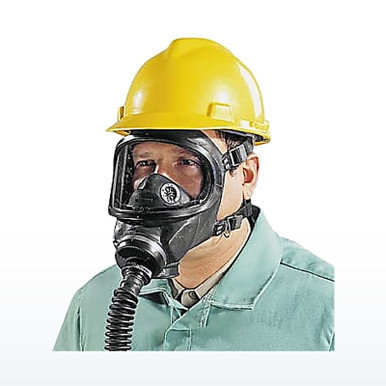
Half-mask and full-facepiece respirators
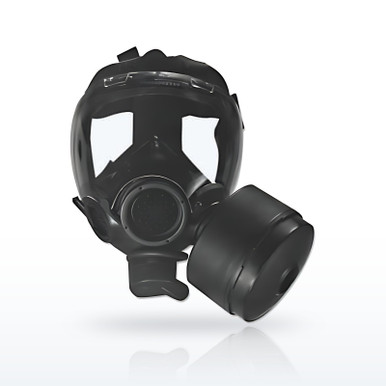
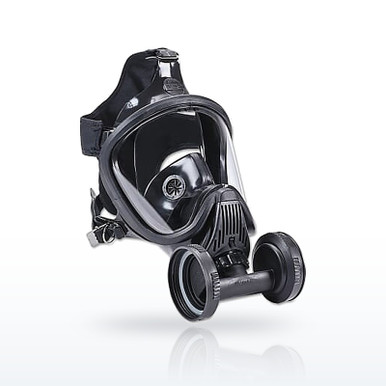
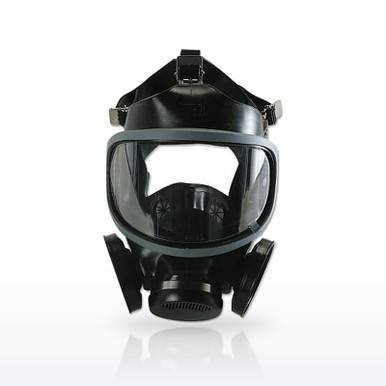
26 items · prices liveRespirator type is as published by the manufacturer. Sizes, cartridge connection and lens material are on the product page; most of these take the same manufacturer’s filters and cartridges across both masks. Contractor Direct orders ship free.
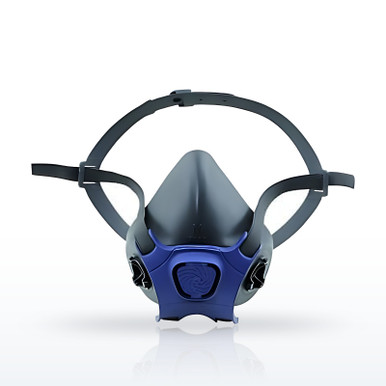


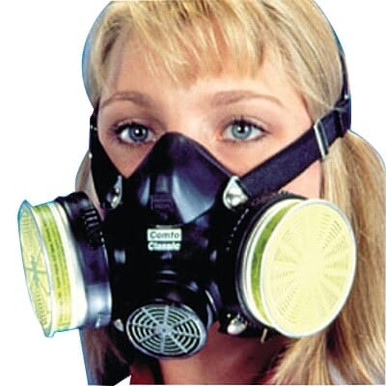
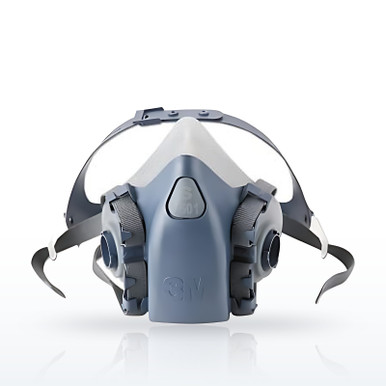


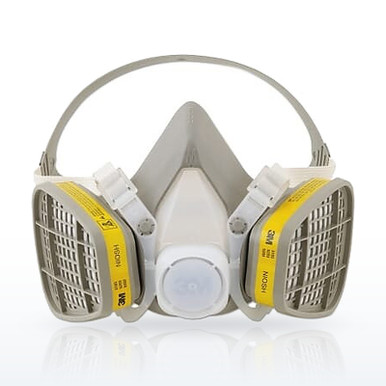
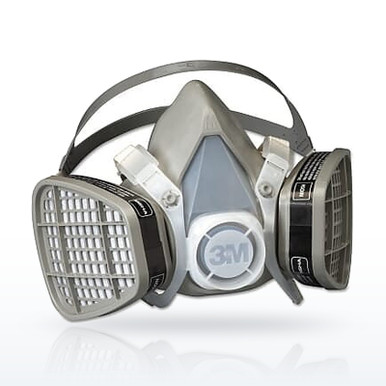
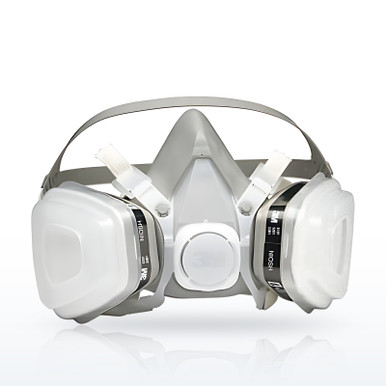


P100 filters, cartridges and PAPR systems are in the respirator selector.
Questions people ask
What is the APF of a half-mask respirator?
10 as an air-purifying respirator; 50 on a PAPR or continuous-flow or pressure-demand airline. (1910.134 Table 1.)
What is the APF of a full-facepiece respirator?
50 as an air-purifying respirator; 1,000 on a PAPR or continuous-flow or pressure-demand airline; 10,000 on a pressure-demand SCBA. (1910.134 Table 1.)
Does a full facepiece need a quantitative fit test?
Yes, if it will be used above APF 10. It must reach a fit factor of 500. Used only at APF 10, a qualitative test is allowed. (1910.134(f)(6) and (f)(7).)
Can I wear glasses with a full-facepiece respirator?
Not ordinary glasses; the temples would break the seal. Manufacturers supply spectacle kits that mount inside the lens. (1910.134(g)(1)(ii).)
Does a full facepiece count as eye protection?
It shields the eyes from the contaminant and many are also rated to ANSI Z87.1 for impact; check the manufacturer’s listing for the impact rating. The standards column on each product page shows what the manufacturer claims.
Is an N95 a half mask?
Yes. Table 1 puts filtering facepieces in the half-mask line at APF 10. (1910.134 Table 1 note 3.)
Can a half mask be used in an IDLH atmosphere?
No. Neither a half mask nor a full facepiece in air-purifying mode may be used in IDLH or oxygen-deficient air. IDLH requires a pressure-demand SCBA or an airline with escape bottle. (1910.134(d)(2).)
Do the two masks use the same cartridges?
Usually, within one manufacturer’s line; the cartridge connection is the same. Check the product page for the connection type.
Standards and ratings on this page are as published in the documents named and by the manufacturers named. The employer’s hazard assessment and written program decide what applies at a given workplace. Verify a rating on the product and its spec sheet before use.