
Respirator fit testing: what it is, when OSHA requires it, and how it is done
A fit test checks that a specific respirator actually seals to your face. A respirator only protects you if dirty air can’t sneak in around the edges, and faces differ, so the N95 that seals on one person leaks on another. OSHA requires the test before you first wear a respirator on the job, again if the model or size changes, and at least once a year.
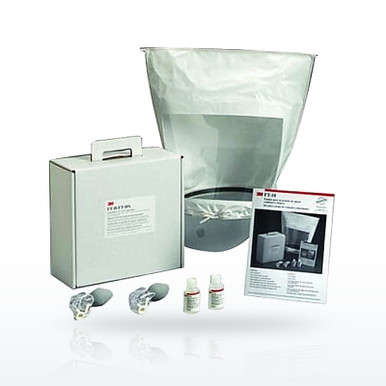 3M FT-10 qualitative fit test kitHood, nebulizers and sweet-taste solutions. Tests a whole crew.
Why does fit testing exist? Half masks and N95s only work when they seal against the skin. Without a seal, air takes the easy path around the edge instead of through the filter, and the wearer gets little or no protection while believing they are protected. A fit test is the only way to know that a given mask seals on a given face, which is why OSHA wrote it into the respiratory protection standard, so every employer does it the same way.
When do you need a fit test, and how often?
OSHA sets three triggers. If any one is missed, the employee is wearing a respirator that has not been shown to seal.
Who has to be fit tested?
Anyone whose employer requires them to wear a mask that seals to the face: an N95 or other disposable, a half mask with cartridges, or a full facepiece. It applies whether the mask is the plain negative-pressure kind or has a powered blower, as long as it seals to the face.
1910.134(f): tight-fitting facepieces, negative-pressure and positive-pressure. Preceded by the written program, 1910.134(c), and the medical evaluation, 1910.134(e).The exception is voluntary use. If the employer lets you wear an N95 but doesn’t require it, and the air is below the exposure limits, no fit test is required; you get the Appendix D information sheet instead. Voluntary use of a reusable mask still needs the medical evaluation and a cleaning routine.
1910.134(c)(2)(i) and (ii); Appendix D.Two things come before the fit test: the medical evaluation, which confirms you can safely breathe through a respirator, and the employer’s written program. Fit testing comes after medical clearance, not before.
1910.134(e)(1): medical evaluation before fit testing and before first use.Who arranges it, and who pays?
The employer. The standard puts the fit test, the medical evaluation, the respirators and the records on the employer, at no cost to the employee. The employer can run the tests in-house with a kit and a trained person, or send people to a clinic or a mobile service; the standard allows any of these.
1910.134(c)(4): provided at no cost to the employee. Appendix A, Part I.A: who may administer.What happens during a fit test?
- Nothing to eat, drink (except water), smoke or chew for 15 minutes before. Taste tests depend on your mouth being clear.
- The taste check, without a mask. The tester puts a hood over your head and sprays a weak bitter (Bitrex) or sweet (saccharin) mist until you can taste it. This proves you can detect the agent and sets how much to use in the real test.
- Put on the respirator you’ll wear on the job, same make, model and size, with your safety glasses or hard hat if you wear them, and do a user seal check (cover the filters, breathe in, feel for leaks).
- The hood goes back on and the test mist is sprayed in. The tester tops it up every 30 seconds.
- Eight exercises, one minute each: normal breathing, deep breathing, turning your head side to side, nodding up and down, talking out loud (reading a passage or counting), a grimace (quantitative tests only, 15 seconds), bending over, and normal breathing again. This moves the mask the way work does.
- Pass or fail. If you never taste the agent, that mask passes and the tester records it. If you taste it, the mask is leaking: you try a different size or model and start again. A mask that fails may not be used by you.
- The record. Your name, the date, the kind of test, the exact mask (make, model, style, size) and the result, kept until the next test.
A quantitative test follows the same exercises, but instead of a hood and a taste, the mask is connected to an instrument that counts particles inside and outside and reports a number, the fit factor.
Which kind of test will you get: qualitative or quantitative?
| Qualitative | Quantitative | |
|---|---|---|
| How it works | Hood, mist, can you taste it. Pass or fail. | Instrument counts leakage and gives a number, the fit factor. |
| Which masks | N95s and half masks. | Any sealing respirator. Required for a full facepiece used at the higher protection level. |
| What it takes to run | A kit: hood, two nebulizers, solutions. No instrument. | An instrument (PortaCount, Quantifit or an aerosol chamber) and training to run it. |
| Typical use | Most field crews, contractors, in-house programs. | Full-face programs, plants, clinics and mobile services. |
For the CHST: qualitative protocols are accepted only for negative-pressure air-purifying respirators that must achieve a fit factor of 100 or less, which is half masks including filtering facepieces (1910.134(f)(6)). A full facepiece worn in negative-pressure mode at an assigned protection factor above 10 requires a quantitative test with a passing fit factor of at least 500; half masks pass at 100 (1910.134(f)(6) and (f)(7)). Accepted qualitative agents: isoamyl acetate, saccharin, Bitrex, irritant smoke. Accepted quantitative methods: generated aerosol, ambient-aerosol condensation nuclei counter, controlled negative pressure, and the 2019 modified ambient-aerosol CNC and CNP protocols.
Why can an N95 be fit tested if it only filters 95 percent?
Every fit tester hears this one, and it is a fair question: if the filter itself lets 5 percent through, how can a taste test or a particle counter tell a leak around the edge from a leak through the paper? The answer is that the 95 and the fit test are measuring two different things, and the test is set up so the filter cannot confuse it.
The 95 is a worst-case number, not an everyday one. NIOSH certifies an N95 by blasting it with the single hardest particle size to catch, about 0.3 micron, at a high test airflow (85 liters a minute, well above a working breathing rate) and with the particles stripped of static charge so the media gets no electrostatic help. Under those conditions the filter must stop at least 95 percent. Bigger particles are caught by impaction, smaller ones by diffusion, and at normal breathing rates the same media typically stops well over 99 percent of what is in the air. The 5 percent is the certification floor under punishing conditions, not what happens to a Bitrex droplet.
42 CFR 84.170(b) (minimum filter efficiency 95 percent for the N95 class) and 84.174 (sodium chloride test aerosol, count median diameter 0.075 micron, mass median aerodynamic diameter about 0.3 micron, 85 L/min, charge-neutralized).N95s are built to seal. OSHA’s definition of a filtering facepiece is a tight-fitting, negative-pressure respirator whose filter is the facepiece. The edge is designed to seal to the skin, which is why Appendix B-1 has a user seal check for it and why 1910.134(f) requires it to be fit tested like any other tight-fitting respirator. A mask that is designed to leak is a surgical or procedure mask, which is not a respirator and is never fit tested.
1910.134(b), definition of filtering facepiece (dust mask); 1910.134(f)(1); Appendix B-1.The qualitative test agents are far too big to get through the media. A nebulizer makes droplets several microns across, around ten times the size the 95 percent figure is measured at. The filter catches essentially all of them. So if the wearer tastes bitter or sweet, it came around the edge, not through the filter. That is the basis on which OSHA accepted saccharin and Bitrex for filtering facepieces, and it is also why qualitative testing is capped at a fit factor of 100: it is a leak detector, not a measurement, and it is a conservative one. Any penetration that did occur would make the mask look worse, never better.
1910.134 Appendix A, Part I.B.3 (saccharin) and I.B.4 (Bitrex) protocols; 1910.134(f)(6): QLFT only for respirators that must achieve a fit factor of 100 or less.Quantitative testing works too, with the right setup. A standard counting instrument cannot tell a particle that leaked around the seal from one that came through the filter, which is the problem you are describing. The instrument makers solved it two ways. First, a sampling probe is punched through the facepiece (the probed mask is used for the test and discarded), so the instrument can draw a sample from inside. Second, the PortaCount’s N95 mode uses a built-in classifier that counts only a narrow band of very small particles that N95 media captures almost completely, so what it counts inside the mask is face-seal leakage, not filter penetration. OSHA’s 2019 “modified ambient aerosol CNC” protocol in Appendix A was written for filtering facepieces using this method. The controlled negative pressure method (Quantifit) cannot be used on an N95 at all, because it needs a sealed, non-filtering facepiece to hold a vacuum.
1910.134 Appendix A, Part I.C.3 (ambient aerosol CNC) and I.C.5 (modified ambient aerosol CNC protocol for filtering facepiece respirators, 2019); TSI, How technology enables PortaCount fit testers to fit test any respirator; NIOSH, Comparison of the Companion and Modified PortaCount Methods for Fit Testing N95 Respirators.For the person who just needs the one-line version: the fit test mist is too big to get through an N95’s filter, so if you can taste it, the mask is leaking around your face. That is exactly what the test is looking for.
Can you pass a fit test with a beard?
A beard or stubble where the mask meets the skin breaks the seal, and the standard doesn’t allow a sealing respirator over it, no matter what a test says. A fit test passed clean-shaven only counts clean-shaven. Workers who keep a beard use a loose-fitting hood or helmet with a powered or supplied-air unit, which doesn’t rely on a face seal.
1910.134(g)(1)(i)(A).What does fit testing cost?
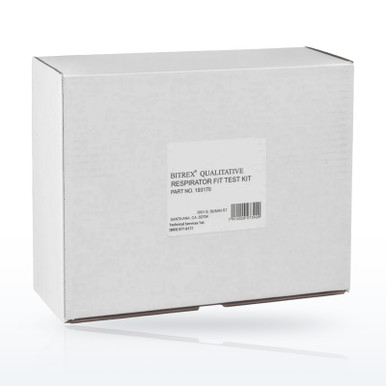
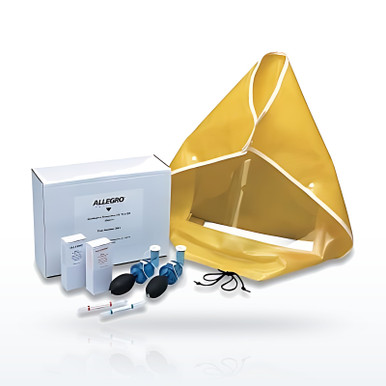
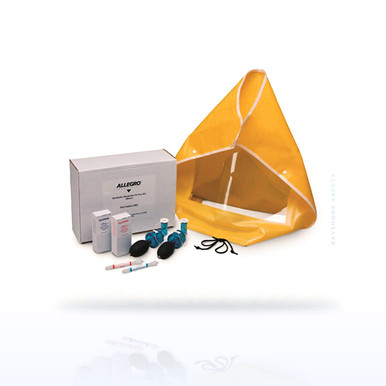
A qualitative kit is a one-time purchase (about $330 for the kits below) and tests many people; the only ongoing cost is the solution refills. A clinic or mobile service charges per person, per year. For a crew that needs annual tests, the kit and a trained person in-house is the lower-cost route; the standard accepts either.
Prices are today’s catalog prices and may change. The kits meet the Appendix A qualitative protocols as published by their manufacturers.Fit-test kits and supplies
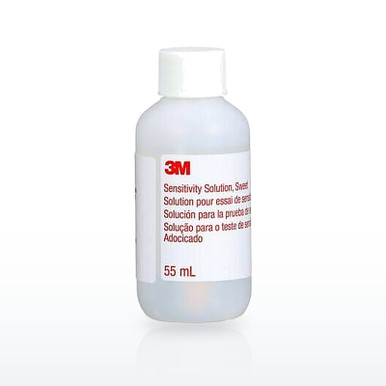
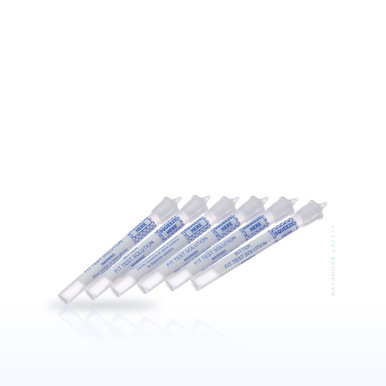
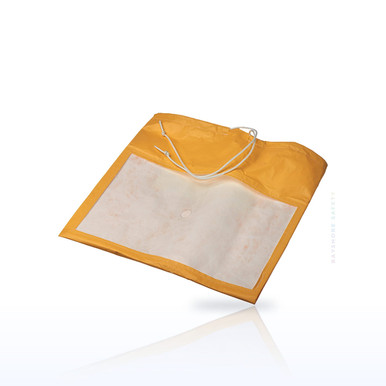
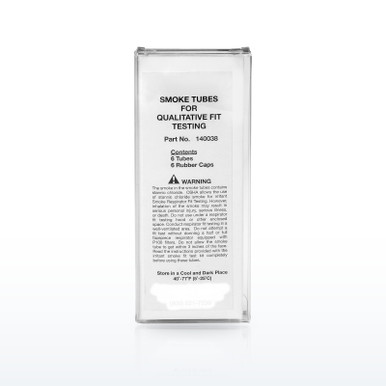
16 items · prices liveItems whose manufacturer data names the fit-test method shown. Methods are as published by the manufacturer; see each product page and spec sheet. Contractor Direct orders ship free.
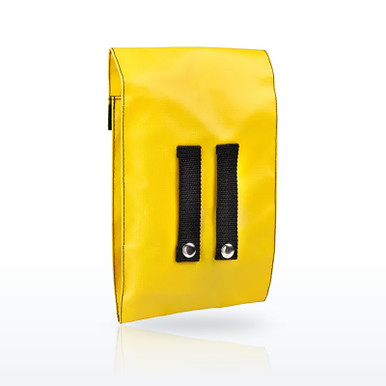
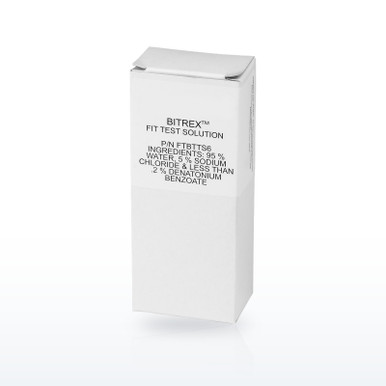
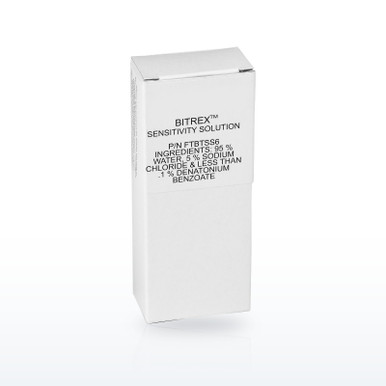
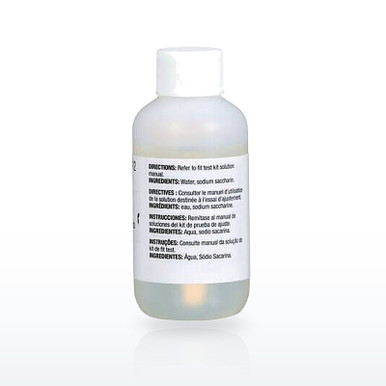
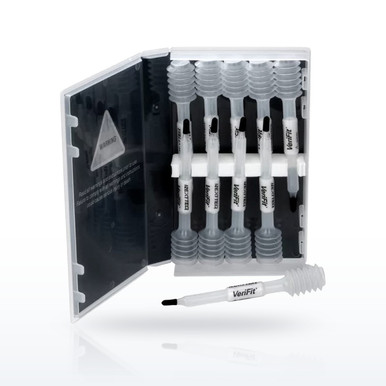
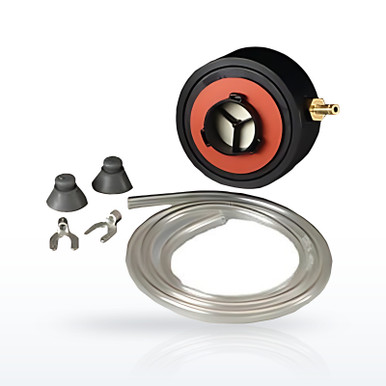
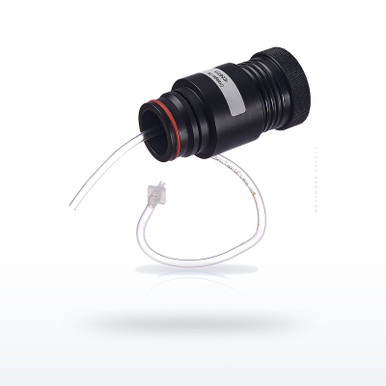
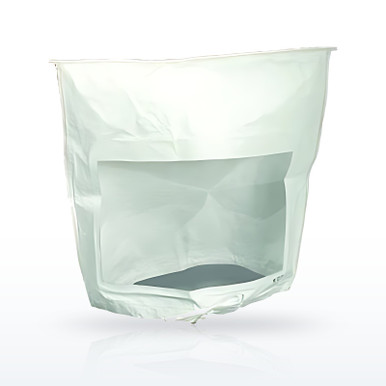
Quantitative instruments (PortaCount, Quantifit) are quoted on request: call (925) 215-7337.
Questions people ask
Does OSHA require a fit test for N95 respirators?
Yes, if your employer requires you to wear it. An N95 seals to the face, so it is covered like any other respirator. If wearing it is your own choice and the air is below the limits, no fit test is required; you get the Appendix D information sheet instead. (1910.134(f) and (c)(2).)
How often do I need a fit test?
At least once a year, and sooner if you switch masks or your face changes in a way that could affect the seal. (1910.134(f)(2) and (f)(3).)
Should a fit test be qualitative or quantitative?
For N95s and half masks, either one. A full facepiece used at the higher protection level has to be tested quantitatively, with a fit factor of at least 500. (1910.134(f)(6) and (f)(7).)
What happens if I fail?
That mask leaks on your face and you can’t use it. You try another size or model until one passes, and that one is recorded as yours. Failing is normal; it’s the test doing its job.
How long does a fit test take?
About 15 to 20 minutes per person for a qualitative test: the taste check, then eight one-minute exercises. Longer if the first mask fails and you try another.
How can an N95 be fit tested when it only filters 95 percent?
Because the test mist droplets are far larger than the particles the 95 percent is measured against, the filter stops essentially all of them. If you taste it, it came around the edge. The 95 percent is NIOSH’s worst-case certification test at 0.3 micron, not the everyday filter performance. Quantitative instruments handle it with a probe through the mask and a mode that counts only particles the filter captures. See the full explanation above.
Can you pass a fit test with a beard?
Not for a tight-fitting respirator. 1910.134(g)(1)(i)(A) does not permit facial hair in the seal area regardless of a test result. Loose-fitting powered or supplied-air hoods are what the standard allows for bearded workers.
What do they spray during a fit test?
A harmless mist of Bitrex (very bitter) or saccharin (sweet) into a hood over your head. Irritant smoke and banana oil are the other two accepted agents. A quantitative test doesn’t spray anything you taste; an instrument counts particles instead.
Do you have to be certified to perform fit testing?
No certificate is required. OSHA requires that the person running it knows the protocol, can spot a bad test, and keeps the equipment working. (Appendix A, Part I.A.)
Who pays for the fit test?
The employer. Fit testing, the medical evaluation and the respirators are provided at no cost to the employee. (1910.134(c)(4).)
Standards and ratings on this page are as published in 29 CFR 1910.134 and by the manufacturers named. The employer’s written respiratory protection program and hazard assessment decide which respirator and which test apply. Verify the method on the product and its spec sheet before use.