
What are the D-rings on a harness for? Dorsal, side, front, sternal and shoulder
The D-ring in the middle of the back, the dorsal ring, is the one for fall arrest. OSHA requires the fall arrest attachment to be at the center of the back near shoulder level, and ANSI Z359.11 calls the dorsal ring the primary fall arrest attachment. Every other ring has a narrower job. The two side rings at the hips are for work positioning only, used as a pair, never for fall arrest. The sternal ring on the chest may be used for fall arrest only where the dorsal ring is not practical and the free fall is kept to 2 feet or less, and for ladder climbing systems. Shoulder rings are a pair for rescue and retrieval, not fall arrest. The harness label and manual say which rings a given harness has and what each is rated for.
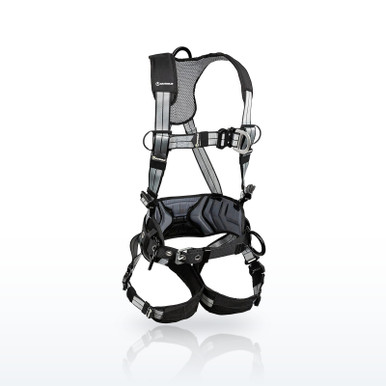 Safewaze 021-18 PRO+ Slate construction harness, aluminum 3DDorsal, front and two side positioning D-rings
Why does it matter which ring you clip to? A harness is designed to take the force of a fall through the dorsal ring, which spreads the load across the shoulders, chest and thighs and leaves the worker hanging upright. The side rings sit on the hips and are built for the small loads of leaning back into a positioning lanyard; a 6-foot fall on one of them loads the body sideways through hardware that was never tested for it. The chest ring works for fall arrest only when the fall is short, because a long fall arrested at the chest can throw the head back. Each ring has a rating and a purpose printed in the manual, and clipping a lanyard to the wrong one is one of the common mistakes an inspector finds on a site.
What is each D-ring for?
The names come from ANSI Z359.11, which calls them attachment elements. The uses below are the ones the standard and OSHA permit.
What do 1D, 3D, 4D and 5D mean on a harness?
Manufacturers count the D-rings. A 1D harness has the dorsal ring only, which is enough for fall arrest from a lanyard or SRL and is what most general construction, roofing and warehouse work uses. A 3D harness adds the two side positioning rings and is the standard construction or iron-worker harness. Adding a front or sternal ring makes a 4D; a 5D adds one more, and which ring that is varies by model, so read the configuration list. The count tells you what the harness can do; the manual tells you what each ring is rated for.
Manufacturer configuration lists for the harnesses below (Safewaze 1D, 3D and FD codes; Miller and DBI-SALA configuration tables).More rings do not make a safer harness. Each unused ring is one more place to clip the wrong thing, and a positioning ring on a worker who never positions is weight and a snag point. Pick the configuration for the work: dorsal only for pure fall arrest, side rings for anyone who leans back into a lanyard to work, sternal or frontal for ladder climbing systems, shoulder rings for confined space entry where the attendant may need to winch the entrant out.
ANSI/ASSP Z359.11 attachment element uses as printed in harness manuals; 29 CFR 1926.502(e) on positioning device systems.Can you tie off to the side D-rings in a fall?
No. The side rings are rated and tested for positioning, which limits free fall to 2 feet by rule. In a fall arrest they would load the pelvis sideways and the harness is not designed to hold the body upright from there. A worker who is positioned on side rings on a pole or a rebar wall still needs a separate fall arrest connection to the dorsal ring when a fall of more than 2 feet is possible. That is why positioning lanyards are sold in pairs of hooks and why 3D harnesses have the dorsal ring as well.
29 CFR 1926.502(e)(1); ANSI/ASSP Z359.11 hip attachment requirement (pair, positioning only, not for fall arrest) as printed in harness manuals.How do you check the rings during inspection?
- Each D-ring must be free of cracks, nicks, sharp edges, corrosion and distortion, and must pivot freely in its pad. A bent ring has been loaded; retire the harness.
- The dorsal ring should sit between the shoulder blades when the harness is adjusted. Too low and the worker hangs forward in a fall; too high and it can strike the head. The chest strap position sets it.
- Check the load indicator stitching behind the dorsal ring. If it has torn open, the harness has arrested a fall and comes out of service.
- Every connector must be a locking snap hook or carabiner that needs two separate actions to open, sized so the ring cannot depress its gate. Only one snap hook goes on a ring unless the manual allows more.
- D-rings and snap hooks must hold 5,000 pounds and be proof tested to 3,600 pounds; the rating is in the harness and lanyard labels, not something to test in the field.
Harnesses by D-ring configuration
21 items · prices liveThe configuration shown is the manufacturer’s stated D-ring set for that harness, as coded in our catalog (B = back or dorsal, S = sides or hips, F = front or sternal, E = shoulder). What each ring is rated for is in the harness manual. Harnesses sold in several configurations show the list on the product page. Free shipping on orders over $199.
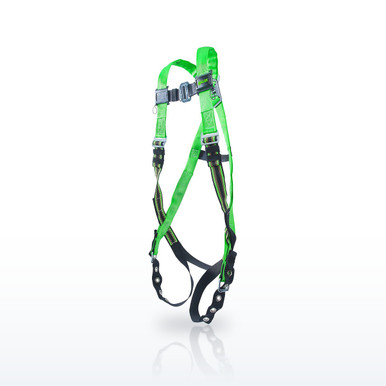
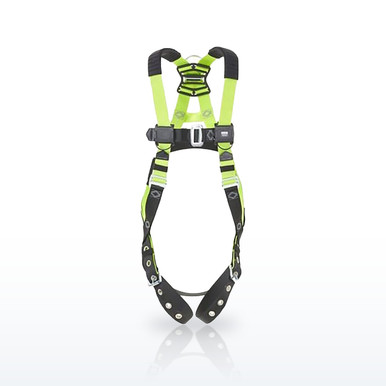
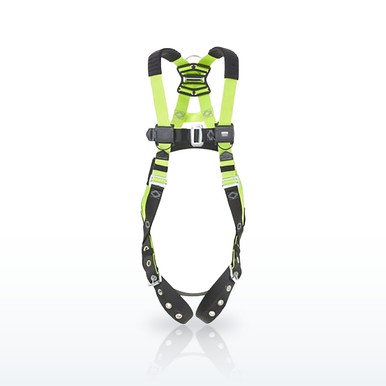
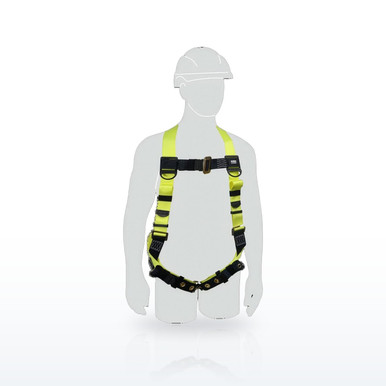
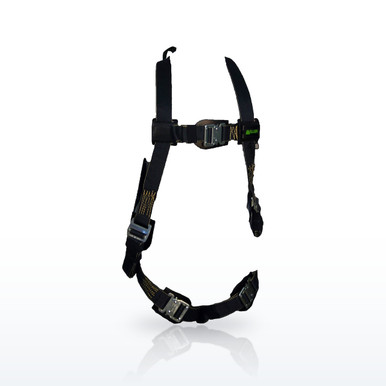
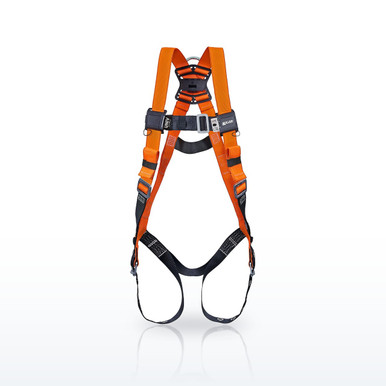
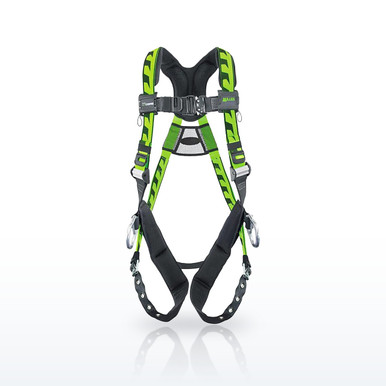
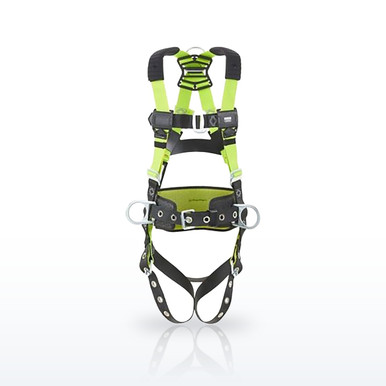
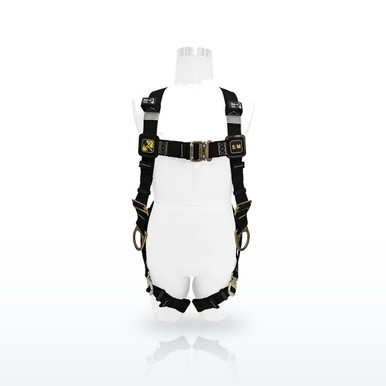
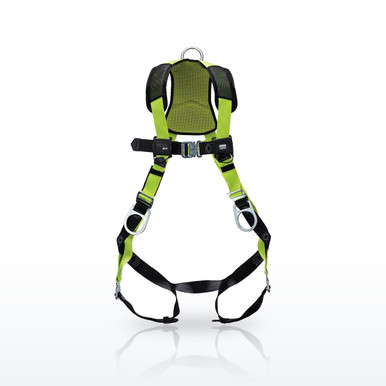
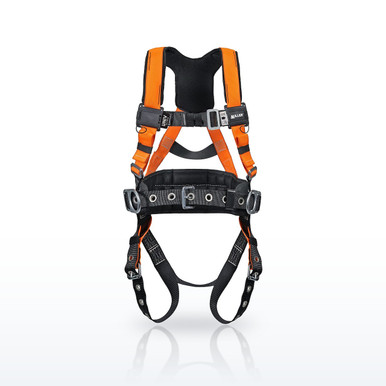
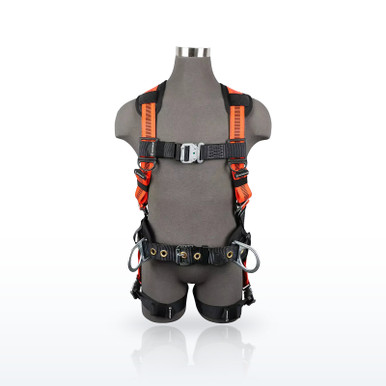
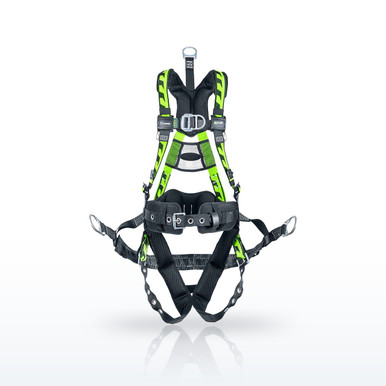
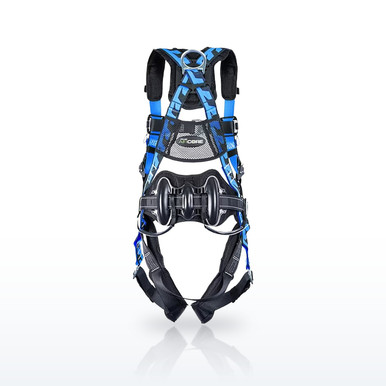
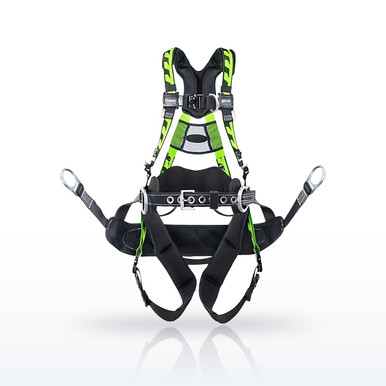
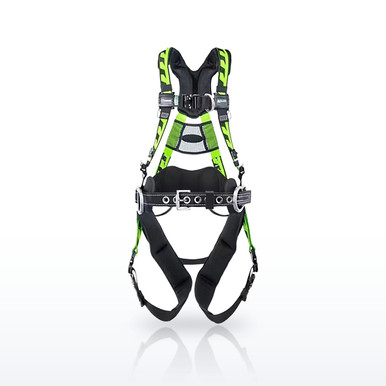
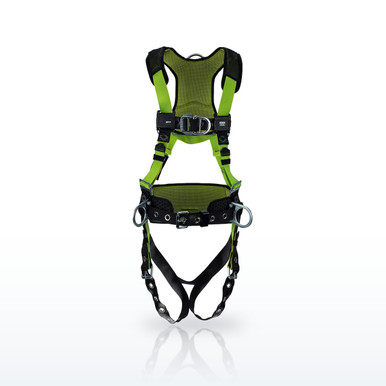
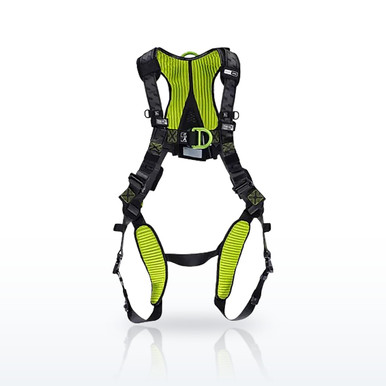
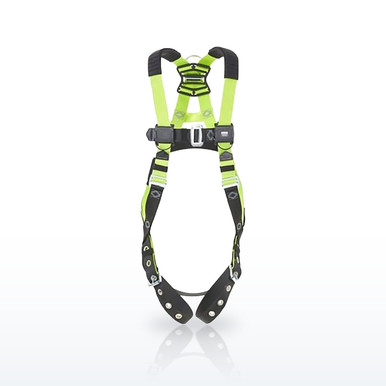
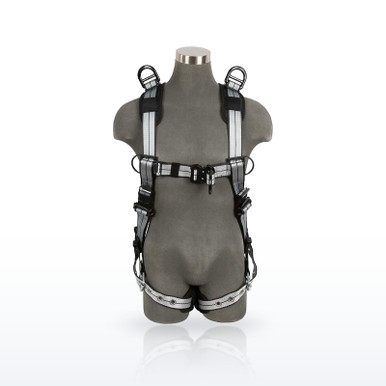
Retrieval harnesses with shoulder D-rings (Safewaze PRO and PRO+ Slate retrieval, Miller H700 with shoulder rings) and configurable 1D and 3D models are in the fall protection finder.
Questions people ask
Which D-ring is for fall arrest?
The dorsal ring in the center of the back. OSHA 1926.502(d)(17) and 1910.140(c)(22) require the attachment there, near shoulder level.
What are the side D-rings on a harness for?
Work positioning only, used as a pair with a positioning lanyard. They are not for fall arrest, and a positioning system must limit free fall to 2 feet (1926.502(e)(1)).
Can the chest D-ring be used for fall arrest?
Only where the dorsal ring is not practical and free fall is limited to 2 feet or less; OSHA 1910.140(c)(22) allows the pre-sternal position on that condition, and ANSI Z359.11 treats it as an alternative attachment. It is also the ladder climbing connection on many harnesses.
What is the front D-ring for?
Ladder climbing with a guided-type fall arrester on a rail or cable system, and positioning or rope access where the manual rates it.
What are shoulder D-rings for?
Rescue and retrieval, as a pair, with a spreader bar or Y-lanyard to a winch or SRL with retrieval. Not for fall arrest.
What does 3D mean on a harness?
Three D-rings: dorsal plus two side positioning rings. 1D is dorsal only; 4D and 5D add a sternal or front ring and one more that varies by model. Retrieval harnesses add a pair of shoulder rings.
How strong is a D-ring?
OSHA requires D-rings and snap hooks to have a minimum tensile strength of 5,000 pounds and to be proof tested to 3,600 pounds without cracking, breaking or deforming (1926.502(d)(3) and (d)(4)).
Can two snap hooks go on one D-ring?
Not unless the hook is a locking type designed for it. 1926.502(d)(6)(iii) prohibits a snap hook on a D-ring that already has another connector attached.
Standards and ratings on this page are as published in the documents named and by the manufacturers named. The employer’s hazard assessment and written program decide what applies at a given workplace. Verify a rating on the product and its spec sheet before use.