
How long is a safety harness good for? Service life and retirement
There is no expiration date in the OSHA rules or in ANSI Z359.11. A harness is good for as long as it passes inspection and has not arrested a fall, unless its manufacturer sets a product life in the manual, and the manual governs. What the rules do fix is the inspection schedule: the wearer checks the harness before each use, a competent person other than the wearer inspects and documents it at least once a year, and any harness that has taken the force of a fall comes out of service at once. Cut or frayed webbing, burns, chemical damage, cracked or bent hardware, a deployed load indicator or an unreadable label all retire it on the spot. Most harnesses on a working crew wear out in a few years; a harness kept clean, dry and out of the sun lasts longer.
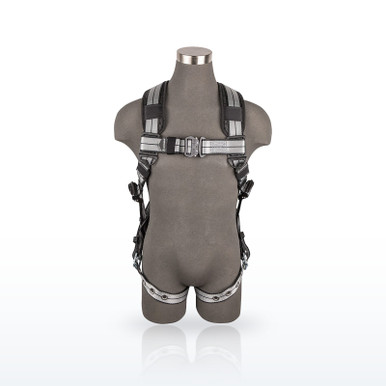
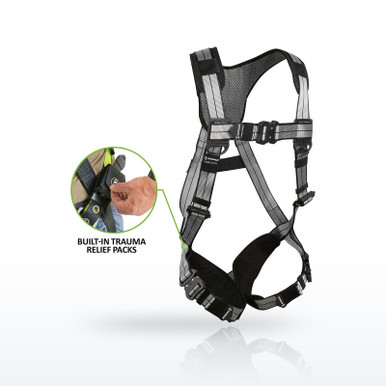
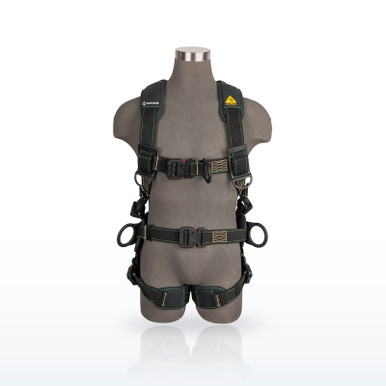
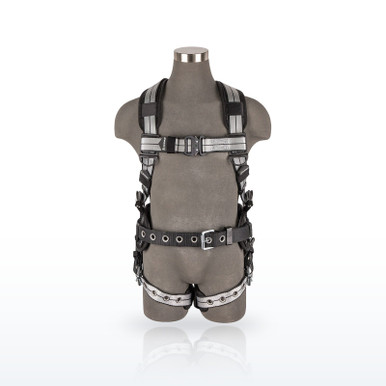
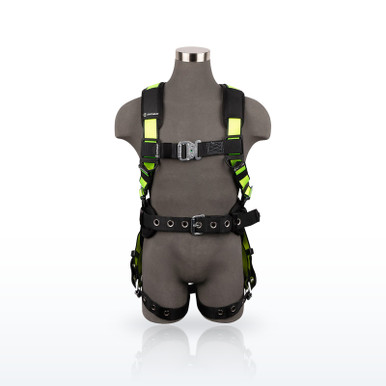
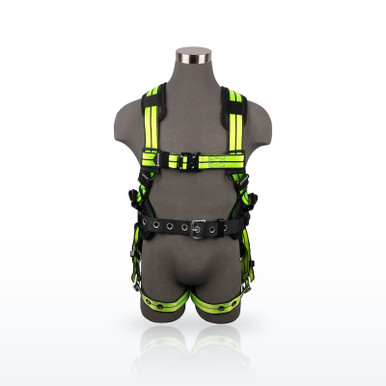
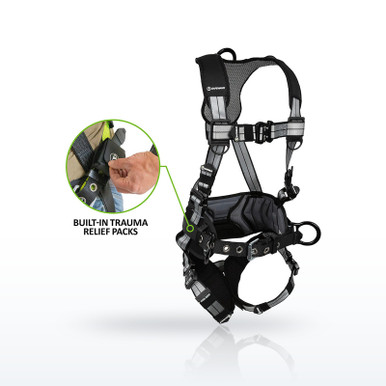
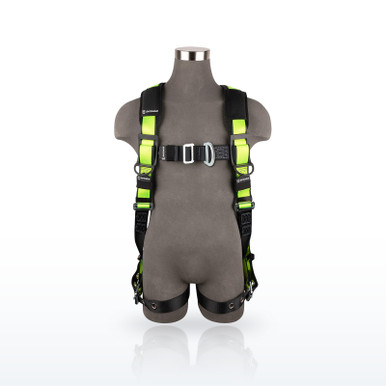 Safewaze PRO full body harnessANSI Z359.11, 130 to 310 lb capacity, 1D or 3D configurations
Why is there no expiration date on a harness? Because the thing that fails a harness is not age. It is wear, cuts, heat, chemicals, sunlight and the one event it is built for, arresting a fall. Two identical harnesses can leave the factory the same day; one spends three years on a roofing crew in the sun and is done, the other sits in a rescue cabinet for ten years and is still sound. So OSHA and the ANSI Z359 committee wrote the rules around inspection, not a calendar. The manufacturer can add a product-life limit in its manual, and when it does, that limit applies in addition to the inspection rules, never instead of them.
What do the rules actually require?
Four duties, all on the employer. None of them is a date.
Does OSHA or ANSI set a service life for harnesses?
No. Neither 1926 Subpart M nor 1910 Subpart I contains a number of years after which a harness must be retired, and ANSI Z359.11 does not either. Manufacturers say the same thing in their own words: MSA states there is no predetermined or mandated expiration date on fall protection harnesses, and that neither OSHA nor ANSI sets a specific time period for taking a harness out of service. The 5-year figure that circulates on jobsites is a rule of thumb some safety programs adopt, not a regulation.
29 CFR 1926.502(d) and 1910.140(c), which contain no service-life period; MSA Safety, Do fall protection harnesses have an expiration date (blog.msasafety.com); ANSI/ASSP Z359.11-2021 as reproduced in manufacturer manuals.What the manufacturer says does bind you. Each harness manual has a product-life section. Some manufacturers set no fixed life and let inspection decide; some set a maximum and some set a shorter interval for harnesses used in harsh conditions. The manual that came with the harness in your hand is the one that counts, and it is the first thing an OSHA inspector asks for after a fall.
Manufacturer user instructions for each harness (the product-life and inspection sections); 29 CFR 1926.502(d)(19) on competent-person determination after impact.What retires a harness on the spot?
- It arrested a fall. A deployed load indicator (the stitched fold on the dorsal strap that tears open under load) is proof, even if nobody saw the fall.
- Cut, frayed, abraded or broken webbing or stitching, anywhere.
- Burns, melted fibers, or hard glazed patches from heat, welding spatter or friction.
- Chemical damage: stiff, discolored or brittle webbing, or known exposure to acids, solvents or bleach.
- Cracked, bent, corroded or deformed D-rings, buckles or grommets, or a buckle that does not lock.
- An unreadable or missing label. Without the label you cannot show the model, capacity, standard or date of manufacture, and manufacturer inspection checklists call for the label to be present and legible.
- Modification of any kind: added holes, replaced hardware, sewing repairs. Harnesses are not repaired in the field.
- A failed or overdue competent-person inspection.
How do you make a harness last?
- Store it dry, dark and off the floor. Ultraviolet light is the main thing that ages polyester and nylon webbing. A harness that lives on a truck dashboard fades, and faded webbing is weaker webbing. Hang it in a bag or a cabinet, away from heat and chemicals.
- Clean it the way the manual says. Mild soap and water, air dry out of the sun. No solvents, no bleach, no pressure washer, no dryer. Grease and concrete dust hide damage and abrade fibers.
- Assign it to one person. A harness fitted to one worker gets adjusted once and inspected by someone who knows what it looked like last week. Shared harnesses get over-adjusted, dragged and lost.
- Keep the inspection record. Date, inspector, serial number, pass or fail. The annual competent-person inspection is only useful if you can produce it, and it tells you when a harness is nearing the end of its life before it fails a pre-use check.
- Write the retirement date in your program. If your company adopts a maximum life, say 5 years from first use, put it in the written fall protection program along with the manufacturer limit, and tag the harness with its in-service date so the field can see it.
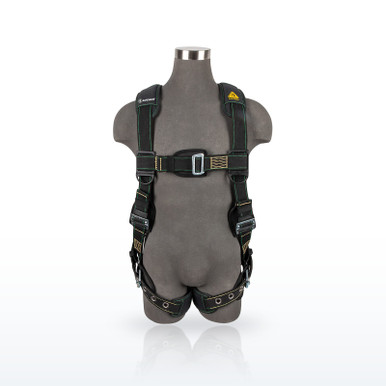
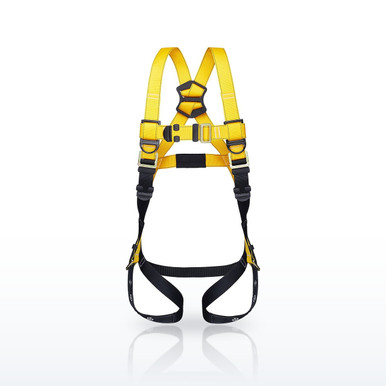
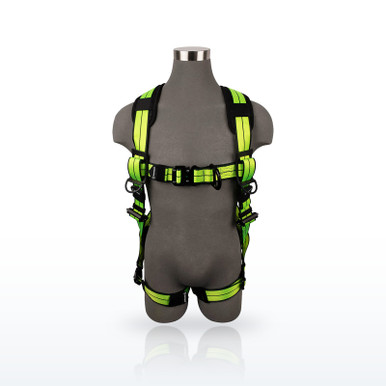
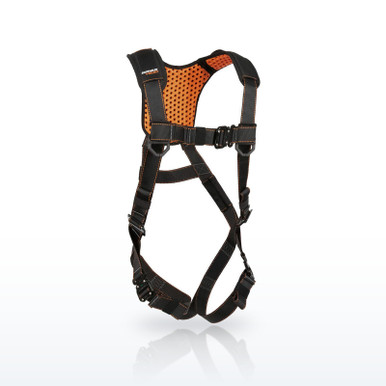
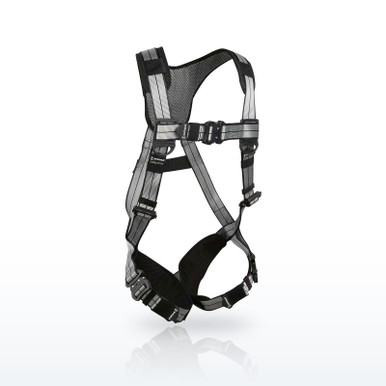
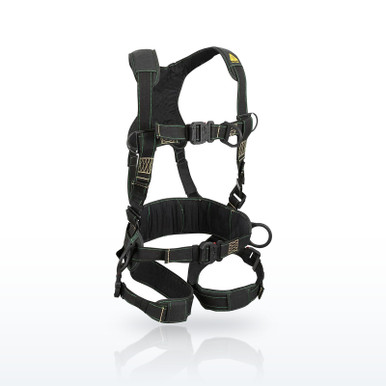
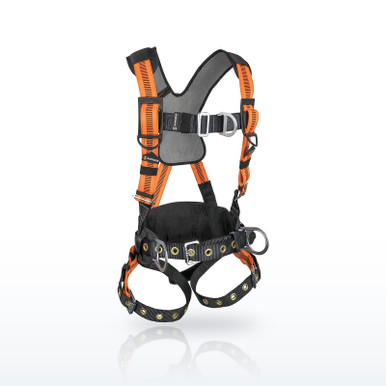
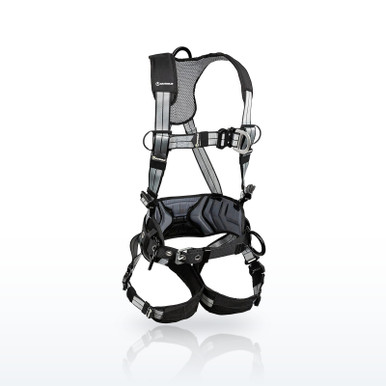
Full body harnesses built to ANSI Z359.11
22 items · prices liveThe standard shown is the one the manufacturer states for each harness. Capacity, D-ring configuration and sizing are on the product page and in the manual, where the product-life and inspection rules for that harness are printed. Contractor Direct orders ship free.
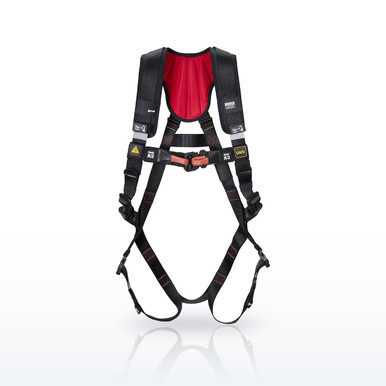
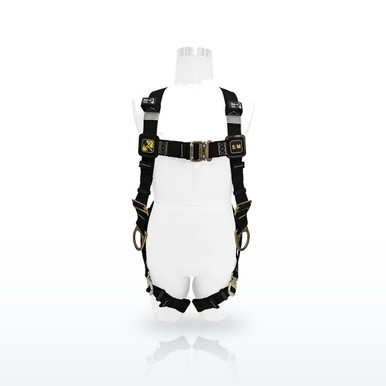
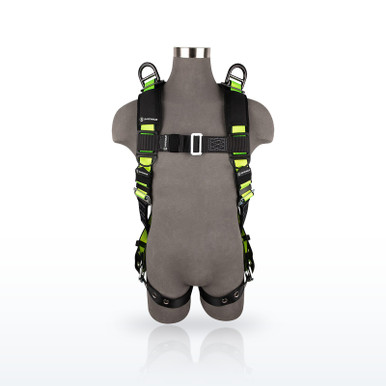
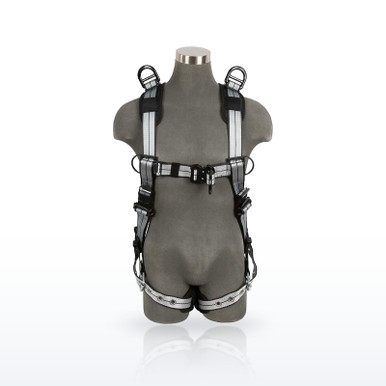
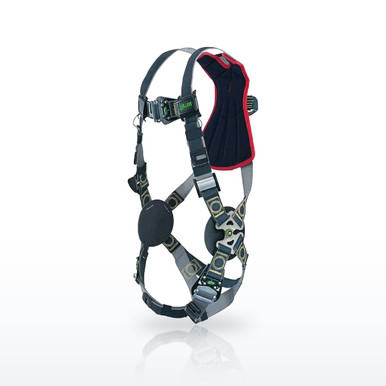
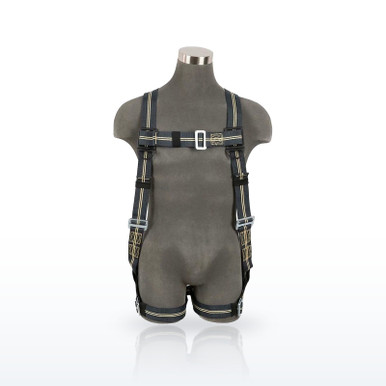
Lanyards, self-retracting lifelines and anchors have their own inspection and service-life rules; see each product manual and the fall protection finder.
Questions people ask
Do safety harnesses expire?
Not by regulation. OSHA and ANSI Z359.11 set inspection and removal rules, not a date. A manufacturer may set a product life in the manual, and that limit applies to its harness.
Is the 5-year rule real?
It is a common company policy, not an OSHA or ANSI requirement. If your written program adopts it, follow it; if the manufacturer sets a different limit, the shorter one applies.
How often must a harness be inspected?
By the wearer before each use (OSHA 1926.502(d)(21) and 1910.140(c)(18)), and by a competent person other than the wearer at least once a year, documented, under the ANSI Z359.11 requirements printed in the harness manual.
Can a harness be used after a fall?
No. It comes out of service immediately under 1926.502(d)(19) and 1910.140(c)(17), and MSA directs that a harness that has arrested a fall be labeled unusable until destroyed. A torn load indicator means it has arrested a fall.
Can I repair a cut harness?
No. Any cut, fray or burn in the webbing or stitching retires the harness. Field repairs are not permitted by any manufacturer.
What if the label is worn off?
Retire it. Without the label the harness cannot be identified for its standard, capacity or model, and manufacturer inspection checklists call for a legible label.
Does the date of manufacture matter?
It is the start point for any product-life limit the manufacturer sets and for your own records. It is on the label, and it is not by itself an expiration date.
What is the capacity of an ANSI Z359.11 harness?
ANSI Z359.11 recognizes a capacity range of 130 to 310 lb including clothing and tools. Many manufacturers also rate the same harness to 420 lb under OSHA; the product page and label show both where they apply.
Standards and ratings on this page are as published in the documents named and by the manufacturers named. The employer’s hazard assessment and written program decide what applies at a given workplace. Verify a rating on the product and its spec sheet before use.