
What is a davit arm, and when is it used for confined space entry?
A davit arm is a curved steel or aluminum arm on a base that reaches out over an opening so a winch line or a self-retracting lifeline can hang straight down the hole. It does the same job as a tripod, holding the line over a worker in a manhole, tank or vault so they can be lowered, raised and pulled out without anyone going in after them, but it mounts to one side of the opening, which is why it is used where a tripod’s three legs will not fit: on a tank top, a wall-mounted sleeve, a truck bed or a hatch beside a railing.
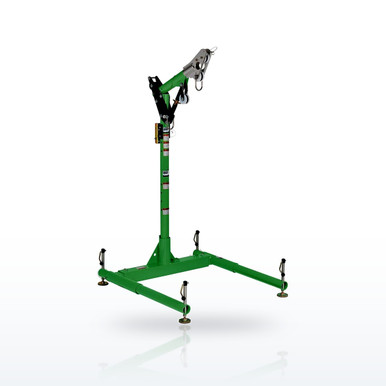 DBI-SALA Advanced 5-piece davit hoist systemDavit arm, mast, base, winch and SRL for confined space entry and retrieval
Why is a retrieval system required at all? More than half of confined-space deaths are would-be rescuers: a worker goes down, a coworker goes in after them, and the same atmosphere takes both. OSHA’s answer is non-entry rescue: the entrant wears a harness connected to a line that runs up to a winch or SRL on a tripod or davit outside the space, so an attendant can pull them out without entering. The davit or tripod is the anchor that makes that possible.
When does OSHA require a retrieval system?
The rule is for permit-required confined spaces, and the equipment must be in place before entry, not fetched after a collapse.
Davit vs tripod: what is the difference?
A tripod stands over the opening on three legs and holds the line at its apex. It sets up anywhere flat and is the common choice for manholes in a street or a yard. A davit arm mounts to a base beside or around the opening and cantilevers the line out over it. It takes less floor space, can be bolted to a permanent sleeve or socket so the arm is dropped in when needed, fits where a railing, curb or tank wall blocks a tripod’s legs, and can reach out over a wide hatch or a tank side. Both carry the same winches and SRLs and both are rated by their manufacturers as anchorages for retrieval and for fall arrest.
Manufacturer system data (DBI-SALA, Miller, Safewaze); ANSI/ASSP Z359.4 (assisted rescue and self-rescue systems).What are the parts of a davit system?
- Davit arm: the curved upper section with the line attachment at the tip; adjustable reach on most models.
- Mast or lower section: joins the arm to the base and sets the height.
- Base: portable (counterweighted or bolted to a plate), floor- or wall-mounted sleeve, core-drilled socket, vehicle hitch mount, or a mount that straddles the manhole frame. The base is what the whole rating depends on.
- Winch: a hand-cranked personnel winch for lowering and raising a worker, with a brake and a rated line, usually 50 to 100 feet.
- Self-retracting lifeline with retrieval: an SRL that arrests a fall and converts to a hand-cranked rescue mode to pull the worker up.
- Mounting brackets for the winch and SRL, and a pulley at the arm tip.
How is a davit rated, and what can it be used for?
Manufacturers rate a davit system as a whole, arm plus base, for two uses: as a retrieval and material-handling anchorage (typically 350 pounds for one person, with a higher material rating) and as a personal fall arrest anchorage, which under OSHA means it supports 5,000 pounds per attached worker or is designed as part of a complete system by a qualified person. A portable base must be set up exactly as the manufacturer’s instructions say, on a surface that will hold the counterweight or the bolts; a wall sleeve or socket must be installed and certified by a qualified person before first use. The rating on the label applies only when every part is from the same manufacturer’s system.
29 CFR 1926.502(d)(15) (anchorage: 5,000 lb per employee or designed by a qualified person at a safety factor of two); 29 CFR 1910.140(c)(13); manufacturer instructions.How is a davit used for an entry?
- Set the base. Portable base positioned and counterweighted or bolted per the instructions; sleeve or socket mounts checked for the installation tag.
- Mount the mast and arm. Pins in, reach set so the line hangs plumb over the center of the opening.
- Mount the winch and the SRL. Winch on its bracket, line run over the tip pulley; SRL with retrieval mounted so it also hangs over the opening.
- Connect the entrant. Full-body harness; retrieval line to the dorsal D-ring or a retrieval D-ring at the shoulders, so the body is pulled up head-first through the opening.
- Attendant on the winch. The attendant stays at the opening, keeps the line taut, and is trained to crank the entrant out on a loss of contact or an alarm. No one enters to rescue.
- Inspect before each use. Arm, base, pins, winch brake, line and SRL; anything that has arrested a fall or shows damage is out of service.
Where a davit is used instead of a tripod
- Tank and vessel tops where the hatch is near the edge.
- Vaults and lift stations with a permanent sleeve beside the hatch, so the arm sets up in minutes.
- Openings next to a wall, a railing or equipment that blocks tripod legs.
- Truck- or trailer-mounted systems for a utility crew that visits many manholes.
- Wide pits where a tripod’s legs would have to straddle too far.
Davit and tripod systems for confined space entry
20 items · prices liveEach system is rated by its manufacturer for retrieval and, where stated on the product page, as a fall arrest anchorage. Bases, winches and SRLs must come from the same manufacturer’s system to carry the rating. Contractor Direct orders ship free.
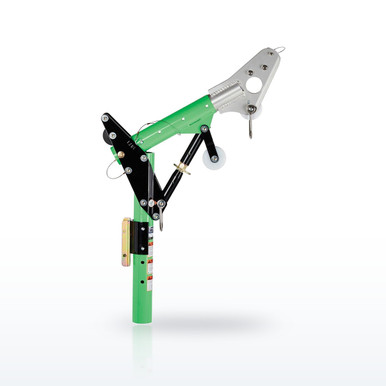
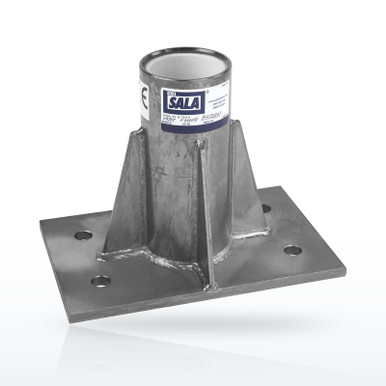
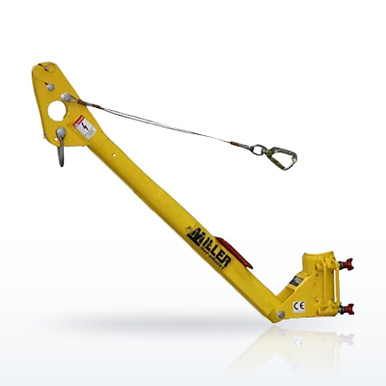
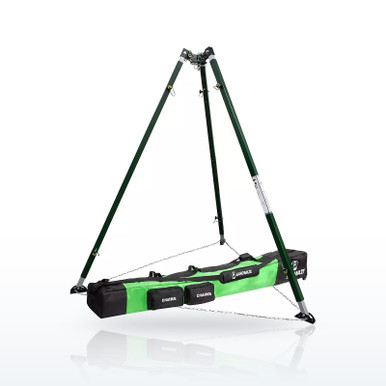
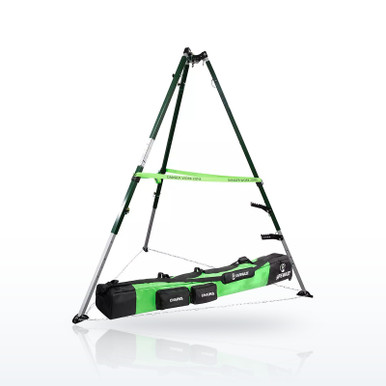
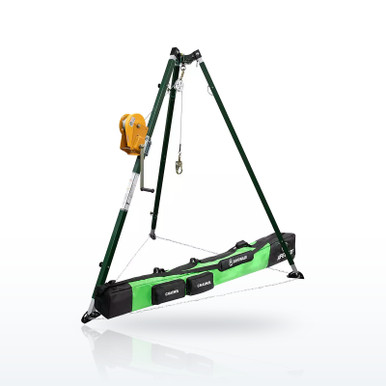
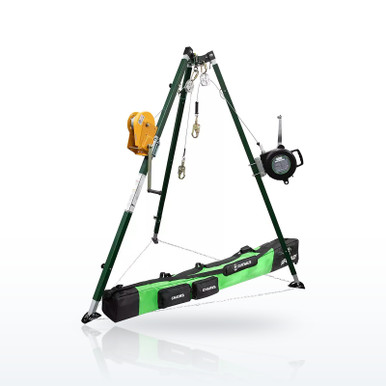
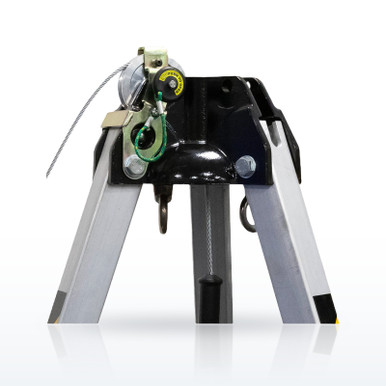
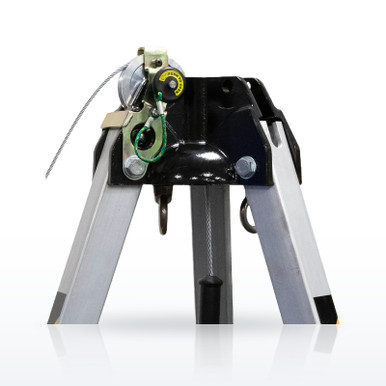
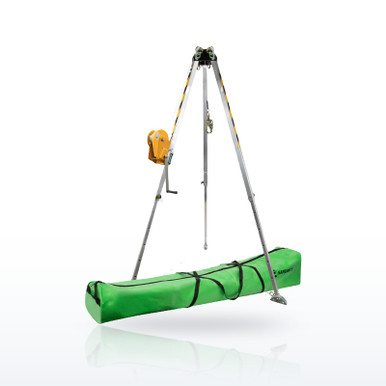
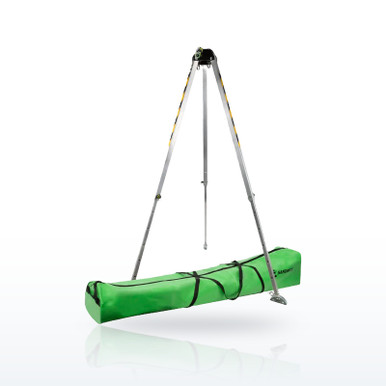
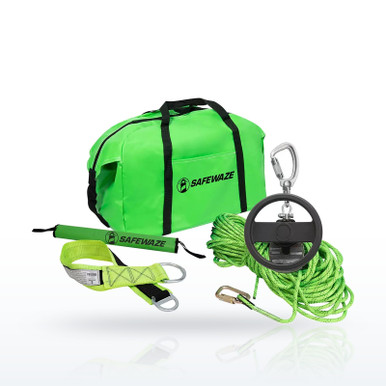
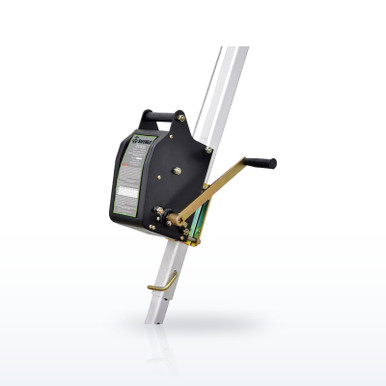
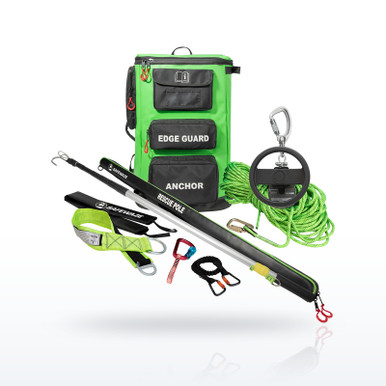
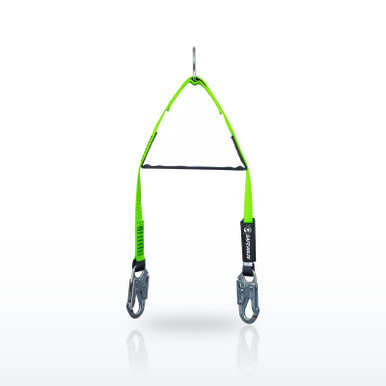
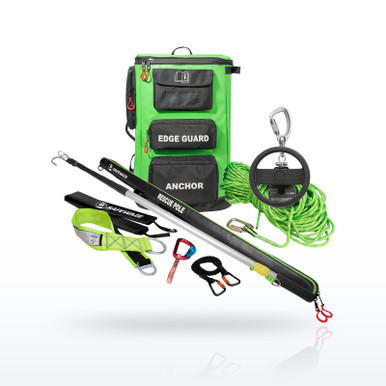
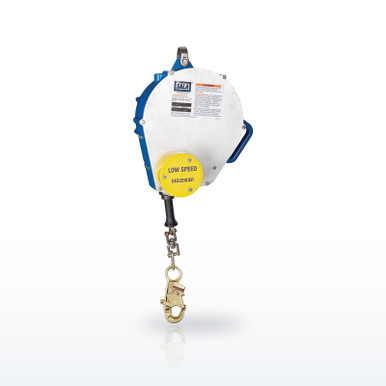
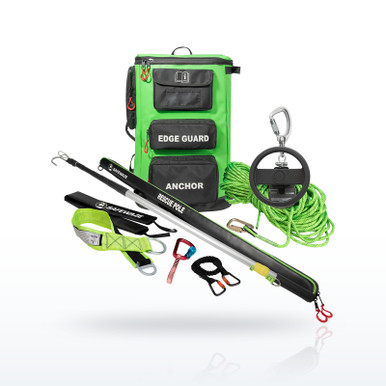
Harnesses with retrieval D-rings, winches and retrieval SRLs are on the fall protection finder under confined space.
Questions people ask
What is a davit used for?
To hold a winch line or SRL over a confined-space opening so a worker can be lowered, raised and pulled out from outside; also as an anchorage for fall arrest at the opening when the manufacturer rates it for that.
What is the difference between a davit and a tripod?
A tripod stands over the hole on three legs; a davit mounts beside it on a base and reaches over. Same winches and SRLs, same job; the davit fits where legs will not.
Does OSHA require a tripod or davit for confined space entry?
OSHA requires a retrieval system for permit-space entry unless it would add risk or not help, and a mechanical device for vertical spaces over 5 feet. A tripod or davit with a winch is how that requirement is met. (1910.146(k)(3).)
How deep does a space have to be before a winch is required?
More than 5 feet vertical. (1910.146(k)(3)(ii).)
Where does the retrieval line attach on the harness?
At the center of the back near the shoulders, above the head, or at another point the employer can show presents a profile small enough to get through the opening. (1910.146(k)(3)(i).)
Can a davit be used for fall arrest?
Only if the manufacturer rates that system, with that base, as a fall arrest anchorage. The product page states it where it applies.
What does a davit system weigh and how long does setup take?
Portable aluminum systems break into pieces of roughly 20 to 60 pounds each and set up in a few minutes with a sleeve or base already in place; the product page lists each component’s weight.
Related guides
What is a confined space? The OSHA definitionAnd what makes one permit-requiredConfined space rescue: non-entry retrievalWhat 1910.146(k) requiresWhat is a self-retracting lifeline (SRL)?And how it differs from a lanyardWhat is an anchor point, and what must it hold?The 5,000-pound ruleStandards and ratings on this page are as published in the documents named and by the manufacturers named. The employer’s hazard assessment and written program decide what applies at a given workplace. Verify a rating on the product and its spec sheet before use.