
High-visibility hard hats and lamp brackets: what the standard says
ANSI/ISEA Z89.1 has an optional high-visibility designation, marked HV after the Type and Class. To carry it, the shell material must test to one of three fluorescent colors (yellow-green, orange-red or red) within the chromaticity limits in the standard’s Table 1, and reflect at least a minimum share of the light that hits it. A hard hat sold in a hi-vis color without the HV mark has not been through that test; it is a color choice, not a rating. Lamp brackets and other accessories are allowed, with two conditions: an accessory the manufacturer installs must not make the hat fail any test, and on a Class G or E hat the electrical test is run with permanent brackets in place, so the bracket cannot be a metal part that goes through the shell. Reflective tape and stickers with metal in them go on a Class G or E hat only with the maker’s permission.
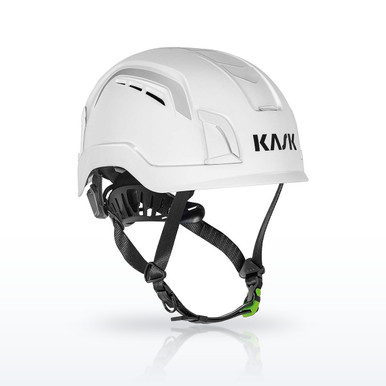 Kask Zenith X Air Hi-Viz vented safety helmetType I, Class C; hi-vis color as labeled by Kask
Why does the standard bother with color? A hard hat is the highest point on a worker and the first thing a driver, an operator or a crane signal person sees. The hi-vis vest standard, ANSI/ISEA 107, covers the garment, not the head. Z89.1 added the HV option so that a hard hat could be bought and specified as hi-vis on the same footing as a vest: a defined color measured by instrument, not a shade of yellow that looks bright on the shelf and fades to beige after a season of sun. Lamp brackets exist for the opposite reason, so the worker can see; the standard’s job there is to make sure the bracket does not take away the protection the hat was bought for.
What does HV on a hard hat mean?
The optional high-visibility designation, in pieces.
What does the standard say about lamp brackets and other accessories?
Three things. First, an accessory the manufacturer installs must not cause the hat to fail any requirement of the standard: the hat with its bracket still has to pass flammability, force transmission, penetration and, if rated, the electrical test. Second, when a Class G or Class E shell goes into the electrical insulation test, permanently attached accessories, and the standard names welding helmet brackets, lamp brackets and chin straps as examples, stay on the sample during the test. A bracket that is riveted through the shell with metal would conduct and fail the shell, which is why electrically rated hats use molded-in or clip-on brackets with no metal through the shell. Third, the standard’s user appendix tells wearers to use only accessories the helmet maker says are compatible, never to drill, glue or cut the shell to fit one, and to contact the helmet or accessory maker when in doubt.
ANSI/ISEA Z89.1-2009 §5 (Accessories); §9.7.4 (permanently attached accessories, including lamp brackets, retained during electrical testing); Appendix A7 (accessory selection; never alter or modify the helmet). The 2014 edition adds that whoever claims an accessory is compatible is responsible for providing justification on request.In practice that leaves three ways to put a light on a hard hat. A molded lamp bracket from the hat’s maker, sold as a kit for that model, which was on the hat when it was tested. A clip that grips the brim or the cap edge from outside and does not touch the shell’s interior or pierce it, which the hat maker or the light maker lists as compatible. Or a headlamp strap over the shell, which some hat makers accept and some do not, because a strap over a vented shell can shift the hat. The one method the standard and every maker rule out is drilling the shell.
ANSI/ISEA Z89.1-2009 Appendix A7; MSA V-Gard user instructions (use only MSA-supplied or approved accessories; never alter or modify the helmet); 3M H-700/H-800 user instructions (only 3M accessories tested with 3M hard hats).Can you put reflective tape on a hard hat?
The standard’s caution is specific to Class G and Class E hats. Identification markers on those shells must be attached without making holes and without metal parts, and metallic-based markers, which the standard says include some reflective tapes, metal foil labels and foil hot stamps, should be applied only with the helmet manufacturer’s authorization. The reason is the same as for brackets: a strip of metal on the shell can give the test voltage a path. On a Class C hat there is no electrical rating to protect, and the remaining concern is that a decoration must not hide a dent, crack or burn from inspection.
ANSI/ISEA Z89.1-2009 Appendix A7 (identification markers on Class G and E helmets: no holes, no metal parts; metallic reflective tapes and foil labels only with the manufacturer’s authorization; decorations must not obscure damage).OSHA takes the same line. Its 2009 letter on stickers and paint says neither 1910.132 nor 1910.135 bans them outright, but stickers and paint may affect electrical resistance and may hide defects, so they are acceptable when the manufacturer authorizes them or the employer can show the hat is still as protective, and when they do not reduce the ability to spot damage. Reflective kits sold by the hat’s own maker for a named model meet the first test by definition; a roll of tape from the truck does not.
OSHA standard interpretation, October 27, 2009 (adhesive stickers and paint on protective helmets), citing 29 CFR 1910.132(a) and 1910.135.Does OSHA require a hi-vis hard hat?
- No. OSHA requires a protective helmet where there is a potential for head injury from falling objects, and an electrically rated one near exposed conductors. Neither 1910.135 nor 1926.100 says anything about shell color.
- Hi-vis is a site or contract rule. Highway and rail owners, utilities and many general contractors write hi-vis hard hats into their specifications; the HV mark is how a buyer can prove the hat meets a measured color rather than a catalog photo.
- ANSI/ISEA 107 is the hi-vis garment standard. It does not rate hard hats, and a hard hat does not count toward a vest’s class or its background material area.
- Hi-vis color fades. The standard’s own appendix says ultraviolet light dulls the surface and chalks it; a fluorescent shell that has gone pale is past the point where its color is doing any work, and the fading is also a replacement sign in its own right.
Hi-vis hard hats, reflective kits and lamp mounts
16 items · prices liveHard hats below are sold in a hi-vis color as labeled by the manufacturer; whether a model carries the Z89.1 HV designation is on the manufacturer’s spec sheet and inside the shell. The class shown next to each hat is the manufacturer’s own. Reflective kits and lamp mounts are each sold for the models the maker names on the product page. Free shipping on orders over $199.
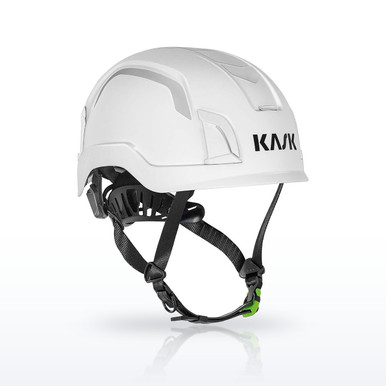
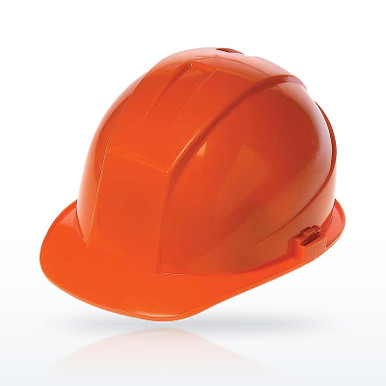
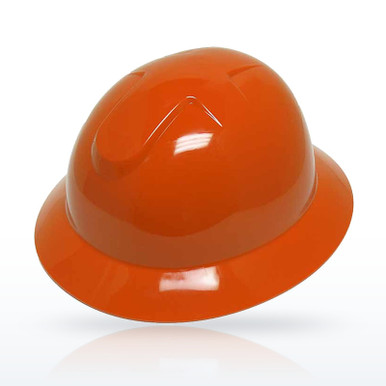
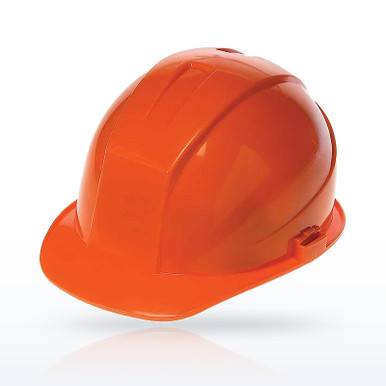
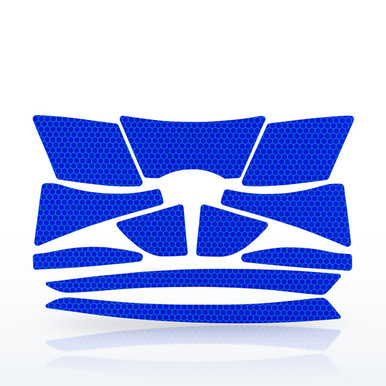
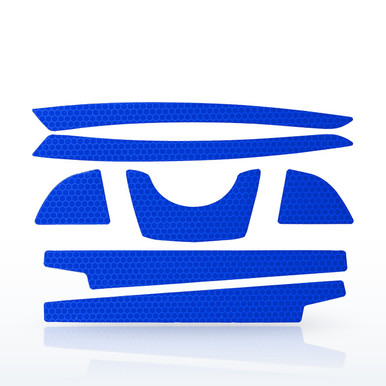
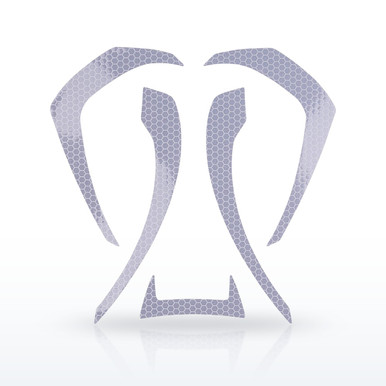
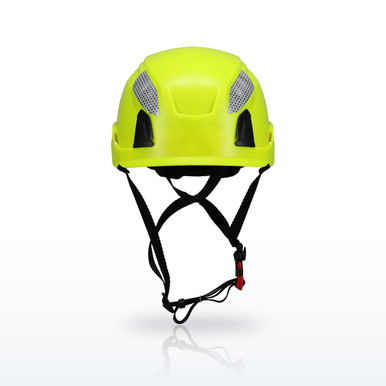
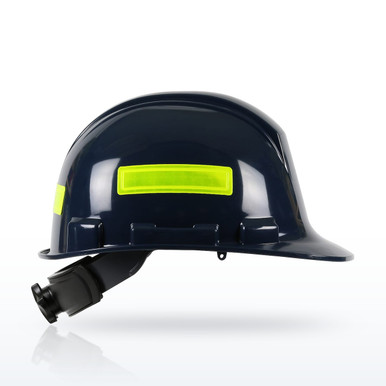


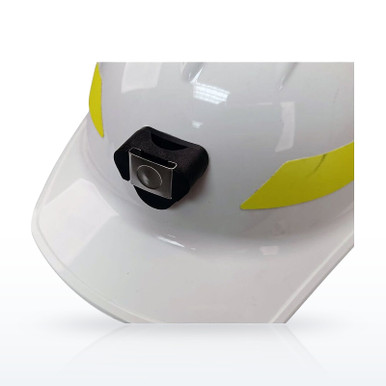
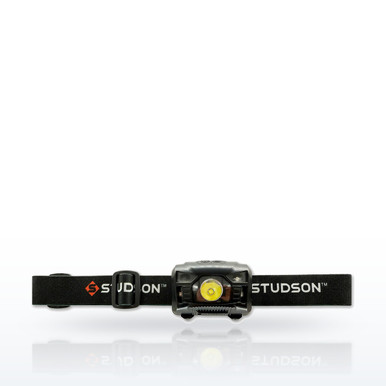
Every model in the hard hat finder lists its colors on the product page; most are offered in hi-vis yellow or orange.
Questions people ask
What does HV mean on a hard hat?
High visibility, an optional ANSI/ISEA Z89.1 designation. The shell material tested to one of three fluorescent colors within the chromaticity limits in Table 1 and above the minimum luminance factor for that color.
Is a yellow hard hat the same as an HV hard hat?
No. A yellow or lime shell without the HV mark has not been tested for color. Only a hat marked HV inside the shell has passed the Z89.1 color test.
Does OSHA require hi-vis hard hats?
No. OSHA requires head protection against falling objects and, near conductors, an electrically rated hat. Hi-vis color is a site, owner or contract requirement.
Can I put a lamp bracket on a Class E hard hat?
Only one the hat maker supplies or lists as compatible. The electrical test is run with permanent brackets on, and metal through the shell would fail it. Never drill the shell.
Can I put reflective tape on a hard hat?
On a Class G or E hat, metallic reflective tape goes on only with the manufacturer’s authorization, with no holes and no metal parts. On any hat, tape must not cover damage. Makers sell reflective kits cut for their own models.
Does a hi-vis hard hat count toward my ANSI 107 vest class?
No. ANSI/ISEA 107 rates garments. A hard hat is not part of the garment’s background or retroreflective area.
Where are the optional marks printed?
Inside the shell after the Type and Class, in a fixed order: the reverse-donning arrow, LT for lower temperature, HV for high visibility.
What is the LT mark?
Lower temperature. The hat was impact-tested after conditioning at minus 30 °C (minus 22 °F) for four hours instead of the standard minus 18 °C (0 °F).
Standards and ratings on this page are as published in the documents named and by the manufacturers named. The employer’s hazard assessment and written program decide what applies at a given workplace. Verify a rating on the product and its spec sheet before use.