
How to put on a safety harness and check the fit
Hold the harness by the back D-ring and shake it so the straps hang free and untwisted. Put it on like a jacket, one arm at a time. Reach between your legs for each leg strap, bring it up and buckle it on the same side. Buckle the chest strap. Then adjust: shoulder straps to the same length so the back D-ring sits between your shoulder blades, chest strap centered on the chest a hand’s width below the shoulders, leg straps snug enough that you can slip a flat hand under them but not a fist. Tuck the loose ends in the keepers, empty your pockets, and have a coworker check the back. A harness that fits wrong can let you slide out or hang badly in a fall, so the check matters as much as the buckles.
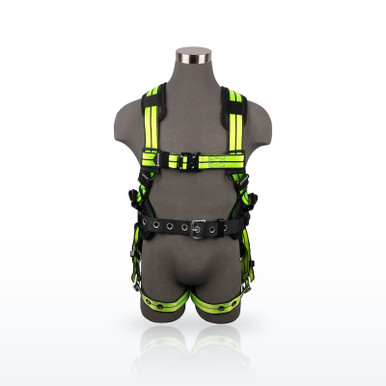
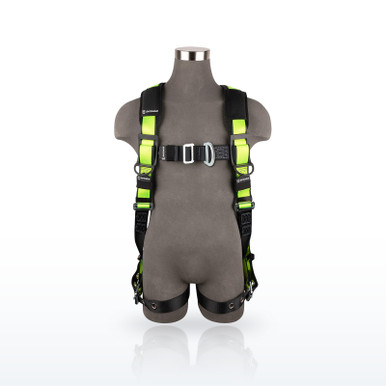
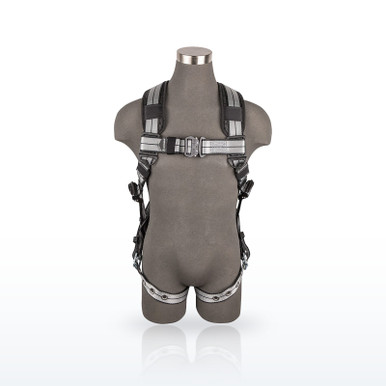 Safewaze PRO+ Slate full body harnessANSI Z359.11, dorsal D-ring, quick-connect buckles
Why does fit matter so much? The harness is designed to catch you at the back D-ring and spread the force over the thighs, pelvis, chest and shoulders. That only happens if the D-ring is where the design puts it and the straps are tight enough to hold you in. A loose chest strap lets the shoulder straps spread in a fall, and the worker can slip out headfirst. Loose leg straps let the body drop until the straps catch under the arms or at the groin. A low D-ring tips the worker forward. General industry writes the result into the rule: the system must hold the employee without the straps contacting the neck and chin. Every fitting step below exists to keep the harness working the way it was tested.
What are the fit checks?
Do these after the buckles are closed, every time. A coworker checks the back.
How do you put on a harness?
- Inspect it first. Webbing, stitching, buckles, D-rings and the label, per the manufacturer’s inspection list. Anything cut, frayed, burned, corroded, bent or missing, or a deployed load indicator, and the harness is tagged and removed from service. OSHA requires this inspection before each use.
- Unbuckle everything and shake it out. Hold the harness by the dorsal D-ring at arm’s length and shake it so the straps hang freely and untwisted. Make sure none of the straps are tangled.
- Shoulders. Slip the harness over your arms and onto your shoulders like a jacket, with the D-ring at your back. Check the straps still hang free and nothing is twisted across your chest.
- Legs. Reach between your legs, grasp the leg strap on your left, bring it up and connect it to the buckle on your left hip. Repeat on the right. Buckle types differ (pass-through, tongue, quick-connect); the harness instructions show yours.
- Chest strap. Connect the chest strap buckle to its mate on the other side and adjust it so the shoulder straps are held taut. If the harness has a waist belt, buckle it now.
- Adjust the torso. Standing straight, pull the vertical torso adjusters on both sides to the same length until the harness is snug and the back D-ring sits between your shoulder blades. Center the chest strap on the lower chest.
- Re-adjust the legs. Snug each leg strap: a flat hand slides under, a fist does not. Leave at least 3 inches of webbing past each buckle.
- Keepers and pockets. Tuck every loose end into its keeper. Empty your pockets.
- Tug and buddy check. Pull up on the shoulder straps and down on the adjusters to confirm they are locked. Have a coworker confirm the D-ring is centered, the chest strap is at mid-chest, the sub-pelvic strap is under the seat and nothing is twisted. Then connect to the anchor at the dorsal D-ring.
Donning a harness may take a coworker’s help, and the manufacturers say so. The whole routine takes about a minute once it is habit, and the buddy check is where the mistakes get caught: a D-ring that has slid to one side, a chest strap at the collarbone, a leg strap routed outside the sub-pelvic strap.
What size harness do you need?
Harness sizing charts are built on height and weight, and every manufacturer draws the lines differently: a universal size covers most adults in one brand and is split into small/medium, large/extra large and 2XL in another. Size by the chart on the product page, then confirm by fit: if the torso adjusters are at the end of their travel, the chest strap cannot reach mid-chest, or the leg straps will not go snug with 3 inches of tail, it is the wrong size. The capacity on the label (130 to 310 pounds under ANSI, up to 420 under OSHA on harnesses tested for it) is a separate number from the size and includes clothing and tools.
ASSP, What the updated Z359.11 standard means for full body harnesses (sizing charts based on height and weight); manufacturer sizing charts and capacity statements for the harnesses listed below; 29 CFR 1926.502(d)(16) note on the 310-pound test weight.What do the D-rings and the label tell you?
The dorsal D-ring is the fall arrest attachment; OSHA puts it in the center of the back near shoulder level. Side D-rings at the hips are for positioning only. A front (sternal) D-ring is for ladder climbing systems, rescue and, in general industry, fall arrest when free fall is limited to 2 feet. Shoulder D-rings are for retrieval. ANSI Z359.11-2021 requires a pictogram on the harness label showing the approved use of each attachment, a visual indicator that deploys if the harness has arrested a fall, and a warning on any built-in D-ring extender. Reading the label is part of putting the harness on: it tells you where to clip, and the indicator tells you whether the harness has already done its job once.
29 CFR 1926.502(d)(17); 1910.140(c)(22); ANSI/ASSP Z359.11-2021 pictogram, visual indicator and D-ring extender requirements, as summarized by 3M Fall Protection.Full-body harnesses built to ANSI Z359.11
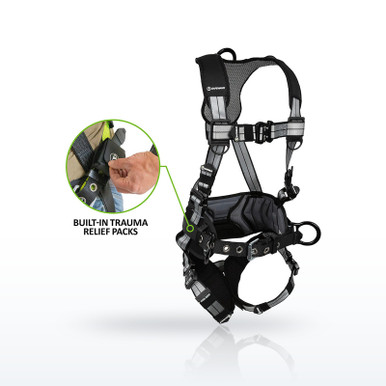
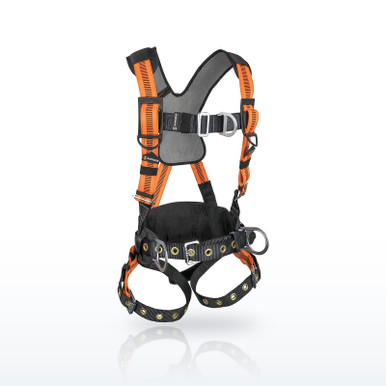
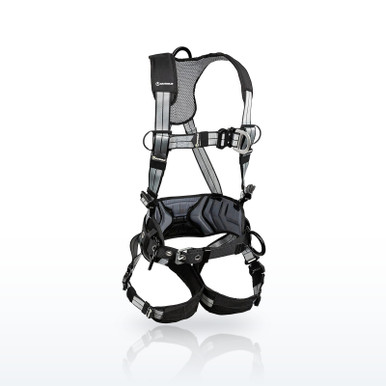
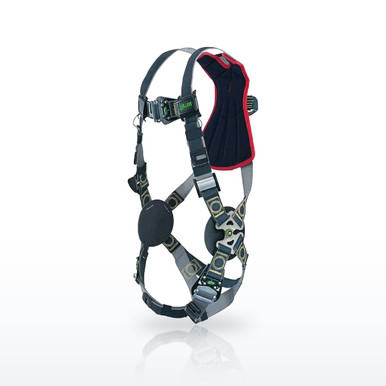
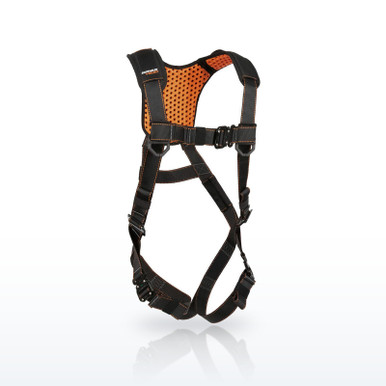
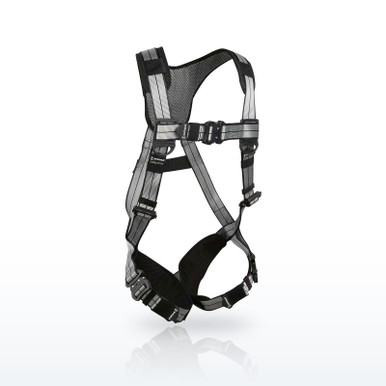
20 items · prices liveEach harness is listed by its manufacturer as meeting ANSI/ASSP Z359.11. Sizes, buckle types and the D-ring configuration are on the product page; fit by the manufacturer’s chart and the checks above. Contractor Direct orders ship free.
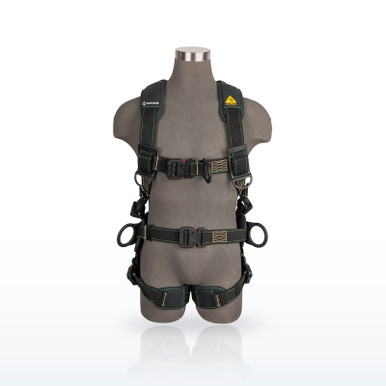
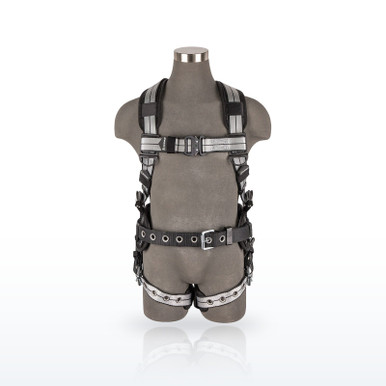
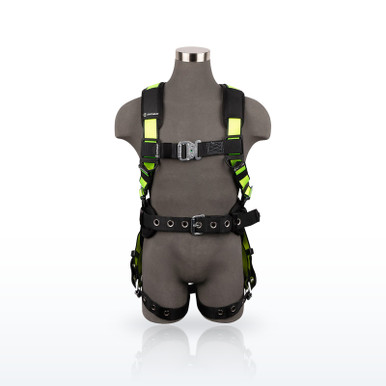
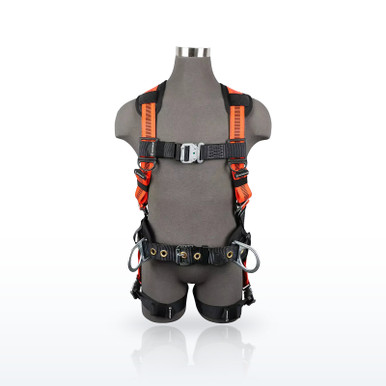
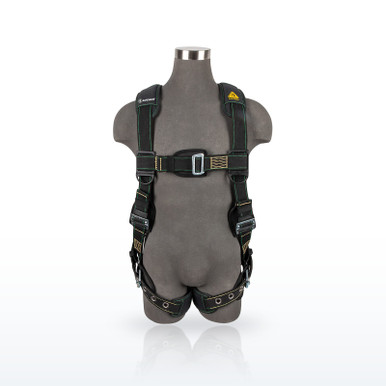
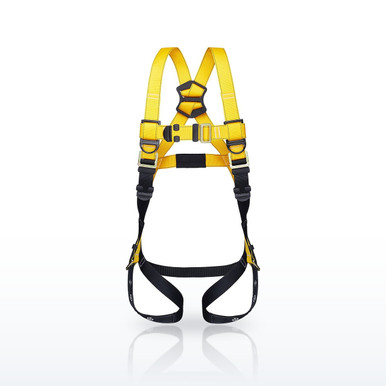
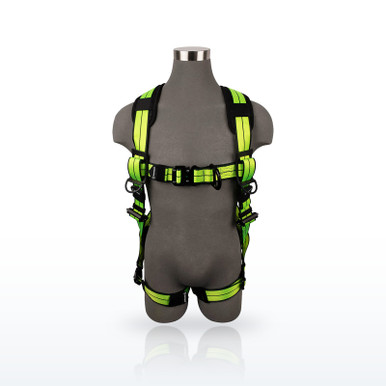
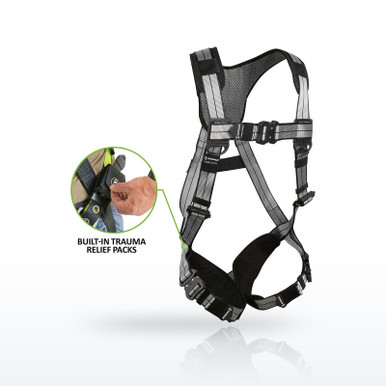
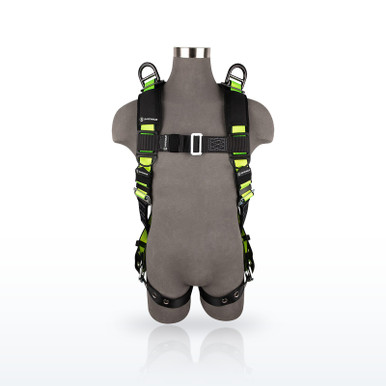
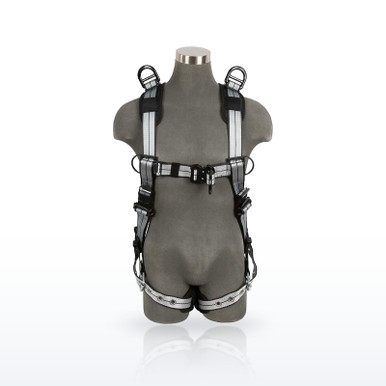
Harnesses from Miller, DBI-SALA, MSA and Protecta, and sizes beyond those shown, are on the fall protection finder.
Questions people ask
Where should the D-ring be on a safety harness?
The back D-ring sits in the center of the back between the shoulder blades, which is where OSHA requires the fall arrest attachment: center of the back near shoulder level. (1926.502(d)(17).)
Where should the chest strap be?
Centered on the lower chest, about 6 inches below the shoulders, between the pectoral muscles. Not at the throat, not at the stomach.
How tight should harness leg straps be?
Snug: you can just slip a flat hand under the strap. If your hand will not go under, it is too tight; if your fist goes under, too loose.
How much strap should hang past the buckle?
At least 3 inches on the leg straps, with the loose end tucked into the keeper.
Can you put on a harness by yourself?
Yes, but the manufacturers note it may take help, and a coworker should check the back: D-ring centered, nothing twisted, chest strap at mid-chest.
Why empty your pockets?
In a fall, objects in your pockets can be trapped between the webbing and your body and injure you. The 3M fitting instructions say to remove them.
Does OSHA say how a harness must fit?
OSHA sets the attachment point and requires inspection before each use; general industry adds that the system must hold the employee without the straps touching the neck and chin. The fit rules come from the manufacturer’s instructions, which OSHA expects you to follow.
What if the harness has caught a fall before?
Its visual load indicator will have deployed. Remove it from service; it cannot be used again until a competent person inspects it and finds it undamaged. (1926.502(d)(19).)
Standards and ratings on this page are as published in the documents named and by the manufacturers named. The employer’s hazard assessment and written program decide what applies at a given workplace. Verify a rating on the product and its spec sheet before use.