
What is suspension trauma, and what are trauma relief straps for?
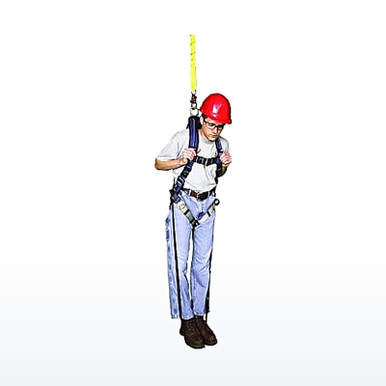
Suspension trauma is what happens when a person hangs upright and still in a harness after a fall. The leg straps press on the veins, the legs stop moving, and blood pools below the heart instead of returning to it. The brain is starved, the worker faints, and a fainted worker cannot move or lie down, so the pooling gets worse. OSHA’s bulletin says it can lead to unconsciousness and then death in less than 30 minutes. That is why OSHA requires the employer to provide for prompt rescue after a fall. Trauma relief straps are a pair of webbing loops stowed on the harness; after a fall the worker deploys them, stands in them, and pumps the legs, which keeps blood moving while the rescue is organized.
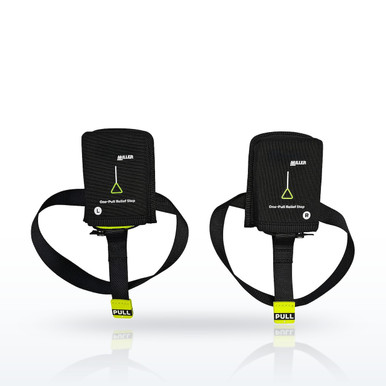
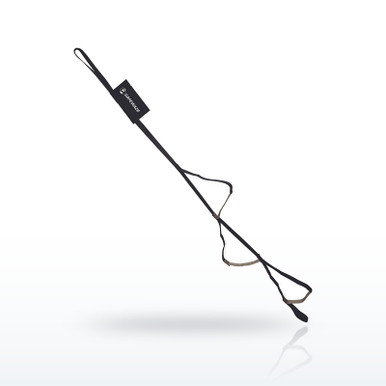 Safewaze FS902 suspension trauma stepsHarness-mounted relief straps, deployed by the worker after a fall
Why is hanging still so dangerous? Standing, your leg muscles squeeze the veins every time you shift your weight and push blood back up to the heart. Hanging in a harness, the legs dangle, the muscles are idle, and the leg straps add pressure where the veins run. Blood collects in the legs, the heart has less to pump, blood pressure falls, and the brain gets less oxygen. OSHA’s bulletin calls this orthostatic intolerance; the medical term is venous pooling. A standing person who feels it faints and falls flat, which fixes the problem. A hanging person faints and stays upright, which does not. That is the trap the bulletin was written about, and it is why the rescue rule is a clock, not a checklist.
What does OSHA’s bulletin say?
The Safety and Health Information Bulletin is guidance, not a standard, but it is the document OSHA points to and the basis of most rescue plans.
What does OSHA require, as opposed to advise?
The rule is one sentence: the employer shall provide for prompt rescue of employees in the event of a fall or shall assure that employees are able to rescue themselves. General industry says the same. The bulletin exists to explain what prompt means in practice: a harness is not a safe place to wait, and a plan that amounts to calling 911 and hoping does not meet the duty on a site where the fire department is 20 minutes out. The rescue plan has to put a specific means of getting the worker down, by self-rescue, by the crew, or by equipment on site, within the time the bulletin describes.
29 CFR 1926.502(d)(20); 29 CFR 1910.140(c)(21); OSHA SHIB 03-24-2004 on prompt rescue and self-rescue.The bulletin also ties in training. Workers who use fall arrest must be trained in the system, and the bulletin adds the specific instruction to pump the legs and use footholds if self-rescue is impossible or rescue will be delayed. The attendant’s job is to keep the worker talking, watch for the signs, and start the rescue, not to wait for a supervisor.
29 CFR 1926.503(a); OSHA SHIB 03-24-2004, training and monitoring guidance.What are trauma relief straps, and how do they work?
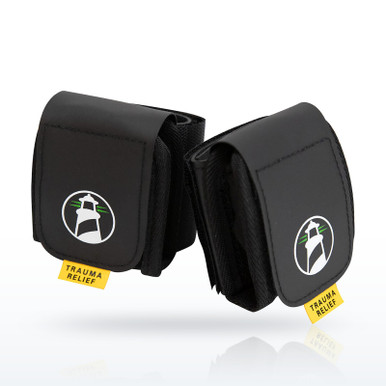
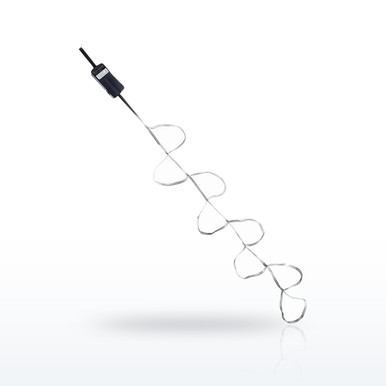
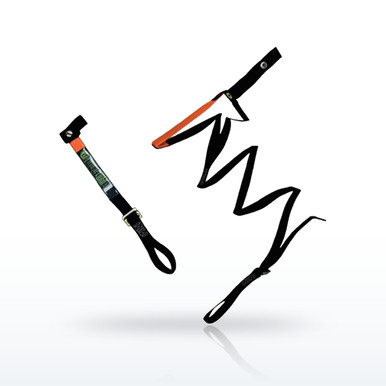
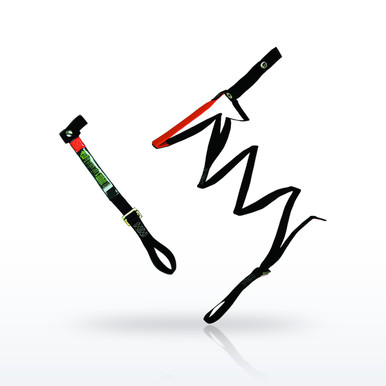
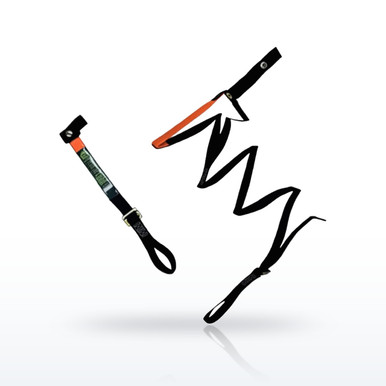
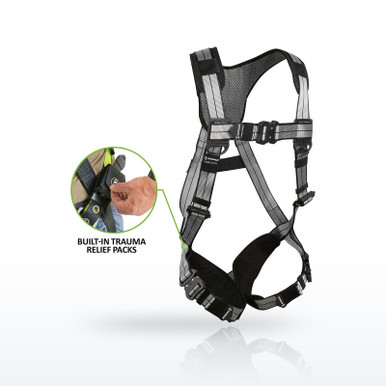
Trauma relief straps (also sold as suspension trauma straps, relief steps or trauma steps) are two pouches of webbing that attach to the harness at the hips or the leg straps and stay stowed until needed. After a fall the worker opens the pouches, clips the two loops together under the feet, adjusts the length and stands up in the loop. Standing takes the leg straps off the veins and gives the legs something to push against, so the worker can pump the calves the way the bulletin describes. Some models form a single step, some a loop for both feet, and some harnesses have them sewn in. They do not get anyone down; they keep the worker in a better state until the rescue does.
OSHA SHIB 03-24-2004, footholds to relieve pressure and support leg pumping; manufacturer instructions for the straps listed below, which describe deployment and use.A few practical points from the manufacturers’ instructions. The worker must be conscious and able to use the hands, which is why training on the ground matters: the first time to find the pouch is not while hanging. The straps need to be attached to a harness in a position that lets the worker reach them. After a fall the instructions say whether they can be reused; the rest of the impacted gear comes out of service regardless. And they are a standard part of the kit for anyone working alone or far from a rescue crew, where the wait is longest.
Manufacturer instructions for the straps listed below; 29 CFR 1926.502(d)(19) on components subjected to impact loading.What should the rescue plan cover?
- Who rescues. The crew, with equipment on site, is the usual answer; outside services are a backup, not the plan, unless they can arrive within the time the bulletin describes.
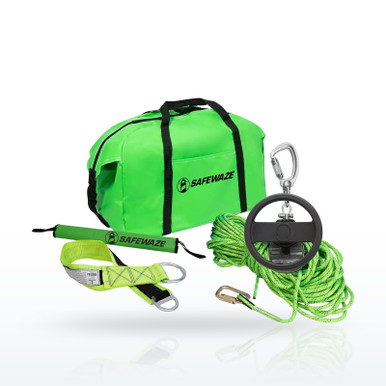
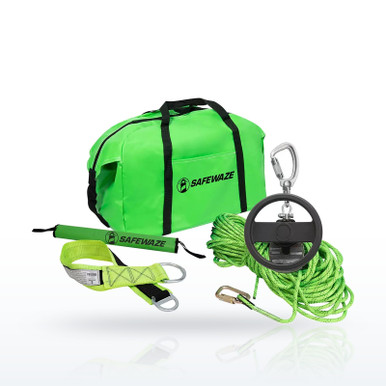
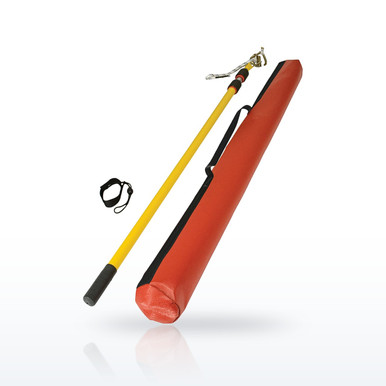
- How. Self-rescue where the worker can climb back or be lowered; a rescue pole to reach the harness from a lift or a roof; a descent device or rescue kit to lower the worker from above; an aerial lift to bring the worker to a platform.
- What is on site. Trauma relief straps on every harness; a rescue kit or descent device staged near the work; a rescue pole where workers are over an edge; a radio or phone for the attendant.
- Who watches. Someone on the ground who can see the worker, talk to them and start the rescue at once; the bulletin asks for continuous monitoring.
- After. The worker is evaluated by a health care professional even if they feel fine, because the effects can be delayed.
Trauma relief straps and rescue equipment
17 items · prices liveItems are listed as the manufacturer labels them: suspension trauma straps and relief steps, harnesses with the straps built in, and rescue and descent kits. The rated use and the ANSI standard, where the manufacturer names one, are on each product page. Free shipping on orders over $199.
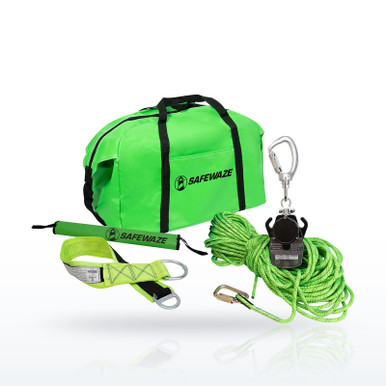
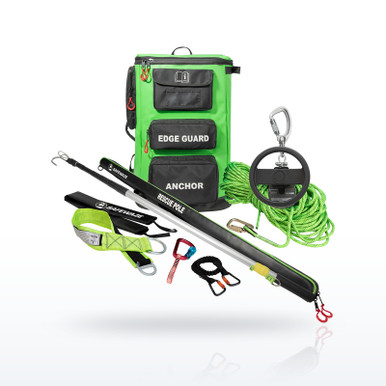
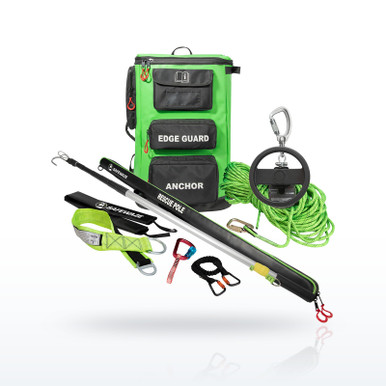
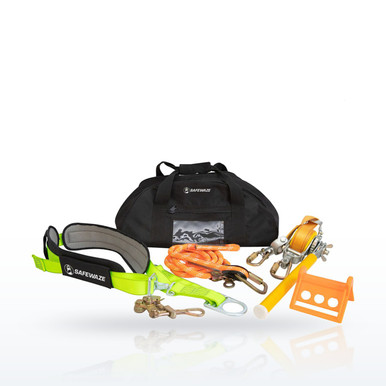
Rescue SRLs, tripods and winches for confined space work are on the fall protection finder.
Questions people ask
What is suspension trauma?
Loss of consciousness, and potentially death, caused by hanging motionless upright in a harness while blood pools in the legs. OSHA’s bulletin calls the condition orthostatic intolerance.
How long can you hang in a harness?
OSHA’s bulletin says suspension can result in unconsciousness followed by death in less than 30 minutes. The time depends on injuries, the harness fit, conditions and the person.
What are the signs of suspension trauma?
Faintness, breathlessness, sweating, paleness, nausea, dizziness and greying or loss of vision. (SHIB 03-24-2004.)
What are trauma relief straps?
Webbing loops stowed on the harness that the worker deploys after a fall to stand in, taking the leg straps off the veins and letting the legs pump blood while waiting for rescue.
Does OSHA require trauma relief straps?
No standard names them. OSHA requires prompt rescue (1926.502(d)(20)) and its bulletin advises footholds to relieve pressure and support leg pumping; relief straps are how most employers meet that advice.
Does OSHA require a rescue plan?
OSHA requires the employer to provide for prompt rescue or make sure employees can rescue themselves. A written plan is how an employer shows that. (1926.502(d)(20); 1910.140(c)(21).)
Should a rescued worker lie down?
OSHA’s 2011 update says to give standard trauma care, keep the airway open if the worker is unconscious, and have the worker evaluated by a health care professional. Follow current first aid training.
What should a suspended worker do while waiting?
Pump the legs, stand in the relief straps or on any foothold, keep talking to the attendant, and report any of the signs. (SHIB 03-24-2004.)
Standards and ratings on this page are as published in the documents named and by the manufacturers named. The employer’s hazard assessment and written program decide what applies at a given workplace. Verify a rating on the product and its spec sheet before use.