
How to put on an N95 respirator and do a user seal check
Cup the respirator in one hand with the nosepiece at your fingertips and the straps hanging. Hold it against your face with the nose piece on the bridge of your nose, pull the bottom strap over your head and down below your ears, then the top strap over your head and high on the back of your head. Press the metal nose clip to the shape of your nose with two fingers, both hands at once. Then check the seal: cover the whole respirator with both hands and breathe out; it should bulge slightly with no air leaking around the edges. Breathe in sharply; it should pull in toward your face. If air leaks at the nose, re-form the clip; if it leaks at the edges, reposition the straps. If you cannot get a seal, that model does not fit your face and you need a different one.
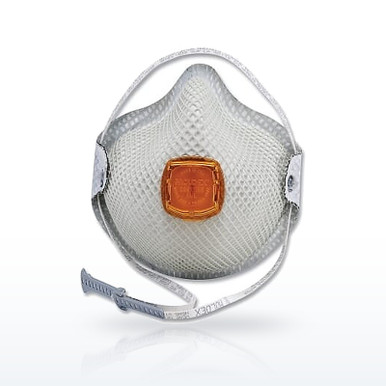
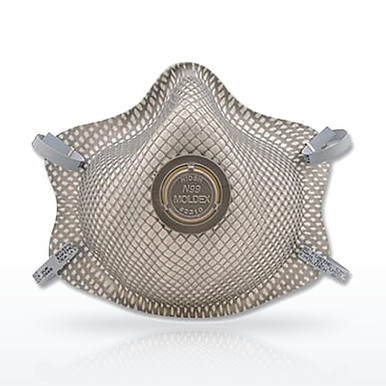
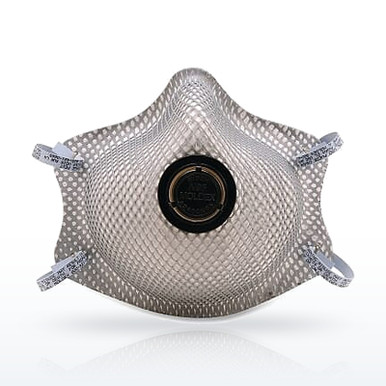 Moldex 2400 N95 particulate respiratorCup-style N95 with two straps and a nose clip
Why does the seal check matter every time? A fit test proves a model seals on your face once a year. The user seal check is how you know it sealed this time: the straps are where you put them, the nose clip is shaped, nothing is caught under the edge. OSHA requires it every time a tight-fitting respirator is put on, and it takes ten seconds. An N95 that is on your face but not sealed is filtering the air that goes through it and letting the rest in around the edge.
What are the rules before you put one on?
Three things that no amount of good technique replaces.
How do you put on a cup-style N95?
- Wash your hands. What is on your hands goes onto the inside of the respirator.
- Inspect it. No holes, tears, crushed shape, stretched straps or bent clip. A damaged respirator is thrown away.
- Cup it. Hold it in one hand with the nosepiece at your fingertips and the straps hanging free below.
- Place it. Put it on your face with the nosepiece on the bridge of your nose and the bottom edge under your chin.
- Bottom strap first. Pull it over your head and let it rest around your neck, below your ears.
- Top strap second. Pull it over your head and place it high on the back of your head, above your ears. The straps should not be twisted and should not cross.
- Mold the nose clip. Place the fingertips of both hands at the top of the metal clip and press it down to the shape of your nose while moving your fingers out to each side. Using one hand leaves a gap on the other side.
- Seal check. Next section. Do it every time.
How do you do the user seal check?
Positive pressure check. Cover the respirator with both hands, cupped so you are not pressing it onto your face, and breathe out gently. The respirator should puff out slightly and you should feel no air leaking at the edges or the nose. Negative pressure check. Cover it the same way and breathe in sharply. The respirator should collapse slightly toward your face and stay there while you hold your breath, with no air rushing in at the edges. Do both. On a respirator with an exhalation valve, cover the valve for the positive check.
29 CFR 1910.134 Appendix B-1, Part I.A (positive pressure) and I.B (negative pressure); manufacturer instructions for valved models.If it leaks at the nose, re-form the clip and check again. If it leaks at the chin or cheeks, reposition the respirator and the straps and check again. If you still cannot get a seal after two or three tries, take it off: that model or size does not fit your face today, and you need a different one and a fit test on it.
29 CFR 1910.134(g)(1)(iii) (user seal check each time); Appendix B-1.How do you put on a flat-fold N95?
Open it fully so the top and bottom panels unfold and the nose clip is at the top. Hold it under your chin with the nose clip over the bridge of your nose, pull the bottom strap over your head to your neck, then the top strap high on the back of your head, and mold the clip with both hands. Make sure the bottom panel is unfolded and cupping your chin; a flat-fold left half-folded cannot seal. Then the same seal check.
Manufacturer instructions (3M Aura, Honeywell flat-fold, Moldex flat-fold); Appendix B-1.What about glasses, hard hats and hearing protection?
- Put the respirator on first, then glasses over it, resting on the respirator, not under its edge. If glasses fog, the seal at the nose is leaking; re-form the clip.
- A hard hat goes on after the respirator; its suspension should clear the top strap. If the suspension pushes the strap down, adjust the suspension, not the strap.
- Earmuffs and ear plugs do not interfere; a hood or balaclava must not come between the respirator and the skin.
- Fit testing is done wearing whatever else you wear on the job, for exactly this reason.
How do you take it off, and how long can you wear it?
Take it off without touching the front: tilt your head forward, pull the bottom strap over your head, then the top strap, and let it fall away from your face. Wash your hands. A disposable N95 is worn until it is damaged, soiled, hard to breathe through, or at the end of the time the employer’s program sets; it is not cleaned. In dusty work a respirator may be used across a shift and discarded; in healthcare, reuse rules are set by the facility and the CDC. Store it in a clean, dry place between uses, not crushed in a pocket.
29 CFR 1910.134(h)(1) and (h)(2) (maintenance, storage); (c)(1)(v) (schedules for inspecting, repairing and discarding respirators); manufacturer instructions.N95 and P100 filtering facepiece respirators
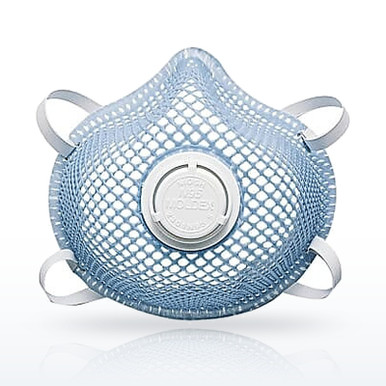
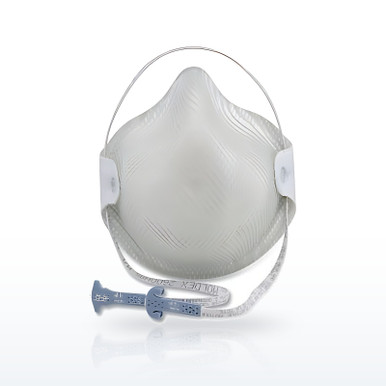
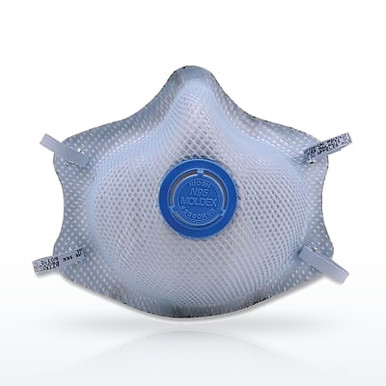
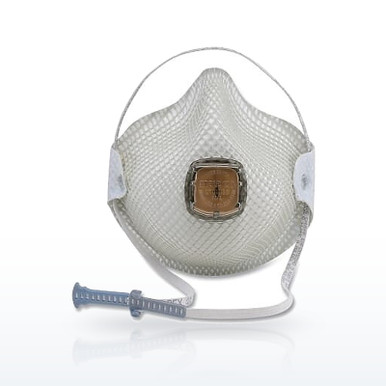
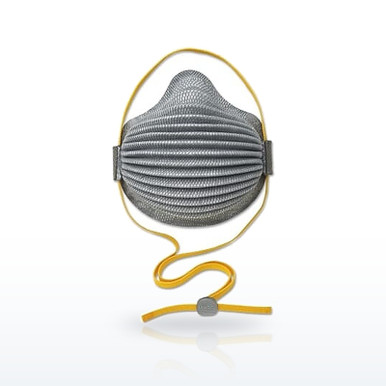
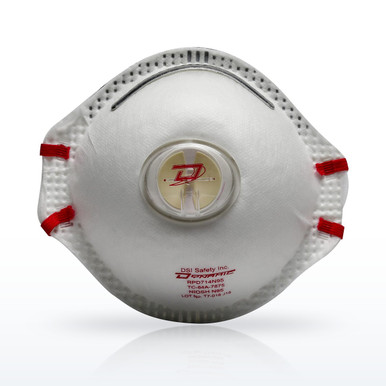
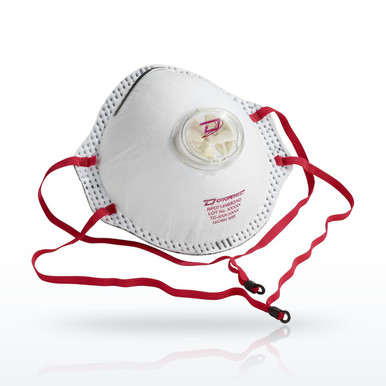
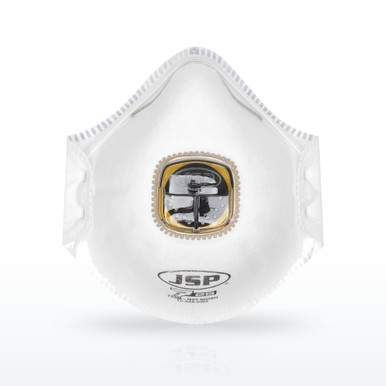
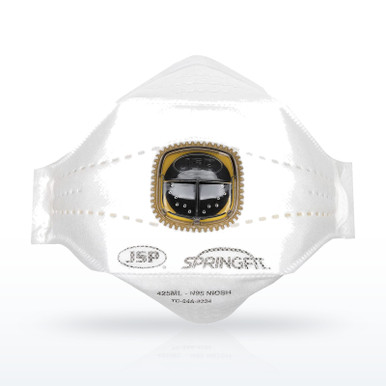
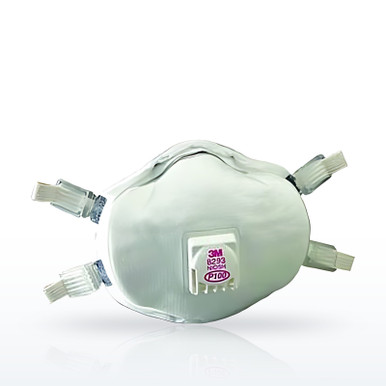
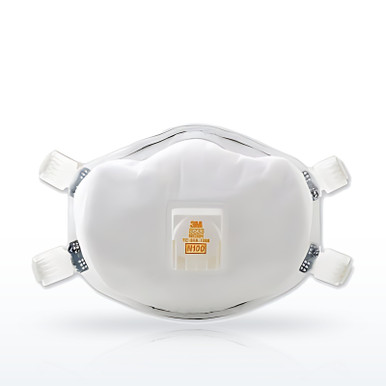
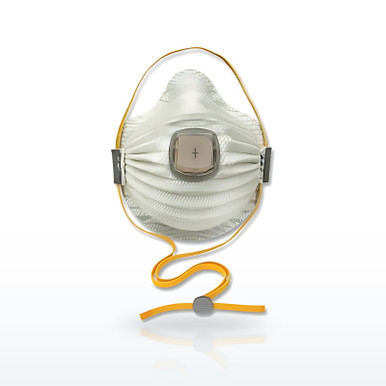
20 items · prices liveEach respirator is listed with its NIOSH filter class as published by the manufacturer and its approval number on the product page. Sold by the box or case. Free shipping on orders over $199.
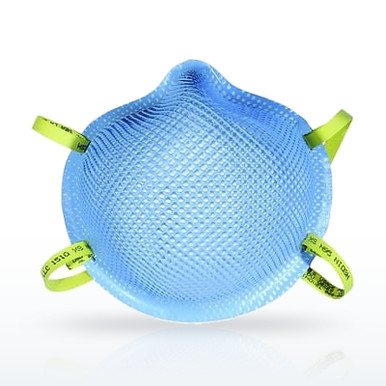
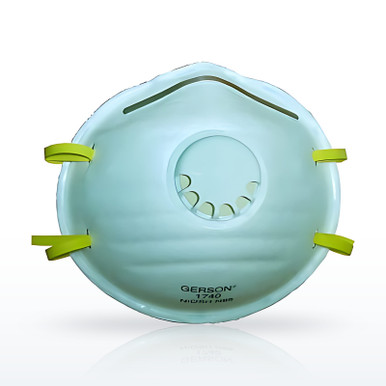
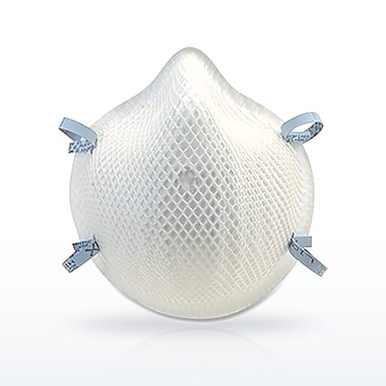

Reusable half masks, cartridges and fit-test kits are on the respirator finder.
Questions people ask
Which strap goes on first on an N95?
The bottom strap, around the neck below the ears; then the top strap high on the back of the head. Taking it off is the reverse.
How do you do a seal check on an N95?
Cover it with both hands and breathe out: it should puff slightly with no leaks. Breathe in sharply: it should pull in and stay. Fix the clip or the straps if either fails. (Appendix B-1.)
Why do my glasses fog with an N95?
Air is leaking at the nose. Re-form the clip with both hands and make sure the glasses sit on top of the respirator, not under its edge.
Can you wear an N95 with a beard?
No. Facial hair in the seal area is not permitted under 1910.134(g)(1)(i)(A), and no technique fixes it. Bearded workers use a loose-fitting PAPR hood.
How long can you wear an N95?
Until it is damaged, soiled, hard to breathe through, or the end of the period in your employer’s program; often a shift in dusty work. It is never washed.
Does an N95 need a fit test?
Yes, when the employer requires it, on the same make, model and size, every 12 months. The seal check is what you do every time you put it on; it does not replace the fit test.
What is the difference between a user seal check and a fit test?
The fit test (annual, by a tester, with a test agent) proves the model fits your face. The seal check (every time, by you, in ten seconds) proves you put it on right this time.
Can you wear a hard hat with an N95?
Yes. Respirator on first, hard hat after, with the suspension clear of the top strap.
Standards and ratings on this page are as published in the documents named and by the manufacturers named. The employer’s hazard assessment and written program decide what applies at a given workplace. Verify a rating on the product and its spec sheet before use.