
Which gloves protect against chemicals? How to read a chemical resistance chart
No single glove protects against every chemical. A chemical resistance chart is the manufacturer’s test data for one glove material against one chemical at a time, and it answers two questions: how long before the chemical gets through (breakthrough time) and what it does to the glove while it is in contact (degradation). You find the chemical on the safety data sheet, find it on the chart for the glove you are considering, and read the breakthrough time against how long the task takes. If the chart does not list the chemical, or lists it with a short breakthrough or a poor degradation rating, that glove is not the one. OSHA requires the employer to make this selection from the glove’s performance data, not from the material name alone.
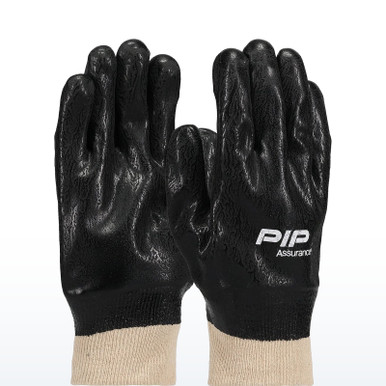
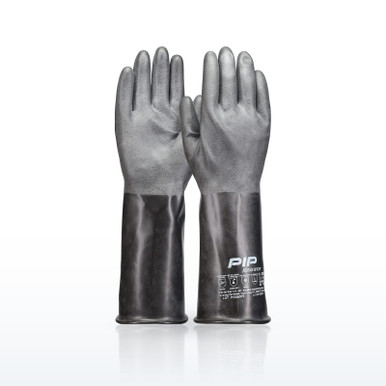 Assurance BUT05R 20 mil butyl glove, rough grip, 14 inchUnsupported butyl, sold per pair
Why is there no all-purpose chemical glove? A glove is a sheet of polymer, and every polymer lets some chemicals through at the molecular level while stopping others. Nitrile holds up well against oils and many solvents and fails quickly against ketones such as acetone; butyl is the reverse. The chemical does not need a hole: it dissolves into the outer surface, moves through the material and comes out the inside against the skin, with the glove looking unchanged. OSHA’s own guidance says it is unaware of any glove that protects against all hand hazards and that common glove materials give only limited protection against many chemicals. That is why the selection has to come from a chart.
What are the terms on a chemical resistance chart?
Four words carry the whole chart. A chart that uses colors or grades (excellent, good, fair, poor) is summarizing these same measurements.
How do you read the chart for a task?
- Start with the safety data sheet, not the glove. Section 8 of the SDS (exposure controls and personal protection) names the glove material the chemical’s maker expects, and sections 2 and 3 tell you what the chemical does to skin and whether it is absorbed through it. That sets how strict you need to be.
- Find the chemical by name and concentration on the glove maker’s chart. Charts are per material and often per glove model and thickness. A 15 mil nitrile and a 5 mil nitrile are not the same row. Concentration matters: 10 percent sulfuric acid and 96 percent sulfuric acid are different entries.
- Read the breakthrough time against the length of contact. If the task is 20 minutes of splash contact and the chart shows more than 480 minutes, the glove is comfortable. If the task is 2 hours of immersion and the chart shows 45 minutes, it is not, no matter how the color code looks.
- Read the degradation column separately. A glove that swells or softens loses its grip and its cut and puncture resistance even before the chemical breaks through. Poor degradation is a reason to reject a glove on its own.
- Set a change-out time shorter than the breakthrough time. Charts are run at 23 °C with a fresh glove and no flexing. A hand at 37 °C in a glove that is being stretched and abraded gives the chemical an easier path, so the working change-out is set below the chart number, and the glove is removed and discarded when the time is up or when contact is heavier than planned.
- For mixtures, use the worst component. OSHA’s Appendix B says to pick the glove by the component with the shortest breakthrough time, because a solvent can carry other ingredients through the glove with it.
What do the EN ISO 374 letters and types on a glove mean?
Many gloves in our catalog carry a European chemical marking next to the beaker pictogram: a Type (A, B or C) and a string of letters. The letters are codes for the standard’s list of 18 test chemicals, and each letter printed on the glove means that chemical broke through in no less than 30 minutes in the EN 16523-1 test. A: methanol. B: acetone. C: acetonitrile. D: dichloromethane. E: carbon disulfide. F: toluene. G: diethylamine. H: tetrahydrofuran. I: ethyl acetate. J: n-heptane. K: 40 percent sodium hydroxide. L: 96 percent sulfuric acid. M: 65 percent nitric acid. N: 99 percent acetic acid. O: 25 percent ammonium hydroxide. P: 30 percent hydrogen peroxide. S: 40 percent hydrofluoric acid. T: 37 percent formaldehyde.
EN ISO 374-1:2016+A1:2018, Annex A list of test chemicals and code letters; EN 16523-1 permeation test.The Type tells you how many of those chemicals the glove held for how long. Type A: at least 6 of the listed chemicals for 30 minutes or more. Type B: at least 3 for 30 minutes or more. Type C: at least 1 for 10 minutes or more. The standard also grades each result on a six-level scale by breakthrough time: level 1 is over 10 minutes, 2 over 30, 3 over 60, 4 over 120, 5 over 240 and 6 over 480. A glove’s information sheet lists the level per chemical; the glove itself shows only the Type and the letters.
EN ISO 374-1:2016+A1:2018, Types A, B and C and performance levels 1 to 6; degradation results reported per EN 374-4 for all three types.A letter on the cuff is a pass against a laboratory chemical, not a promise about your chemical. If your solvent is not one of the 18, the letters tell you only what family the glove is good against; you still need the manufacturer’s chart row for the chemical you use. The biohazard pictogram with EN ISO 374-5 is a separate claim about bacteria, fungi and, when marked VIRUS, viruses, and says nothing about chemicals.
EN ISO 374-1:2016+A1:2018 (chemicals); EN ISO 374-5:2016 (micro-organisms; virus claim tested to ISO 16604).What does OSHA require of the employer?
Two things. First, hand protection must be selected and worn when hands are exposed to skin absorption of harmful substances or to chemical burns; those are two of the seven hazards 1910.138(a) lists by name. Second, the selection has to be based on an evaluation of the glove’s performance characteristics for the task, the conditions, how long it is worn and the hazards identified. A chart is how that evaluation is documented. Picking “nitrile” because the last crew used nitrile does not meet the second requirement.
29 CFR 1910.138(a) and (b).The hazard assessment under 1910.132(d) is where the chemical, the task and the glove get written down, and it has to be certified in writing with the workplace, the person and the date. Appendix B to Subpart I adds the practical guidance: ask the manufacturer for documentation that the glove meets the test standard for the hazard before buying it, work out how long the glove can be worn and whether it can be reused, and make sure workers can take the gloves off without contaminating their skin.
29 CFR 1910.132(d)(1) and (d)(2); 1910 Subpart I Appendix B, section 11.Which glove materials go with which chemical families?
The chart decides, but the materials have well-known strengths, which is why each one is in the catalog. Nitrile: oils, fuels, greases, many acids and caustics, aliphatic solvents; weak against ketones and many chlorinated and aromatic solvents. Butyl: ketones, esters, aldehydes, strong acids and caustics; weak against fuels and hydrocarbons. Neoprene: acids, caustics, alcohols, refrigerants and oils, a broad middle ground. PVC: acids, caustics, salts and oils, and the lowest cost per pair; weak against most organic solvents. Natural latex: water-based chemicals, dilute acids and caustics; weak against oils and solvents, and a latex allergy risk. Polyethylene and laminate film gloves: the widest chemical range in a thin, loose glove, usually worn under another glove. These are the directions a chart will point you; they are not a substitute for the row.
Manufacturer chemical resistance charts for the materials named (PIP, MCR Safety, Assurance, North, SHOWA, Ansell); 1910 Subpart I Appendix B, section 11 (any chemical-resistant glove is generally acceptable for dry powders).Chemical-resistant gloves by material
26 items · prices liveEach glove is grouped by the material its manufacturer publishes, with the thickness and length on the product page. Breakthrough and degradation data for a given chemical are on the manufacturer’s chart linked from the product page; the grouping here is by material only, not a rating for any chemical. Free shipping on orders over $199.
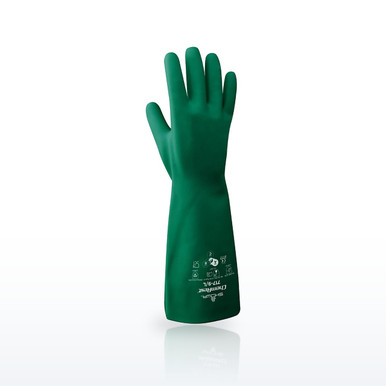
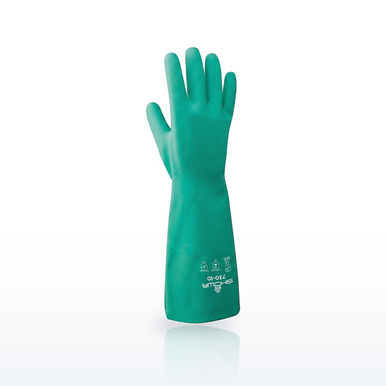
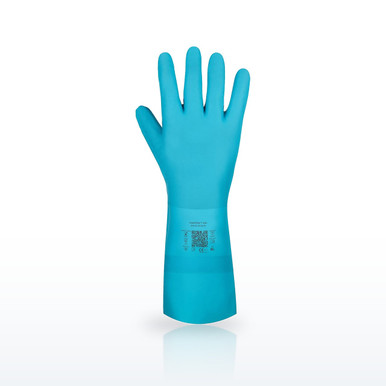
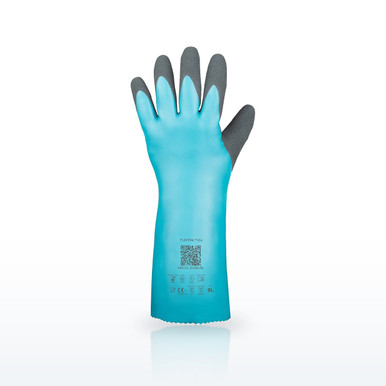
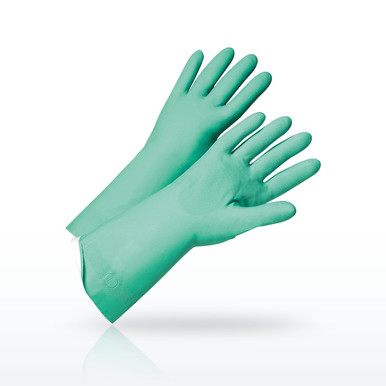

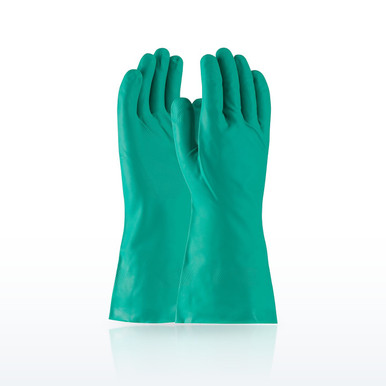
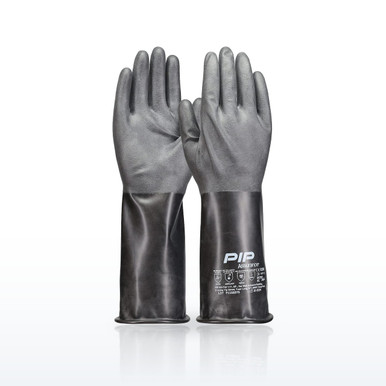
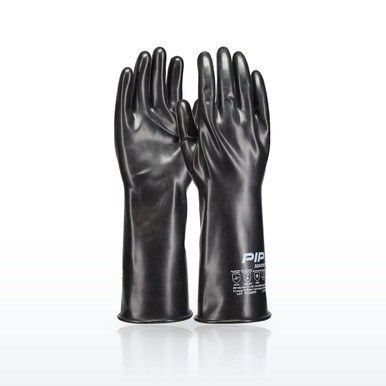
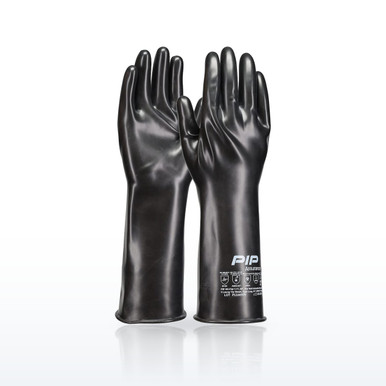
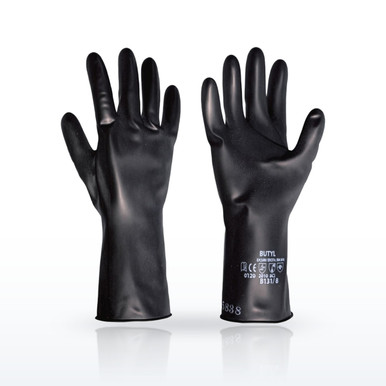
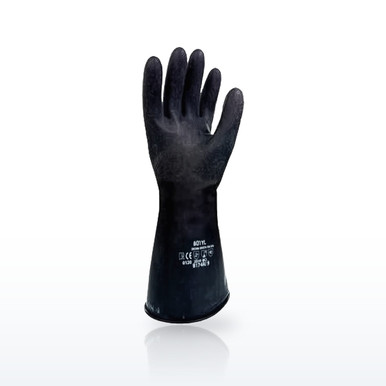
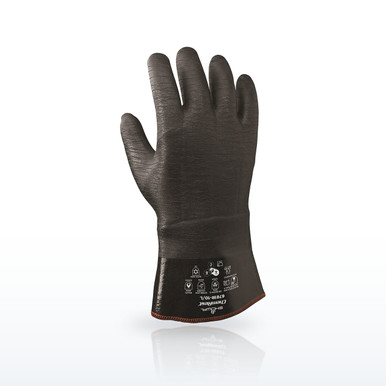
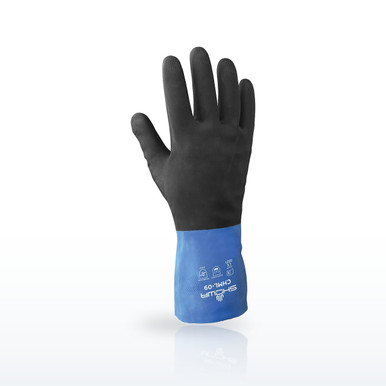
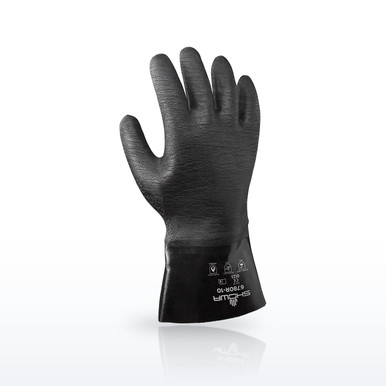
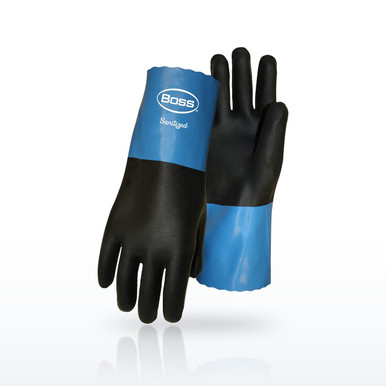
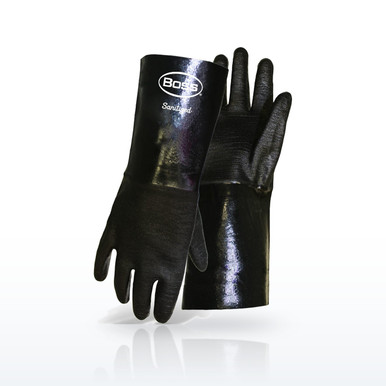
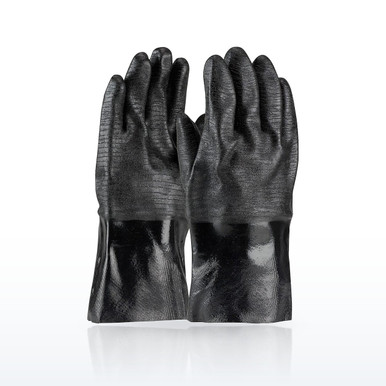
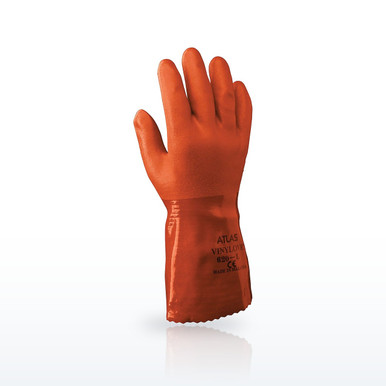
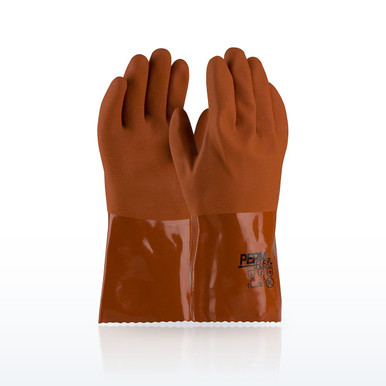
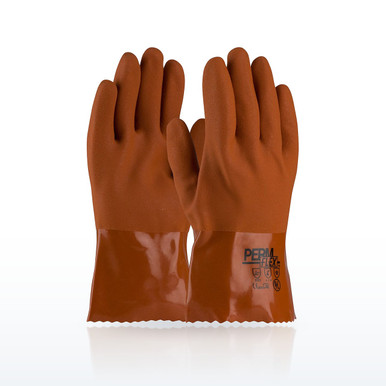
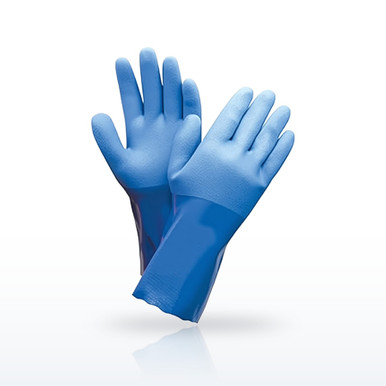
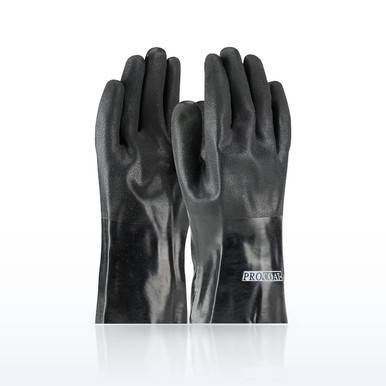
All 180-plus chemical-resistant gloves we carry, with thickness, length, lining and EN ISO 374 letters where published, are on the work glove selector.
Questions people ask
What is permeation on a glove chart?
The chemical moving through the glove material itself, molecule by molecule, with no hole. It is measured in a test cell under ASTM F739 or EN 16523-1, and the result is a breakthrough time in minutes.
What is breakthrough time?
The minutes from first contact until the chemical is detected on the inside of the glove at the rate the test method sets. ASTM F739 uses 0.1 micrograms per square centimeter per minute; the European test uses 1.0, so European numbers can be longer for the same glove.
What is degradation?
Physical damage to the glove from the chemical: swelling, softening, hardening, cracking or loss of strength. EN 374-4 measures it as the change in puncture resistance after 1 hour of contact. It is reported separately from breakthrough time and can fail a glove on its own.
Does OSHA require a specific glove for chemicals?
No. 1910.138 requires hand protection where hands are exposed to skin absorption of harmful substances or chemical burns, and requires the selection to be based on the glove’s performance characteristics for the task. The manufacturer’s chart is the performance data.
Which gloves are good for acetone?
Read the chart for the glove in hand. As a family, butyl is the material manufacturers list for ketones such as acetone; nitrile charts commonly show short breakthrough times for it. The product page links the manufacturer’s data.
How long can you wear a chemical glove?
Less than the breakthrough time on the chart, because the chart is run at 23 °C on a new, unflexed sample. The employer sets the change-out time in the hazard assessment and the glove is discarded when it is reached or when contact is heavier than planned.
Can disposable nitrile gloves be used for chemicals?
For incidental splash with a chemical the chart supports, yes, and they are removed as soon as they are contaminated. Thin disposables show short breakthrough times for many solvents; for immersion or extended contact, charts point to a thicker unsupported or supported glove.
What do the letters like JKL on a chemical glove mean?
EN ISO 374-1 code letters: each one is a test chemical the glove held for at least 30 minutes. J is n-heptane, K is 40 percent sodium hydroxide, L is 96 percent sulfuric acid. The full list is in the guide above.
Related guides
Nitrile vs latex vs vinyl glovesWhich disposable material for which jobOSHA hand protection requirementsWhat 1910.138 saysWhen must disposable gloves be changed?OSHA and FDA Food Code rulesWhat is a GHS label?Reading the pictograms and the SDSHazard Communication StandardSDS, labels and trainingStandards and ratings on this page are as published in the documents named and by the manufacturers named. The employer’s hazard assessment and written program decide what applies at a given workplace. Verify a rating on the product and its spec sheet before use.