
Respirators for asbestos: what 1926.1101 requires
The construction asbestos standard ties respirators to the class of work. Respirators are required for all Class I work (removing thermal system insulation and surfacing material), for Class II and III work done without wet methods or without a negative exposure assessment, for Class III work that disturbs insulation or surfacing material, for Class IV work in a regulated area where others wear respirators, for any exposure above the limits, and in emergencies. Disposable filtering facepieces are not allowed for asbestos. The minimum is an elastomeric half mask with HEPA (P100) filters; Class I work without a negative exposure assessment needs a tight-fitting PAPR or pressure-demand supplied air, and above 1 fiber per cubic centimeter it needs pressure-demand supplied air with an auxiliary SCBA.
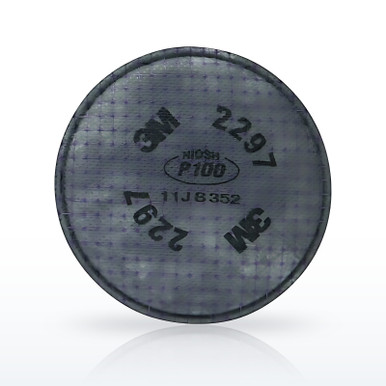
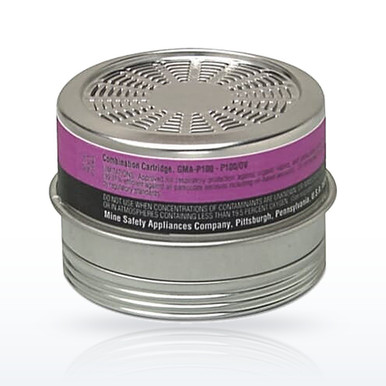
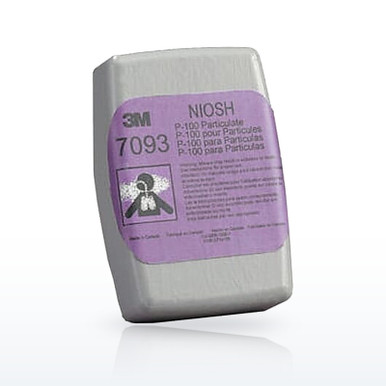 3M 7093 P100 particulate filterThe 99.97 percent HEPA level the asbestos standard requires
Why are the asbestos rules stricter than the general respirator rule? Asbestos fibers cause cancer and lung scarring decades after exposure, there is no known safe dose, and the fibers are too small to see. OSHA wrote the respirator selection into the asbestos standard itself rather than leaving it to the exposure arithmetic of 1910.134, so that the respirator is set by the kind of work before anyone samples the air. That is why a disposable N95 is banned outright, why every air-purifying respirator must carry HEPA filters, and why the highest-exposure removal work goes straight to supplied air.
When does 1926.1101 require a respirator?
The 8 triggers in paragraph (h)(1). The classes are defined in paragraph (b).
Which respirator does each situation require?
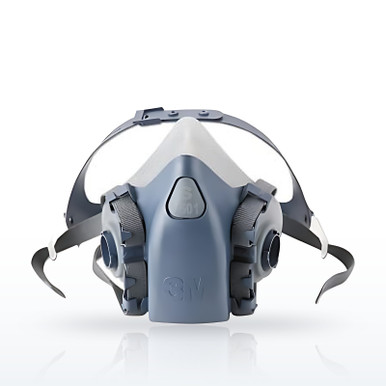
The baseline for every asbestos respirator is 1910.134 Table 1 selection with 2 changes: filtering facepiece respirators may not be selected or used against asbestos fibers, and every powered and non-powered air-purifying respirator must have HEPA filters. HEPA is defined in the standard as 99.97 percent capture of 0.3-micrometer particles, which is the P100, N100 or R100 level under 42 CFR 84; P100 is the one used in practice. The half mask that results is an elastomeric half mask with P100 filters, APF 10.
1926.1101(h)(3)(i)(A) and (B); 1926.1101(b) definition of HEPA filter; 42 CFR 84.171(b)(1); 1910.134 Table 1.Two situations require at least that half mask by name: Class II or Class III work with no negative exposure assessment, and Class III work that disturbs thermal system insulation or surfacing material. In both, the standard says an air-purifying half mask other than a filtering facepiece.
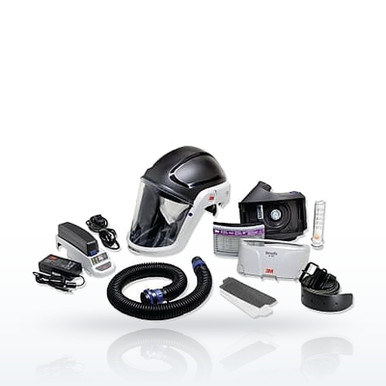
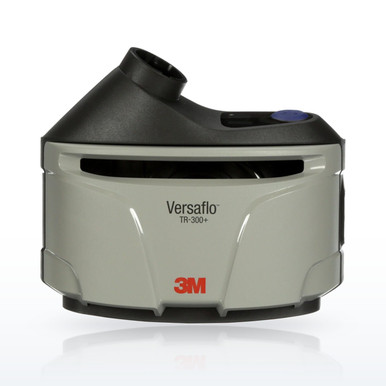
1926.1101(h)(3)(iii)(A) and (B).Class I work inside a regulated area without a negative exposure assessment moves up. If the exposure assessment shows the level will be at or below 1 f/cc as an 8-hour average, the employer must provide a tight-fitting PAPR or a full facepiece supplied-air respirator in pressure-demand mode with either HEPA egress cartridges or an auxiliary positive-pressure SCBA. If the level will be above 1 f/cc, the only option is the full facepiece pressure-demand supplied-air respirator with an auxiliary positive-pressure SCBA.
1926.1101(h)(3)(iv)(A) and (B).In every case, an employee who chooses a tight-fitting PAPR must be given one in place of the negative-pressure respirator, provided it protects adequately. And no employee may be assigned to asbestos work that requires a respirator if the examining physician has found they cannot function normally while wearing one.
1926.1101(h)(3)(ii); 1926.1101(h)(2)(ii).What else goes with the respirator?
- A written respiratory protection program under 1910.134(b) through (d) and (f) through (m), with medical evaluation, fit testing, training, cleaning and records.
- A regulated area for all Class I, II and III work, demarcated, with access limited to authorized persons.
- Protective clothing (coveralls, head covering, gloves, foot covering) for anyone exposed above the limits, for work with no required negative exposure assessment, and for Class I removal of more than 25 linear or 10 square feet of TSI or surfacing material.
- A competent person who can identify asbestos hazards and choose the control strategy, with additional training for Class I and II work.
What about general industry and shipyards?
Asbestos work in general industry is covered by 1910.1001 and in shipyards by 1915.1001. They carry the same exposure limits and the same reliance on 1910.134 for selection. This guide follows the construction standard because removal, repair and demolition are where most respirator decisions are made; read the applicable standard’s respiratory protection paragraph before setting up a program for a plant or a vessel.
29 CFR 1910.1001 and 1915.1001 (asbestos in general industry and shipyards); 1926.1101(a) scope.Half masks, full facepieces, P100 filters and PAPRs for asbestos
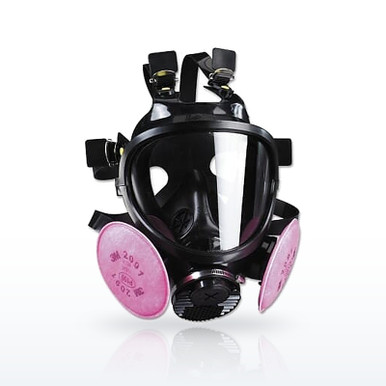
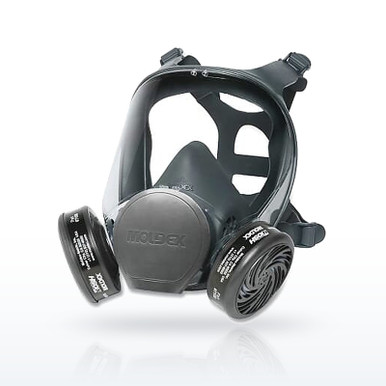
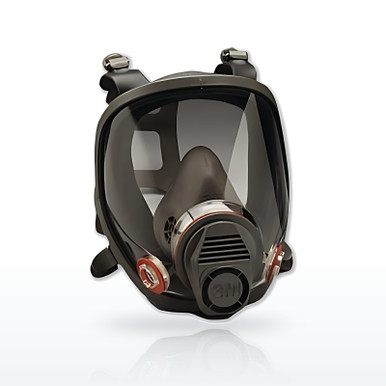
36 items · prices liveFilter class and respirator type are as certified by NIOSH and published by the manufacturer. Filtering facepieces are excluded because 1926.1101(h)(3)(i)(A) does not allow them for asbestos. The work class and exposure assessment decide which type is required. Contractor Direct orders ship free.
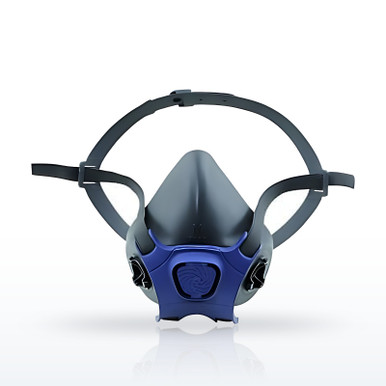


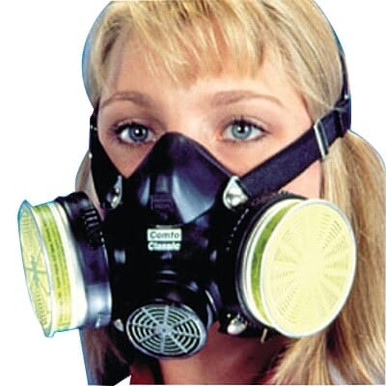



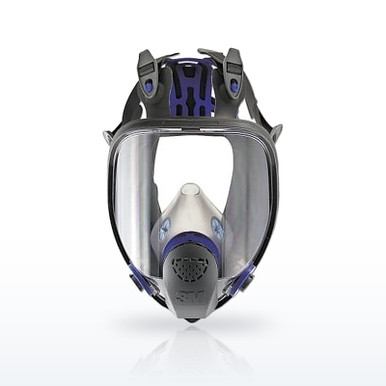
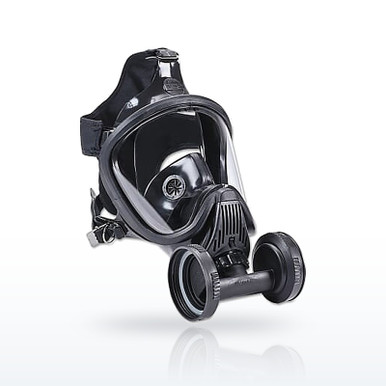




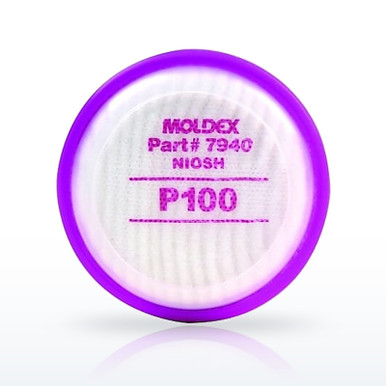

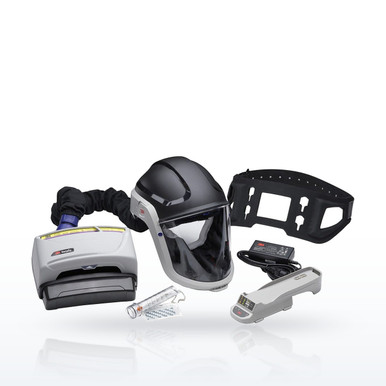
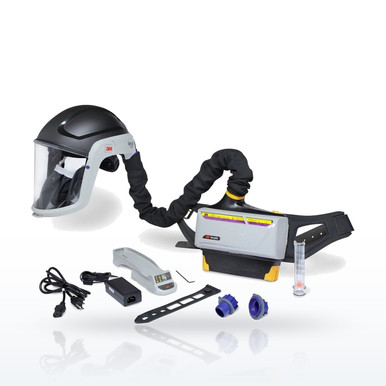
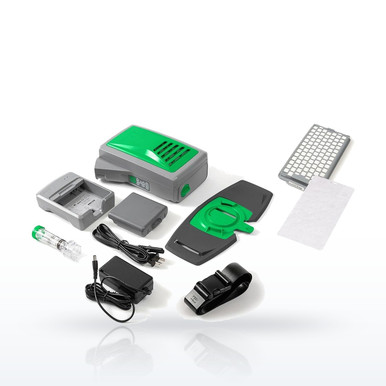
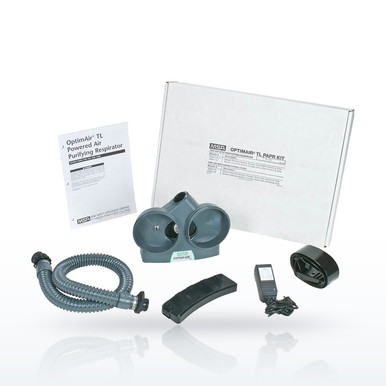
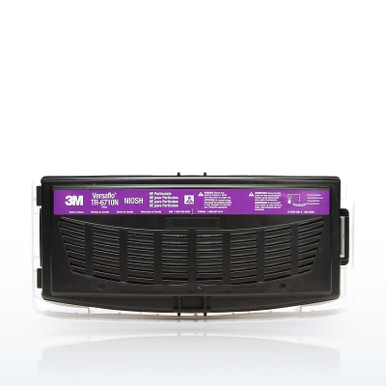

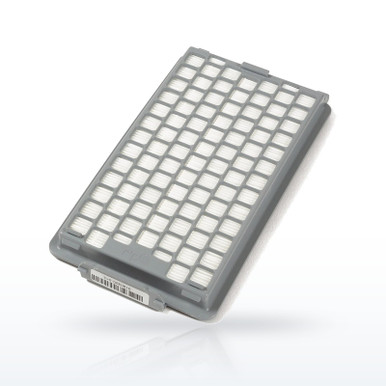
Pressure-demand supplied-air systems with auxiliary SCBA for Class I work above 1 f/cc are quoted on request: call (925) 215-7337. Asbestos coveralls are in the coverall finder.
Questions people ask
Can I use an N95 for asbestos?
No. 1926.1101(h)(3)(i)(A) says employers must not select or use filtering facepiece respirators against asbestos fibers. The minimum is an elastomeric half mask with HEPA (P100) filters.
What filter is required for asbestos?
HEPA, defined as 99.97 percent capture at 0.3 micrometers. Under 42 CFR 84 that is the 100 level: P100 in practice. 1926.1101(h)(3)(i)(B).
What is the asbestos PEL?
0.1 fiber per cubic centimeter as an 8-hour TWA, with an excursion limit of 1 f/cc averaged over 30 minutes. 1926.1101(c).
When is a PAPR or supplied air required for asbestos?
For Class I work in a regulated area with no negative exposure assessment: a tight-fitting PAPR or pressure-demand supplied air with HEPA egress cartridges or auxiliary SCBA at or below 1 f/cc, and pressure-demand supplied air with auxiliary SCBA above 1 f/cc. 1926.1101(h)(3)(iv).
What is a negative exposure assessment?
The employer’s documented demonstration, under 1926.1101(f)(2)(iii), that exposure during an operation is expected to stay consistently below the PELs. Without one, Class II and III work requires at least a half mask.
Do I need a respirator for removing floor tile?
Floor tile is Class II work. A respirator is required if the tile is not removed substantially intact, if wet methods are not used, or if there is no negative exposure assessment. 1926.1101(h)(1)(ii) through (iv).
Does the half mask need a fit test?
Yes. The asbestos standard incorporates 1910.134(f), so every tight-fitting respirator, including the half mask, is fit tested before use and annually.
Standards and ratings on this page are as published in the documents named and by the manufacturers named. The employer’s hazard assessment and written program decide what applies at a given workplace. Verify a rating on the product and its spec sheet before use.