
What is SCBA, and when does OSHA require it?
SCBA is a self-contained breathing apparatus: a cylinder of compressed breathing air carried on the back, a regulator that feeds it to a full facepiece at slightly above atmospheric pressure, and 30, 45 or 60 minutes of air that does not depend on the atmosphere around you. OSHA requires it, or a supplied-air respirator combined with an escape cylinder, in any atmosphere that is immediately dangerous to life or health: too little oxygen, a contaminant above its IDLH level, an unknown atmosphere, interior structural firefighting, and confined-space rescue where the hazard has not been cleared. A cartridge respirator is never allowed in those conditions.
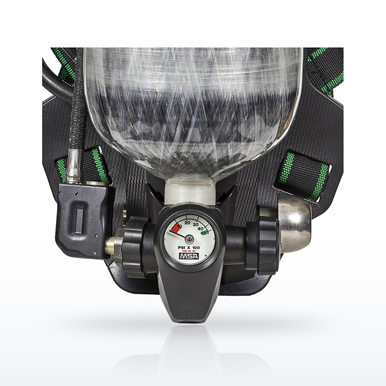 MSA G1 industrial SCBAPressure-demand SCBA for industrial IDLH entry and rescue
Why is SCBA the only answer in an IDLH atmosphere? Because every other respirator depends on the air around you. A filter needs oxygen in that air; a cartridge needs the contaminant to be one it can hold, at a concentration it can handle, and a supplied-air hose can be cut, kinked or fed by a compressor that fails. An IDLH atmosphere is one where a few breaths can kill or disable, so the standard allows only equipment that carries its own air and holds positive pressure in the mask: pressure-demand SCBA, or pressure-demand supplied air with an SCBA escape bottle on the belt.
When does OSHA require SCBA?
The requirement is written around IDLH, and the situations below are the ones that produce it.
How does an SCBA work?
The cylinder holds breathing air at 2,216 or 4,500 psi (some fire-service units 5,500). A first-stage regulator on the cylinder drops the pressure to a few hundred psi and sends it down a hose to a second-stage, pressure-demand regulator on the facepiece. Pressure-demand means the regulator keeps a slight positive pressure inside the mask at all times and opens wider when you inhale, so if the seal leaks, air flows out rather than in. A gauge and an audible low-air alarm (at 33 percent remaining under NFPA 1981; 25 percent on older units) tell you when to leave; a heads-up display in the mask on fire-service units does the same. The harness carries the weight, 20 to 35 pounds depending on the cylinder, on the hips.
NIOSH 42 CFR 84 Subpart H (SCBA approval, service-life rating, low-pressure warning at 25 percent); NFPA 1981-2019 (end-of-service-time indicator at 33 percent); manufacturer technical data (MSA G1, 3M Scott Air-Pak, Dräger).What are the rules for working in an IDLH atmosphere?
- At least one employee stays outside the IDLH atmosphere, in visual, voice or signal contact with the person inside, and is trained and equipped to rescue.
- The standby person has pressure-demand SCBA (or SAR with escape) and retrieval equipment ready, and the employer is notified before the standby enters to rescue.
- The entrant wears pressure-demand SCBA or pressure-demand SAR with an auxiliary self-contained supply, both NIOSH-certified for at least 30 minutes.
- Where retrieval equipment would add risk, the employer documents why it is not used.
SCBA and supplied-air equipment compared
| Equipment | Air source | Duration | Where it is used |
|---|---|---|---|
| Open-circuit pressure-demand SCBA | Cylinder on the back, exhaled air vented | 30, 45 or 60 minutes rated; less under hard work | IDLH entry, firefighting, confined-space rescue, emergency response |
| Closed-circuit SCBA (rebreather) | Oxygen cylinder plus CO2 scrubber, exhaled air recycled | 1 to 4 hours | Mine rescue, long-duration entry; specialized |
| Supplied-air respirator with escape cylinder | Hose from compressor or cylinder bank, 5- to 15-minute escape bottle | Unlimited on the hose; escape bottle for exit | IDLH work where a hose is practical: tank cleaning, abrasive blasting, some confined spaces |
| Supplied-air respirator, no escape bottle | Hose only | Unlimited | Non-IDLH work: painting, blasting, pharmaceutical |
| Escape-only SCBA (5 to 15 minutes) | Small cylinder, hood | 5 to 15 minutes | Escape from a sudden release; never for entry |
| Emergency escape breathing device (EEBD) | Small cylinder or oxygen generator, hood | 10 to 15 minutes | Ships, refineries, ammonia plants; escape only |
The rated service time is measured at a standard breathing rate; a worker climbing or carrying under stress can use a 30-minute cylinder in 15 to 20 minutes. Escape-only units are approved by NIOSH for escape and are never used for entry or work. Aluminum cylinders are hydrostatically tested every 5 years; carbon-fiber composite cylinders every 5 years with a 15-year service life; fire-service cylinders follow DOT exemptions on the cylinder label.
NIOSH 42 CFR 84 Subpart H; 29 CFR 1910.134(d)(2); 49 CFR 180.205 (cylinder requalification); NFPA 1981 and NFPA 1986 (tactical and technical operations SCBA); manufacturer data.
Industrial SCBA vs fire-service SCBA
Both are NIOSH-approved and both work the same way. A fire-service SCBA is additionally certified to NFPA 1981 (and the CBRN option), which adds heat and flame resistance, a heads-up display, a universal emergency breathing connection for buddy breathing, a PASS alarm integration, and the 33-percent end-of-service indicator, at a higher cost and weight. An industrial SCBA meets 1910.134 for IDLH entry, confined-space rescue and emergency response in plants, refineries and utilities without the fire-specific features. OSHA requires the NFPA-certified unit only for interior structural firefighting; fire brigades at industrial sites that do interior attack need it too.
29 CFR 1910.134(g)(4); 29 CFR 1910.156(f)(1) (fire brigades: SCBA for interior structural firefighting); NFPA 1981-2019; NIOSH CBRN SCBA approval.What does an SCBA program require?
- Everything a respirator program requires: written program, medical evaluation (SCBA is the most demanding respirator physically), annual quantitative fit test on the facepiece, training on donning, air management and emergency procedures.
- Inspection before each use and at least monthly for units kept for emergency use, with a record on the unit: cylinder pressure at least 90 percent of full, regulator and warning devices working, no damage.
- Breathing air that meets Grade D and is tested when the cylinders are filled; fill stations with filtration and a CO monitor if compressor-fed.
- Cylinder hydrostatic test and service-life tracking; cylinders out of date are not filled.
- Cleaning and disinfection after each use; storage protected from damage, sunlight and contamination, ready for immediate use.
SCBA, cylinders and supplied-air equipment
18 items · prices liveUnits are NIOSH-approved as the manufacturer publishes; NFPA 1981 certification and CBRN options are noted on the product page where they apply. Cylinders ship hazmat. Free shipping on orders over $199 (hazmat and freight items excepted).
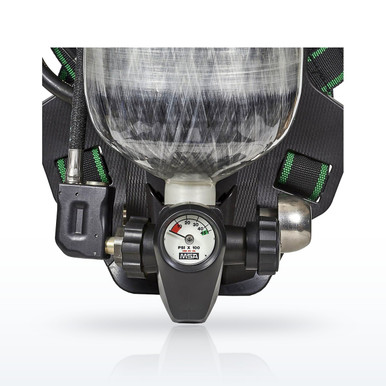
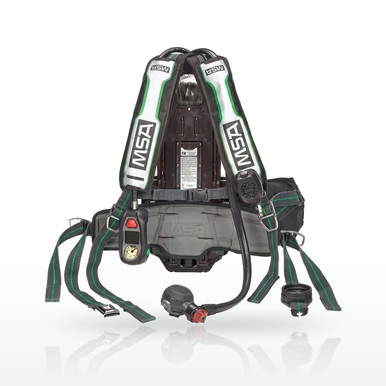
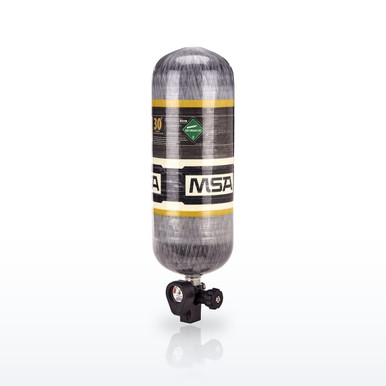
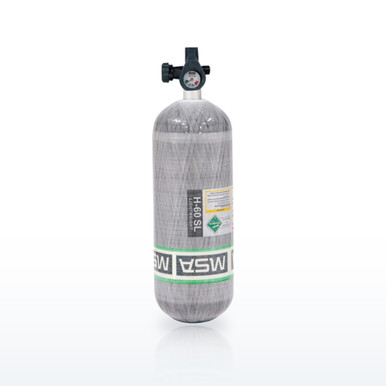
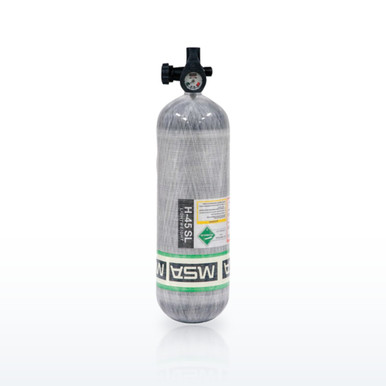
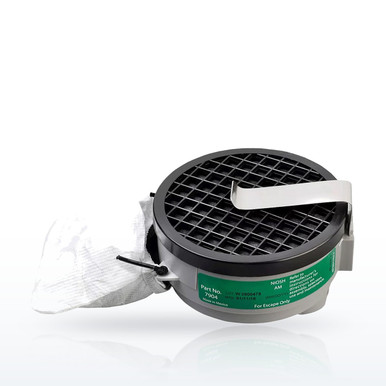
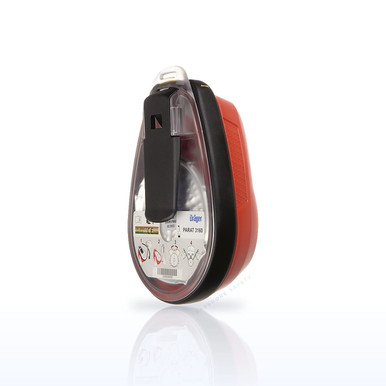
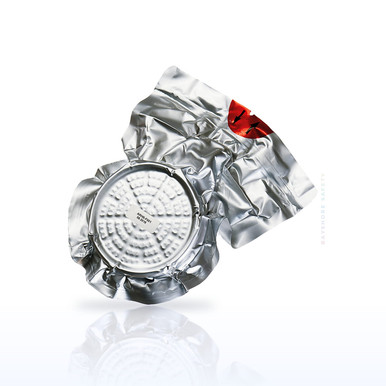
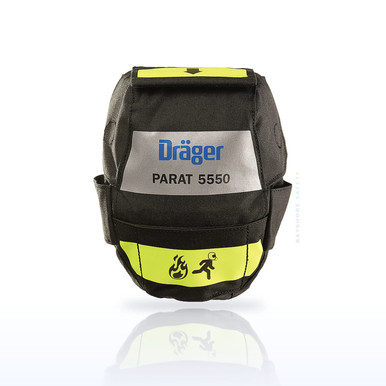
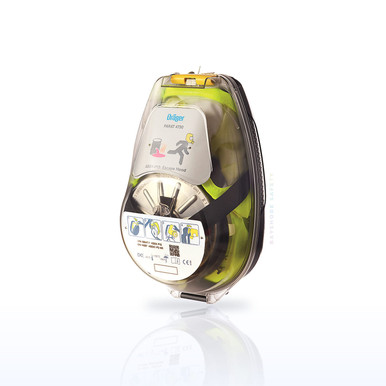
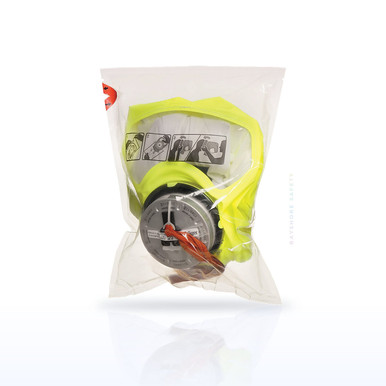
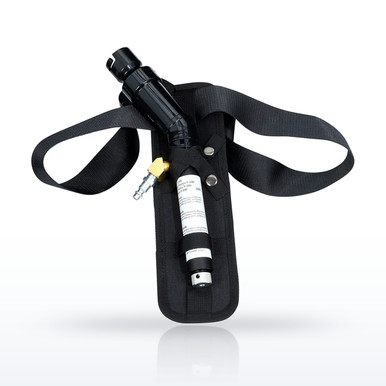
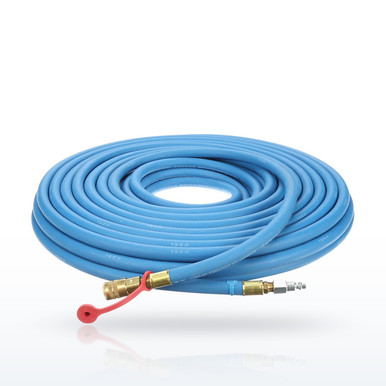
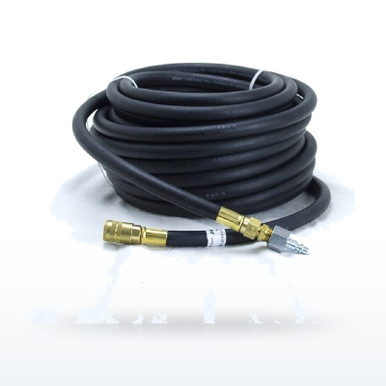
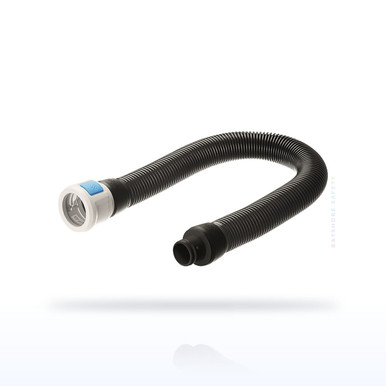
Supplied-air hose, couplings, vortex tubes and escape respirators are on the respirator finder under PAPR and supplied air. SCBA service, flow testing and cylinder requalification are quoted on request.
Questions people ask
What does SCBA stand for?
Self-contained breathing apparatus: a respirator that carries its own air supply in a cylinder, independent of the surrounding atmosphere.
When is SCBA required?
In any IDLH atmosphere: oxygen below 19.5 percent, a contaminant above its IDLH concentration, an unknown atmosphere, interior structural firefighting, and confined-space or HAZWOPER entry before the atmosphere is made safe. Pressure-demand supplied air with an escape cylinder is the alternative. (1910.134(d)(2) and (g).)
How long does an SCBA cylinder last?
Rated 30, 45 or 60 minutes at a standard breathing rate; hard work can halve that. The low-air alarm sounds at 25 to 33 percent remaining, and that is the signal to leave.
What is the difference between SCBA and supplied air?
SCBA carries its air on the back; supplied air (SAR) brings it through a hose from a compressor or cylinders. SAR is lighter and unlimited but tethered; for IDLH it needs an escape bottle on the belt.
What is the difference between SCBA and a gas mask?
A gas mask is an air-purifying respirator: it filters the air you are in and needs normal oxygen. SCBA supplies its own air and works in any atmosphere. A gas mask is never allowed in IDLH conditions.
Does an escape SCBA count for entry?
No. Escape-only units (5 to 15 minutes, hood style) are NIOSH-approved for leaving a hazardous area and may not be used to enter or work in one.
How often are SCBA cylinders tested?
Hydrostatically every 5 years for aluminum and most composite cylinders, with composite cylinders retired at 15 years, per DOT; the test date is stamped or labeled on the cylinder and an out-of-date cylinder may not be filled.
Do you need a fit test for SCBA?
Yes, a quantitative fit test on the full facepiece every 12 months, and a medical evaluation that accounts for the weight and exertion of SCBA use. (1910.134(e) and (f).)
Standards and ratings on this page are as published in the documents named and by the manufacturers named. The employer’s hazard assessment and written program decide what applies at a given workplace. Verify a rating on the product and its spec sheet before use.