
Respirators for lead: when 1910.1025 requires them
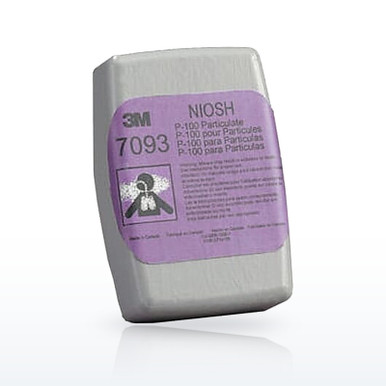
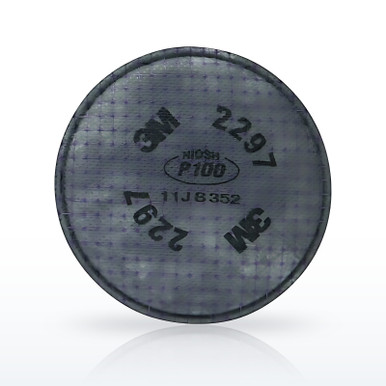
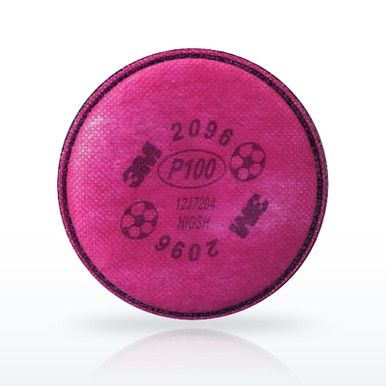
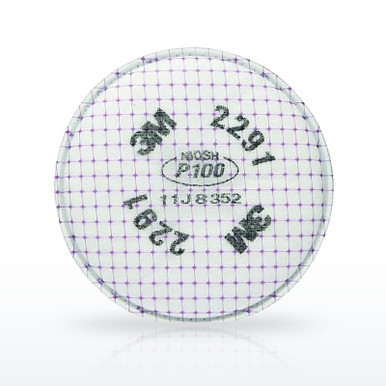
The general industry lead standard requires a respirator in 3 situations: while engineering and work-practice controls are being installed, during operations where those controls do not get exposure down to the permissible exposure limit of 50 micrograms per cubic meter averaged over 8 hours, and whenever an employee asks for one. The respirator is selected by assigned protection factor under 1910.134, and the filter must be HEPA, which in today’s NIOSH classes means a 100-series filter: P100, N100 or R100. A full facepiece replaces a half mask where lead aerosol irritates the eyes or skin, and an employee who asks for a PAPR must be given one if it protects adequately. Construction lead work follows 1926.62, which is written the same way.
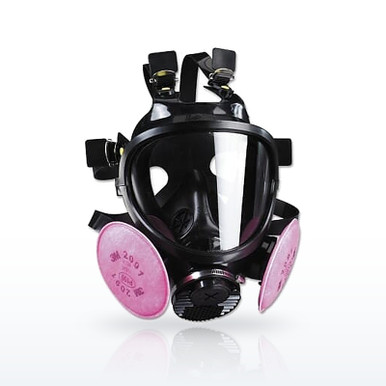
 3M 2091 P100 particulate filter99.97 percent filter efficiency level, the HEPA level the lead standard calls for
Why does lead have its own respirator rules? Lead is a cumulative poison. It builds up in blood and bone from dust and fume that is often invisible, and the standard is built around keeping the daily dose below a level that does not accumulate. Engineering controls come first; respirators fill the gap while those controls are installed and where they cannot get the air clean enough. Because the particles are small and the limit is low, the standard does not accept an ordinary 95-level filter. It calls for HEPA, the 99.97 percent level, on every air-purifying respirator used for lead.
When does the lead standard require a respirator?
The 3 triggers in 1910.1025(f)(1), plus the limit they are measured against.
Which respirator and which filter?
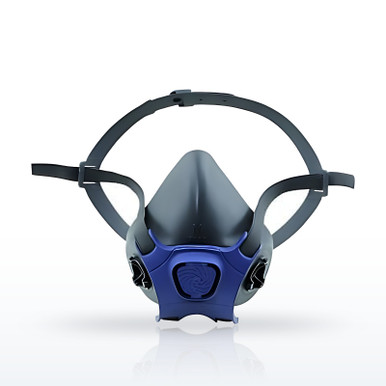
Selection follows the assigned protection factors in 1910.134 Table 1: a half mask (including an elastomeric half mask) is APF 10, a full facepiece is APF 50, a PAPR with a loose-fitting hood is 25 and with a tight-fitting full facepiece is 1,000. The maximum use concentration is the APF times 50 µg/m³: 500 µg/m³ for a half mask, 2,500 µg/m³ for a full facepiece. Air sampling tells the employer which line applies.
1910.1025(f)(3)(i)(A); 1910.134(d)(3)(i)(A) and Table 1; 1910.134(d)(3)(i)(B).The filter must be HEPA on both powered and non-powered air-purifying respirators. HEPA is defined in OSHA’s standards as a filter that traps at least 99.97 percent of 0.3-micrometer particles. Under NIOSH’s current certification in 42 CFR 84 the filters certified at the 99.97 percent level are N100, R100 and P100 for non-powered respirators and HE (or PAPR100) for powered ones; 1910.134 accepts a particulate filter certified under 42 CFR 84 in place of an old 30 CFR 11 HEPA filter. In practice, lead work uses P100, because lead dust and fume are not oil mists and the P series has no use-time limit.
1910.1025(f)(3)(i)(C); 1926.1101(b) definition of HEPA filter; 42 CFR 84.171(b)(1)(i) through (iii) and (b)(2); 1910.134(d)(3)(iv)(B).Two more selection rules are specific to lead. Where the lead aerosol irritates the eyes or skin at the use concentration, the employer must provide a full facepiece instead of a half mask. And when an employee chooses a PAPR, the employer must provide it in place of the negative-pressure respirator, as long as it gives adequate protection.
1910.1025(f)(3)(i)(B); 1910.1025(f)(3)(ii).What else does the respirator program have to include?
- A written respiratory protection program under 1910.134(b) through (d) and (f) through (m): medical evaluation, fit testing, training, cleaning, storage, inspection and records.
- A medical examination for any employee who has breathing difficulty during fit testing or respirator use, to decide whether they can use a respirator on the job.
- Protective clothing (coveralls, gloves, hats, shoe covers) and face protection whenever exposure is above the PEL without regard to the respirator, cleaned at least weekly, and daily above 200 µg/m³.
- Exposure monitoring measured as if no respirator were worn, which is the number the respirator is selected against.
Is construction lead work different?
Construction has its own lead standard, 1926.62, with the same PEL of 50 µg/m³ and the same respirator structure: required above the PEL, where controls are insufficient, on request, and as interim protection during the tasks listed in 1926.62(d)(2) until exposure has been assessed. Selection is again by 1910.134 Table 1 with HEPA filters, a full facepiece where the aerosol irritates eyes or skin, and a PAPR on request. Until the exposure assessment is done, the construction rule presumes an exposure level by task: above 500 µg/m³ for lead mortar, lead burning, rivet busting, power-tool cleaning without dust collection and abrasive-blasting enclosure work, and above 2,500 µg/m³ (50 times the PEL) for abrasive blasting, welding, cutting and torch burning on lead-painted structures, which puts those tasks beyond a half mask or a full facepiece from the first day.
1926.62(c)(1); 1926.62(f)(1)(i) through (iv); 1926.62(f)(3)(i) and (ii); 1926.62(d)(2)(iii) and (iv).P100 filters, respirators and PAPRs for lead
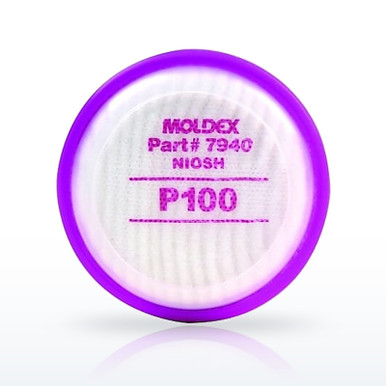
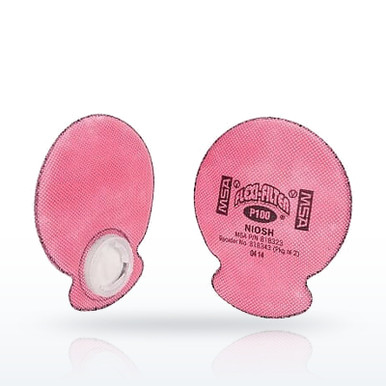
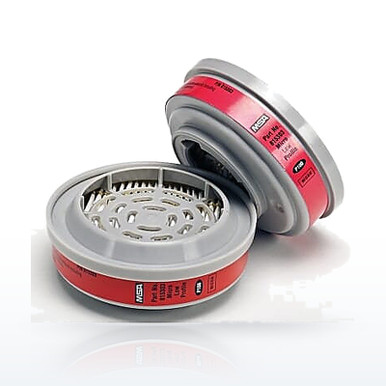
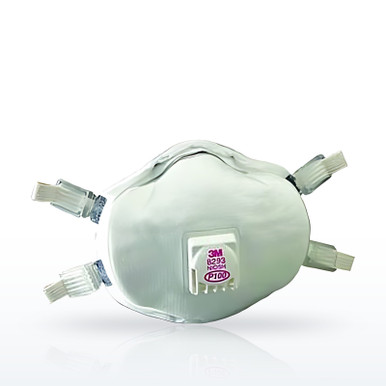
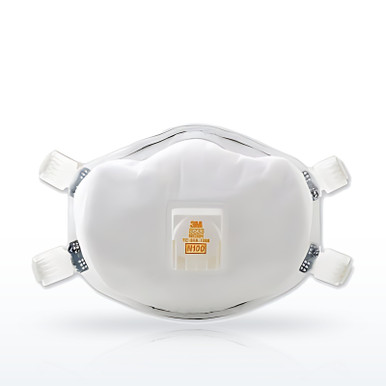
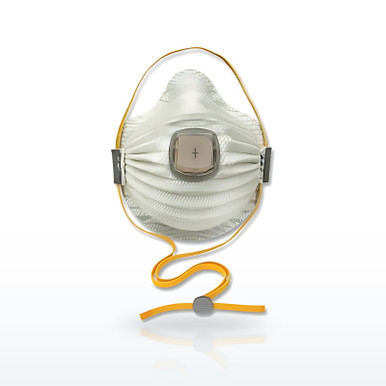
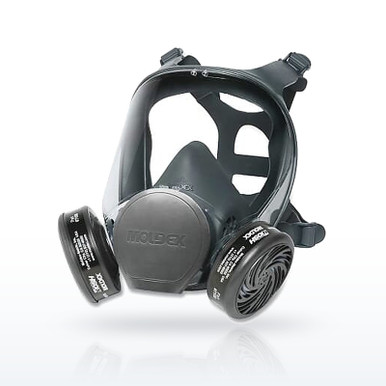
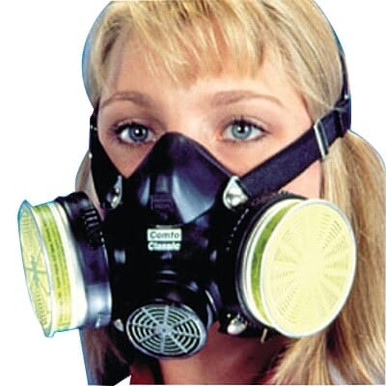
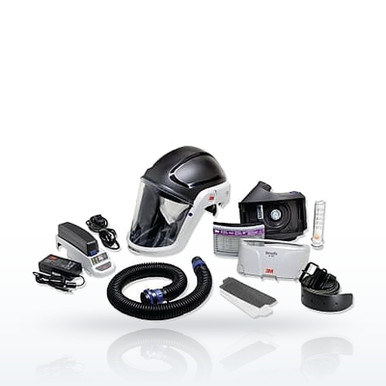
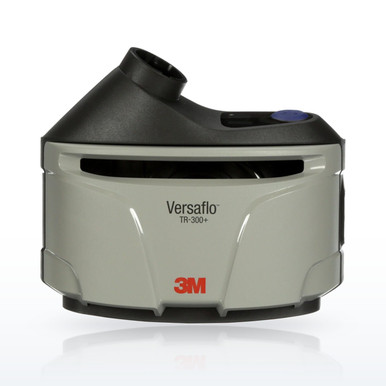
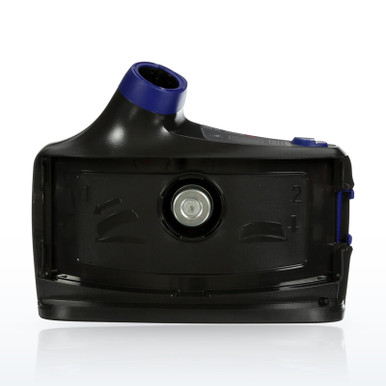
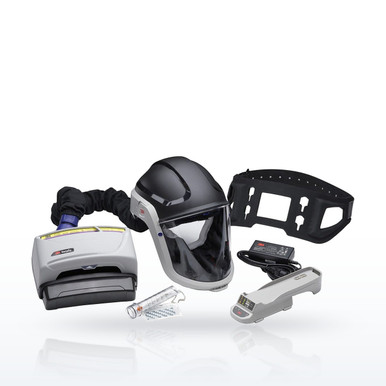
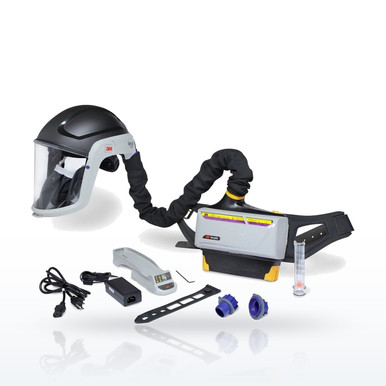
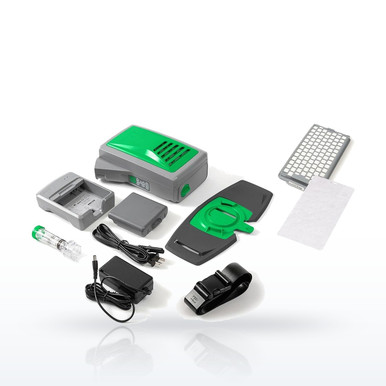
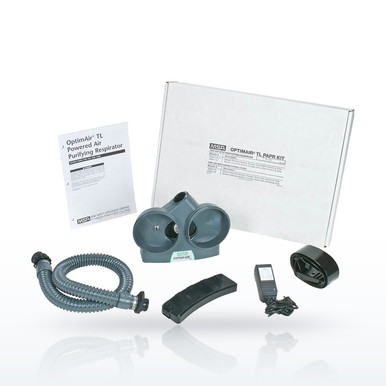
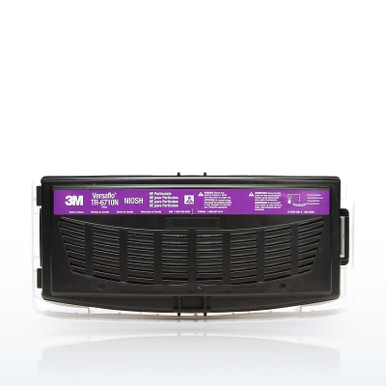
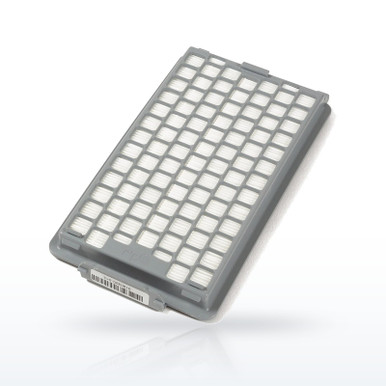
33 items · prices liveFilter class is as certified by NIOSH and published by the manufacturer. The employer’s air sampling and program decide which respirator type is required. Contractor Direct orders ship free.





Lead-rated coveralls and hand protection are in the coverall finder and glove selector. Supplied-air systems are in the respirator selector.
Questions people ask
At what lead level is a respirator required?
Above the PEL of 50 µg/m³ as an 8-hour average, while controls are being put in, where controls cannot reach the PEL, and whenever an employee asks for one. 1910.1025(c)(1) and (f)(1).
Is an N95 acceptable for lead?
No. The lead standard requires HEPA filters on air-purifying respirators, which is the 99.97 percent level: P100, N100 or R100. An N95 is a 95 percent filter. 1910.1025(f)(3)(i)(C).
Is a P100 the same as HEPA?
For respirator purposes, yes. HEPA is defined as 99.97 percent at 0.3 micrometers, and 42 CFR 84 certifies P100, N100 and R100 at the 99.97 percent filter efficiency level. 1910.134(d)(3)(iv)(B) accepts a 42 CFR 84 particulate filter where a HEPA filter was once required.
When is a full facepiece required for lead?
When the lead aerosol irritates the eyes or skin at the use concentration, or when the exposure is above the half-mask MUC of 500 µg/m³. 1910.1025(f)(3)(i)(B); 1910.134 Table 1.
Can an employee demand a PAPR for lead work?
Yes. If the employee chooses a PAPR and it provides adequate protection, the employer must provide it instead of a negative-pressure respirator. 1910.1025(f)(3)(ii).
What is the action level for lead?
30 µg/m³ as an 8-hour average, measured without regard to respirators. It triggers monitoring, medical surveillance and training, not the respirator requirement itself. 1910.1025(b).
Does the lead respirator rule apply to construction?
Construction follows 1926.62(f), which has the same triggers plus interim protection during listed tasks, and the same HEPA, full facepiece and PAPR rules.
Standards and ratings on this page are as published in the documents named and by the manufacturers named. The employer’s hazard assessment and written program decide what applies at a given workplace. Verify a rating on the product and its spec sheet before use.