
Respirators for spray painting and isocyanates
Spray paint puts two things in the air at once: solvent vapor and paint mist. An air-purifying respirator for it needs an organic vapor cartridge for the solvent and a particulate filter in front of it for the mist, on a half or full facepiece that has been fit tested. Two-part polyurethane and other isocyanate coatings are the hard case: isocyanates cause occupational asthma, OSHA sets ceiling limits for MDI and TDI that may never be exceeded, and OSHA’s spray booth rule requires an air-supplied respirator or one approved for the material whenever the painter stands downstream of the work. Many isocyanate programs use supplied air for that reason. Cartridges must be changed on a written schedule, not when the painter smells paint.
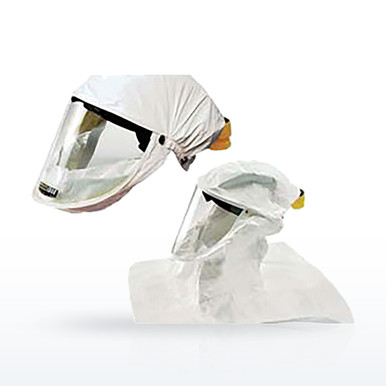
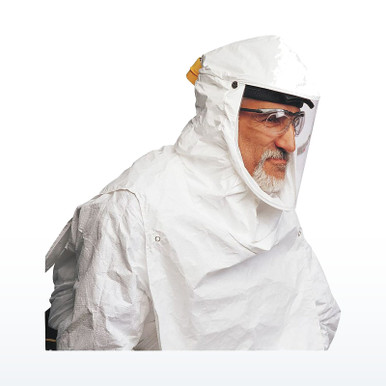
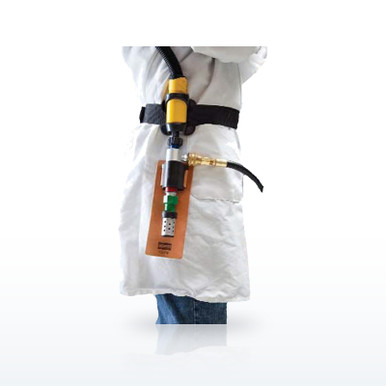
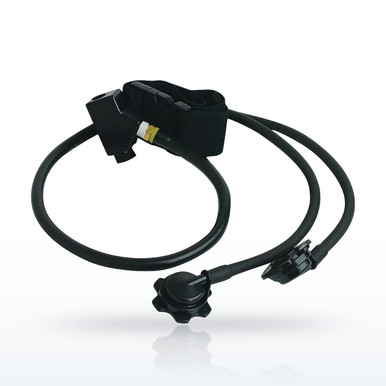
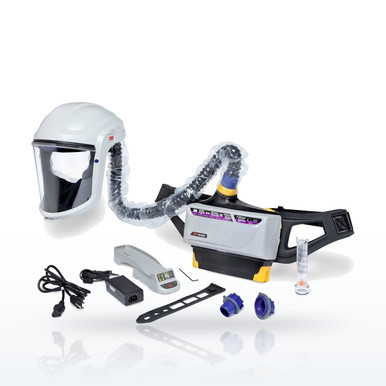 3M Versaflo TR-800 PAPR painters kitPowered air-purifying respirator kit assembled by the manufacturer for paint spraying
Why is spray painting different from brushing? A spray gun atomizes the paint into a fine mist of droplets and drives the solvent into the air much faster than a brush. The painter stands in the plume. Solvents such as toluene and xylene have exposure limits and are stopped only by a sorbent cartridge; the droplets carry pigment and resin and are stopped only by a particulate filter; and with isocyanate paints the resin itself is the hazard. A single filter does neither job, and a dust mask does nothing for the vapor, which is why the respirator for spraying is a combination cartridge or supplied air.
What does OSHA require for spray finishing?
The spray finishing rule, 1910.94(c), is mostly about booths and ventilation. Its respirator sentence is short.
Which cartridge and filter for solvent-based paint?
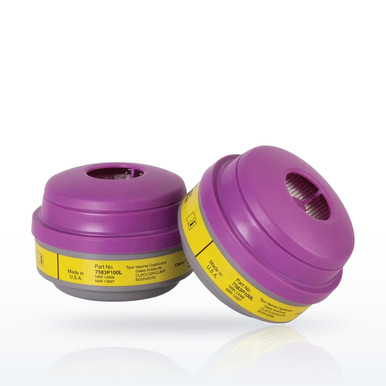
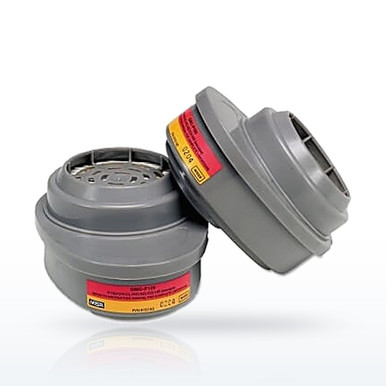
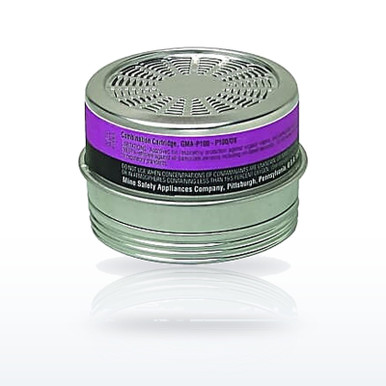
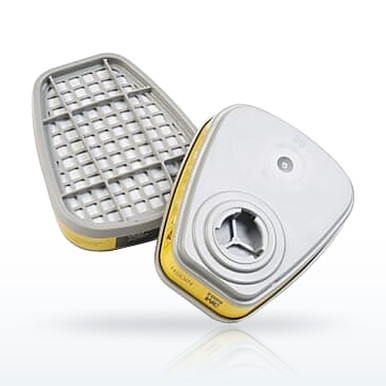
An organic vapor (OV) cartridge with a particulate filter ahead of it. The particulate filter is either a P95 or P100 pad snapped over the cartridge or a combination cartridge that carries both in one body, marked OV/P100 or similar. Paint mist is a liquid aerosol that may contain oil, which is why the P series (oil proof) is the usual choice over an N filter. For protection against gases and vapors the standard requires either an atmosphere-supplying respirator or an air-purifying respirator whose cartridge has an end-of-service-life indicator, or, where none exists for the conditions, a change schedule based on objective data. Paint solvents have no cartridge indicator, so every paint program needs a change schedule written into the program.
1910.134(d)(3)(iii)(A) and (B)(1) and (2); 1910.134(j) NIOSH label and color code on every cartridge; 42 CFR 84.170(a)(2) N, R and P series.Water-based (latex) paints still produce mist and some vapor; the cartridge and filter are chosen from the paint’s safety data sheet, which lists the solvents and their limits. Where the data sheet shows only particulate hazards, a P95 or P100 filter alone may be what the hazard assessment supports. The employer’s evaluation of the hazard, not the paint can, decides.
1910.134(d)(1)(iii): the employer identifies and evaluates the respiratory hazard, including the contaminant’s chemical state and physical form.What makes isocyanate paints different?
Two-part polyurethane paints, clear coats, bed liners and many industrial topcoats cure with an isocyanate hardener. OSHA lists occupational asthma and other lung problems as the main effects of exposure, along with irritation of the eyes, nose, throat and skin, and classes some isocyanates as potential carcinogens. A sensitized painter can react to very small later exposures. OSHA’s exposure limits for the two common ones are ceilings: 0.02 parts per million for MDI and for TDI, never to be exceeded at any time. There is no OSHA limit for HDI, the one most common in automotive paints, so the employer must set a maximum use concentration from the available data and professional judgment.
OSHA Safety and Health Topics, Isocyanates (health effects); 1910.1000 Table Z-1: methylene bisphenyl isocyanate (MDI) (C) 0.02 ppm, toluene-2,4-diisocyanate (TDI) (C) 0.02 ppm; 1910.1000(a)(1) ceiling values; 1910.134(b), definition of maximum use concentration where no OSHA limit exists.Those numbers are why isocyanate work moves programs toward supplied air. An air-purifying respirator works only to its assigned protection factor times the limit, 10 times 0.02 ppm for a half mask, and only until the cartridge is spent, which the painter cannot sense. A supplied-air hood or full facepiece gets a protection factor of 25 to 1,000, delivers clean air from outside the booth, and has no cartridge to run out. Where the painter is downstream of the work in the booth, which is the case in most manual spraying, the spray rule’s air-supplied respirator clause is already in force. Skin exposure is part of the hazard too; gloves and coveralls are chosen with the respirator.
1910.134(d)(3)(i)(A) Table 1 and (d)(3)(i)(B) maximum use concentration; 1910.94(c)(6)(iii)(a); OSHA Isocyanates topic page on skin irritation.How do you set a cartridge change schedule for paint?
- Use the manufacturer’s service-life calculator or breakthrough data for the specific solvent mix, concentration, humidity, temperature and work rate; that is the objective data the standard calls for.
- Write the result into the respiratory protection program: which cartridge, the conditions assumed, the change interval, and the basis for relying on the data.
- Do not use smell as the trigger. The standard requires the change before the end of service life, on a schedule built from data; a smell means the cartridge has already let vapor through.
- Change sooner when breathing resistance rises from loaded prefilters, after a longer shift than assumed, or when the painter detects any vapor. Leaving the booth when breakthrough is detected is a separate requirement.
- Keep the NIOSH approval label on every cartridge and filter; the color band is how the painter checks the right cartridge is on the mask.
What else is required once the respirator is required?
A written program, a medical evaluation before fit testing, a fit test on every tight-fitting facepiece before first use and annually, training, a user seal check each time, cleaning after each use when shared, and no facial hair under a tight-fitting seal. A supplied-air system also brings in the breathing-air rules: Grade D air, carbon monoxide under 10 ppm, a CO alarm or high-temperature alarm on oil-lubricated compressors, and couplings that cannot connect to shop air.
1910.134(c)(1), (e)(1), (f)(2), (k)(3), (g)(1)(iii), (h)(1)(ii), (g)(1)(i)(A); (i)(1)(ii), (i)(6), (i)(7), (i)(8).Cartridges, facepieces and air-supplied options for spraying
38 items · prices liveCartridge type and NIOSH filter class are as published by the manufacturer on each approval label; combination cartridges show the particulate class. The cartridge must match the solvents on the paint’s safety data sheet. Free shipping on orders over $199.

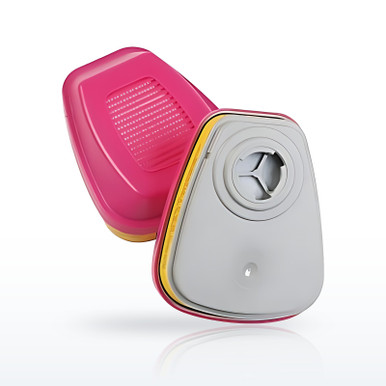
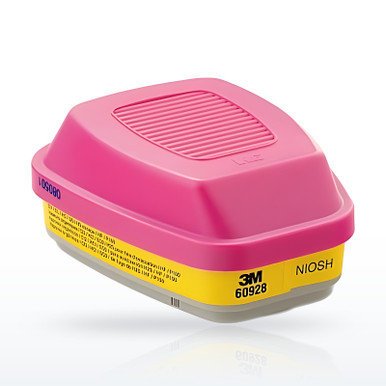
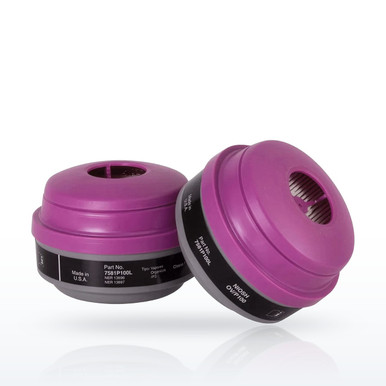



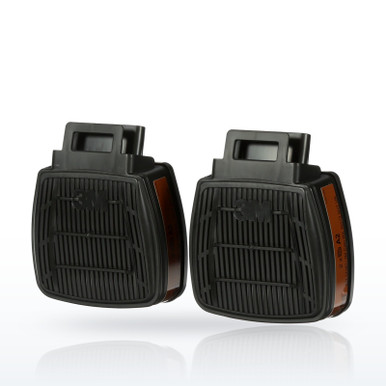

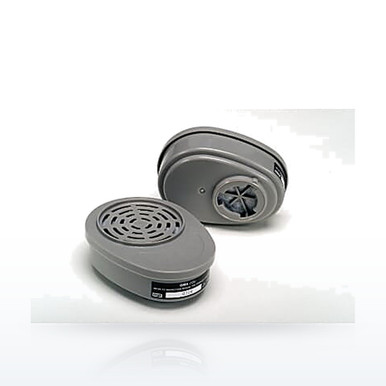
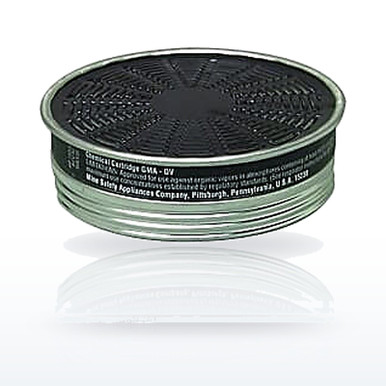

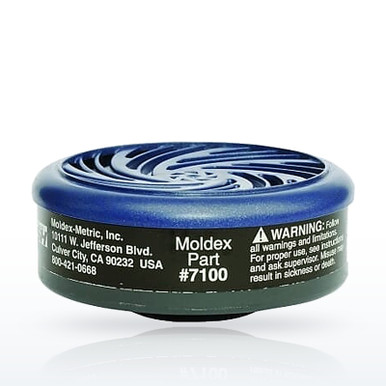

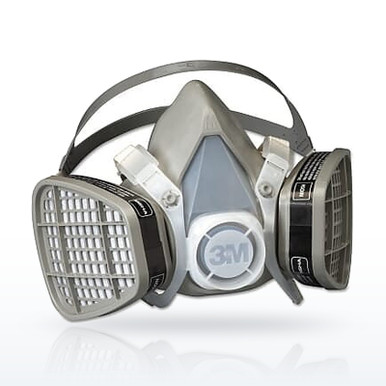
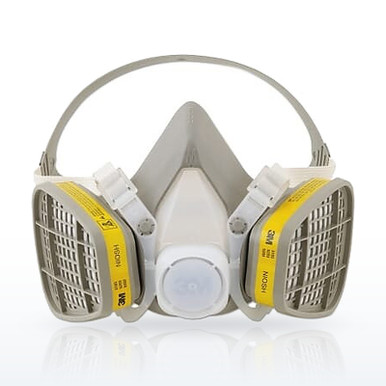
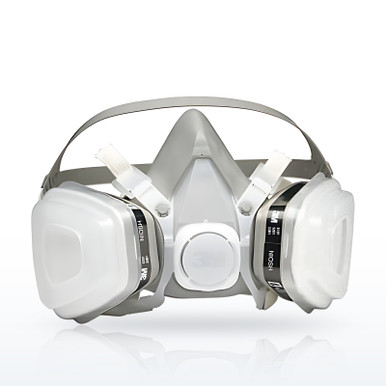
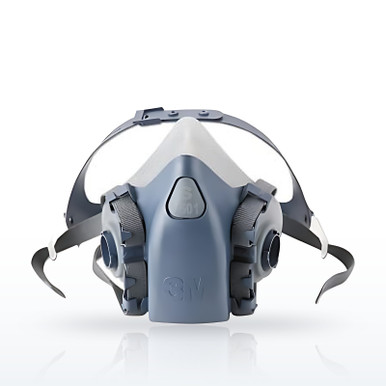


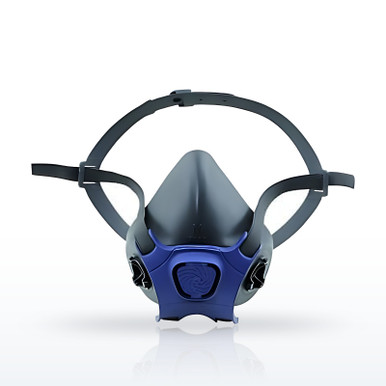
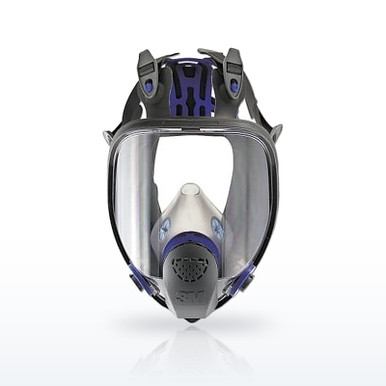
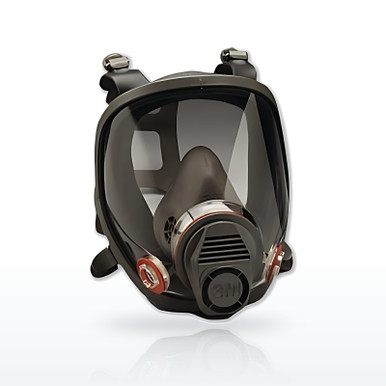
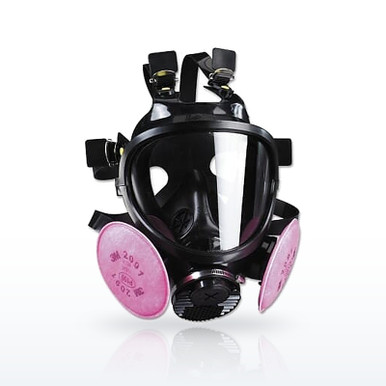
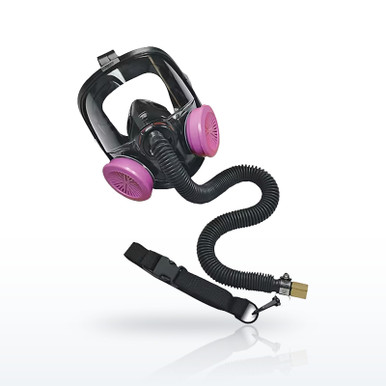
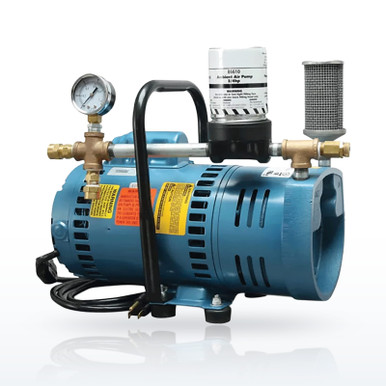
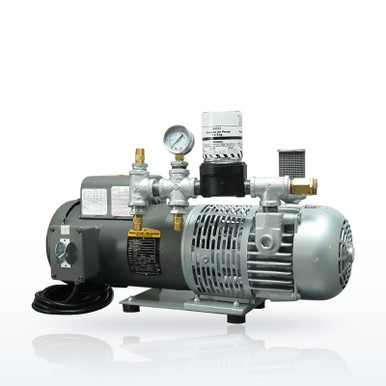
Spray socks, paint coveralls and nitrile gloves are in the coverall and glove finders.
Questions people ask
What respirator do I need for spray painting?
For solvent paint, a half or full facepiece with organic vapor cartridges and a P95 or P100 particulate filter ahead of them, fit tested, with a written cartridge change schedule. For isocyanate (two-part polyurethane) paints, the numbers usually point to supplied air, and OSHA’s booth rule requires an air-supplied or material-approved respirator when the painter is downstream of the work.
Is an N95 enough for spray paint?
No. An N95 stops particles only. Paint solvent vapor passes straight through it, and N-series filters are not rated for oil-containing mist. (42 CFR 84.170; 1910.134(d)(3)(iii).)
What is the OSHA limit for isocyanates?
Ceilings of 0.02 ppm for MDI and 0.02 ppm for TDI, never to be exceeded. OSHA has no limit for HDI; the employer sets a maximum use concentration from available data. (1910.1000 Table Z-1; 1910.134(b).)
Can I use an organic vapor cartridge for isocyanates?
Only within the facepiece’s protection factor and a change schedule based on data for the isocyanate, and only outside the conditions where 1910.94(c)(6)(iii)(a) requires an air-supplied respirator. Many programs choose supplied air because the cartridge cannot be checked by smell and the limit is so low.
How often do I change paint respirator cartridges?
On the schedule the employer writes into the program from the cartridge manufacturer’s data for the solvents and conditions, and sooner if vapor is detected or breathing resistance rises. Not by smell. (1910.134(d)(3)(iii)(B)(2).)
Does OSHA require a spray booth?
Spray booths or rooms are to be used to enclose or confine spray-finishing operations in general industry, with air velocities from Table G-10. (1910.94(c)(2) and (c)(6).)
Does a supplied-air hood need a fit test?
A loose-fitting hood does not. A tight-fitting supplied-air facepiece is fit tested in negative-pressure mode with filters or a surrogate facepiece. (1910.134(f)(8).)
What air can feed a supplied-air painting hood?
Grade D breathing air: 19.5 to 23.5 percent oxygen, carbon monoxide 10 ppm or less, carbon dioxide 1,000 ppm or less, no noticeable odor, from a compressor or ambient-air pump set up to keep contaminated air out and with couplings that cannot connect to shop air. (1910.134(i).)
Standards and ratings on this page are as published in the documents named and by the manufacturers named. The employer’s hazard assessment and written program decide what applies at a given workplace. Verify a rating on the product and its spec sheet before use.