
Welding blankets, curtains and screens: what 1910.252 requires for shielding
The welding standard asks for two kinds of shielding and names them in different paragraphs. The first protects people: anyone next to a welding area must be shielded from the arc by noncombustible or flameproof screens or shields, or wear goggles; where the work allows, the welder is enclosed in a booth or by noncombustible screens painted a low-reflectivity finish, open at floor level so air can circulate. The second protects property: combustibles that cannot be moved 35 feet away are covered with flameproofed covers or shielded with metal or other guards or curtains, and fire-resistant shields go up when welding near a combustible wall, ceiling or floor. A welding blanket or pad is the flameproof cover; a welding curtain or screen is the shield for people. The standard sets the duty; manufacturers rate their fabrics for the job.
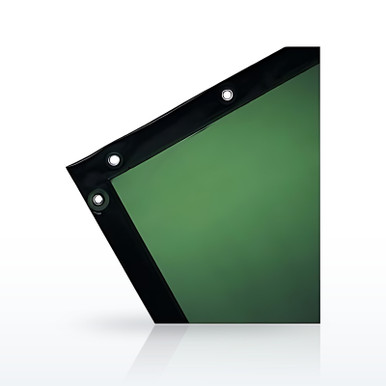 Wilson see-thru green welding curtain14 mil flame-resistant vinyl, 6 by 8 feet, as published by Wilson
Why does the standard separate screens from blankets? A screen and a blanket solve different problems. The arc throws ultraviolet light that burns the eyes and skin of anyone who can see it, including the forklift driver 40 feet away, so the screen’s job is to block light without burning or reflecting it. Sparks and slag land on whatever is below and beside the work, so the blanket’s job is to take molten metal without letting it through to the pallet, the cable or the floor underneath. A vinyl curtain that blocks the arc will melt under slag; a fiberglass blanket that takes slag does nothing for the eyes of the person behind it. Most jobs need both, and OSHA writes the duties for each in its own paragraph.
What does 1910.252 require, and where?
The shielding duties, in the order the standard lists them.
Can a see-through vinyl curtain meet the standard?
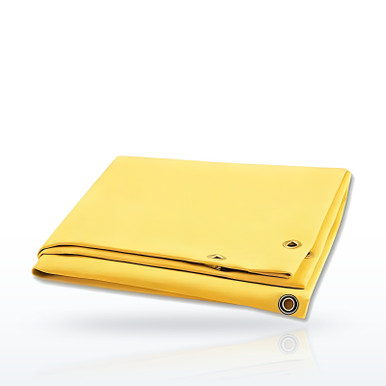
For the people-protection duty, yes, if it is flameproof. OSHA answered this in a 1978 interpretation of the arc-rays paragraph: a transparent plastic curtain can serve as the flameproof screen or shield that protects adjacent workers, because it can be made flameproof and absorbs rather than reflects the arc. The same letter says a plastic curtain cannot form the welder’s booth, because the booth must be noncombustible and no treatment makes plastic noncombustible. So a tinted vinyl curtain hung between a welding station and an aisle is doing the job the standard describes; a vinyl enclosure around the welder is not the booth the standard describes, and the fiberglass or steel-framed screen is. Either way the screen must leave air moving at floor level; the ventilation paragraph puts the bottom edge about 2 feet above the floor unless the work is so low that nearby workers need it lower.
29 CFR 1910.252(b)(2)(iii); OSHA standard interpretation, March 17, 1978, transparent welding curtains; 1910.252(c)(1)(ii) screens about 2 feet above the floor.Transparency matters for another reason. Welding curtains are tinted so that the arc’s ultraviolet and blue light are filtered while the welder remains visible to the fire watch and to anyone walking in; the manufacturer states the light the material filters. A curtain is not a welding lens; nobody should watch an arc through it at close range for long, and the person inside still wears the helmet.
Manufacturer product data for the curtains listed below (Wilson, Best Welds); 1910.252(b)(2)(i)(A) helmet required for the welder regardless of screens.What makes a welding blanket a welding blanket?
OSHA’s word is flameproofed cover, and the standard does not rate fabrics. The industry test is FM Approvals Class 4950, Approval Standard for Welding Pads, Welding Blankets and Welding Curtains for Hot Work Operations. It defines three products by exposure: a welding pad, for horizontal use with severe exposure, placed directly under the work to take molten metal and slag; a welding blanket, for horizontal use with light to moderate exposure, draped over equipment and combustibles to keep sparks and spatter off them; and a welding curtain, for vertical use with light to moderate exposure, hung to keep sparks from leaving an area. The fire test uses an oxy-acetylene cutting machine so that sparks and slag fall onto the sample; a pad or blanket passes with no burn-through and no underside temperature over 500 degrees F, and a curtain passes with no melting, burning or burn-through.
FM Approvals Class 4950, July 2014: sections 1.2 scope, product definitions by exposure, section 2.6 test apparatus, and the pass criteria for pads, blankets and curtains.What that means when reading a product page: a fiberglass blanket rated by its maker for 1,000 degrees F is the usual cover for combustibles beside and below the work; the silica and carbon-fiber fabrics, rated by their makers for higher temperatures, are the ones sold for direct slag; and the material’s weight in ounces per square yard and its thickness tell you how much molten metal it can take before it burns through. A blanket carrying an FM 4950 mark has been tested to that standard; one without it is rated only by its manufacturer. Neither mark is required by OSHA, which asks only that the cover be flameproofed and do the job.
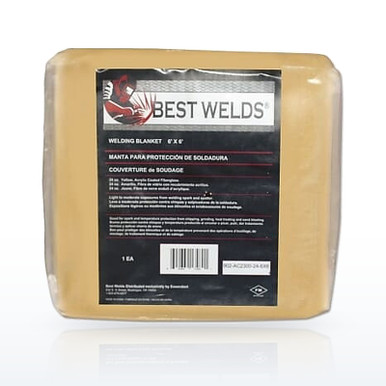
Manufacturer product data for the blankets listed below (Best Welds, Wilson); 29 CFR 1910.252(a)(2)(vii).What does ANSI Z49.1 add?
- Persons near welding are guarded against radiant energy and spatter by screens or shields that are noncombustible or flame-resistant.
- Where arc welding is routine, adjacent walls and other surfaces have low reflectivity to ultraviolet radiation, which is what the zinc oxide and lamp black finish in the OSHA rule is for.
- Welding stations are separated by noncombustible screens or shields where operations allow.
- Cracks and openings in the floor are covered or closed before hot work.
- The construction standard says the same thing in one sentence: positive means shall be taken to confine the heat, sparks and slag and to protect the immovable fire hazards from them, and the same precautions go on the opposite side of a wall, floor or ceiling being welded.
Welding screens, curtains and blankets
14 items · prices liveMaterial, thickness, temperature rating and panel size are as published by the manufacturer on each product page; each item is labeled by what it is for. Free shipping on orders over $199.
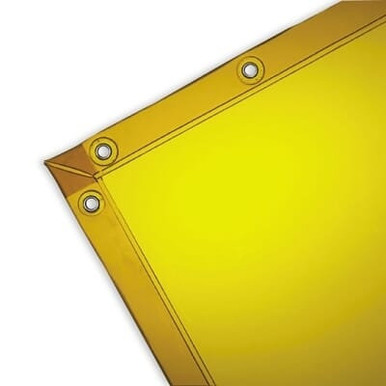
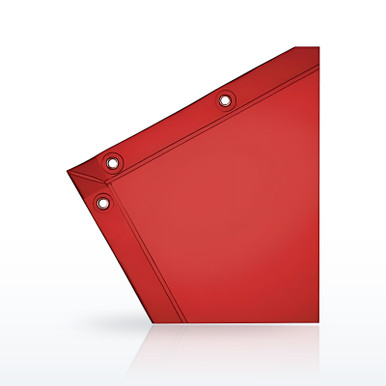
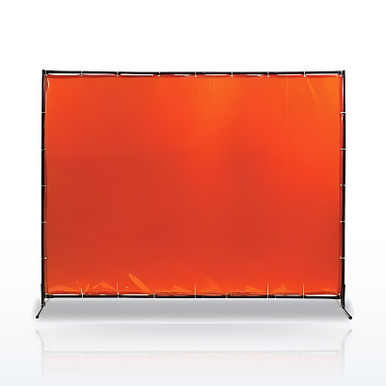
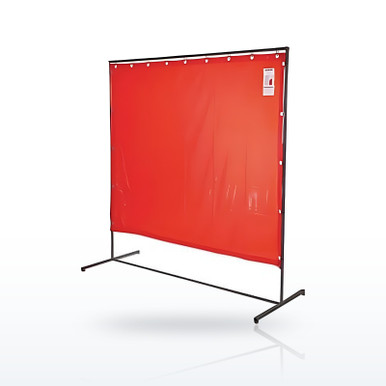
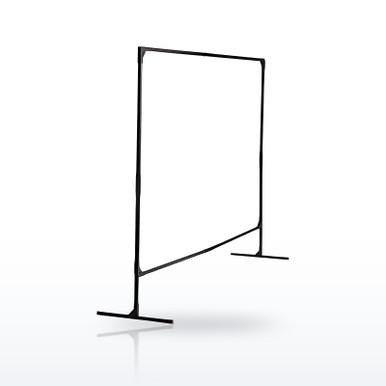
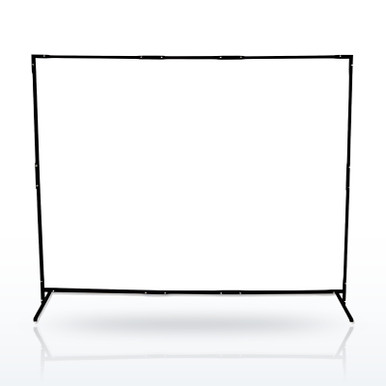
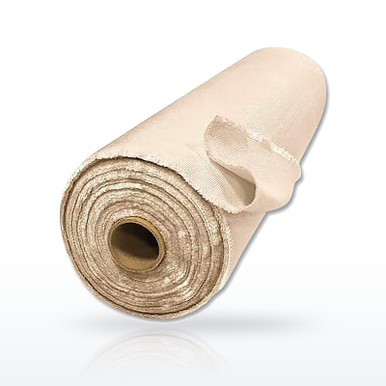
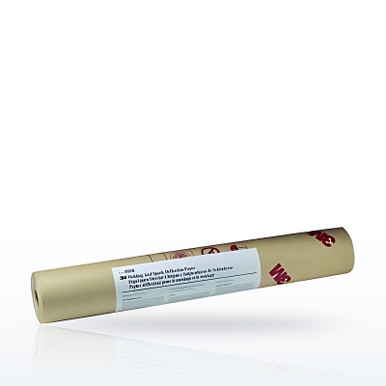
Curtain frames, roll goods by the yard and spark deflection paper are also listed; call for cut sizes.
Questions people ask
Does OSHA require welding screens?
Yes, where anyone adjacent to the welding area could see the arc: they must be protected by noncombustible or flameproof screens or shields, or wear appropriate goggles. Where the work permits, the welder is also enclosed in a booth or noncombustible screens. (1910.252(b)(2)(iii).)
Does OSHA require welding blankets?
Not by name. It requires that combustibles within 35 feet that cannot be moved be protected with flameproofed covers or shielded with metal or other guards or curtains, and that guards confine heat, sparks and slag. A welding blanket is the usual flameproofed cover. (1910.252(a)(2)(vii) and (a)(1)(ii).)
How far from welding do combustibles have to be?
35 feet (10.7 meters) where practicable, with the floor swept clean for the same radius. Closer than that, they are covered or shielded and a fire watch is required. (1910.252(a)(2)(vii), (v) and (iii).)
Why are welding curtains orange, green or yellow?
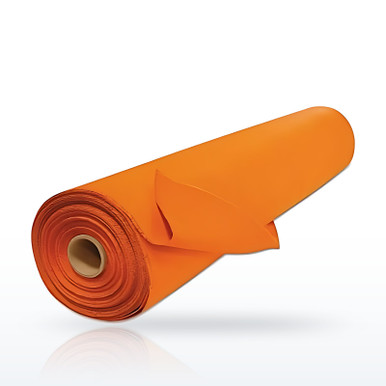
The tint filters the arc’s ultraviolet and blue light while leaving the welder visible from outside. The color and the light it filters are the manufacturer’s specification; the standard requires only that the screen be flameproof and not reflective.
How high off the floor should a welding screen be?
About 2 feet, so ventilation is not blocked, unless the work is so low that the screen must come nearer the floor to protect nearby workers from the glare. (1910.252(c)(1)(ii).)
What is the difference between a welding blanket and a welding pad?
Under FM 4950, a pad is for severe horizontal exposure directly under the work, taking molten metal and slag; a blanket is for light to moderate horizontal exposure, covering equipment and combustibles against sparks and spatter. Manufacturers label which their fabric is.
What is a welding blanket made of?
Fiberglass cloth, plain or acrylic-coated, in most of what we carry, rated by the maker for 1,000 degrees F in the heavier weights; silica and carbon-fiber fabrics for higher temperatures; flame-retardant paper for light spark deflection. The rating is the manufacturer’s.
Does a plastic welding curtain meet OSHA?
As the flameproof shield for adjacent workers, yes, per OSHA’s 1978 interpretation. As the noncombustible booth around the welder, no; plastics cannot be made noncombustible.
Standards and ratings on this page are as published in the documents named and by the manufacturers named. The employer’s hazard assessment and written program decide what applies at a given workplace. Verify a rating on the product and its spec sheet before use.