
What is hi-vis, and how does retroreflective material work?
High-visibility (hi-vis) clothing is a garment built from two materials that work in different light. The fluorescent background, in yellow-green, orange-red or red, converts ultraviolet light into visible light, so by day the fabric looks brighter than anything around it. The retroreflective tape sends light straight back toward its source, so at night a driver’s own headlights light the wearer up long before the driver could see an ordinary jacket. ANSI/ISEA 107 fixes the colors, the brightness, how many square inches of each material a garment must carry, and where the tape goes. A garment that meets it carries a label saying so.
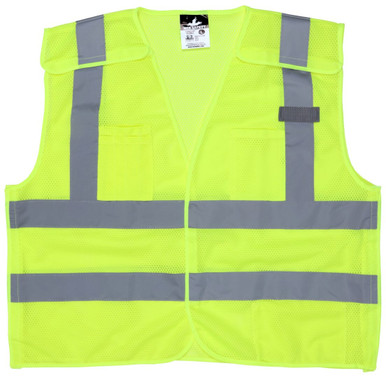 MCR Safety Luminator CL2ML2 Hi-Vis Vests, Hi-Vis Lime Safety VestType R Class 2 vest, fluorescent yellow-green background with silver retroreflective tape
Why two materials instead of one? Because no single material works in both daylight and darkness. Fluorescent fabric is brilliant in the sun and at dawn and dusk, when there is ultraviolet light to convert, and it does nothing at night. Retroreflective tape is nearly invisible by day and lights up under headlights. A garment with only one of them is unseen for half the working day. The standard requires both, in set amounts, so the wearer is seen in every light the shift runs through.
What are the parts of a hi-vis garment?
The three materials ANSI/ISEA 107 defines, and what each one does.
How does retroreflective material work?
Ordinary surfaces reflect light in one of two ways. A matte surface scatters it in every direction, so only a small share goes back to where it came from. A mirror bounces it off at the same angle it arrived, so unless the light source and the viewer are in exactly the same place, the viewer sees nothing. Retroreflection is the third case: the material sends the light back along the path it came in on, whatever the angle. The headlight is a few feet from the driver’s eye, so the returned light lands on the driver, and the tape appears many times brighter than the fabric beside it.
3M Scotchlite, How Retroreflection Works (retroreflection, mirror reflection and diffuse reflection compared).Two constructions do this. Glass-bead tape is a layer of tiny glass spheres over a mirror coating; each bead focuses the incoming light onto the mirror behind it and sends it back the way it came. Microprismatic tape is a sheet of tiny corner-cube prisms molded into plastic; each prism bounces the light off three faces and returns it. Both are rated the same way, by the coefficient of retroreflection, measured in candelas per lux per square meter at set angles. ANSI/ISEA 107 requires its Level 2 retroreflective material to return at least 330 candelas per lux per square meter when the light comes in 5 degrees off straight and is viewed 0.2 degrees from the source, which is the geometry of a driver looking past a headlight. A new silver tape typically starts around 500.
ANSI/ISEA 107-2020 section 7 (retroreflective material photometric performance levels); the Level 2 minimum of 330 cd/lx/m² at 0.2° observation and 5° entrance, and the initial values, are as published in the 3M Scotchlite Reflective Material Fabrics technical data sheet.The tape is also tested after washing. The manufacturer states on the care label how many wash cycles the garment is rated for; the test runs the material through that many cycles and checks that it still returns at least 100 candelas per lux per square meter. That is why the label’s cycle count matters: past it, the tape may still look silver and no longer meet the minimum under headlights.
ANSI/ISEA 107-2020 section 7 (retroreflective material after laundering, ISO 6330 at 60 °C) and sections 12 to 14 (care labeling); 3M Scotchlite Reflective Material Fabrics technical data sheet (wash cycles to RA ≥ 100 cd/lx/m²).What do safety vest colors mean? Orange, yellow-green and red
The standard allows three fluorescent background colors: yellow-green, orange-red and red. Each has a defined color box and a minimum luminance; a fabric outside the box or below the brightness is not a hi-vis background no matter how bright it looks. The color is a choice, not a class: a Class 2 vest can be any of the three.
ANSI/ISEA 107-2020 section 6 (background material: color and luminance).Fluorescent yellow-green (often sold as lime) is the color the human eye is most sensitive to and the one most used for general roadway, construction and utility work. Fluorescent orange-red is the traditional roadway color and is chosen where workers need to stand out against yellow-green equipment, signs and vegetation, or where a state agency specifies it. Fluorescent red is allowed by the standard but rarely used. Many garments are two-tone: a yellow-green body with orange panels, or the reverse, so the wearer contrasts with both kinds of background. The 3M guide to the standard puts it simply: choose the color with the highest contrast against the work and natural environment.
ANSI/ISEA 107-2020 section 6; 3M, ANSI/ISEA 107-2020 Made Easier (color selection).For roadway work the MUTCD narrows the choice. Background material shall be fluorescent orange-red, fluorescent yellow-green, or a combination of the two; the retroreflective material shall be orange, yellow, white, silver, yellow-green, or a fluorescent version of those colors. Fluorescent red, allowed by ANSI, is not in the MUTCD list for traffic control zones. Non-fluorescent colors such as black or navy are used on the bottom of many vests and pants to hide dirt; they are not counted as background material, and the garment still has to meet its class minimum with the fluorescent fabric alone.
MUTCD 11th edition section 6C.05 paragraph 02; MUTCD 2009 edition section 6E.02 paragraph 01; ANSI/ISEA 107-2020 Table 1.Colors do not carry job meanings under the standard. Some sites and agencies assign them by role, such as orange for roadway crews and yellow-green for everyone else, or a different color for visitors or new hires, but that is site policy, not a rule in ANSI/ISEA 107 or the MUTCD.
ANSI/ISEA 107-2020 section 6 (no role or trade assignment of colors); MUTCD 11th edition section 6C.05.What makes a garment hi-vis in the legal sense?
- It meets ANSI/ISEA 107: the materials are tested by an accredited laboratory for color, brightness, retroreflection, and performance after washing and weathering, and the finished garment carries the minimum areas and placement for its class.
- It is labeled: manufacturer, style, size, the standard and year, the type and class in a pictogram, and whether it is flame resistant. The manufacturer issues a declaration of conformity for the style.
- It is worn as the outer layer. Tape under a jacket, or a vest under a hoodie, does nothing.
- It is still in condition: fluorescent fabric that has faded, or tape that is cracked, soiled or washed past its rated cycles, no longer meets the numbers the label claims.
Rated hi-vis garments
30 items · prices liveEach garment is listed at the ANSI/ISEA 107 type and class its manufacturer publishes. Colors in the first two groups are as labeled by the manufacturer in the product name; the exact colors and sizes are on the product page. Contractor Direct orders ship free.
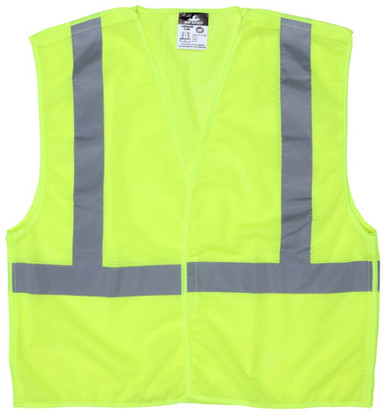
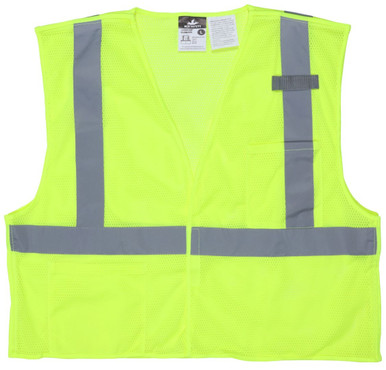
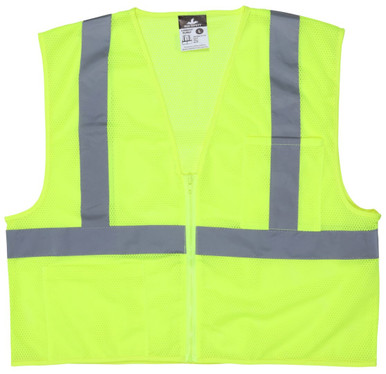
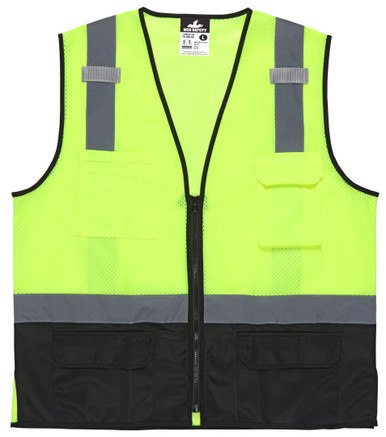
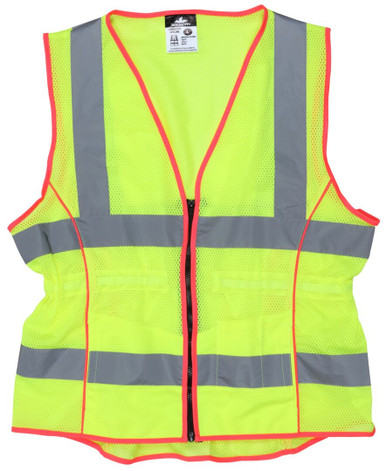
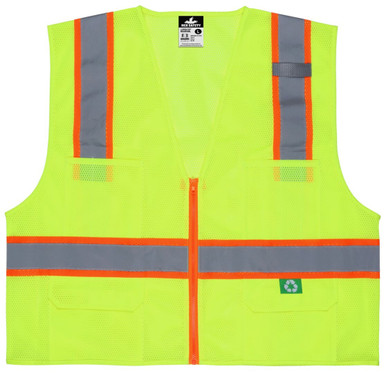
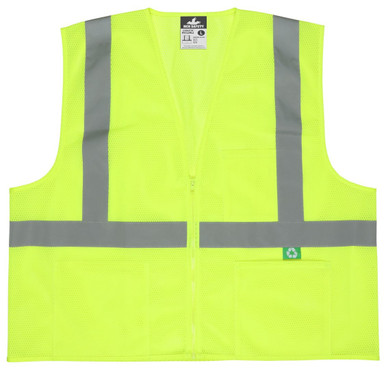
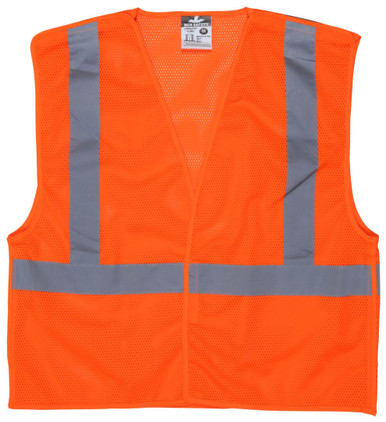
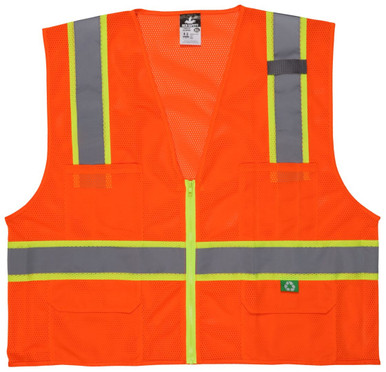
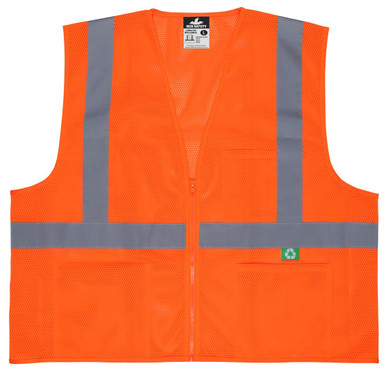
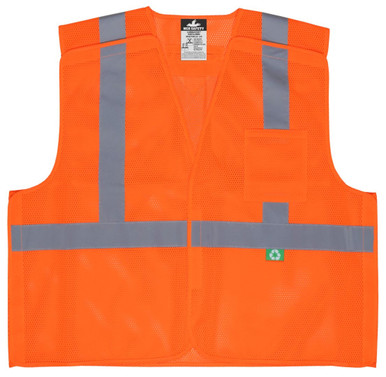
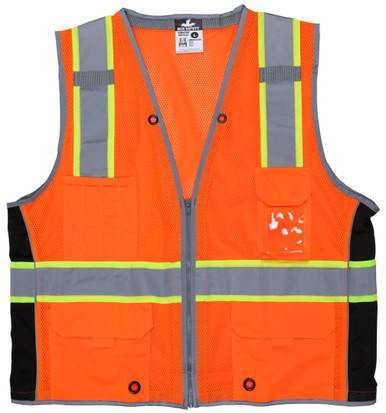
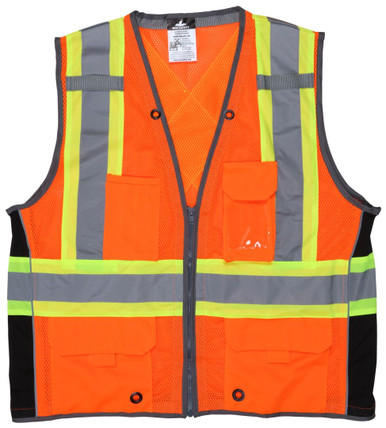
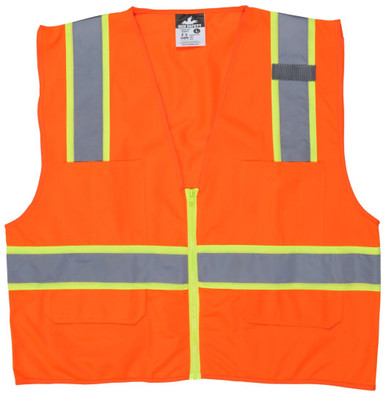
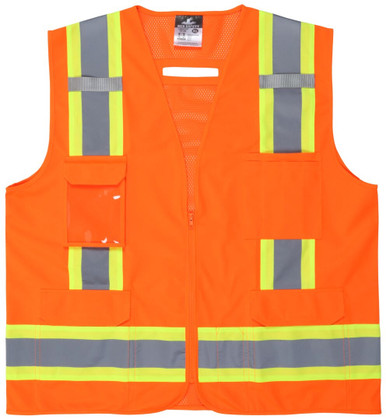
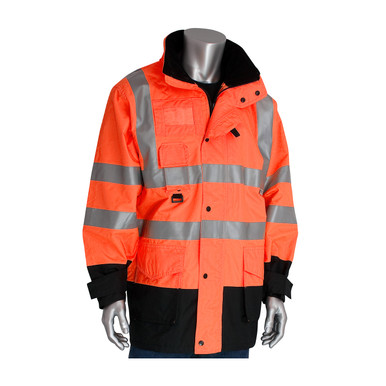
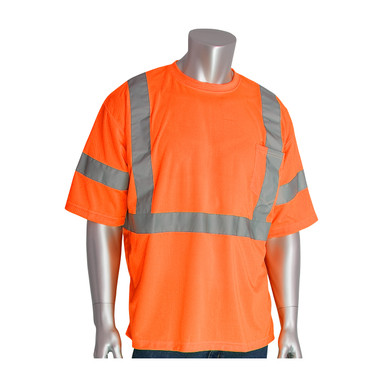
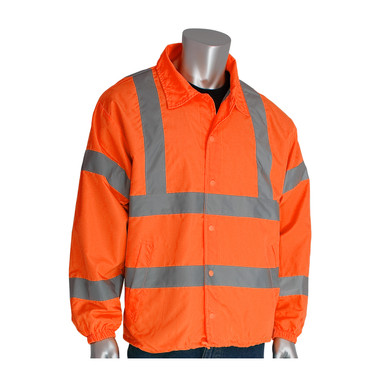
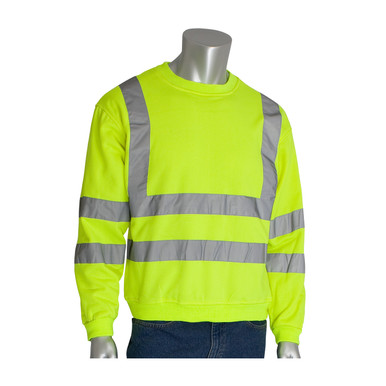
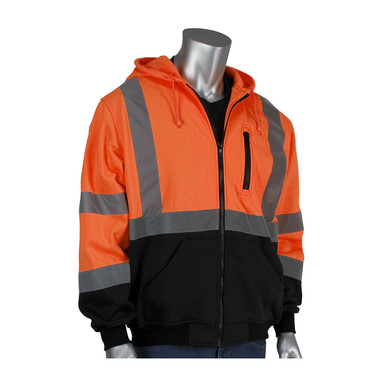
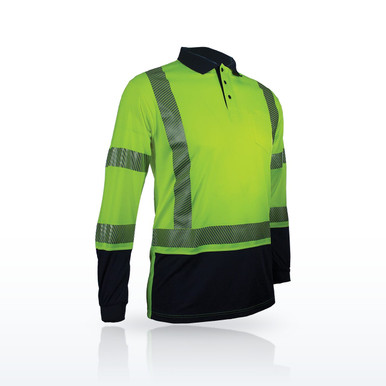
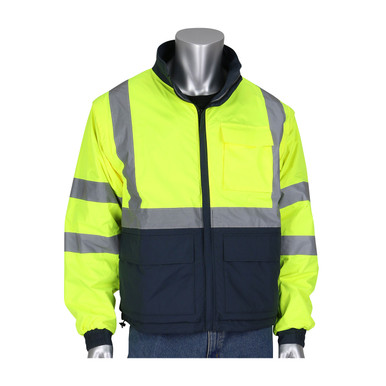
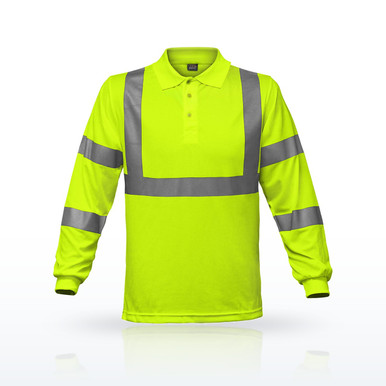
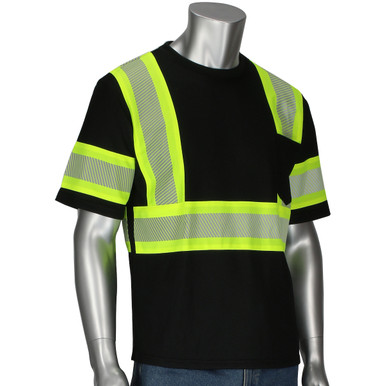
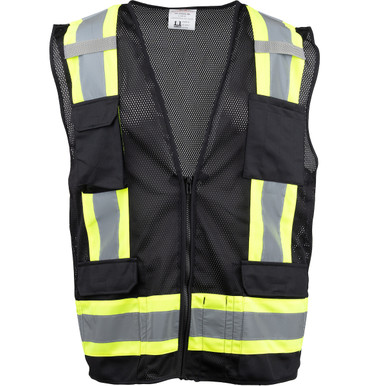
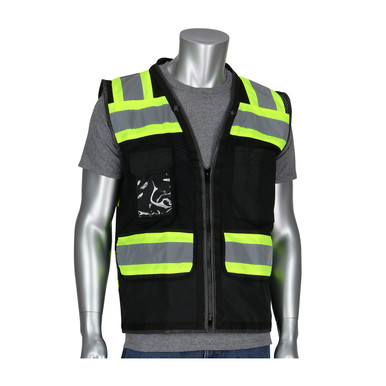
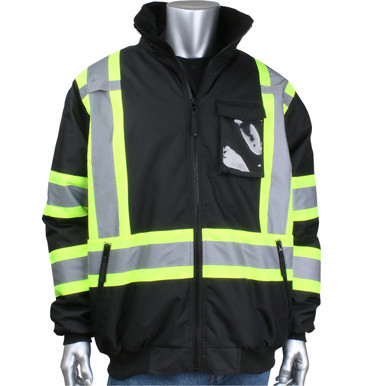
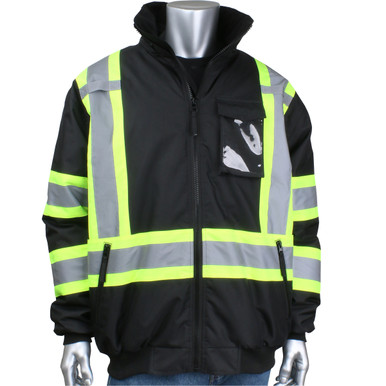
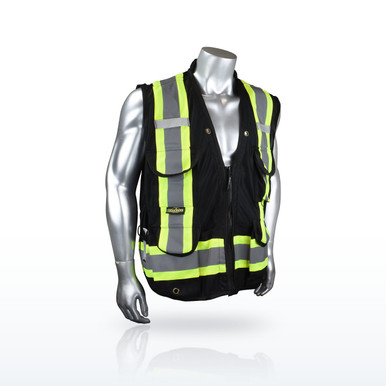
Every hi-vis garment we carry, filtered by type, class and color, is on the hi-vis finder.
Questions people ask
What does hi-vis mean?
High visibility: clothing made with fluorescent fabric for daylight and retroreflective tape for headlights, in the amounts and colors set by ANSI/ISEA 107.
What is the difference between reflective and fluorescent?
Fluorescent fabric converts ultraviolet light into visible light and works by day and at dawn and dusk. Retroreflective tape returns headlight beams to the driver and works at night. A hi-vis garment needs both.
Why does the reflective tape look dull in daylight?
Because retroreflection needs a light source close to the viewer’s eye. In daylight the light comes from everywhere, so the tape looks gray. Under a headlight or a flashlight it returns the beam to you.
How far away can a driver see hi-vis?
The MUTCD requires the retroreflective material on flagger apparel to be visible at a minimum of 1,000 feet. The FHWA guidance on worn apparel uses the same 1,000-foot check by day and by night.
What color safety vest should I wear?
Yellow-green and orange-red are both allowed at every class; pick the one that contrasts with the work area and equipment, or the one your agency or site specifies. Red is allowed by ANSI but not listed by the MUTCD for traffic control zones.
Does a black-bottom vest meet the standard?
It can. The black part is not background material and does not count; the fluorescent part must meet the class minimum on its own, and the label says whether it does.
Is a reflective jacket from a sporting goods store hi-vis?
Not unless it carries an ANSI/ISEA 107 label with a type and class. Reflective piping or logos do not add up to the minimum area the standard requires.
Does hi-vis wear out?
Yes. Fluorescent dye fades in sunlight and tape loses retroreflection with washing and abrasion. The care label gives the rated number of wash cycles; faded or cracked garments should be replaced.
Standards and ratings on this page are as published in the documents named and by the manufacturers named. The employer’s hazard assessment and written program decide what applies at a given workplace. Verify a rating on the product and its spec sheet before use.