
What is IDLH, and which respirators are allowed in an IDLH atmosphere?
IDLH means immediately dangerous to life or health: an atmosphere that poses an immediate threat to life, would cause irreversible health effects, or would keep a person from escaping. Three things make an atmosphere IDLH under OSHA: a contaminant at or above its IDLH level, oxygen below 19.5 percent, or an exposure the employer cannot identify or estimate. Only two respirators may be worn into it. A full-facepiece pressure-demand SCBA certified by NIOSH for at least 30 minutes, or a full-facepiece pressure-demand supplied-air respirator with an auxiliary self-contained air supply for escape. No air-purifying respirator, no PAPR, no plain airline. The standard also requires at least one trained, equipped standby person outside, in contact with the entrant, with a positive-pressure SCBA or airline-plus-SCBA and retrieval equipment, and respirators carried only for escape must be NIOSH-certified for escape from that atmosphere.
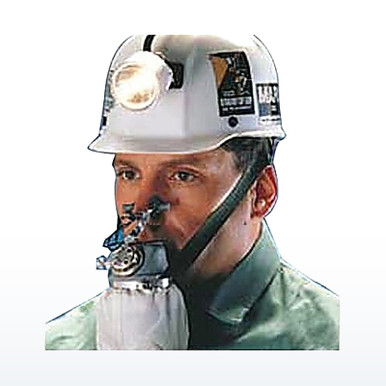
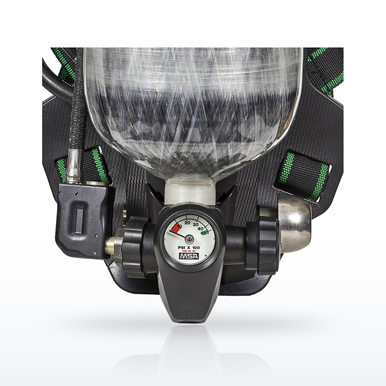 MSA G1 industrial SCBAFull-facepiece pressure-demand SCBA; one of the two respirators allowed for IDLH entry
Why do only two respirators qualify? Every other respirator has a failure mode that, in IDLH air, is fatal. An air-purifying respirator or PAPR does nothing for low oxygen and quits without warning when the cartridge is spent or the contaminant is wrong for it. An airline alone depends on a hose and a compressor that can be cut, kinked or stopped. A pressure-demand SCBA carries its own air on the wearer’s back and keeps the facepiece above room pressure so leaks go out; the airline-plus-escape-bottle version does the same, with the bottle as the way out if the hose fails. The 30-minute minimum and the auxiliary supply exist so that the wearer can get out when something goes wrong, which is the whole point of the IDLH line.
What makes an atmosphere IDLH?
Any one of these puts the work under paragraph (d)(2) and (g)(3).
Which respirators are allowed for IDLH entry?
The employer shall provide one of two respirators for employee use in IDLH atmospheres. A full facepiece pressure demand SCBA certified by NIOSH for a minimum service life of thirty minutes. Or a combination full facepiece pressure demand supplied-air respirator with auxiliary self-contained air supply. Both are full facepieces, both are pressure-demand (positive pressure inside the mask), and both carry their own air, in the first case as the whole supply and in the second as the escape reserve. Table 1 gives a pressure-demand SCBA an APF of 10,000, the highest in the table.
1910.134(d)(2)(i)(A) and (B); 1910.134(b), definitions of pressure demand respirator and SCBA; Table 1 row 4.What is not allowed: any air-purifying respirator including a P100 half mask or full facepiece; any PAPR, loose-fitting or tight; a continuous-flow or pressure-demand airline with no escape bottle; a demand-mode SCBA, which runs at negative pressure on inhalation; and any escape-only respirator used for entry. NIOSH approves non-powered and powered air-purifying particulate respirators only for atmospheres that are not IDLH and contain adequate oxygen.
1910.134(d)(2)(i); 42 CFR 84.170(a)(1) and (b)(1); 1910.134(b), definitions of demand respirator and escape-only respirator.Interior structural firefighting is treated as IDLH with extra rules: at least two go in together and stay in contact, at least two stay outside, and everyone inside uses an SCBA.
1910.134(g)(4).What does the standby requirement say?
- One employee, or more when needed, is located outside the IDLH atmosphere.
- Visual, voice or signal-line communication is maintained between those inside and those outside.
- The outside employees are trained and equipped to provide effective emergency rescue.
- The employer or a designee is notified before the outside employees enter to perform a rescue, and once notified provides the assistance the situation needs.
- The outside employees are equipped with a pressure-demand or other positive-pressure SCBA, or a pressure-demand airline with auxiliary SCBA, and with appropriate retrieval equipment where it would help the rescue without adding risk, or an equivalent means of rescue where retrieval equipment is not required.
What about respirators for escape only?
A respirator provided only for escape from an IDLH atmosphere must be NIOSH-certified for escape from the atmosphere in which it will be used. That is a different approval from entry: an escape hood with a filter is certified for a named contaminant and a stated number of minutes; a small-cylinder escape SCBA gives 5 to 15 minutes of air regardless of contaminant. Escape respirators are inspected before being carried into the workplace, kept accessible and in marked containers, and are not used for entry or for work. The Table 1 APFs do not apply to them; for substances with their own OSHA standard, the escape respirator is whatever that standard specifies.
1910.134(d)(2)(ii); 1910.134(h)(3)(i)(C) and (h)(2)(ii); Table 1 note 5.What does the SCBA program have to include?
- Monthly inspection of each SCBA, plus a function check before and after each use for units kept for emergencies. Cylinders kept fully charged and recharged when pressure falls to 90 percent of the manufacturer’s recommended level; regulator and warning devices checked.
- Breathing air that meets at least Grade D (19.5 to 23.5 percent oxygen, 10 ppm CO or less), cylinders tested and maintained under the DOT rules, and only the respirator manufacturer’s NIOSH-approved breathing-gas containers.
- Medical evaluation that accounts for the weight of the SCBA and the work effort; fit testing of the full facepiece in negative-pressure mode, passing at a fit factor of 500; training that covers emergency use and malfunction.
- A certification record for each emergency SCBA: date, inspector, findings, remedial action and the unit’s serial number, kept with the unit or in a file.
- For confined spaces, the permit, atmospheric testing and rescue provisions of 1910.146 or 1926 Subpart AA in addition to the respirator rules.
SCBA, cylinders and escape respirators
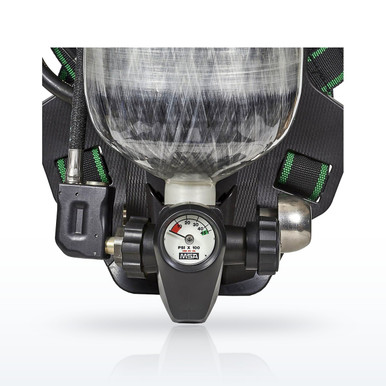
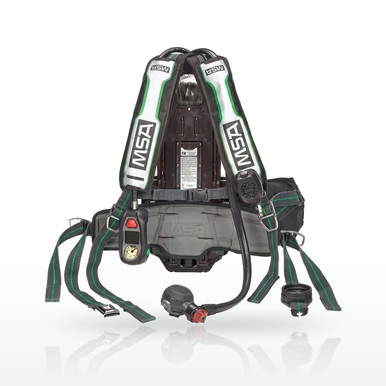
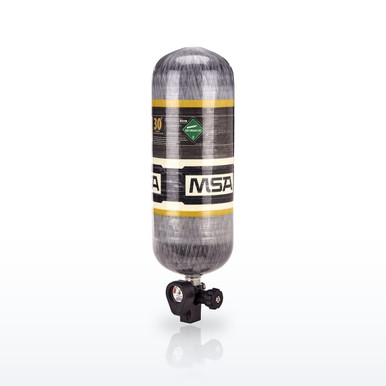
23 items · prices liveItems are grouped by what the manufacturer labels them. SCBA certification (NIOSH, and NFPA 1981 where claimed), rated duration and cylinder pressure are on each spec sheet; escape respirators are certified for the contaminants and minutes stated by the manufacturer. Free shipping on orders over $199.
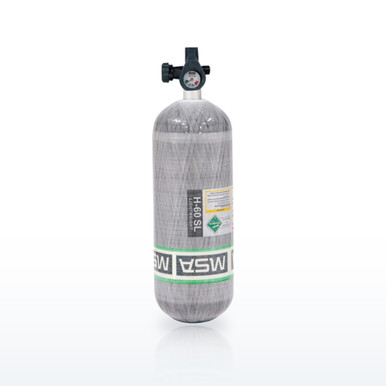
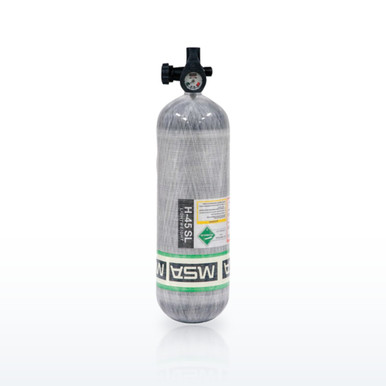
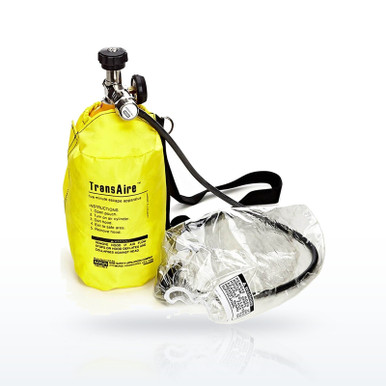
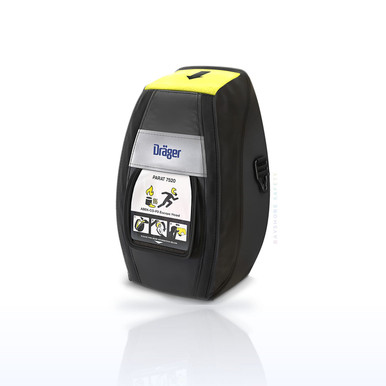
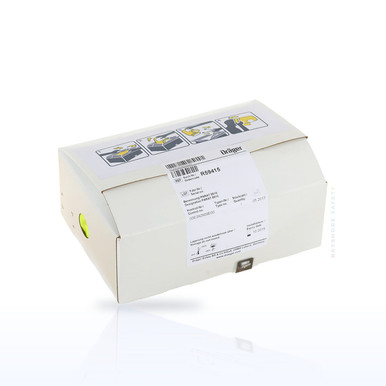
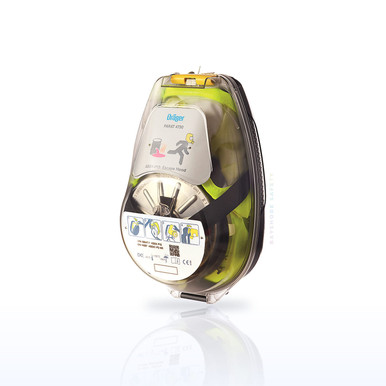
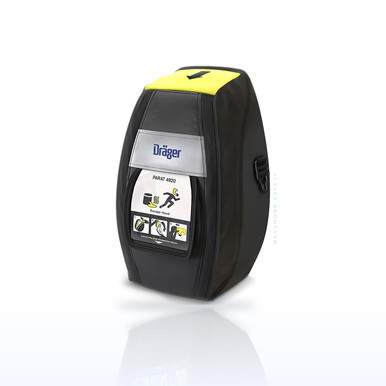
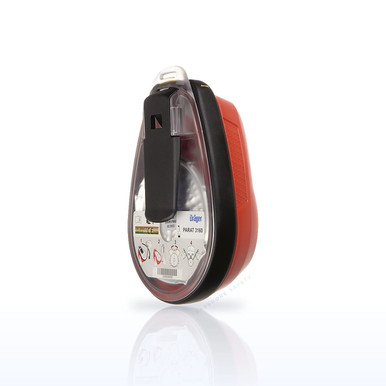
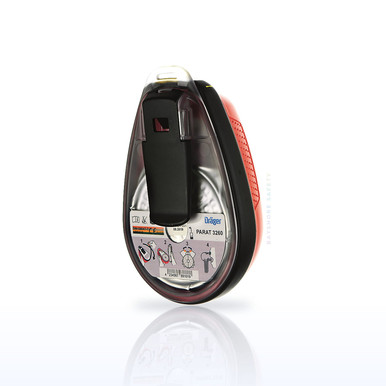
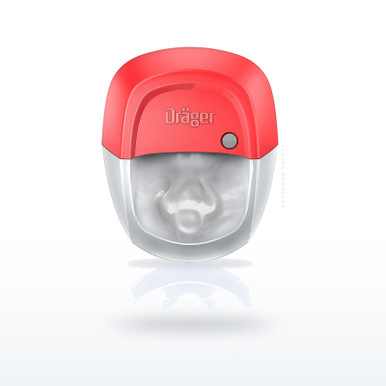
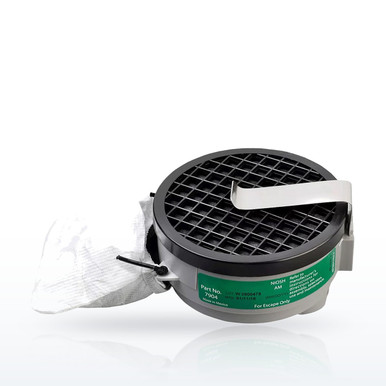
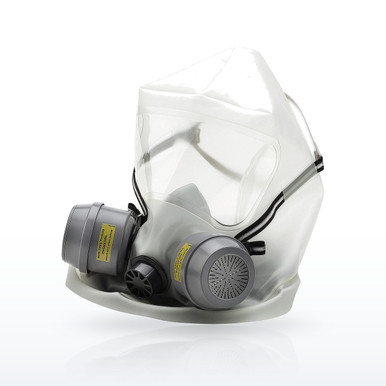
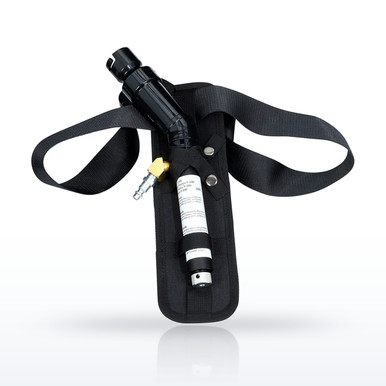
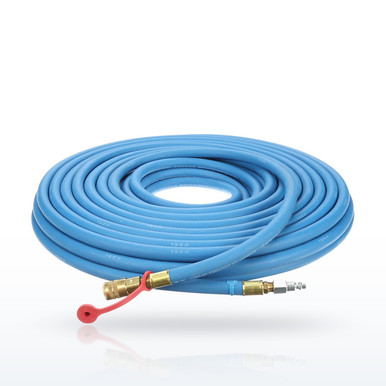
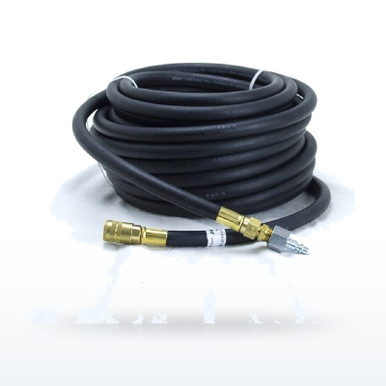
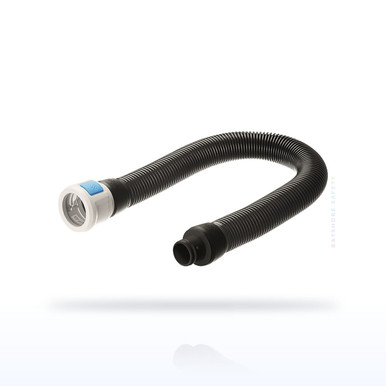
Gas monitors for testing the atmosphere before entry are in the gas detection finder; supplied-air hoses, couplings and airline filters are in the respirator selector.
Questions people ask
What does IDLH stand for?
Immediately dangerous to life or health: an atmosphere that poses an immediate threat to life, would cause irreversible adverse health effects, or would impair the ability to escape. (1910.134(b).)
Which respirators can be used in an IDLH atmosphere?
Only a full-facepiece pressure-demand SCBA rated for at least 30 minutes, or a full-facepiece pressure-demand airline respirator with an auxiliary self-contained air supply. (1910.134(d)(2)(i).)
Can a PAPR or a P100 respirator be used in IDLH?
No. Air-purifying respirators, powered or not, are approved only for atmospheres that are not IDLH and have adequate oxygen. (42 CFR 84.170; 1910.134(d)(2).)
Is low oxygen IDLH?
Yes. All oxygen-deficient atmospheres (below 19.5 percent) are considered IDLH, with a narrow altitude-based exception in Table II. (1910.134(d)(2)(iii).)
What if we do not know the concentration?
Then the atmosphere is IDLH by rule and the (d)(2) respirators apply. Measure it, or treat it as IDLH. (1910.134(d)(1)(iii).)
Where do IDLH values come from?
NIOSH publishes them. They are set so a worker can escape if the respirator fails and mark the level above which only a highly reliable breathing apparatus is permitted. (NIOSH IDLH Values.)
Does an IDLH entry need a standby person?
Yes. At least one trained and equipped person outside, in communication, with a positive-pressure SCBA or airline-plus-SCBA and retrieval equipment where appropriate. (1910.134(g)(3).)
Can an escape hood be used to go into an IDLH space?
No. An escape-only respirator is for emergency exit. It must be NIOSH-certified for escape from the atmosphere it is used in. (1910.134(b); (d)(2)(ii).)
Standards and ratings on this page are as published in the documents named and by the manufacturers named. The employer’s hazard assessment and written program decide what applies at a given workplace. Verify a rating on the product and its spec sheet before use.