
What is H2S (hydrogen sulfide), and why does it kill?
H2S is hydrogen sulfide, a colorless gas that smells like rotten eggs at tiny concentrations and then stops smelling like anything at the concentrations that kill. It collects in low spots because it is heavier than air, it comes from anything that rots without oxygen or from sour crude and gas, and at a few hundred parts per million it stops your breathing within breaths. OSHA’s ceiling is 20 ppm; a personal monitor is how a worker knows it is there.
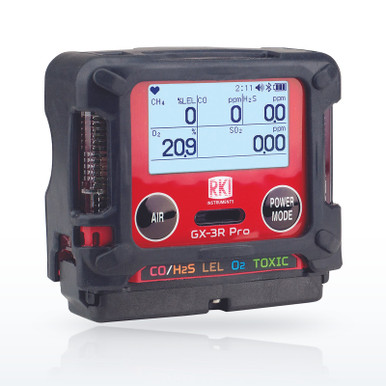
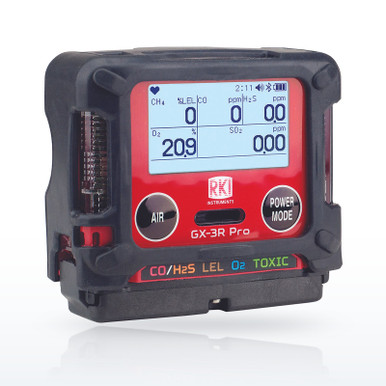 RKI GX-3R Pro single-gas H2S monitorPersonal H2S monitor with low and high alarms
Why does H2S kill? At low levels it irritates the eyes and lungs. At about 100 ppm it knocks out your sense of smell, so the warning disappears at the moment it matters. Above about 500 ppm it acts on the nerve center that drives breathing: a worker takes one or two breaths, collapses, and stops breathing. The people who die next are usually the ones who went in to help. That is why the rule in sewers, pits, tanks and sour-gas work is a monitor on every person and no rescue without air.
What are the exposure limits for H2S?
Three bodies publish limits; the OSHA numbers are the law, NIOSH and ACGIH are the health-based recommendations most programs follow.
Where does H2S come from?
Anywhere organic matter breaks down without oxygen, and anywhere sulfur is in the ground. Sewers, lift stations and wastewater plants. Manure pits and silage. Oil and gas wells, pipelines and refineries handling sour crude. Pulp and paper mills, tanneries, landfills, and the bottom of any tank, vault or manhole that has held water or waste. It is also made on purpose in some chemical processes.
OSHA Safety and Health Topics, Hydrogen Sulfide: hazards and industries.Because it is heavier than air (vapor density about 1.19), it settles and concentrates in low places: the bottom of a manhole, a pit, a tank, a trench. Air at the top can read zero while the bottom is lethal, which is why confined-space testing is done at every level before entry.
NIOSH Pocket Guide: vapor density 1.19; 1910.146(d)(5)(iii) and (c)(5)(ii)(C): testing before entry, in order oxygen, flammables, toxics.What does H2S do to the body at each level?
- 0.01 to 1.5 ppm: rotten-egg odor, noticeable to most people.
- 2 to 5 ppm: prolonged exposure can cause nausea, headache and tearing eyes.
- 20 ppm: fatigue, headache, irritability, loss of appetite; the OSHA ceiling.
- 50 to 100 ppm: mild eye inflammation and airway irritation after an hour; the NIOSH IDLH is 100 ppm.
- 100 to 150 ppm: coughing, eye irritation, and loss of smell within 2 to 15 minutes. The gas is still there.
- 200 to 300 ppm: marked eye and lung inflammation; fluid in the lungs after prolonged exposure.
- 500 to 700 ppm: staggering, collapse within minutes; death within 30 to 60 minutes.
- 700 to 1,000 ppm: rapid unconsciousness, breathing stops within one or two breaths, death.
- Above 1,000 ppm: nearly instant death.
How is a worker protected from H2S?
A personal monitor. You cannot smell your way to safety, so every worker who can be exposed wears a monitor that alarms at a set level. A single-gas H2S monitor is the simplest; a four-gas monitor adds oxygen, combustible gas and carbon monoxide, which is what confined-space entry requires. The monitor is bump tested before each day’s use and calibrated on the manufacturer’s schedule.
1910.146(d)(5): testing and monitoring of permit spaces; OSHA SHIB 11-26-2024: calibrating and testing direct-reading portable gas monitors.Ventilation and testing before entry. In a confined space the atmosphere is tested from outside, top to bottom, before anyone enters, and ventilated until the readings are acceptable; the space is monitored continuously while people are inside.
1910.146(c)(5)(ii)(C) and (d)(5).Respiratory protection when it cannot be controlled. Above the exposure limit, and in any atmosphere that is or could become IDLH, only a pressure-demand SCBA or a supplied-air respirator with an escape bottle is allowed. Air-purifying cartridges are not permitted for H2S above the limit, and a cartridge gives no protection at all when the oxygen is low.
1910.134(d)(2)(i): respirators for IDLH atmospheres; 1910.134(d)(3)(iii): cartridge use limits.No one goes in after a collapsed worker without air. A large share of H2S deaths are would-be rescuers. The permit program requires a rescue plan and, for most spaces, a retrieval line so a worker can be pulled out without entry.
1910.146(k): rescue and emergency services; NIOSH, Preventing Deaths of Farm Workers in Manure Pits, and confined space fatality reports.H2S exposure limits compared
| Body | Limit | What it means |
|---|---|---|
| OSHA (the law) | 20 ppm ceiling; one 10-minute peak to 50 ppm | Never exceed 20 ppm, except one short peak per shift with no other exposure |
| NIOSH | 10 ppm ceiling (10 minutes); IDLH 100 ppm | The health-based recommendation; above 100 ppm is immediately dangerous |
| ACGIH | TLV 1 ppm TWA; 5 ppm STEL | The most protective; many corporate programs adopt it |
| Typical monitor alarms | Low 10 ppm; high 15 ppm (set by employer) | Defaults shipped by manufacturers; the written program decides |
29 CFR 1910.1000 Table Z-2; NIOSH Pocket Guide; ACGIH TLV documentation; manufacturer default alarm settings.
Is H2S flammable?
Yes. It burns in air between about 4 and 44 percent by volume, so a space can be a poisoning hazard at parts per million and an explosion hazard at percent levels. That is one reason a four-gas monitor pairs the H2S sensor with a combustible-gas (LEL) sensor.
NIOSH Pocket Guide: LEL 4.0 percent, UEL 44.0 percent.Can you smell H2S?
At first. The rotten-egg smell is detectable far below the exposure limit, which fools people into thinking their nose is a detector. Around 100 ppm the gas paralyzes the sense of smell, and the smell fading is a sign the concentration went up, not down. Never use odor as a warning.
OSHA, Hydrogen Sulfide: Health Hazards (olfactory fatigue at about 100 ppm).H2S monitors and calibration gas
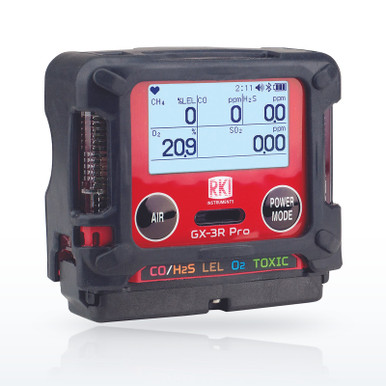
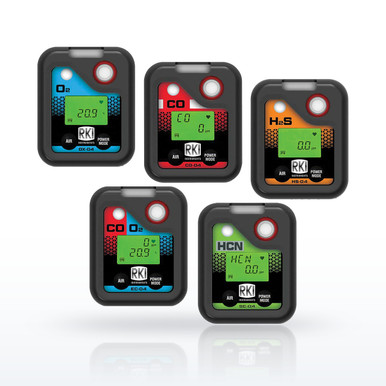
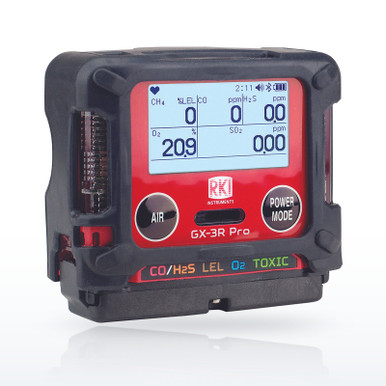
21 items · prices liveEvery monitor shown lists hydrogen sulfide among the gases its manufacturer specifies for it. Gases detected are as published by the manufacturer; see each product page. Contractor Direct orders ship free.
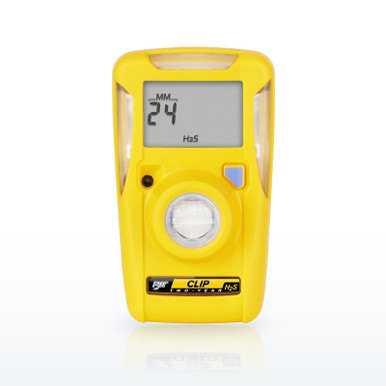
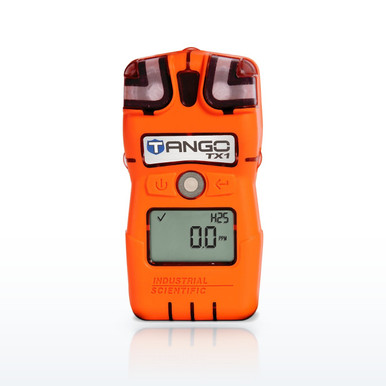
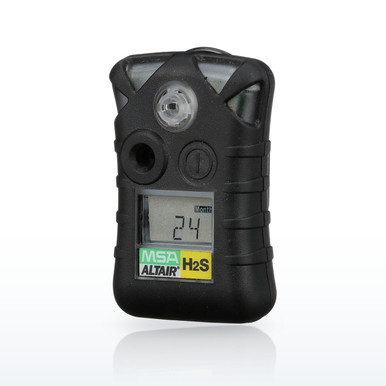
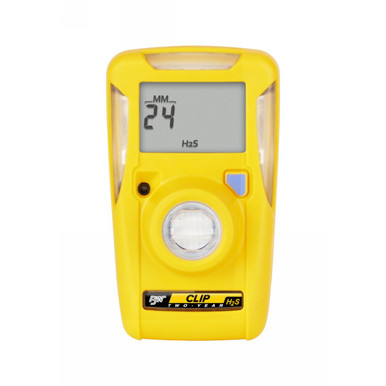
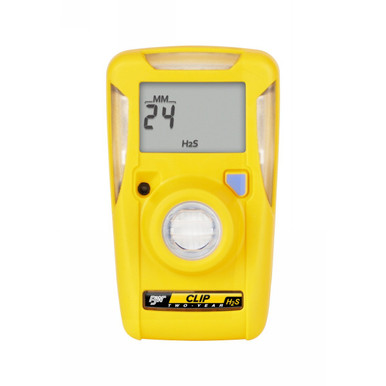
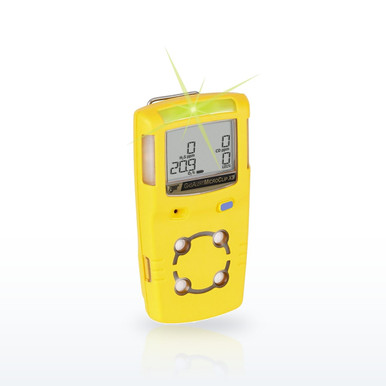
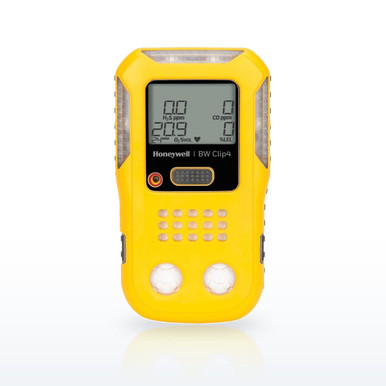
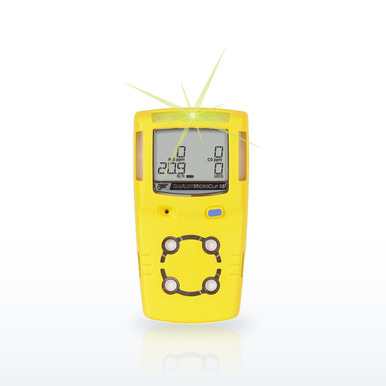
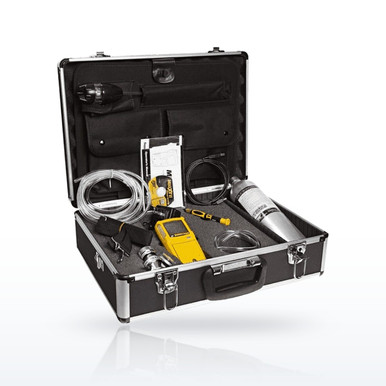
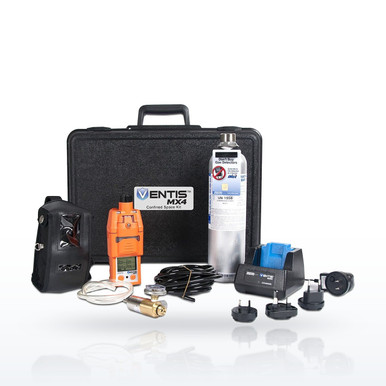

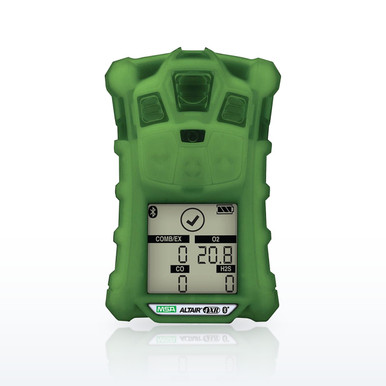
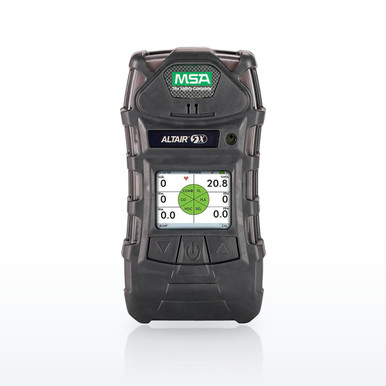
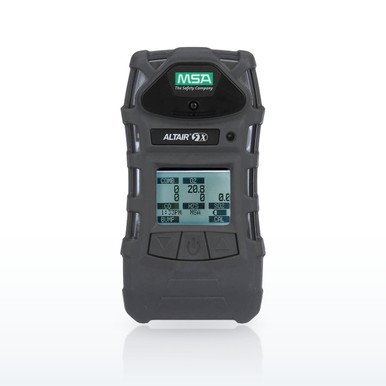
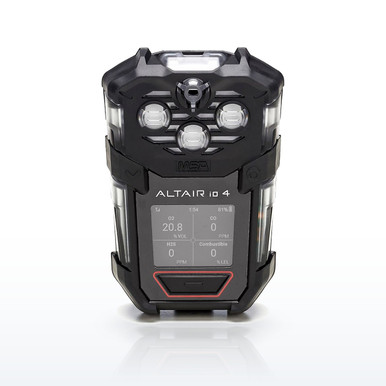
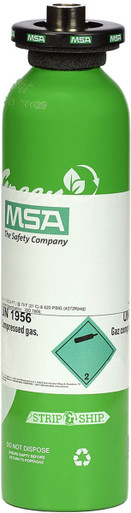
Calibration gas and docking stations for these monitors are on the gas detection finder. Bump test before each day’s use.
Questions people ask
What does H2S stand for?
Hydrogen sulfide: two hydrogen atoms and one sulfur. It is also called sewer gas, sour gas and stink damp.
Is H2S heavier than air?
Yes, about 1.2 times as dense, so it settles into pits, manholes, tanks and trenches. Test the bottom of a space, not just the opening.
What is a safe level of H2S?
OSHA sets a ceiling of 20 ppm; NIOSH recommends no more than 10 ppm for any 10 minutes; ACGIH sets 1 ppm as an 8-hour average. Most monitors ship with a 10 ppm low alarm. The employer’s written program sets the number for a given site.
How fast does H2S kill?
Above about 700 ppm, breathing stops within one or two breaths and death follows in minutes. At 500 ppm, collapse comes within minutes and death within an hour without rescue and air.
Why can’t I just smell it?
Because around 100 ppm the gas shuts off your sense of smell. The warning disappears exactly when the concentration becomes dangerous.
What respirator is used for H2S?
Above the exposure limit or in any IDLH atmosphere, only a pressure-demand SCBA or a supplied-air respirator with an escape cylinder. A cartridge respirator is not allowed for H2S at those levels. (1910.134(d)(2).)
How often do I bump test an H2S monitor?
Before each day’s use, per OSHA’s guidance and every manufacturer’s instructions; full calibration on the manufacturer’s schedule or whenever a bump test fails.
Related guides
What is LEL, and what does 10 percent LEL mean?The combustible-gas limit on a monitor, from 1910.146Bump test vs calibrationWhat each does and how oftenWhat is a confined space?The OSHA definition and what makes one permit-requiredWhat does a 4-gas monitor measure?The four gases and why those fourStandards and ratings on this page are as published in the documents named and by the manufacturers named. The employer’s hazard assessment and written program decide what applies at a given workplace. Verify a rating on the product and its spec sheet before use.