
What is a supplied-air respirator, and when is one required?
A supplied-air respirator, also called an airline respirator, feeds the wearer clean breathing air through a hose from a source that is not carried on the body: a compressor, an ambient-air pump outside the contaminated area, or cylinders. The wearer breathes that air inside a hood, helmet or facepiece instead of filtering the air around them. OSHA requires an atmosphere-supplying respirator when no filter or cartridge will do the job: oxygen below 19.5 percent, a contaminant with no suitable cartridge or indicator, an exposure the employer cannot measure, or an exposure above what an air-purifying respirator’s protection factor can handle. For atmospheres immediately dangerous to life it must be a pressure-demand SCBA or a supplied-air respirator with its own escape bottle.
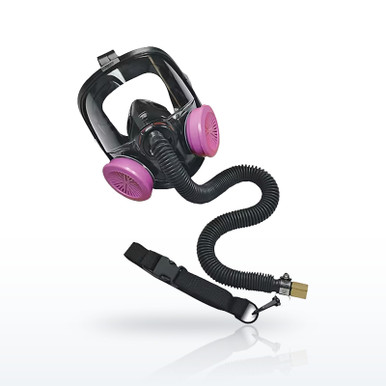
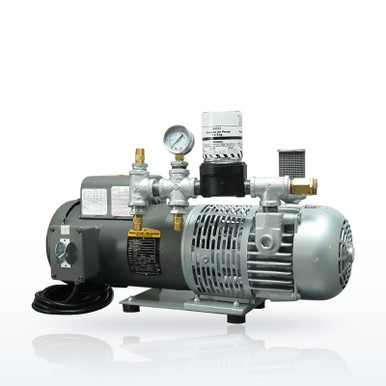
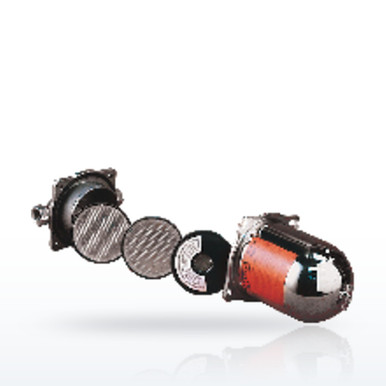
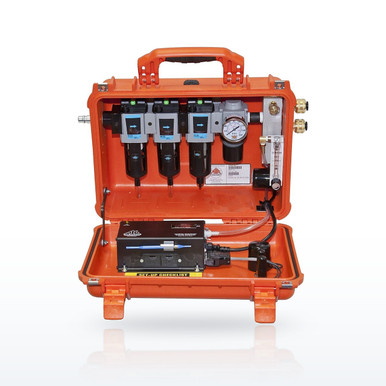
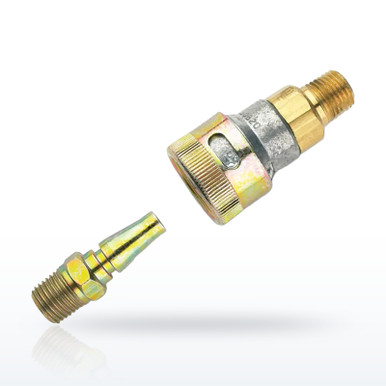
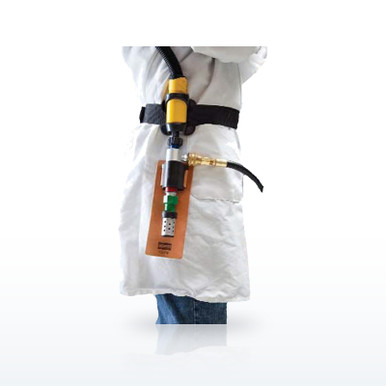 North CF1001D continuous-flow supplied-air assemblyConstant-flow airline respirator assembly, as labeled by the manufacturer
Why supply air instead of filtering it? A filter or cartridge only works when there is enough oxygen, when the contaminant is one it can catch, and when the concentration is low enough for the facepiece’s protection factor. Below 19.5 percent oxygen nothing in a cartridge helps. Some gases have no cartridge and no warning. Some jobs, abrasive blasting and spray painting among them, put so much in the air at the worker’s face that the cartridge is spent in minutes. Supplied air sidesteps all of that: the air the worker breathes never came from the room. The costs are a hose that limits movement, a compressor or pump that has to be set up right, and the breathing-air rules that come with it.
When does OSHA require an atmosphere-supplying respirator?
The selection rules in 1910.134(d). An atmosphere-supplying respirator is either a supplied-air respirator or an SCBA.
Supplied-air respirator, SCBA, PAPR: what is the difference?
All three deliver air to the face under positive pressure or flow, and all three come as hoods, helmets or facepieces, so they look alike. The difference is where the air comes from. A supplied-air respirator (SAR) gets it through a hose from a source not carried by the user. A self-contained breathing apparatus (SCBA) carries the source, a cylinder, on the user’s back, which is why it is the one allowed for IDLH entry and escape. A powered air-purifying respirator (PAPR) is not atmosphere-supplying at all: its blower pulls the surrounding air through a filter or cartridge, so it has the same limits as any air-purifying respirator on oxygen and contaminant type, with a higher protection factor and no breathing resistance.
1910.134(b) definitions of atmosphere-supplying respirator, supplied-air respirator (SAR) or airline respirator, self-contained breathing apparatus (SCBA), powered air-purifying respirator (PAPR), air-purifying respirator.A supplied-air respirator runs in one of three modes, and the mode sets its protection factor. Demand mode admits air only when the wearer inhales and creates a negative pressure; it gets the same factor as an unpowered mask, 10 for a half mask and 50 for a full facepiece. Continuous flow delivers a steady stream: 50 for a half mask, 1,000 for a full facepiece, 25 for a hood, helmet or loose-fitting facepiece, or 1,000 for a hood or helmet where the manufacturer has test data showing that level. Pressure demand keeps positive pressure in the facepiece at all times: 50 for a half mask, 1,000 for a full facepiece. A combination SAR with auxiliary SCBA in pressure-demand mode is the IDLH-rated version.
1910.134(d)(3)(i)(A), Table 1, rows 3 and 4 and note 4; 1910.134(b) definitions of demand respirator, pressure demand respirator, positive pressure respirator; (d)(2)(i)(B).What are the breathing-air rules?
- Compressed breathing air must meet at least Grade D of the CGA specification: 19.5 to 23.5 percent oxygen, condensed hydrocarbons 5 milligrams per cubic meter or less, carbon monoxide 10 ppm or less, carbon dioxide 1,000 ppm or less, no noticeable odor.
- A compressor feeding respirators must be built and placed so contaminated air cannot enter the intake, must keep the dew point 10 degrees F below ambient, must have in-line sorbent beds and filters maintained and changed per the manufacturer, and must carry a tag with the last change date and the signature of the person who changed it.
- An oil-lubricated compressor must have a high-temperature alarm, a carbon monoxide alarm, or both; with only a high-temperature alarm, the air must be monitored often enough to keep CO under 10 ppm. A compressor that is not oil-lubricated must still keep CO under 10 ppm.
- Breathing-air couplings must be incompatible with outlets for shop air or other gases, so a hose cannot be plugged into the wrong line. No asphyxiant may be introduced into a breathing-air line.
- Cylinders of purchased breathing air need a certificate of analysis for Grade D and a dew point no higher than minus 50 F; cylinders are tested and maintained under DOT rules. Compressed oxygen is never used in a respirator that has used compressed air.
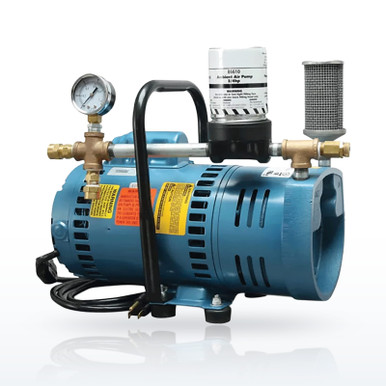
- An ambient-air pump that draws clean outside air through a low-pressure hose is a supplied-air source too; the intake placement and the hose length and type the manufacturer approves are part of the NIOSH approval.
What else applies when a supplied-air respirator is used?
The whole of 1910.134: a written program with procedures for air quality, quantity and flow; medical evaluation; training; and, for a tight-fitting SAR facepiece, a fit test done in negative-pressure mode with filters on the facepiece or on an identical surrogate. A loose-fitting hood or helmet needs no fit test and may be worn with a beard. In IDLH work, an attendant stays outside, communication is maintained, and the attendant is equipped with a pressure-demand SCBA or SAR with auxiliary SCBA and retrieval equipment. Respirators kept for emergencies are inspected monthly and certified on a tag.
1910.134(c)(1)(vi); (e)(1); (k); (f)(8)(i) through (iii); (g)(1)(i)(A) tight-fitting only; (g)(3)(i) through (vi); (h)(3)(i)(B) and (h)(3)(iv).Supplied-air respirators, pumps, filters and hoses
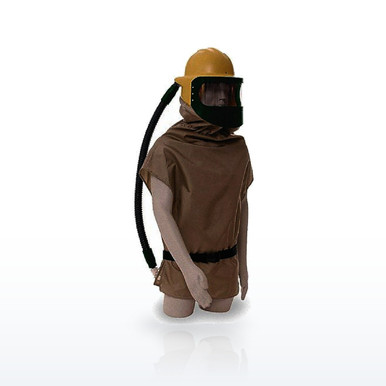
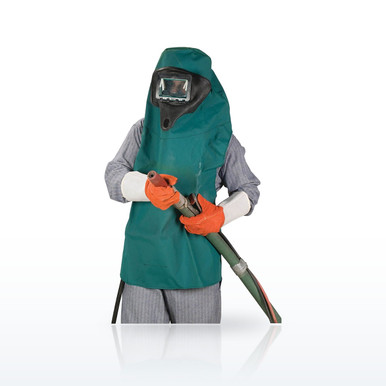
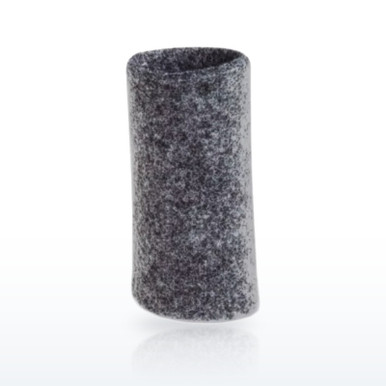
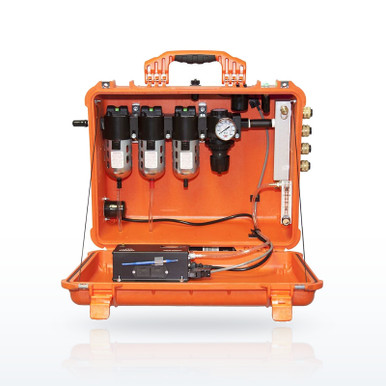
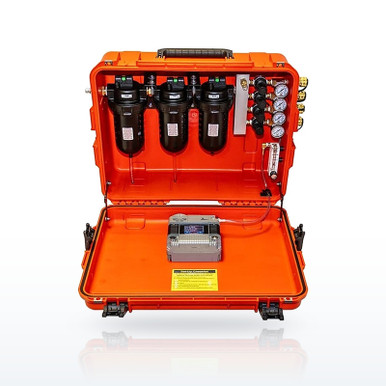
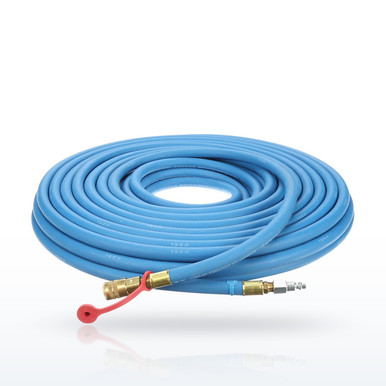
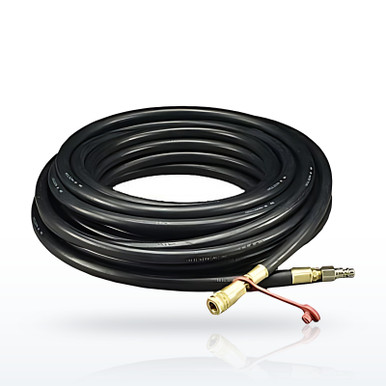
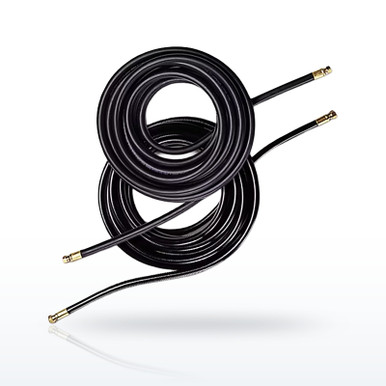
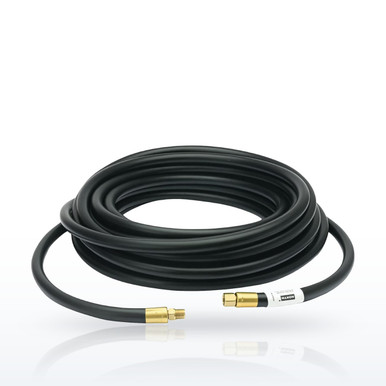
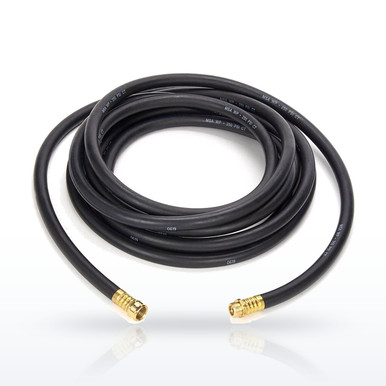
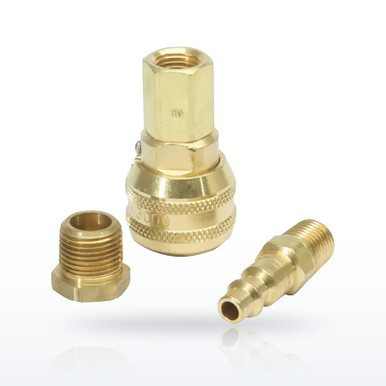
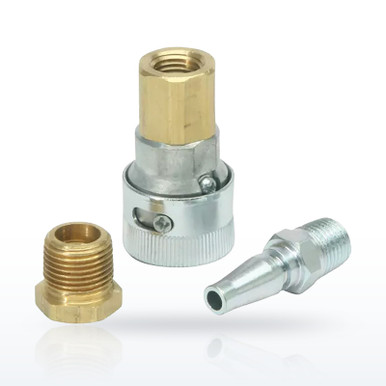
26 items · prices liveProducts are listed as labeled by the manufacturer; the NIOSH approval for a supplied-air respirator covers the hood or facepiece, hose and air source together, so the matching parts are on each product page. Contractor Direct orders ship free.
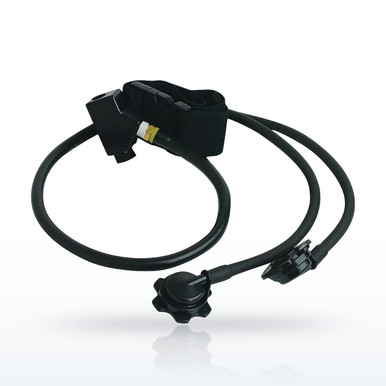
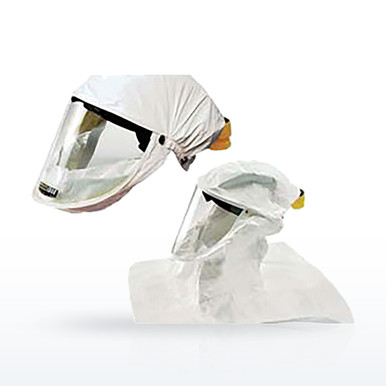
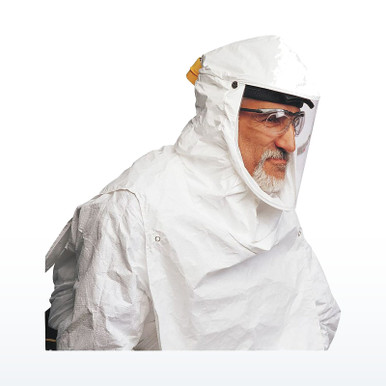

SCBA units for IDLH entry are quoted on request: call (925) 215-7337.
Questions people ask
What is a supplied-air respirator?
An atmosphere-supplying respirator whose breathing air comes through a hose from a source not carried by the user: a compressor, an ambient-air pump or cylinders. OSHA also calls it an airline respirator. (1910.134(b).)
When is a supplied-air respirator required?
When an air-purifying respirator cannot do the job: a gas or vapor with no cartridge indicator or change-schedule data, an exposure above the air-purifying respirator’s maximum use concentration, and the named operations in the abrasive blasting, welding and spray finishing rules. Oxygen deficiency and other IDLH atmospheres require an SCBA or a combination SAR with escape bottle instead.
Can a supplied-air respirator be used in a confined space?
Yes, where the space is not IDLH. If the atmosphere is IDLH or oxygen-deficient, the respirator must be a pressure-demand SCBA or a combination pressure-demand SAR with auxiliary self-contained air supply. (1910.134(d)(2).)
What is the protection factor of a supplied-air hood?
25 in continuous-flow mode, or 1,000 where the manufacturer has test evidence of that level. A pressure-demand full facepiece is 1,000. (1910.134 Table 1.)
What is Grade D breathing air?
The CGA G-7.1 grade OSHA requires: 19.5 to 23.5 percent oxygen, carbon monoxide 10 ppm or less, carbon dioxide 1,000 ppm or less, condensed hydrocarbons 5 mg/m3 or less, no noticeable odor. (1910.134(i)(1)(ii).)
Can I run a supplied-air respirator off shop air?
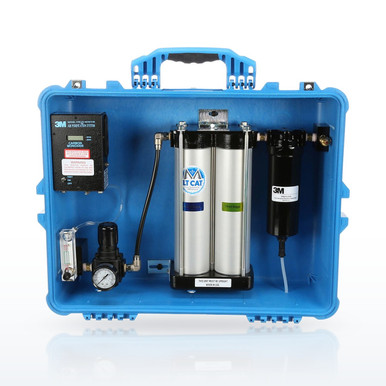
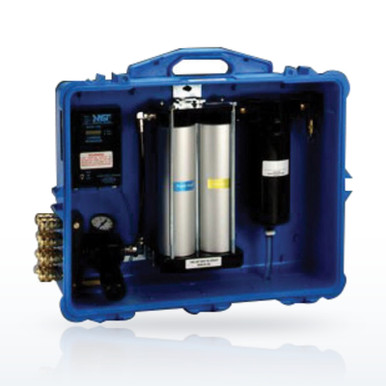
Only if the air meets Grade D at the respirator, the compressor meets 1910.134(i)(5), an oil-lubricated compressor has a CO or high-temperature alarm, and the couplings cannot connect to non-breathing-air outlets. In practice that means a breathing-air filter panel and CO monitor between the shop line and the hose.
Does a supplied-air respirator need a fit test?
A tight-fitting facepiece does, tested in negative-pressure mode with filters or a surrogate facepiece. A loose-fitting hood or helmet does not. (1910.134(f)(8).)
What is the difference between a SAR and an SCBA?
A SAR’s air source is not carried by the user; an SCBA’s is. Only an SCBA, or a SAR with its own auxiliary SCBA, is allowed for IDLH atmospheres. (1910.134(b) and (d)(2).)
Related guides
What is SCBA?The self-contained version for IDLHHow do respirators work?Air-purifying vs atmosphere-supplyingAssigned protection factorsTable 1 by respirator type and modeWhat is a confined space?The OSHA definitionCarbon monoxide exposure limitWhy the 10 ppm breathing-air limit mattersStandards and ratings on this page are as published in the documents named and by the manufacturers named. The employer’s hazard assessment and written program decide what applies at a given workplace. Verify a rating on the product and its spec sheet before use.