
Banded ear plugs: when they are the right choice
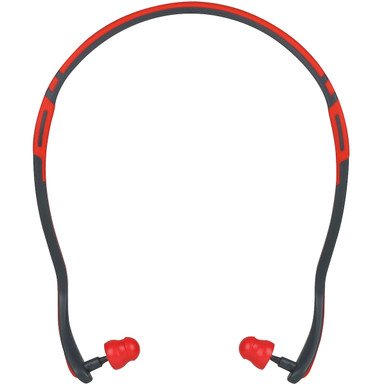
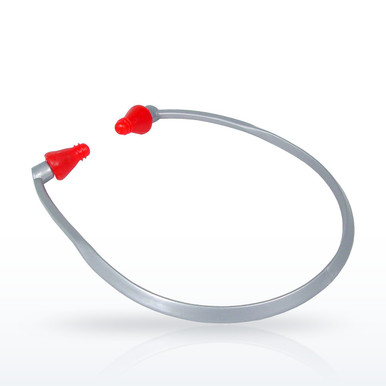
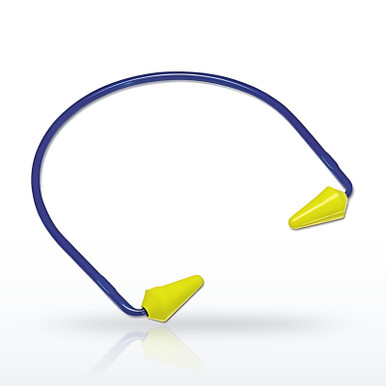
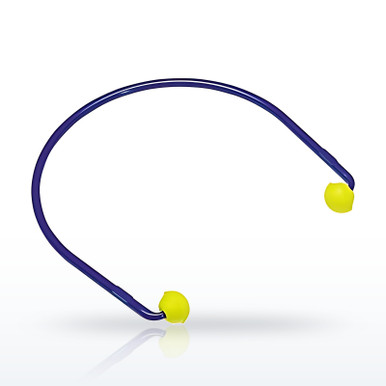
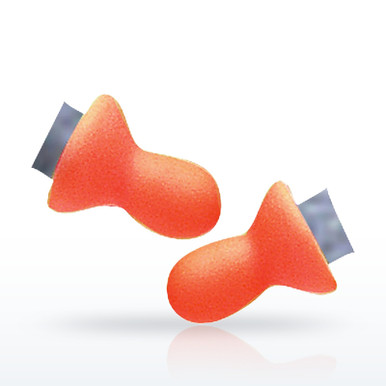
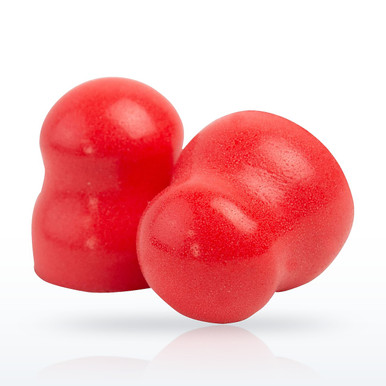
Banded ear plugs are two soft pods on a plastic band that presses them into the ear canal openings. NIOSH calls them canal caps or semi-inserts. They are for people who go in and out of noise all day: forklift drivers, maintenance, supervisors, inspectors, anyone who takes protection off to talk and puts it back on 30 times a shift. They hang around the neck between uses, so they are never on the floor or in a pocket, and they go on in a second with one hand. The trade-off is the rating: NRR 17 to 28 in our catalog, under a foam plug (up to 33) and under most muffs. They are the right choice for intermittent, moderate noise, and the wrong one for a full shift at high levels.
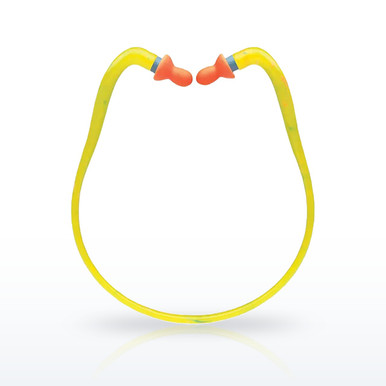 Howard Leight QB1HYG Earplugs, Banded Ear Plugs, NRR 27 / SNR 26Banded ear plugs rated NRR 27 or 28
Why is the rating lower? A foam plug seals deep in the canal; a banded pod seals at the entrance, held by band pressure rather than by expanding to fill the canal. Less of the canal is blocked and the seal depends on the band staying pressed in, so the laboratory rating is lower and the real-world figure more variable. NIOSH derates all non-foam plugs by 70 percent of the label for that reason. What the band gives back is wearing time: a protector that goes on every time the noise starts beats a higher-rated one that stays in a pocket, and NIOSH’s own arithmetic shows a 30 dB protector removed for 30 minutes of an 8-hour day delivers about 15.
Where do banded plugs fit, and where do they not?
The use cases the makers publish, and the limits the ratings set.
How do you wear a banded ear plug?
- Check the pods. Clean, soft, no tears. Dirty or hard pods come off and get replaced.
- Position the band the way the maker shows. Most are worn under the chin; some may be worn behind the neck or over the head. The NRR was measured in the position on the instructions, so use that one.
- Pull the ear up and back with the other hand to straighten the canal, and press the pod in with an inward motion until it seals. Repeat on the other side.
- Check the seal. Your own voice should sound muffled and low. If not, reseat the pod; press the band inward in loud areas.
- Between exposures, let the band hang around the neck. Do not put the pods in a pocket.
- Wash the band and pods in mild soap and warm water, dry, and store in a case or hung up. No solvents or alcohol.
How does OSHA treat them?
As a hearing protector like any other. The employer must offer a variety of suitable protectors and let the employee choose; a banded plug is one of the styles that satisfies that. The employer then has to show by an Appendix B method that it brings the exposure to 90 dBA or below (85 after a standard threshold shift). An NRR 25 band at 90 dBA: 90 minus (25 minus 7) = 72, which passes. The same band at 105 dBA gives 87 on paper, before any real-world derating, which is where foam or muffs take over. OSHA’s technical manual describes hearing bands as a third type of protector alongside plugs and muffs, similar to ear plugs but on a stiff band.
1910.95(i)(3); (j)(1), (j)(2), (j)(3); Appendix B (NRR minus 7 for A-weighted levels); OSHA Technical Manual Section III Chapter 5, Personal Protective Equipment (hearing bands).Who ends up with a banded plug?
- Forklift and yard drivers passing through loud areas.
- Maintenance and electricians: short jobs beside running equipment, then back to a quiet shop.
- Supervisors, inspectors, auditors and visitors on a plant floor.
- Food and pharma plants, where a plug that hangs around the neck stays off the product line; metal-detectable pods exist.
- People who cannot roll foam or seat it deep, or whose canals are irritated by deep insertion.
- Hot work in a hard hat and face shield, where a muff has nowhere to sit and a foam plug comes out sweaty.
Banded ear plugs and replacement pods
11 items · prices liveNRR is as tested by the manufacturer under ANSI S3.19 and printed on the package. Replacement pods fit the band named on each product page. Contractor Direct orders ship free.
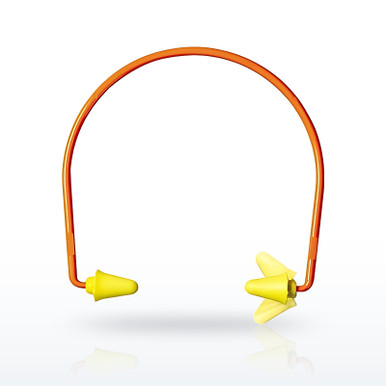
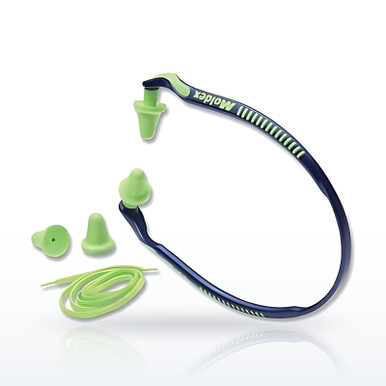
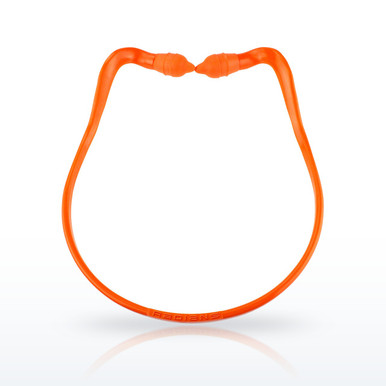

Foam plugs, reusable plugs and muffs for continuous noise are in the hearing protection finder.
Questions people ask
What are banded ear plugs?
Two soft pods on a stiff plastic band that presses them into the ear canal openings. NIOSH calls them canal caps or semi-inserts; OSHA’s technical manual calls them hearing bands.
What is the NRR of banded ear plugs?
NRR 17 to 28 for the ones we carry, each item’s own figure as published by its manufacturer. Foam plugs run up to 33.
When should you use banded ear plugs?
For intermittent noise, when protection goes on and off many times a shift and a plug in a pocket would not get reinserted. Not for a full shift in continuous high noise.
Can you wear a banded ear plug under a hard hat?
Yes. The band sits under the chin or behind the neck, so it does not compete with the suspension, safety glasses or a face shield.
How do you wear a banded hearing protector?
In the position the maker’s instructions show, usually under the chin; pull the ear up and back and press each pod in until your voice sounds muffled. Hang it around the neck between uses.
How often do you replace the pods?
Honeywell says every 2 to 4 weeks with proper care, and at once if a pod is torn, hard or dirty. The band itself is replaced when it is brittle or deformed.
Do banded plugs meet OSHA?
They are hearing protectors under 1910.95. The employer checks the NRR by an Appendix B method against the measured noise, the same as for any plug or muff. (1910.95(j).)
Standards and ratings on this page are as published in the documents named and by the manufacturers named. The employer’s hazard assessment and written program decide what applies at a given workplace. Verify a rating on the product and its spec sheet before use.