
What is NRR, and how do you calculate the protection you actually get?
NRR is the Noise Reduction Rating, a single number on every hearing protector sold in the United States, in decibels, from an EPA-required lab test: NRR 33 means the lab measured 33 dB of reduction on trained subjects with the protector fitted by an expert. Nobody gets that at work. OSHA’s method for estimating real protection subtracts 7 from the NRR (to convert the C-weighted lab number to the A-weighted scale exposures are measured on), and when deciding whether engineering controls are still required, takes half of what is left. So an NRR 33 plug is treated as (33 minus 7) = 26 dB, and as 13 dB for the engineering-control decision. NIOSH instead derates by type: 25 percent off earmuffs, 50 percent off foam plugs, 70 percent off all other plugs.
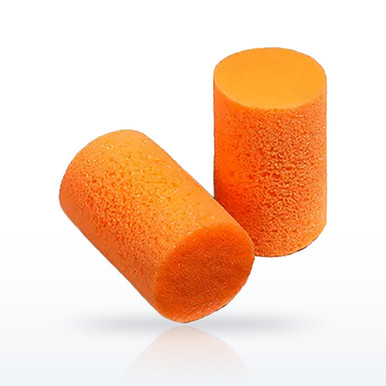 Howard Leight FirmFit FF-1-D Earplugs, Cylinder Shape Disposable PVC Foam EarFoam ear plugs rated NRR 33, the highest common rating
Why is the label not what you get? The EPA test fits the protector on each subject by an experimenter, in a quiet lab, and reports the average minus two standard deviations. On a jobsite the worker fits it themselves, in a hurry, with dirty hands, over glasses and under a hard hat, and takes it out to talk. Field studies going back to the 1980s found real-world attenuation from foam plugs averaging a third to a half of the label. The derating rules exist so the employer does not plan a program around a number nobody reaches.
How is NRR calculated into real protection?
Three methods you will see, and what each is for.
How is the NRR measured?
Under the EPA’s labeling rule, the manufacturer tests the protector on a panel of subjects per ANSI S3.19-1974: each subject’s hearing threshold is measured with and without the protector at nine frequencies, with the protector fitted by the experimenter. The attenuation at each frequency, averaged and adjusted downward by two standard deviations so that 98 percent of the subjects would get at least that much, is combined into one C-weighted number. The result is the NRR on the label. The label must also show the attenuation by frequency, which is more useful for a specific noise but almost never used. The EPA has proposed updating the label method for years; as of this writing the 1979 rule is still in force.
40 CFR 211 Subpart B (hearing protective devices, labeling); ANSI S3.19-1974 (method for measurement of real-ear protection); EPA proposed rule 74 FR 39150 (2009), not finalized.Worked examples: what the same protector gives at different noise levels
| Noise exposure (8-hr TWA) | Protector and NRR | OSHA estimate (NRR minus 7) | OSHA for engineering-control decision (half) | NIOSH derated estimate |
|---|---|---|---|---|
| 92 dBA | Foam plug, NRR 33 | 92 minus 26 = 66 dBA | 92 minus 13 = 79 dBA | 92 minus 9.5 = 82.5 dBA |
| 95 dBA | Earmuff, NRR 25 | 95 minus 18 = 77 dBA | 95 minus 9 = 86 dBA | 95 minus 11.75 = 83 dBA |
| 100 dBA | Pre-molded plug, NRR 27 | 100 minus 20 = 80 dBA | 100 minus 10 = 90 dBA | 100 minus 1.1 = 99 dBA |
| 100 dBA | Foam plug NRR 33 plus muff NRR 25 (dual) | 100 minus (26 + 5) = 69 dBA | 100 minus (13 + 5) = 82 dBA | About 100 minus (9.5 + 5) = 85.5 dBA |
| 105 dBA | Foam plug, NRR 33 | 105 minus 26 = 79 dBA | 105 minus 13 = 92 dBA | 105 minus 9.5 = 95.5 dBA |
For dual protection (plug plus muff), OSHA’s Appendix B says to take the higher NRR, derate it by the chosen method, and add 5 dB; the combination never reaches the sum of the two. The NIOSH examples use the derating formula (NRR times the percentage, then minus 7). Where the OSHA engineering-control estimate lands above 90, feasible engineering or administrative controls are still required; where the OSHA estimate lands above 85 for a worker who has had a standard threshold shift, a better protector is required. The pre-molded plug at 100 dBA shows why NIOSH’s 70 percent derating for non-foam plugs matters: on paper it works, on the NIOSH estimate it barely helps.
29 CFR 1910.95 Appendix B, sections I and II (including dual protection); OSHA Technical Manual III-5; NIOSH 1998 Criteria Document section 6.3.
Which method should an employer use?
OSHA accepts any of the methods in Appendix B for compliance, and the enforcement derating (50 percent) is used by the inspector to decide whether engineering controls are still owed. NIOSH recommends its derating or, better, individual fit testing. A reasonable program uses the OSHA estimate to show compliance, the NIOSH estimate to pick protectors with margin, and fit testing to catch the workers whose insertion is poor. The one thing not to do is subtract the raw NRR from the exposure; that number is not real.
29 CFR 1910.95(j) and Appendix B; OSHA Technical Manual III-5; NIOSH hearing protector fit-testing guidance (2010 onward).What does the NRR not tell you?
- How the protector performs at low frequencies, where most industrial noise is and where plugs are weakest; the frequency table on the package does.
- Whether it fits the worker’s ear canal; a plug that is the wrong size reads NRR 33 and delivers 5.
- How it performs when the worker talks, chews or sweats, all of which break the seal.
- Whether it is comfortable enough to be worn all shift; a protector removed for 30 minutes of an 8-hour shift at 95 dBA loses most of its benefit.
- How much it blocks speech and alarms; an over-protected worker in 85 dBA noise cannot hear a backup alarm. Choose the NRR that brings exposure to about 75 to 80 dBA, not the highest one.
What is SNR, and how does it compare?
SNR is the European single-number rating under EN 352, measured by a different method and reported without the two-standard-deviation reduction in the same way, so it runs a few dB higher than the NRR for the same protector; an NRR 33 plug typically shows SNR 36 or 37. Neither is converted to the other on a label; a protector sold in both markets carries both numbers. In the United States the NRR is the number OSHA’s methods use.
EN 352 series (hearing protectors) and EN ISO 4869-2 (SNR); 40 CFR 211 Subpart B.Ear plugs and earmuffs by NRR
20 items · prices liveNRR is the EPA-labeled rating the manufacturer publishes. The protection you get depends on fit, as explained above. Contractor Direct orders ship free.
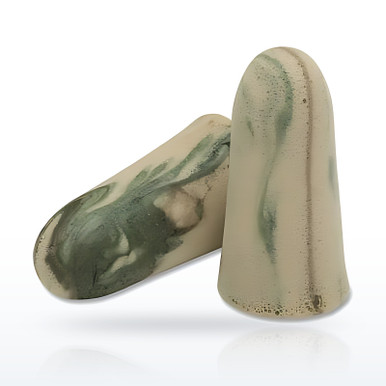

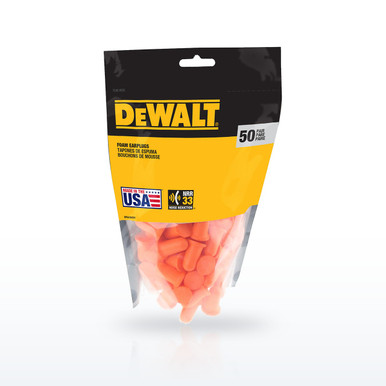
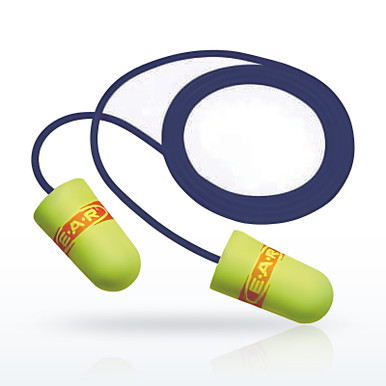
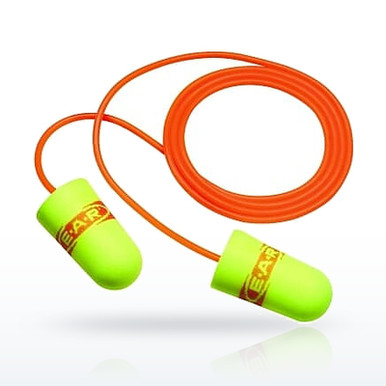
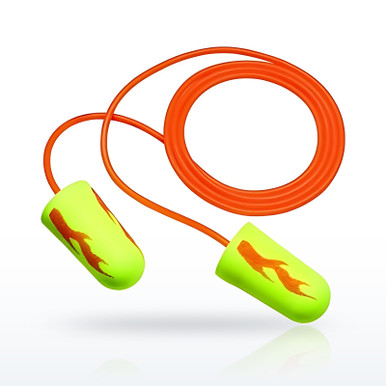
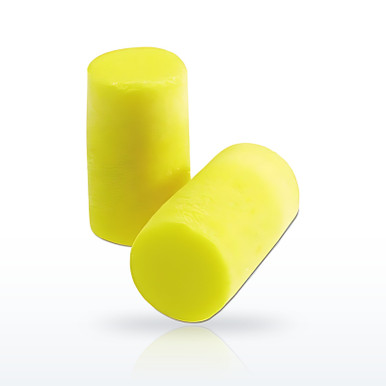
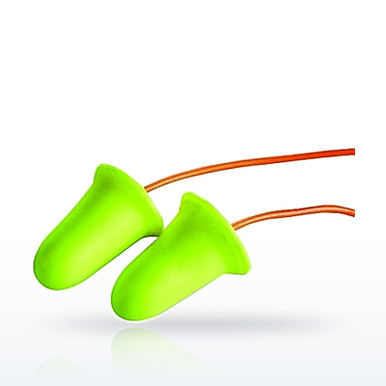
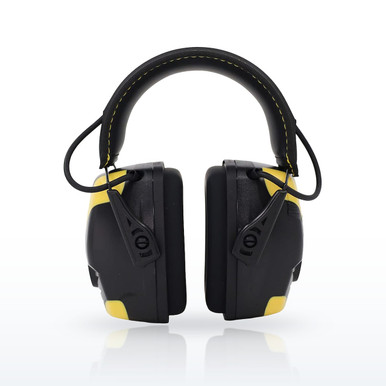
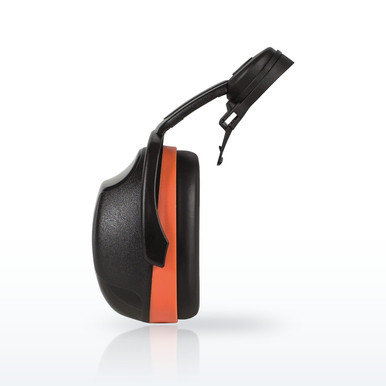
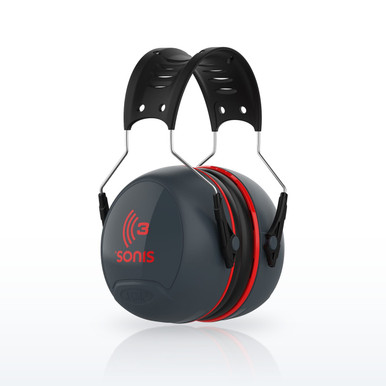
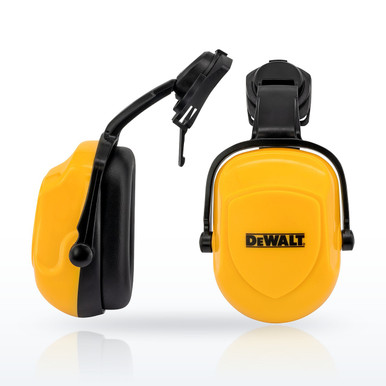
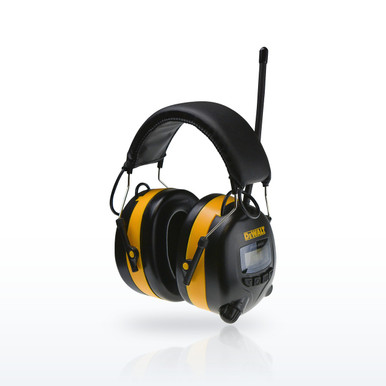
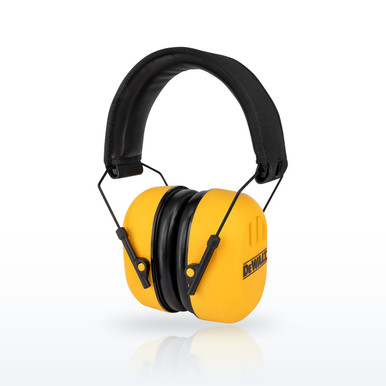
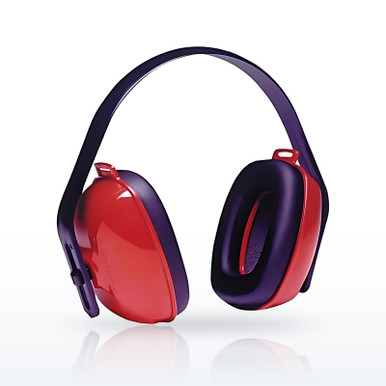
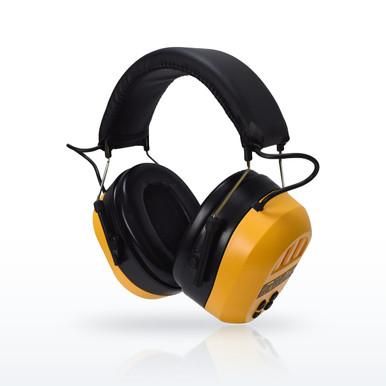
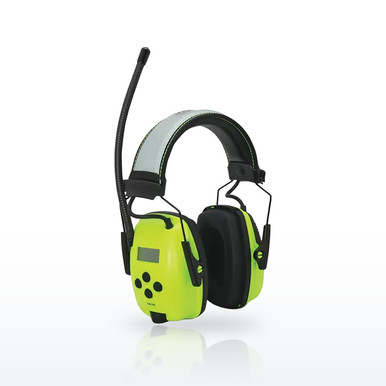
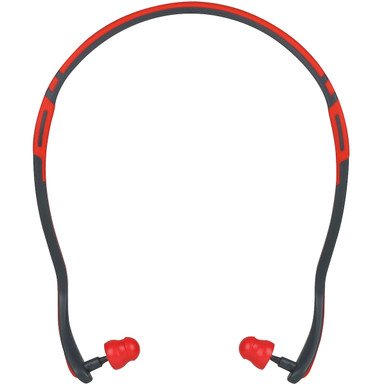
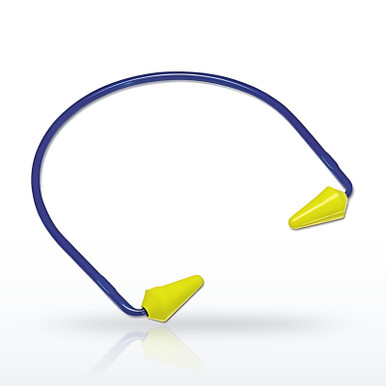
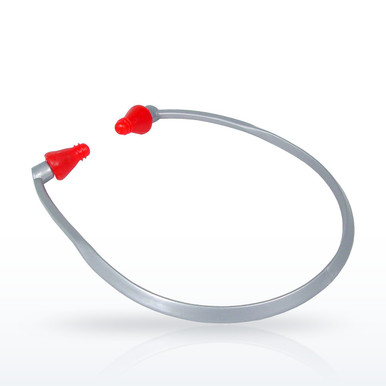
Every plug, muff and cap-mounted muff we carry, filtered by NRR band and style, is on the hearing protection finder.
Questions people ask
What does NRR stand for?
Noise Reduction Rating: the EPA-required single-number rating, in decibels, of a hearing protector’s lab-measured attenuation.
How do you calculate NRR?
The manufacturer measures it in a lab per ANSI S3.19. To estimate your protection, OSHA subtracts 7 from the NRR and subtracts the result from your exposure; for engineering-control decisions it uses half of (NRR minus 7). NIOSH derates by protector type instead.
What is a good NRR?
The one that brings your exposure to roughly 75 to 80 dBA after derating. For most industrial noise around 90 to 95 dBA, an NRR in the mid-20s to low 30s does it; higher is not better if it blocks alarms and speech.
What is the highest NRR?
About 33 for foam ear plugs and 30 to 31 for earmuffs on the US market. Dual protection (plug plus muff) adds about 5 dB to the higher rating in OSHA’s method.
Why does OSHA subtract 7 from the NRR?
The NRR is measured on the C-weighted scale and workplace exposures are measured A-weighted; 7 dB is the standard correction between them. (1910.95 Appendix B.)
Does doubling up ear plugs and earmuffs double the protection?
No. OSHA’s method adds 5 dB to the higher-rated protector. The combination is used for exposures over about 100 dBA.
What is the difference between NRR and SNR?
SNR is the European rating under EN 352; it is measured differently and reads a few dB higher than NRR for the same protector. US rules use NRR.
Can a smartphone app measure my protection?
No. Only a fit-test system (a special headset that measures attenuation on your ears) gives a personal attenuation rating. Apps measure the room, not your ears.
Standards and ratings on this page are as published in the documents named and by the manufacturers named. The employer’s hazard assessment and written program decide what applies at a given workplace. Verify a rating on the product and its spec sheet before use.