
Hearing protection with a hard hat: cap-mounted earmuffs
A cap-mounted earmuff is an earmuff whose arms clip into the accessory slots on the sides of a cap-style hard hat, so the hat holds the cups against the ears instead of a headband. It solves the problem a headband muff has on a hard hat: the band and the suspension want the same space on the head, and the cups end up tilted off the ear. The cups swing up to a standby position and back down. The manufacturers rate the muff as a combination: the NRR on the package was measured on a hard hat, and the muff maker’s instructions say which hats and adapters it fits. In our catalog the same cup can carry a different NRR on a headband, cap mount or full-brim mount, so the rating to use is the one on the mounted version. Dielectric versions have no metal parts, for electrical work.
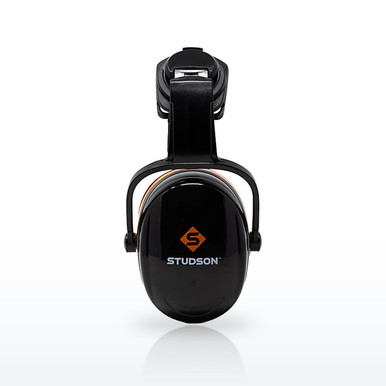
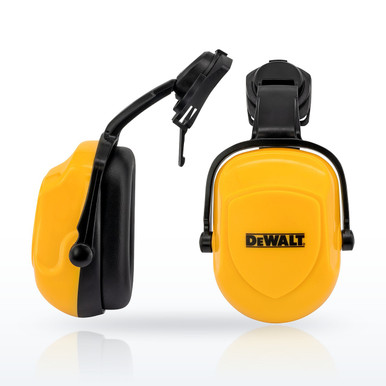 DEWALT DPG660-D Dielectric Cap Mount NRR 25 EarmuffCap-mounted earmuffs rated NRR 25 to 27 by the manufacturer
Why is the rating tied to the hard hat? An earmuff only works if the cushion seals all the way around the ear, and on a cap mount the force that makes the seal comes from the arms and the hat, not a headband. Change the hat and you change the geometry: the slot height, how far the brim sits forward, how the suspension holds the shell. The European standard for helmet-mounted muffs, EN 352-3, tests the muff on a named helmet and only extends the result to other helmets after force and sizing checks; 3M issued a stop-use notice in 2023 for certain muff-and-helmet pairings where the arm force fell over time. US makers likewise publish a separate NRR for the cap-mounted version of a cup, and it is often lower than the headband figure. That is why the instructions list compatible hats, and why a muff on an unlisted hat is an unrated muff.
What are the options for hearing protection with a hard hat?
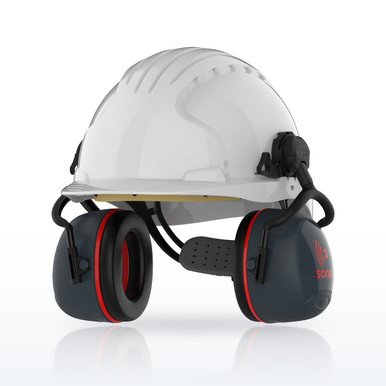
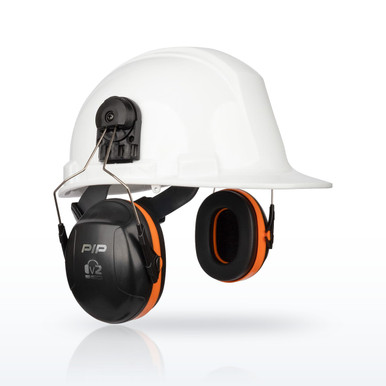
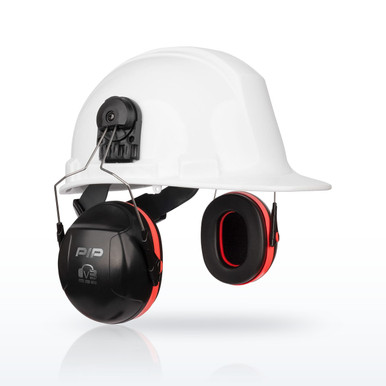
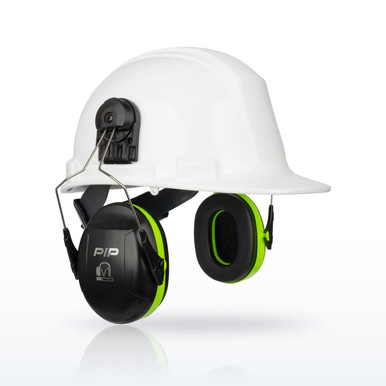
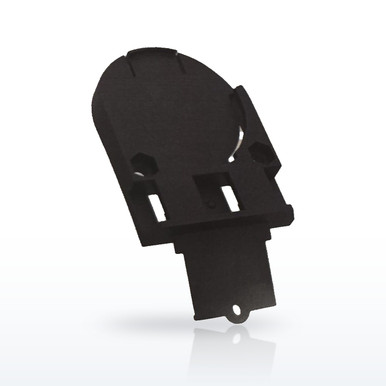
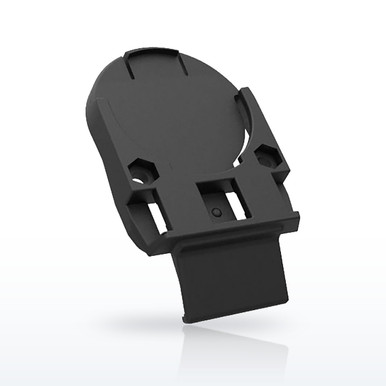
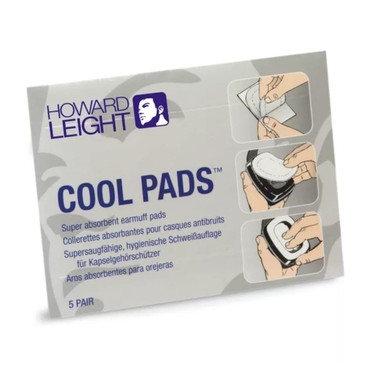
Four ways the catalog solves it, with each item’s own NRR shown in the band.
Does putting an earmuff on a hard hat change the hard hat’s rating?
OSHA requires head protection to meet ANSI Z89.1, which rates the hat for impact (Type I for blows from above, Type II for blows from above and the side) and electrical class (G, E or C). The hard hat makers caution that alterations, attachments or added accessories may affect the helmet’s performance, which is why the slots exist: an accessory in the slot the maker designed is within what the hat was tested with; a muff clamped, glued or screwed to the shell is not. Use the slots, use the adapter the muff maker names, and do not drill. For a Class E hat near energized parts, choose a dielectric muff so the accessory does not add a conductive path the hat was rated without.
29 CFR 1910.135(b)(1) (ANSI Z89.1 editions incorporated); ANSI/ISEA Z89.1 user-information caution on alterations and accessories, as summarized by Workplace Material Handling and Safety (cited at source level; the standard text is not freely published); manufacturer dielectric designations.The hearing side is unchanged by the mounting. OSHA’s Appendix B check uses the NRR from the package: subtract 7 for an A-weighted level and subtract the rest from the noise; the result must be 90 dBA or below, or 85 after a standard threshold shift. Use the NRR of the mounted version. In our catalog, for example, the same manufacturer lists one cup at NRR 29 on a headband, 27 on a full brim and 26 as a cap mount, and another at 25 on a headband and 24 as a cap mount; those are the maker’s published figures, not ours.
1910.95 Appendix B; 1910.95(j)(2) and (j)(3); catalog NRR figures as published by PIP for the V2 and V3 series (headband, full brim and cap-mounted versions).How do you check that a muff fits your hard hat?
- Find the slot. Cap-style hard hats with accessory slots have a rectangular opening on each side of the shell, above the ear. No slots, no cap-mounted muff; use plugs or a headband muff that clears the suspension.
- Read the muff’s instructions. They say universal slot, or name the hat families and the adapter. 3M’s guidance for EN 352-3 products is that if compatibility information is not supplied with the product, the combination should not be used; treat US products the same way.
- Mount and seat. Push the arms into the slots until they lock, swing the cups down, and press them against the head. The cushions should sit flat all the way round with the hat sitting level, suspension adjusted as normal.
- Check the seal. With the cups down, your voice should sound muffled; a gap at the bottom of the cushion from a jaw strap, glasses temple or hood lining is a leak. Tilt the hat and see whether the cups lift.
- Standby position. Rotate the cups up and out when out of the noise; do not rest them on the hat brim where the cushions get crushed.
- Re-check after a hat change. A new hat model, a new suspension or a liner changes the fit. A muff that fit the old hat is not rated on the new one until the instructions say so.
When is a cap mount not the answer?
- Face shields and welding helmets: the shield arm and the cup arm share the slot on many hats. Some muffs have an adapter with a slot for a visor carrier; otherwise use plugs.
- Hoods and liners: a winter liner or a hood under the hat lifts the cushion. Plugs under the liner.
- Hats without slots, and bump caps.
- Full shifts above about 100 dBA: NIOSH says to wear plugs and muffs together, and the plug does most of the work.
- Crews that will not keep cups down: a banded plug under the chin goes on in a second and stays around the neck.
Cap-mounted, full-brim and helmet-mounted earmuffs by NRR
20 items · prices liveNRR is as tested by the manufacturer on the mount shown and printed on the package. Compatible hard hats, adapters and dielectric construction are on each product page. Free shipping on orders over $199.
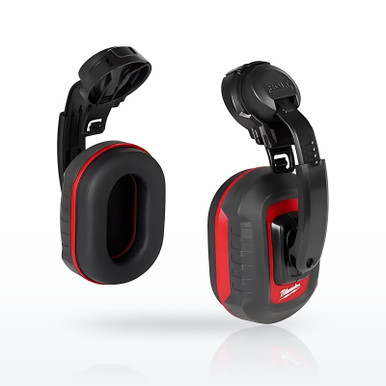
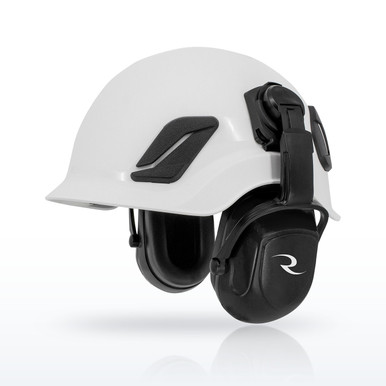
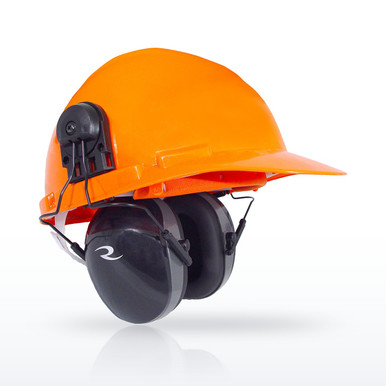
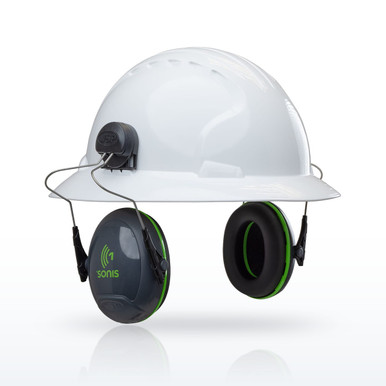
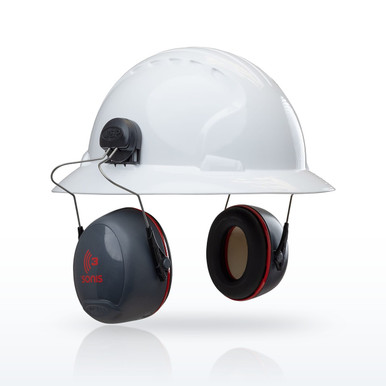
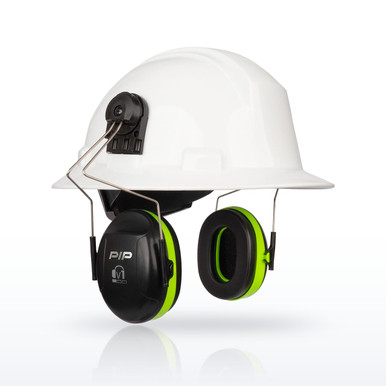
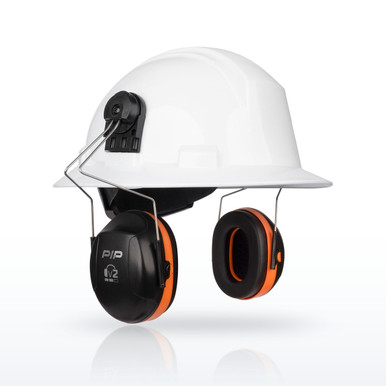
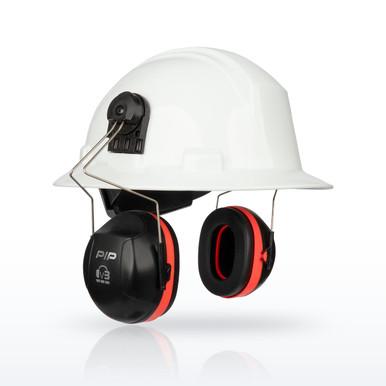
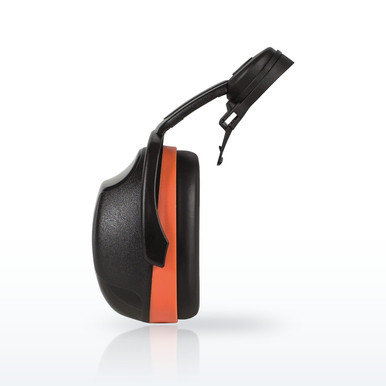
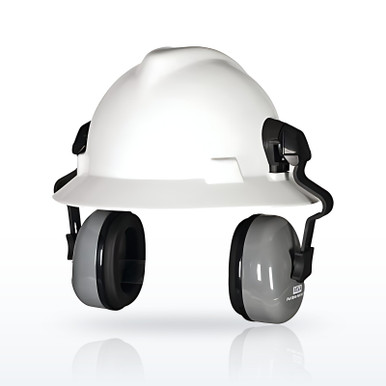
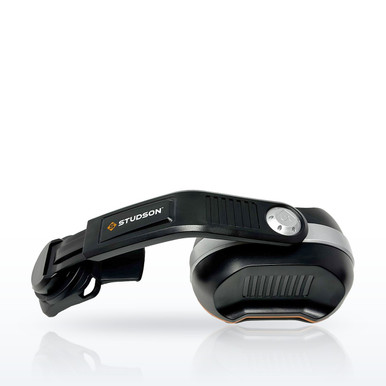
Headband muffs, foam plugs and banded plugs for under a hat are in the hearing protection finder.
Questions people ask
Can you wear regular earmuffs with a hard hat?
Sometimes, but the headband and the suspension compete for the same space and the cups tilt off the ear. Cap-mounted muffs in the accessory slots, or ear plugs, are how most crews solve it.
Do cap-mounted earmuffs fit all hard hats?
No. They fit hard hats with accessory slots, and the muff maker’s instructions name the hats or adapters. A muff on a hat not listed for it has no rating on that hat.
Is the NRR the same on a cap mount as on a headband?
Not always. The manufacturers rate each mounting separately; in our catalog the same cup carries different NRRs on headband, cap-mount and full-brim versions. Use the number on the mounted version you are wearing.
Does mounting earmuffs void the hard hat’s ANSI rating?
Using the accessory slots and the adapter the makers designed is within what the hat was built for. Drilling, gluing or clamping is an alteration the hat makers caution against. For electrical work choose a dielectric muff on a Class E hat.
What is a dielectric earmuff?
A muff built with no metal parts, as designated by the manufacturer, for use near energized equipment. The muff itself carries no electrical test rating; the hard hat’s Class E or G rating is the electrical protection.
Can I use a cap-mounted muff with a face shield?
Only if the muff or the hat provides a second slot or a visor carrier on the adapter; many do not. Ear plugs under the shield are the usual answer.
What about full-brim hard hats?
Use a full-brim mounted muff; its arm is shaped to clear the brim. A cap-style arm will not seat on a full brim.
Standards and ratings on this page are as published in the documents named and by the manufacturers named. The employer’s hazard assessment and written program decide what applies at a given workplace. Verify a rating on the product and its spec sheet before use.