
What is the carbon monoxide exposure limit at work? OSHA, NIOSH and the ppm numbers
OSHA’s legal limit for carbon monoxide is 50 parts per million averaged over 8 hours, in general industry, construction and maritime alike. NIOSH recommends 35 ppm over 8 hours and a ceiling of 200 ppm never to be exceeded; ACGIH’s threshold limit value is 25 ppm. The level that is immediately dangerous to life or health is 1,200 ppm. Personal CO monitors are usually shipped with a low alarm near 35 ppm and a high alarm near 200 ppm, the NIOSH numbers, so a worker is warned at the recommended limit rather than the legal one.

Why is carbon monoxide the gas that catches people? It has no color, no smell and no taste, it comes from anything that burns, and its first symptoms, headache, tiredness, nausea, are the symptoms of a long day. The blood takes it up over oxygen and holds it, so the dose builds through a shift even when the level in the air is steady. A forklift in a cold warehouse, a generator under a tarp, a pressure washer in a tank: the exposure ends, in the cases OSHA investigates, when someone collapses. A monitor on the belt is the only early warning there is.
What are the limits?
Each number and who sets it.
What are the symptoms OSHA lists, and at what level?
OSHA’s fact sheet lists the early signs as tightness across the chest, headache, fatigue, dizziness, drowsiness and nausea; prolonged or higher exposure adds vomiting, confusion, collapse, loss of consciousness and muscle weakness, and people with angina may get sudden chest pain. The NIOSH entry adds rapid breathing, weakness, hallucinations, bluish skin and changes on an electrocardiogram. Neither source ties a symptom to a ppm, because the effect depends on level and time together and on the person; what the limits above encode is that 50 ppm all day is the most the law allows and 1,200 ppm can disable a healthy adult in minutes.
OSHA Fact Sheet, Carbon Monoxide Poisoning (symptoms); NIOSH Pocket Guide, carbon monoxide (symptoms, IDLH basis).Where does CO come from on a jobsite?
- Anything that burns carbon fuel incompletely: gasoline, diesel, propane, natural gas, kerosene, coal, wood.
- Internal combustion engines indoors or in a pit: forklifts, floor machines, pressure washers, generators, compressors, concrete saws.
- Furnaces, forges, blast furnaces, coke ovens, and any heater or boiler with a bad burner or a blocked flue.
- Welding with CO2 shielding gas in a poorly ventilated space.
- Confined spaces that take air from any of the above: tanks, manholes, trenches near engines.
What does OSHA say employers should do?
Ventilate so CO is removed from work areas; maintain fuel-burning equipment and consider electric, battery or compressed-air tools where they are safe; prohibit gasoline engines in poorly ventilated areas; test the air regularly where CO may be present, including before and during confined-space entry; provide personal CO monitors with audible alarms wherever exposure is possible; use a NIOSH-approved full-facepiece pressure-demand SCBA in high-CO atmospheres; and train workers on sources, symptoms and controls. A gas-powered tool indoors with the doors open is the case the fact sheet is written for.
OSHA Fact Sheet, Carbon Monoxide Poisoning (employer actions); 29 CFR 1910.146(d)(5) (atmospheric testing); 1910.134 (respirators).How are CO monitors set up?
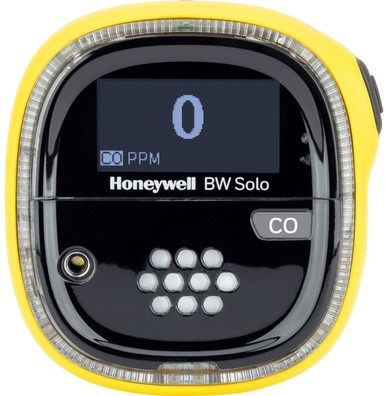
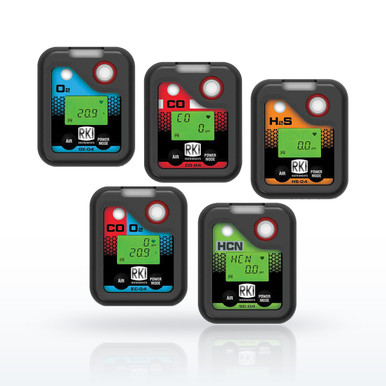
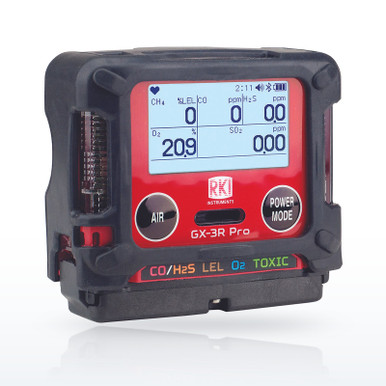
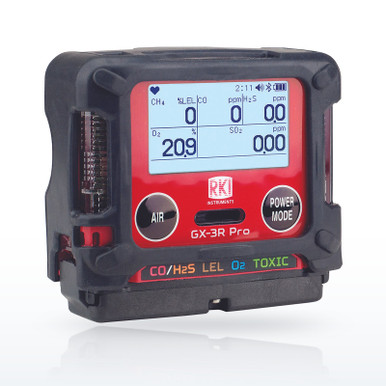
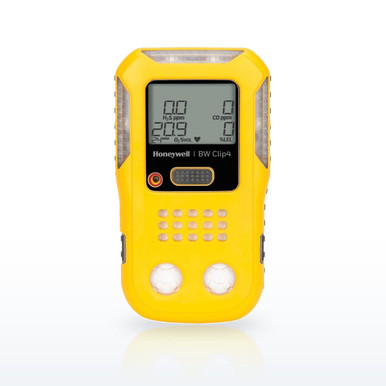
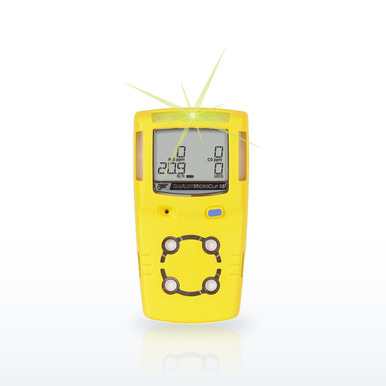
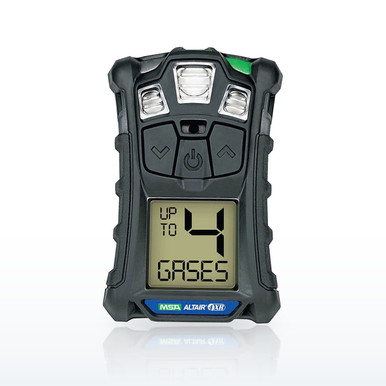
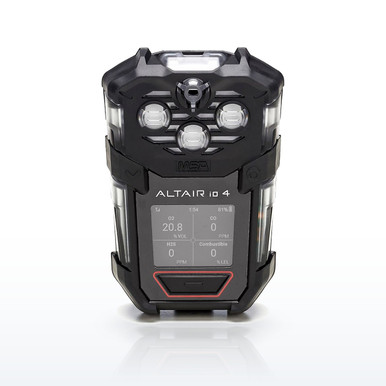
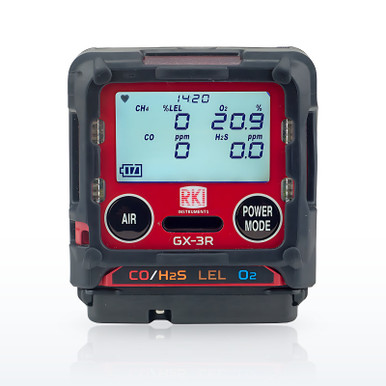
A single-gas CO monitor or the CO sensor in a 4-gas detector reads in ppm and has two instantaneous alarms plus time-weighted alarms. Manufacturers ship them with defaults, typically 35 ppm low and 200 ppm high, or 25 and 50 on some models, and the employer sets them to the limit its program uses. The TWA alarm trips when the shift average reaches the set limit; the STEL alarm on a 15-minute average. Bump test before each day’s use and calibrate on the manufacturer’s schedule, with a CO calibration gas; a CO sensor that has sat unexposed can still read, but only the gas proves it.
Manufacturer manuals (Honeywell BW Clip and Solo, RKI GX-3R Pro and CO-04, MSA ALTAIR) for default alarm set points; ISEA Statement on Validation of Operation for Direct Reading Portable Gas Monitors (bump testing).CO monitors, 4-gas detectors and CO calibration gas
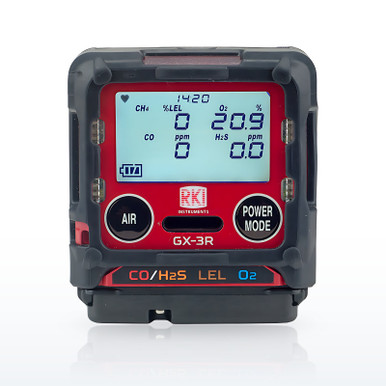
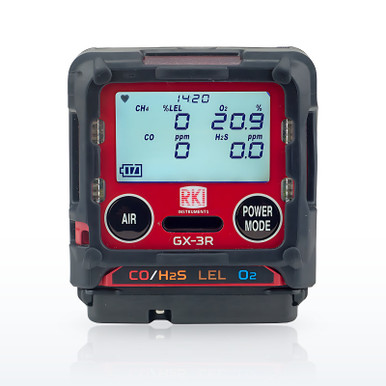
16 items · prices liveGases, alarm defaults and sensor life are as published by the manufacturer on each product page. Free shipping on orders over $199.



The full range by gas and sample method is in the gas detection finder.
Questions people ask
What is the OSHA limit for carbon monoxide?
50 ppm averaged over 8 hours, in general industry, construction and maritime.
What is the NIOSH limit for CO?
35 ppm over 8 hours, with a 200 ppm ceiling that is never to be exceeded.
What is the ACGIH TLV for CO?
25 ppm as an 8-hour time-weighted average.
What ppm of CO is dangerous?
NIOSH sets 1,200 ppm as immediately dangerous to life or health. Symptoms begin well below it with time; the limits exist so no one finds out where.
What should a CO monitor alarm be set at?
Manufacturer defaults are commonly 35 ppm low and 200 ppm high; the employer sets alarms to the limit its program uses. Check the model’s manual.
Is 50 ppm of CO safe?
It is the legal 8-hour average. NIOSH and ACGIH recommend lower limits, 35 and 25 ppm, and a ceiling of 200 ppm for any moment.
Does OSHA require CO monitors?
Not by name outside confined spaces, where atmospheric testing is required. The CO fact sheet tells employers to provide personal CO monitors with audible alarms wherever exposure is possible, and the PEL is the number to be measured against.
How does a CO sensor work?
An electrochemical cell: CO reacts at an electrode and produces a current proportional to the ppm. Sensors last about two to three years and are replaced; the monitor reports when one fails.
Standards and ratings on this page are as published in the documents named and by the manufacturers named. The employer’s hazard assessment and written program decide what applies at a given workplace. Verify a rating on the product and its spec sheet before use.