
What is LEL, and what does 10 percent LEL mean on a gas monitor?
LEL is the lower explosive limit: the smallest concentration of a flammable gas in air that will burn or explode if it finds a spark. Below it the mixture is too lean to ignite. Methane’s LEL is 5 percent gas in air, so a monitor reading 10 percent LEL means 0.5 percent methane, one-tenth of the way to an explosive mix. OSHA uses 10 percent of the LEL as the line for a hazardous atmosphere in a confined space, so an alarm at 10 percent LEL is a warning long before the air can actually burn.
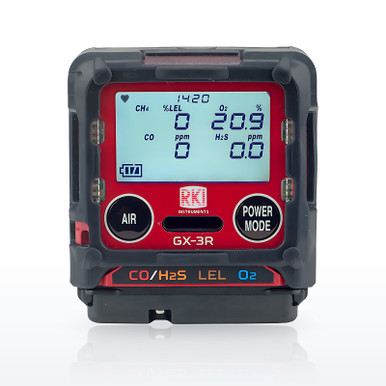
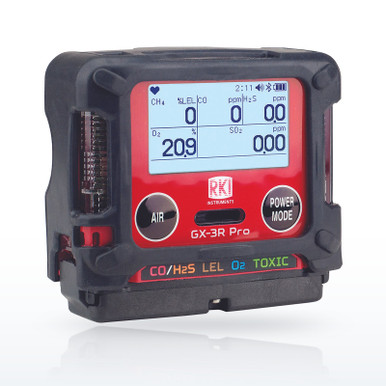
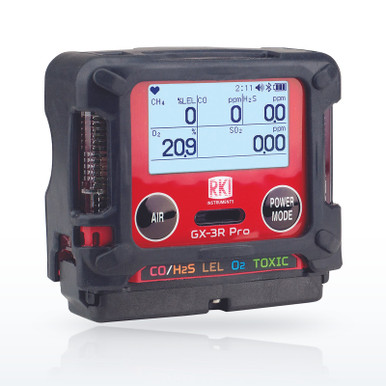
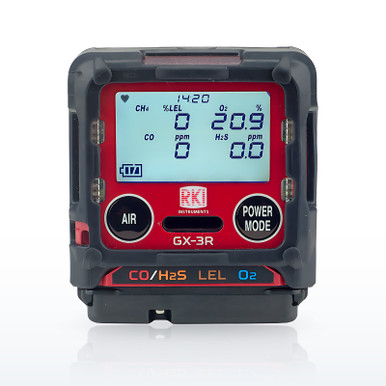
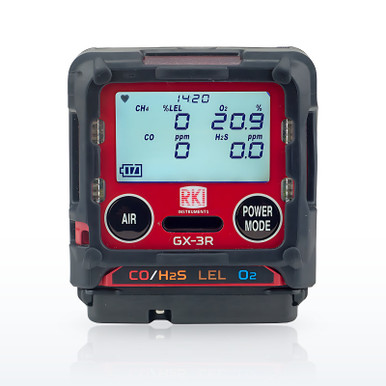 RKI Instruments 72-RA-C-56 Multi-Gas Detectors, GX-3R 4-Gas Monitor LEL/O2/H2S/COFour-gas monitor with a combustible (LEL) sensor
Why does the monitor read in percent of LEL? Because the number that matters is how close the air is to burning, not how much gas is in it. Every flammable gas has its own LEL: 5 percent for methane, 2.1 for propane, 1.4 for gasoline vapor, 4 for hydrogen. A monitor that read in percent of gas would need a different alarm for each one. Reading in percent of LEL puts them all on one scale where 100 means the air can ignite and 10 means get out and ventilate.
What do the numbers on the LEL scale mean?
The same scale on every combustible-gas monitor, whatever the gas.
LEL and UEL of common gases
| Gas or vapor | LEL (% in air) | UEL (% in air) | 10% LEL equals |
|---|---|---|---|
| Methane (natural gas) | 5.0 | 15.0 | 0.5 percent gas |
| Propane | 2.1 | 9.5 | 0.21 percent |
| Hydrogen | 4.0 | 75.0 | 0.4 percent |
| Gasoline vapor | 1.4 | 7.6 | 0.14 percent |
| Acetylene | 2.5 | 100 | 0.25 percent |
| Hydrogen sulfide | 4.0 | 44.0 | 0.4 percent (40,000 ppm; the toxic limit is 20 ppm) |
| Carbon monoxide | 12.5 | 74.0 | 1.25 percent (12,500 ppm; the toxic limit is 50 ppm) |
| Ammonia | 15.0 | 28.0 | 1.5 percent |
| Pentane (the common calibration gas) | 1.5 | 7.8 | 0.15 percent |
LEL and UEL are published in the NIOSH Pocket Guide and NFPA 325; the values are at normal temperature and pressure and shift with heat. The last two rows show why an LEL sensor is useless for toxic gases: H2S and CO are deadly at parts per million, thousands of times below the level a combustible sensor sees. A four-gas monitor pairs the LEL sensor with dedicated electrochemical sensors for those.
NIOSH Pocket Guide to Chemical Hazards (LEL and UEL by substance); NFPA 325 (fire hazard properties of flammable liquids, gases and volatile solids); NFPA 497.
What is the difference between LEL and LFL?
None in practice. LFL, lower flammable limit, is the term OSHA uses in the confined-space standard and NFPA uses in its documents; LEL, lower explosive limit, is the term on monitors and in the field. Both mean the lean limit of the flammable range. UEL and UFL are the same pair for the rich limit.
29 CFR 1910.146(b) (uses LFL); NFPA 325 (uses LFL); manufacturer documentation (uses LEL).How does a combustible-gas sensor work, and where does it fail?
Most LEL sensors are catalytic bead (pellistor) sensors: a tiny heated coil coated with a catalyst burns any flammable gas that reaches it, the burning raises its temperature and resistance, and the change is read as percent LEL. They need oxygen to work, at least about 10 percent, so in an oxygen-deficient space an LEL reading can be falsely low while the gas is really there, which is why the standard says test oxygen first. They are calibrated to one gas, usually methane or pentane, and read other gases higher or lower by a correction factor the manufacturer publishes. Silicones, lead compounds and sulfur gases poison the catalyst; high concentrations can burn it out. Infrared (IR) LEL sensors avoid poisoning and work without oxygen but cannot see hydrogen. The sensor’s own life is typically two to five years.
Manufacturer sensor documentation (RKI, Industrial Scientific, MSA, Honeywell BW); 29 CFR 1910.146(d)(5)(iii) (test oxygen first); ISA TR12.13.01 (performance of combustible gas detectors).Why is the limit 10 percent and not 100?
Because the reading is a sample from one spot, the gas is not evenly mixed, the sensor has error and a response time, and the mixture can change faster than a person can leave. Ten percent is the margin that covers all of that. It is also why hot-work permits and tank-entry procedures hold the line at 10 percent or lower, and why a monitor that alarms at 10 percent is set to keep people out of trouble, not to tell them the air is about to explode.
29 CFR 1910.146(b); OSHA confined-space guidance; NFPA 51B (hot work: 10 percent LFL).What has to be done with an LEL monitor before each use?
- Bump test before each day’s use: expose the sensor to a known gas and confirm it alarms. A bump test takes under a minute.
- Full calibration on the manufacturer’s schedule, after any failed bump test, after exposure to a poison or a high concentration, and after a sensor change.
- Use the calibration gas the sensor was set to (commonly 50 percent LEL methane or 25 percent LEL pentane) and apply the correction factor for other gases.
- Zero it in clean air, not in the space.
- Replace the sensor at the end of its life or when it will not calibrate.
LEL monitors and calibration gas
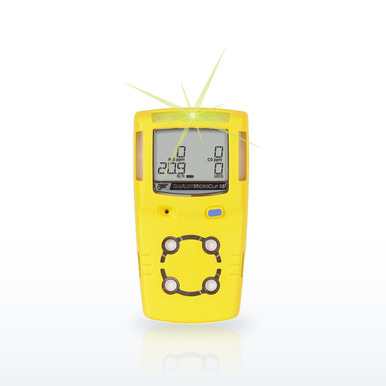
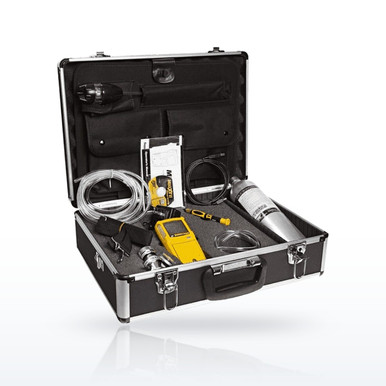
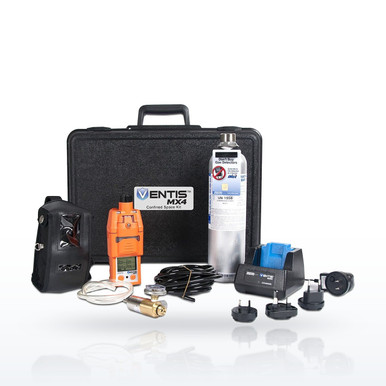
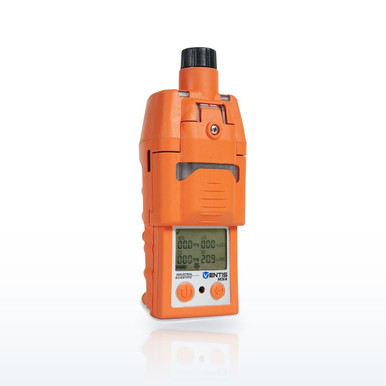
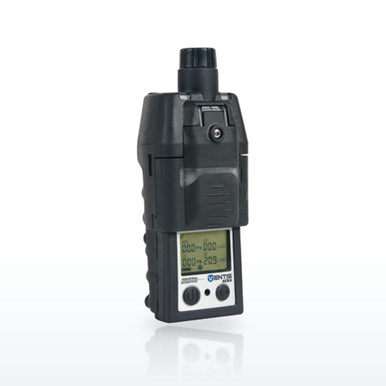
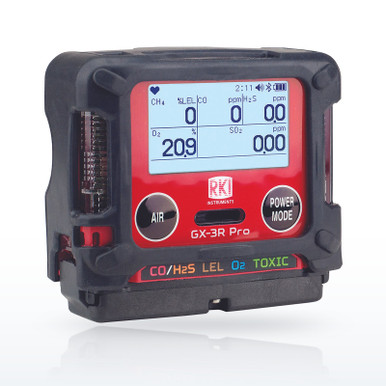
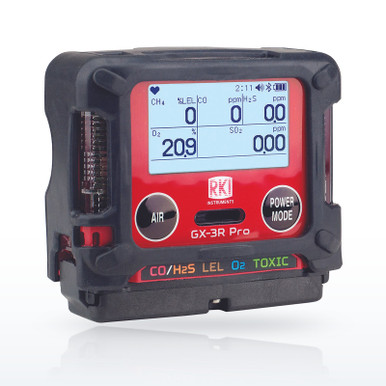
15 items · prices liveEvery monitor shown lists a combustible (LEL) sensor among the gases its manufacturer specifies; calibration gases are listed with their concentration. Contractor Direct orders ship free.
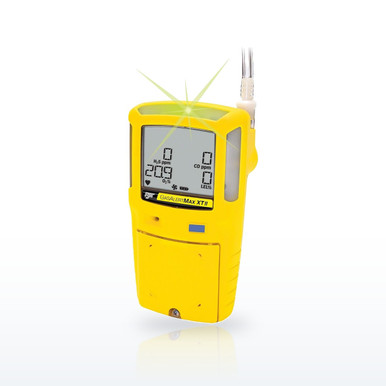
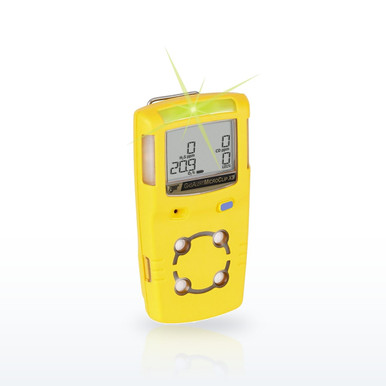
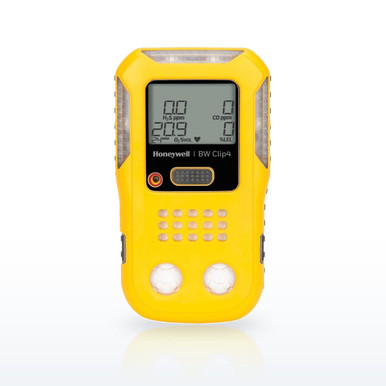
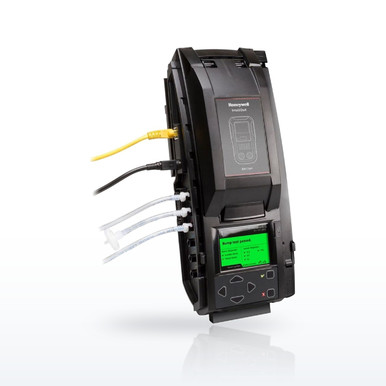
Single-gas LEL monitors, IR sensors and docking stations are on the gas detection finder.
Questions people ask
What does LEL stand for?
Lower explosive limit: the lowest concentration of a flammable gas in air that can ignite. OSHA and NFPA call it the lower flammable limit (LFL); same number.
What does 10 percent LEL mean?
The air holds one-tenth of the gas needed to burn. For methane, that is 0.5 percent gas. OSHA treats 10 percent LEL as a hazardous atmosphere in a confined space, and it is the usual low alarm.
What is a safe LEL level?
Below 10 percent LEL for entry and hot work under OSHA and NFPA 51B. Many employers set the alarm lower. Zero is the goal; 10 is the line.
What is the LEL of natural gas?
About 5 percent gas in air (methane), with a UEL of 15 percent.
What is the difference between LEL and UEL?
LEL is the lean limit, below which the mixture will not burn; UEL is the rich limit, above which it is too rich to burn until air dilutes it. Between them is the explosive range.
Can an LEL monitor detect H2S or CO?
Not at the levels that matter. Those gases are toxic at parts per million, far below what a combustible sensor sees. A four-gas monitor has separate sensors for them.
Why does my LEL sensor read zero in a tank that smells of fuel?
Check the oxygen reading. A catalytic LEL sensor needs oxygen to burn the gas; in a low-oxygen space it under-reads. Test oxygen first, ventilate, and retest.
How often should an LEL monitor be bump tested?
Before each day’s use, per OSHA’s guidance and every manufacturer; calibrate on schedule and after any failed bump.
Standards and ratings on this page are as published in the documents named and by the manufacturers named. The employer’s hazard assessment and written program decide what applies at a given workplace. Verify a rating on the product and its spec sheet before use.