
Chemical aprons and sleeves: what to look for
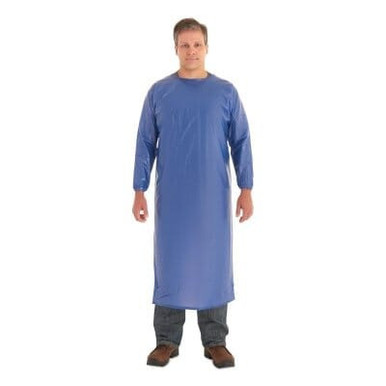
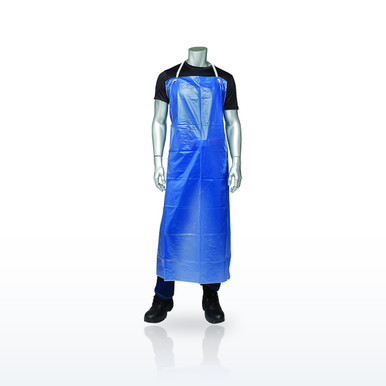
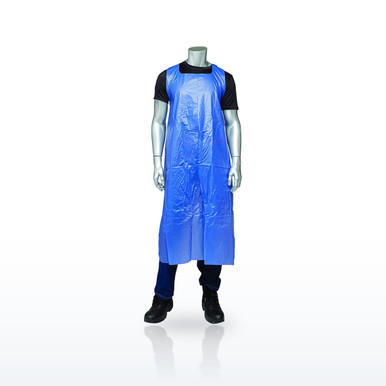
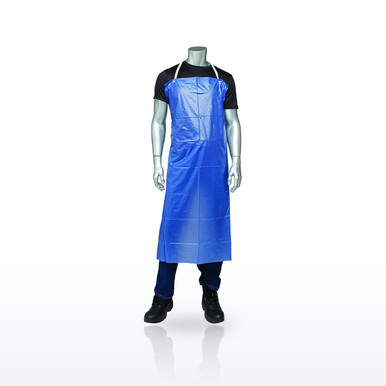
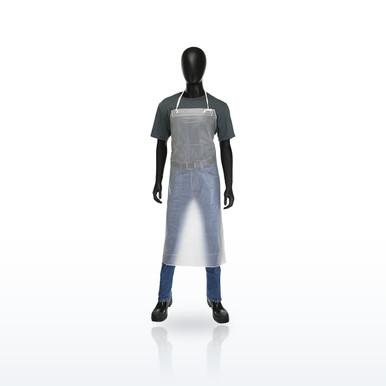
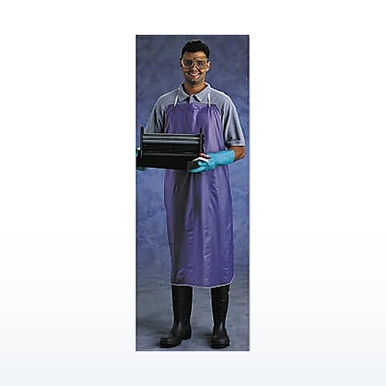
An apron protects the front of the body from splash and sleeves protect the forearms, for work where the exposure is in front of you and below the chest: mixing, pouring, dipping, washing parts, cleaning tanks, food and animal processing. OSHA does not have an apron standard. The general PPE rule requires the employer to assess the hazard and select equipment that protects against it, and the bloodborne pathogens rule names aprons outright. What to look for is the same as for any chemical garment: a material that resists the chemical you handle (vinyl for acids, bases and water-based cleaners; nitrile for oils, fats and solvents; a laminate for the worst chemicals), a thickness that survives the job (6 and 8 mil for light work, 12 to 20 mil for heavy), a length that covers the knees, and ties or a neck loop you can get off fast if it is soaked.
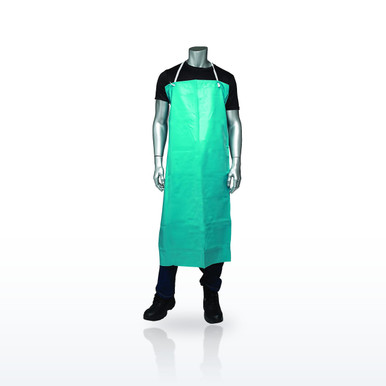 PIP UG-20 vinyl apron, 20 milHeavy green vinyl, grommets and cloth ties, 45 and 50 inch.
Why an apron instead of a coverall? Because the exposure is in one place. A worker at a dip tank or a sink gets splashed on the front, from the chest down, and almost never on the back or the legs behind. An apron puts the barrier there and leaves the rest of the body breathing, which matters in a hot plant where a coated coverall is a heat-stress problem. It also comes off in two seconds when it is soaked, which a coverall does not. Where the splash can come from any direction, or the chemical is one the skin absorbs, the apron is the wrong garment and the hazard assessment should say coverall.
What does OSHA require?
No apron standard; two rules do the work.
Which apron material for which chemical?
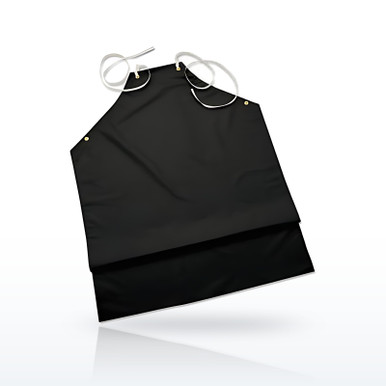
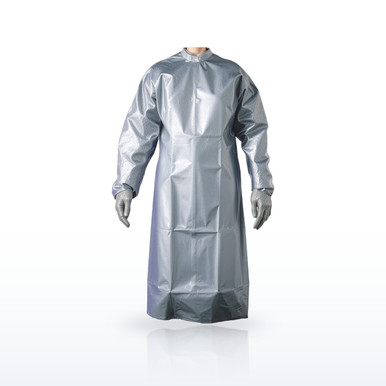
Vinyl (PVC) is the general-purpose chemical apron. Manufacturers rate it for acids, bases, water-based chemicals, grease and oil, and it is the lowest-cost material, which is why most food-plant, janitorial and parts-washing aprons are vinyl. For solvents, check the maker’s chart before relying on it. Nitrile and nitrile-coated fabric (Hycar is one trade name) hold up to oils, fats, grease and a range of solvents, and resist cuts and abrasion better than vinyl, for meat and poultry processing and machine shops. Laminate films such as polyethylene/EVOH (Silver Shield) are thin, flexible, five-layer barriers in which each layer stops a different group of chemicals; they are sold as disposable coat aprons for laboratories, spill response and chemical mixing.
PIP vinyl apron product data (resistance to chemicals, punctures and abrasion); AlphaTec 1051 and 10522 PVC apron data (acids, bases, chemical splashes, grease, oils); AlphaTec Hycar 10525 data (animal fats, grease); North Silver Shield SSCA data (PE/EVOH five-layer laminate), as published by the manufacturers.The material is a starting point. For a named chemical, the manufacturer’s permeation data is the answer: glove makers test their materials to ASTM F739, which measures how long a chemical takes to come through a swatch under continuous contact and how fast it then permeates. Where an apron is sold without permeation data, the same maker’s glove chart for that material is the usual reference, since the polymer is the same. For a chemical that is not in any chart, ask the manufacturer before buying a case.
ASTM F739-20, scope and section 5.2; manufacturer chemical resistance charts for PVC, nitrile and PE/EVOH laminate.What thickness and length?
- Thickness is given in mils, thousandths of an inch. 6 mil vinyl is light-duty and disposable-grade: food prep, cleanup, short tasks. 8 mil is the standard reusable weight for washing, mixing and plant work. 12 to 20 mil is heavy-duty for dip tanks, pressure washing, battery work and anything with sharp edges; it lasts longer but is stiffer and heavier.
- Length is measured from the neck. 35 to 36 inches covers the thighs; 45 inches reaches the knees on an average worker; 50 to 55 inches covers the shins and is the choice for wash-down and dip-tank work where liquid runs down the front. The apron should end above the boot top so it does not channel liquid into the boot.
- Width of 33 to 35 inches wraps the sides enough to catch a splash from an angle.
- Closure: a neck loop and waist ties are the standard. Grommets with cloth ties outlast a punched hole. A hook-and-loop or quick-release neck is worth having where a soaked apron has to come off fast.
- Edge: a sewn or bound edge resists tearing and is easier to clean; a raw cut edge is lighter and cheaper and is fine for disposable use.
- Sleeves: for forearm exposure, 18 inch sleeves in the same material as the apron, elastic at both ends, worn over the glove cuff or with the glove gauntlet over them, depending on which way the liquid runs. Chemical sleeves are not in the band below; call for a quote.
How is a chemical apron worn and cared for?
Over the sleeves and under the glove gauntlet when liquid runs down the arm, so it drips off the glove rather than into it; over the glove when it runs up from the hands. Rinse it after each use and hang it to dry; a vinyl apron folded wet grows mold and cracks at the fold. Inspect for pinholes by holding it to the light, and retire it at the first cut or crack, because an apron that leaks at one point is an apron that soaks a shirt. Under the bloodborne pathogens rule, PPE that is penetrated by blood is removed as soon as feasible and contaminated clothing comes off before leaving the area.
1910.1030(d)(3)(vi) and (vii); 1910.132(a) (maintained in a sanitary and reliable condition); manufacturer care instructions.Chemical aprons by material and thickness
12 items · prices liveMaterial and thickness are as published by the manufacturer; chemical resistance for a specific chemical is on the manufacturer’s chart linked from each product page. Most vinyl aprons are sold by the dozen. Contractor Direct orders ship free.
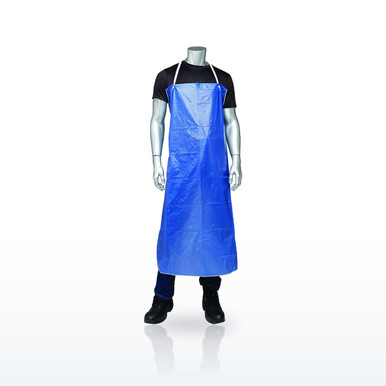
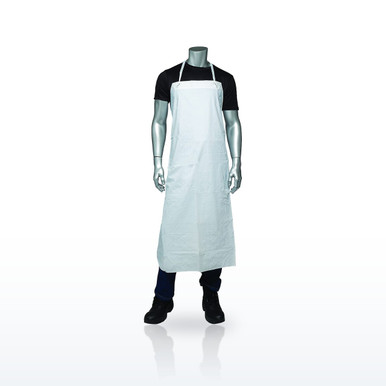
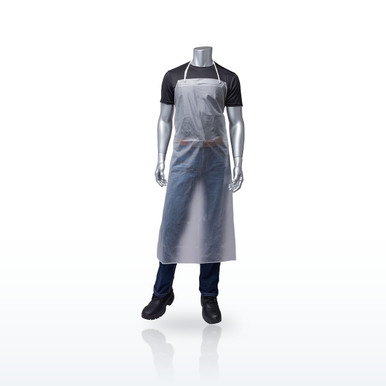
Chemical sleeves (vinyl, polyethylene and Tychem, 18 inch) and welding aprons are quoted on request: call (925) 215-7337. Chemical-resistant gloves are in the chemical glove category.
Questions people ask
Does OSHA require a chemical apron?
Not by name, except that the bloodborne pathogens standard lists aprons among the protective clothing to be worn (1910.1030(d)(3)(xi)). For chemicals, the employer’s hazard assessment under 1910.132(d) decides whether an apron, sleeves or a coverall is needed.
What is a chemical apron made of?
Most are vinyl (PVC). Nitrile and nitrile-coated fabric aprons are used for oils, fats and solvents; polyethylene/EVOH laminate aprons for the widest chemical range.
What thickness apron do I need?
6 mil for light disposable use, 8 mil for everyday reusable work, 12 to 20 mil for dip tanks, pressure washing and sharp-edged work.
How long should an apron be?
45 inches reaches the knees on most workers; 50 inches or more for wash-down and dip-tank work. It should end above the boot top.
Is a vinyl apron chemical resistant?
To acids, bases, water-based chemicals, grease and oil per the manufacturers. For solvents, check the maker’s chart for your chemical before relying on it.
What does ASTM F739 mean on a chemical garment?
The material was tested for permeation under continuous contact: how long the chemical took to break through and how fast it then came through. The data is per chemical.
Do I need sleeves with an apron?
Where the forearms get splashed, yes; an apron stops at the shoulder. Sleeves in the same material, 18 inches, go over or under the glove cuff depending on which way the liquid runs.
Who pays for aprons?
The employer, when the apron is required PPE (1910.132(h)(1)).
Standards and ratings on this page are as published in the documents named and by the manufacturers named. The employer’s hazard assessment and written program decide what applies at a given workplace. Verify a rating on the product and its spec sheet before use.