
What is a lab coat for, and which fabric for which hazard?
A lab coat is a barrier between what you are working with and your skin and clothes: it catches the splash, the dust and the spatter so they can be taken off at the door instead of carried home. Which coat depends on the hazard. A polyester-cotton coat is for light splash and keeping street clothes clean; 100 percent cotton or flame-resistant cotton where there is an open flame or a flammable solvent, since polyester melts; Nomex or an arc-rated coat for fire and arc hazards; a disposable polypropylene or film-laminate coat for biological and chemical contamination that will be thrown away; and a low-linting polyester or cleanroom frock where the product has to be protected from you. OSHA’s PPE standard (1910.132) and laboratory standard (1910.1450) do not name lab coats; they require the employer to assess the hazard and provide the protective clothing that matches it. The bloodborne pathogens standard (1910.1030) does name lab coats among the protective clothing for blood exposure.
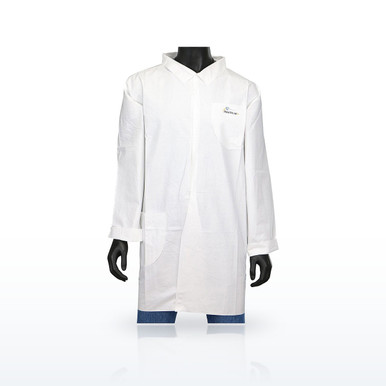
Why is the fabric the whole question? Because the wrong lab coat makes an injury worse. A polyester coat near a Bunsen burner or a solvent fire melts into the skin; a cotton coat soaked with a solvent becomes a wick; a woven coat worn with a pathogen can carry it to the lunchroom. The coat that looks the part is not always the coat that protects. The hazard assessment picks the fabric, and the fabric decides whether the coat helps or hurts.
Which lab coat fabric for which hazard?
Match the fabric to the main hazard in the room. Where there are two, the more serious one wins.
Does OSHA require lab coats?
Not by name in the PPE or laboratory standards. The PPE standard requires the employer to assess the workplace for hazards, select PPE that protects against them, provide it at no cost, and train employees in it. In laboratories, the chemical hygiene plan under 1910.1450 has to include the PPE for each procedure, and OSHA’s non-mandatory Appendix A points to lab coats, gloves and eye protection as the baseline. The bloodborne pathogens standard requires appropriate protective clothing, naming lab coats and gowns, where blood or infectious material can reach clothing. So a lab coat is required wherever the employer’s assessment says the hazard calls for body protection, and the assessment also says which kind.
29 CFR 1910.132(a), (d), (f) and (h); 29 CFR 1910.1450(e)(3) and Appendix A; 29 CFR 1910.1030(d)(3)(i) and (xi).Lab coat fabrics compared
| Fabric | Protects against | Not for | Launder or dispose |
|---|---|---|---|
| Polyester-cotton (65/35, 80/20) | Light splash, dust, soil | Flame, flammable liquids (melts) | Launder |
| 100% cotton | Light splash; chars rather than melts | Sustained flame; soaked solvent wicks | Launder |
| FR-treated cotton | Momentary flame, flash fire; self-extinguishes | Heavy chemical splash | Launder per FR care rules |
| Nomex / modacrylic blends | Flame, arc flash (arc-rated versions), heat | Some acids degrade aramids | Launder per FR care rules |
| Polypropylene / SMS disposable | Dry particulates, light splash, biological contamination | Flame (melts), heavy liquids | Dispose |
| Microporous film laminate disposable | Liquid splash, blood and body fluids, fine particulates | Flame; breathability is limited | Dispose |
| Continuous-filament polyester (cleanroom) | Protects the product from lint and skin particles | Flame; chemical splash | Cleanroom laundry |
Flame resistance is claimed only where the manufacturer certifies it: NFPA 2112 for flash fire, or an arc rating per ASTM F1506 and NFPA 70E. “FR” on a label with no standard named means the maker’s own test. For bloodborne pathogens, the standard requires that fluid not pass through to the skin or underclothes under normal conditions of use; the manufacturer’s data (AAMI PB70 levels or ASTM F1670/F1671 results) says whether a given coat meets that.
Manufacturer fabric data; NFPA 2112; ASTM F1506; 29 CFR 1910.1030(d)(3)(i); ANSI/AAMI PB70; ASTM F1670 and F1671.
How should a lab coat fit and close?
- Long sleeves to the wrist, with knit cuffs where gloves are worn so the sleeve goes under the glove cuff and nothing is exposed.
- Length to the knee for seated bench work; a shorter coat for standing work and walking is acceptable where the hazard is light.
- Closed all the way: snaps, not buttons, in labs with chemicals or flame, because snaps tear open in one pull when the coat is on fire or soaked. Some programs require a wrap-around or back-closure gown for biological work.
- Loose enough to move and to come off fast, not so loose it catches equipment.
- No coat outside the work area; it stays at the door.
How are lab coats laundered?
Not at home, if they have been worn with chemicals or biologicals: OSHA’s bloodborne pathogens standard requires contaminated laundry to be handled as little as possible and laundered by the employer or a contractor, and the laboratory standard’s guidance says the same for chemically contaminated clothing. A coat used only for cleanliness can be laundered normally. FR and arc-rated coats follow FR care rules: no bleach, no fabric softener, no oily contamination. Cleanroom frocks go to a cleanroom laundry. Disposable coats are discarded after the task or the shift, as regulated waste where the standard requires.
29 CFR 1910.1030(d)(4)(iv) (contaminated laundry); 29 CFR 1910.1450 Appendix A; manufacturer care instructions; ASTM F1449.Lab coat vs frock vs gown vs coverall
A lab coat is knee-length, front-opening, with pockets. A frock is a cleanroom term for a similar coat, usually longer, with knit cuffs and a snap collar, in low-linting fabric. A gown closes in the back and is tied, for healthcare and biological work where the front must stay clean. A coverall covers the legs too and is the choice when the hazard reaches below the knee: spraying, dusty demolition, asbestos, spill cleanup. The hazard assessment says which; the coverall finder covers the full-body options.
Manufacturer product definitions; 29 CFR 1910.132(d).Lab coats, frocks and disposable coats
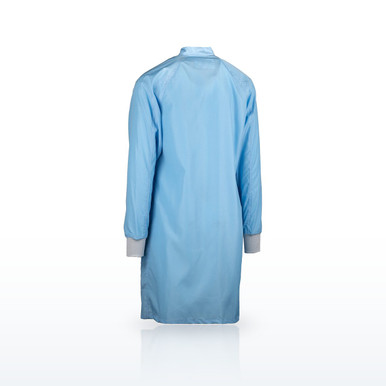
8 items · prices liveFabric, closure and any flame or fluid rating are as published by the manufacturer; see each product page. Contractor Direct orders ship free.
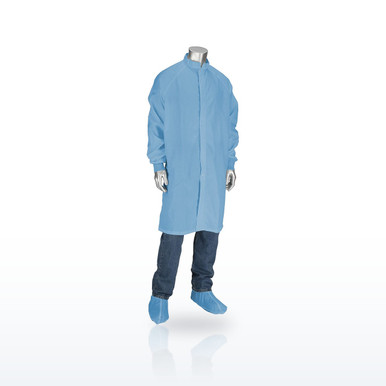
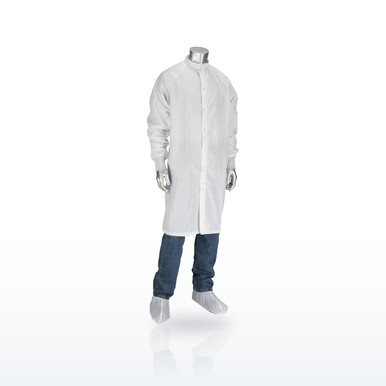
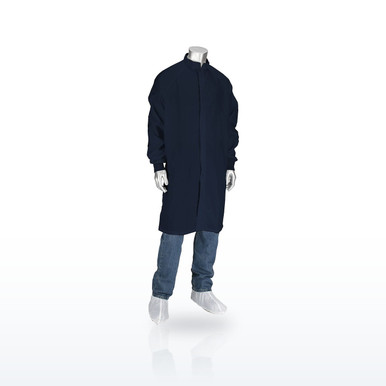
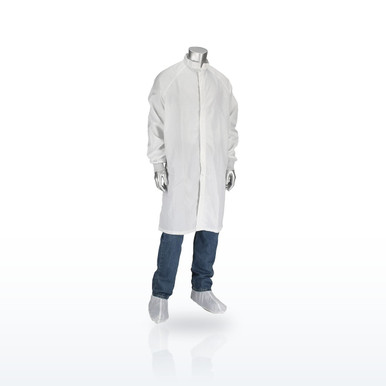
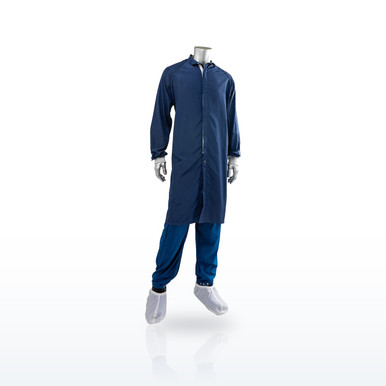
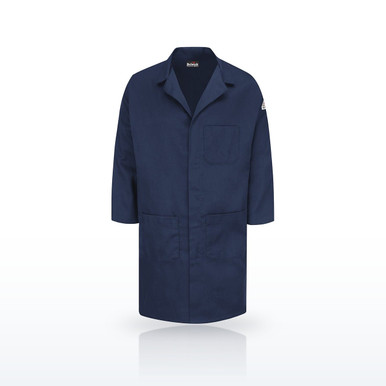
Disposable and FR coveralls, aprons and sleeves are on the coverall finder.
Questions people ask
What is the purpose of a lab coat?
To put a removable barrier between the hazard and your skin and clothes: splashes, dust, biological material, and in FR versions a momentary flame. It comes off at the door so the hazard stays in the lab.
Does OSHA require lab coats?
Not by name in 1910.132 or 1910.1450; 1910.1030 names lab coats for blood exposure. OSHA requires the employer to assess hazards and provide the protective clothing that matches them (1910.132), to include PPE in the chemical hygiene plan (1910.1450), and to provide protective clothing against blood and body fluids (1910.1030). A lab coat is what usually meets those.
What is the best material for a lab coat?
It depends on the hazard: polyester-cotton for light splash, cotton or FR cotton near flame and solvents, Nomex for fire and arc, disposable polypropylene or laminate for contamination, low-linting polyester for cleanrooms. There is no one best; polyester near a flame is the one wrong answer.
Should a lab coat have buttons or snaps?
Snaps where there is flame or chemical risk, so the coat can be torn off in one motion. Buttons are fine for cleanliness-only use.
Can I wash my lab coat at home?
If it has been worn with chemicals or biological material, no: the employer launders it or disposes of it. A coat worn only for cleanliness can be washed at home. FR coats follow FR care rules either way.
What is the difference between a lab coat and a frock?
A frock is a cleanroom lab coat: longer, knit cuffs, snap collar, low-linting fabric, laundered in a cleanroom laundry. It protects the product; a lab coat protects the person.
How long should a lab coat be?
To the knee for seated bench work with chemicals or biologicals; shorter is acceptable for light, standing work. Sleeves to the wrist, under the glove cuff.
Standards and ratings on this page are as published in the documents named and by the manufacturers named. The employer’s hazard assessment and written program decide what applies at a given workplace. Verify a rating on the product and its spec sheet before use.