
Gas detection for confined space entry: what to test and the order
Before anyone enters a permit space, the air inside is tested from outside with a calibrated direct-reading instrument, and OSHA fixes the order: oxygen first, then combustible gases and vapors, then toxic gases and vapors. The limits are in the same standard. Oxygen must be between 19.5 and 23.5 percent. Flammable gas must be under 10 percent of its lower flammable limit. Any toxic with a published exposure limit must be under that limit, and nothing may be at a level immediately dangerous to life or health. A four-gas monitor reads all of these at once (O2, LEL, H2S, CO), and a pumped unit on a hose samples every level of the space before the entrant goes in. Testing continues while people are inside, and every entrant has the right to watch the test and see the results.
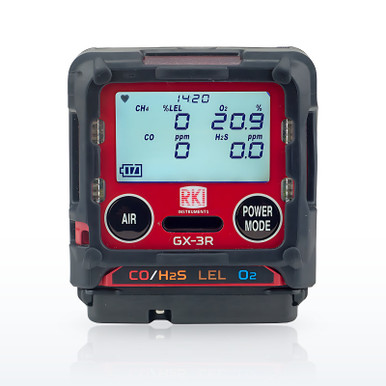
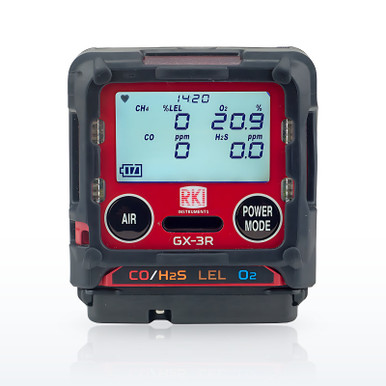 RKI Instruments 72-RA-C-59-NGR Multi-Gas Detectors, GX-3R LEL/O2/H2S/CO ConfinedFour-gas pumped monitor for sampling a space from outside before entry
Why does the order matter? Because the readings depend on each other. A combustible-gas sensor needs oxygen to burn the sample on its catalytic bead; in a low-oxygen space it reads low or reads nothing while the space is full of methane. A toxic reading in percent-of-air terms shifts when the oxygen is off. And a low oxygen reading on its own tells you something displaced the air, which means a gas the monitor may not have a sensor for is in there. So the oxygen number is read first and judged first, the flammable number is trusted only if the oxygen is right, and the toxics come last. The monitor shows all four at once; the order is the order in which you believe them.
What does OSHA require the entry supervisor to test?
From the permit-space program paragraph. The construction rule, 1926.1204(e), repeats it almost word for word.
Confined space atmospheric testing: what are the limits?
The standard defines a hazardous atmosphere as one that may expose employees to the risk of death, incapacitation, impairment of the ability to self-rescue, injury or acute illness from any of five causes. Oxygen below 19.5 percent or above 23.5 percent. Flammable gas, vapor or mist above 10 percent of its lower flammable limit. Combustible dust at or above its LFL, which in practice means dust so thick it obscures vision at 5 feet. Any substance with an OSHA exposure limit at a level that could expose someone above that limit. And any other condition that is immediately dangerous to life or health. A space that fails any one of these is not acceptable for entry until ventilation or another control brings it inside the limits and the test confirms it.
29 CFR 1910.146(b), definition of hazardous atmosphere, items (1) through (5), and the note on dust; definitions of oxygen deficient and oxygen enriched atmosphere.For the four-gas monitor that means: O2 reads 19.5 to 23.5 percent, LEL reads under 10 percent, H2S and CO read under their limits. The common factory alarms sit at those lines or below: O2 19.5 and 23.5, LEL 10 and 20 percent, H2S 10 and 15 ppm, CO 25 to 50 ppm low and 100 to 200 ppm high, depending on the maker and version. The written program may set them lower; it may not set them above the standard’s numbers for entry.
29 CFR 1910.146(b); OSHA Table Z-1 and Z-2 limits for the toxics; manufacturer product data for factory alarm set points (MSA ALTAIR, Honeywell BW Clip, RKI).How do you test a confined space, step by step?
- Bump test the monitor that day, and zero it in clean air outside the space. A monitor that was not shown to work that morning has not tested anything.
- Open the space and let it breathe, but do not lean in. Test from outside. The entry supervisor stays at the opening; the probe goes in, not the head.
- Sample at the top, the middle and the bottom, and at any point where the entrant will work. Gases stratify: methane and ammonia rise, H2S, CO2 and propane sink, CO mixes. A single reading at the hatch is not a test. Use a pumped (sample-draw) monitor with a hose or probe, and hold the test for at least the instrument’s minimum response time plus the time the manufacturer gives for the sample to travel the hose, before reading. Appendix B says to test about every 4 feet in the direction of travel and to slow down when a probe is used.
- Read oxygen first. If it is outside 19.5 to 23.5, stop: ventilate, retest. Do not evaluate the LEL reading in a low-oxygen space.
- Then combustibles. Under 10 percent LEL is the line. Remember the sensor was calibrated to one gas, usually methane or pentane, and reads other vapors differently; the manual gives correction factors.
- Then toxics, H2S and CO on a four-gas unit, plus any other gas the space could hold, which may need a fifth sensor, a PID for solvent vapors, or a detector tube.
- Record the readings on the permit, with the time and the tester’s initials, and show them to the entrants. If ventilation was used, keep it running and test again after it has run; the permit shows the before and after.
- Monitor during entry. The entrant wears a monitor, the attendant watches readings, and in continuous or large spaces the monitoring never stops. Anyone whose monitor alarms leaves, and the space is re-evaluated before re-entry.
Which monitor does the testing: diffusion or pumped?
The pre-entry test from outside the space needs a pumped unit: an internal pump draws the sample up a hose from the bottom of the space to the sensors at the opening. A diffusion unit only reads the air it is sitting in, which at the hatch is outside air. Once inside, the entrant can wear a diffusion unit, which is smaller and runs longer on a battery, or the same pumped unit with the hose removed. Many crews own one pumped four-gas for the attendant and testing and diffusion units for the entrants. A pumped unit with the pump failed or the hose kinked reads outside air and looks fine; the pump alarm and a block test (cover the hose end and watch for the stall alarm) before each test are part of the routine.
29 CFR 1910.146(d)(5)(i) (test before entry is authorized) and Appendix B (probe sampling, minimum response time); manufacturer data for pumped (sample-draw) and diffusion models and pump block tests.Four-gas monitors for confined space entry
28 items · prices liveSensor set and sample method are as published by the manufacturer on each product page. Pumped units sample through a hose from outside the space; diffusion units read the air around the wearer. Contractor Direct orders ship free.
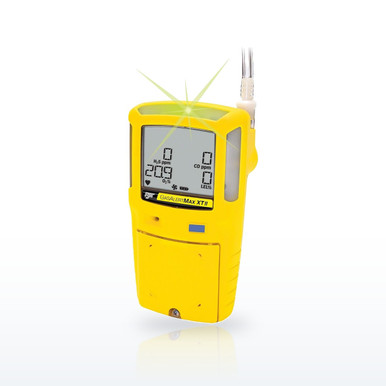
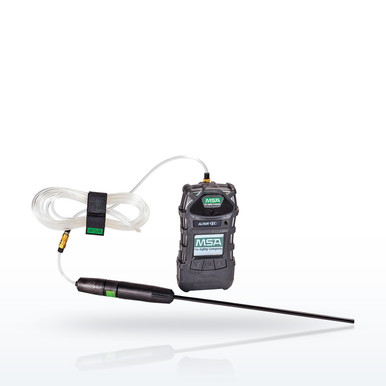
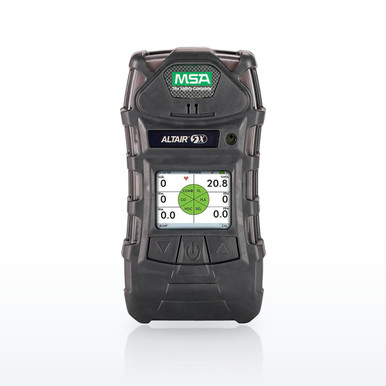
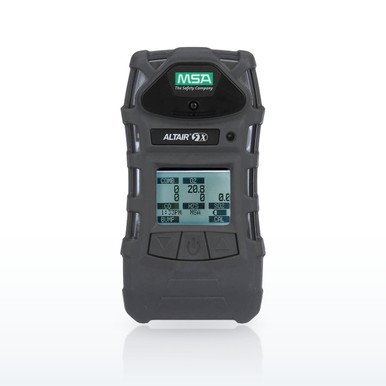
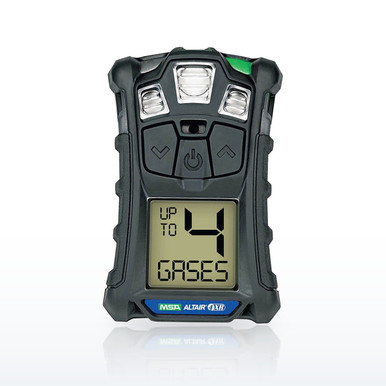
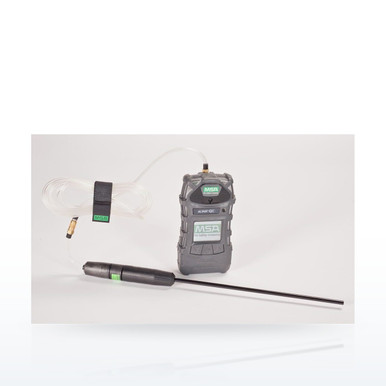
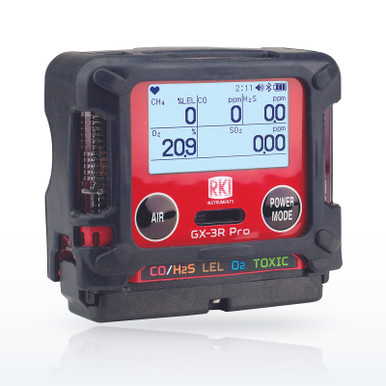
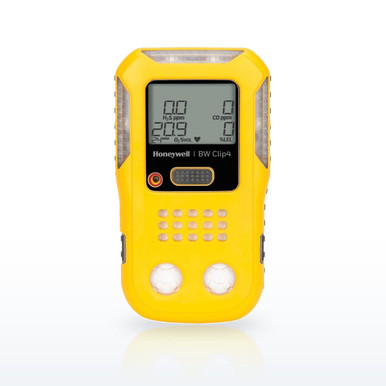
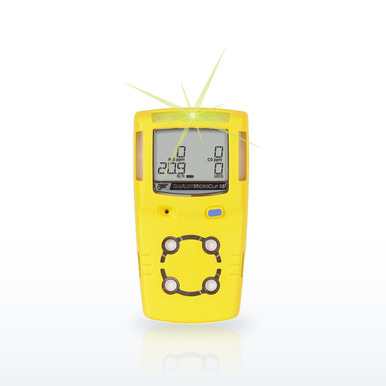
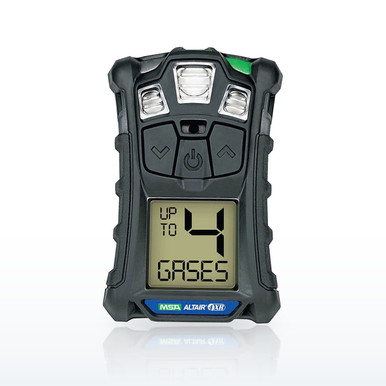
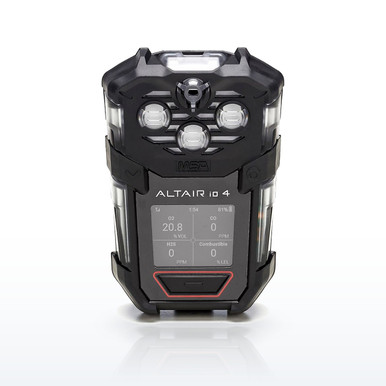

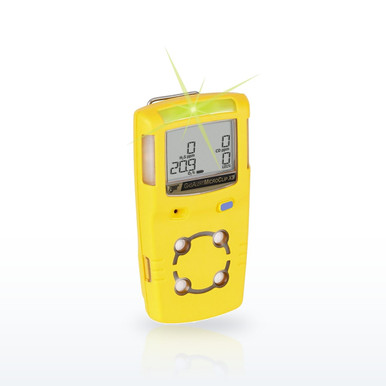
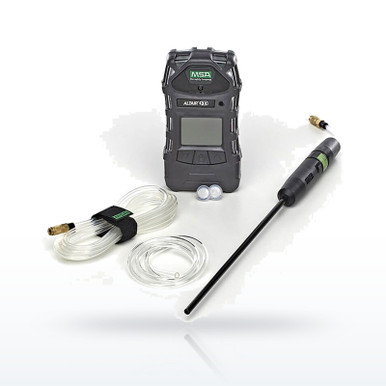
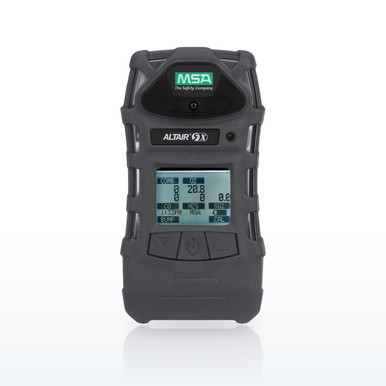
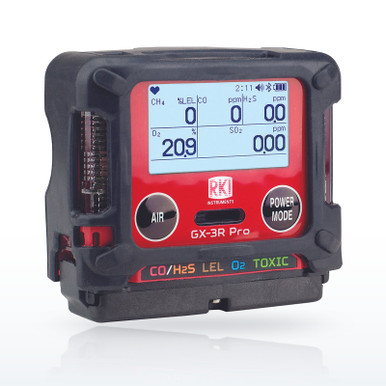
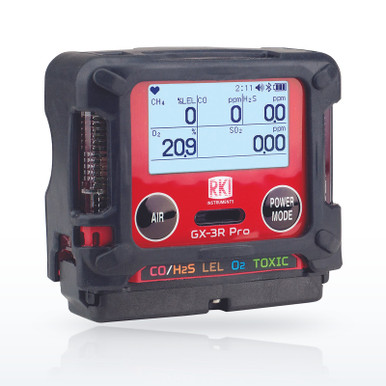
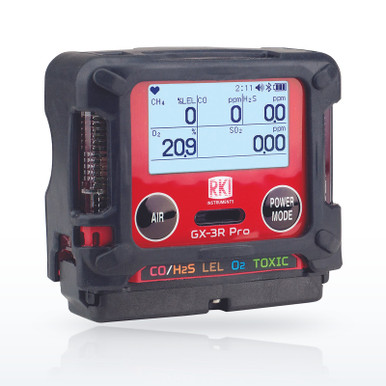
Sampling hoses, probes, calibration gas and docks for each model are in the gas detection finder. Tripods, winches and retrieval lines are in the fall protection finder.
Questions people ask
What is the order of testing for a confined space?
Oxygen first, then combustible gases and vapors, then toxic gases and vapors. (1910.146(d)(5)(iii); 1926.1204(e)(3).)
Why test oxygen first?
Because the combustible sensor needs oxygen to read correctly and a low oxygen reading means something has displaced the air. The other readings are judged in light of the oxygen number.
What are the acceptable limits for confined space entry?
Oxygen 19.5 to 23.5 percent, flammable gas under 10 percent of its LFL, toxics under their OSHA limits, and nothing at an IDLH level. (1910.146(b), hazardous atmosphere.)
How long before entry do you test?
Immediately before entry is authorized, and again as needed during the entry; if the space was ventilated, after the ventilation has run. The permit records each test with the time.
Do I have to test at different levels?
Yes. Gases stratify, and Appendix B calls for testing about every 4 feet in the direction of travel, with slower progress when a sampling probe is used. A pumped monitor with a hose does the pre-entry pass from outside.
Can the entrant watch the test?
Yes. Each entrant or their representative has the right to observe pre-entry and later testing, to be told the results immediately, and to request re-evaluation. (1910.146(d)(5)(iv) through (vi).)
Does the construction standard have the same rules?
Yes. 1926.1204(e) has the same order and limits and requires continuous monitoring unless continuous equipment for that hazard is not commercially available.
What monitor do I need for confined space entry?
At minimum a four-gas monitor (O2, LEL, H2S, CO); a pumped unit for the pre-entry test from outside, and a monitor on each entrant during the work. Add a sensor or a detector tube for any other gas the space could hold.
Standards and ratings on this page are as published in the documents named and by the manufacturers named. The employer’s hazard assessment and written program decide what applies at a given workplace. Verify a rating on the product and its spec sheet before use.