
Confined space rescue: non-entry retrieval systems and what OSHA requires
Non-entry rescue means pulling an entrant out of a permit space from outside, without sending a second person in. OSHA requires a retrieval system on every authorized entrant unless the equipment would add risk or would not help the rescue. The entrant wears a chest or full-body harness with the line attached at the center of the back near shoulder level or above the head; the other end goes to a mechanical device or fixed point outside the space, set up so rescue can start the moment it is needed. For a vertical space more than 5 feet deep a mechanical device, in practice a winch on a tripod or davit, must be on hand. Most confined-space deaths are would-be rescuers, which is why the standard pushes rescue outside the space.
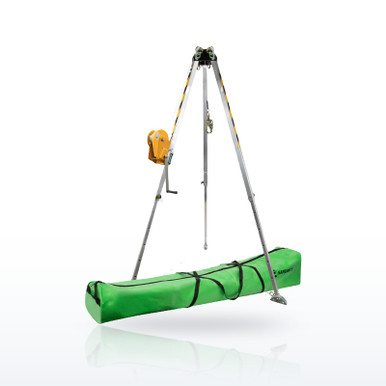
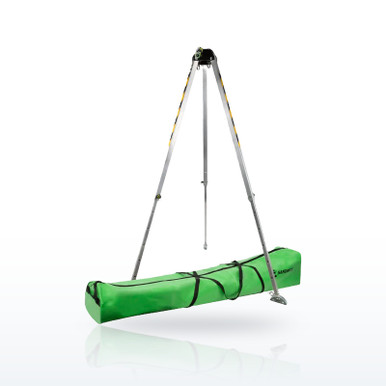
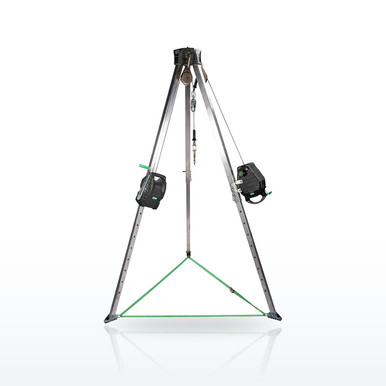
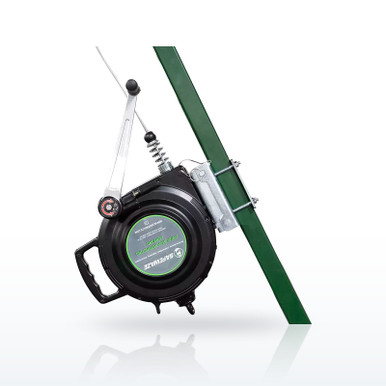
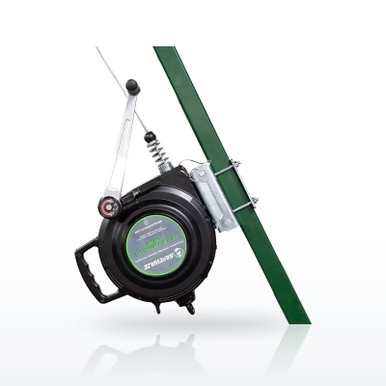
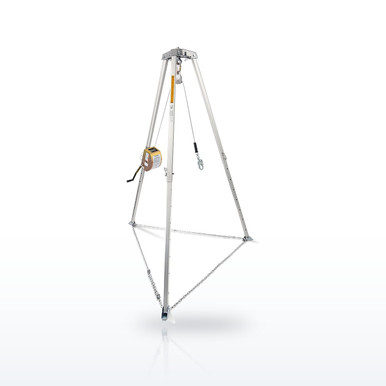
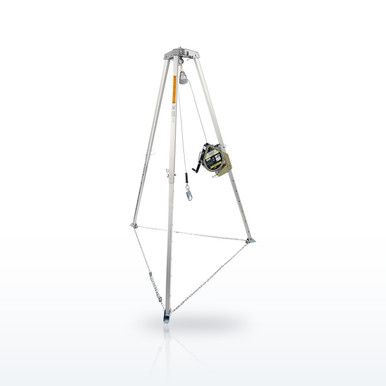
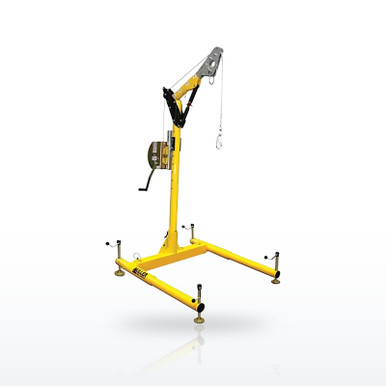
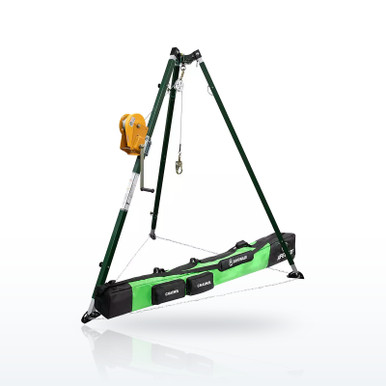 Safewaze 10-foot Tech tripod kitTripod, winch and bracket, the mechanical device for a vertical entry
Why does OSHA push rescue outside the space? An entrant who collapses in a permit space usually did so because of the atmosphere. A co-worker who climbs in after them breathes the same air and goes down beside them. OSHA wrote the retrieval requirement so that the first response to a collapse is a crank handle outside the hole, not a second body inside it, and wrote the attendant rule so that nobody enters until a trained, equipped rescue team arrives.
What does the standard require for rescue?
The same core rules appear in general industry (1910.146) and construction (1926.1211).
What is in a non-entry retrieval system?
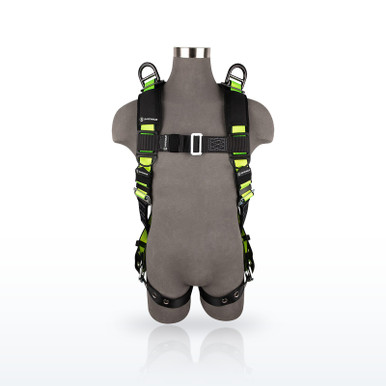
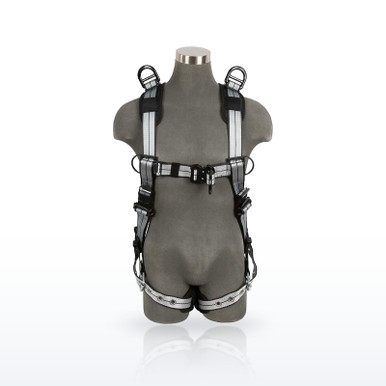
- A harness with a dorsal or overhead attachment. Many harnesses add shoulder D-rings so the entrant hangs upright and narrow in a manhole; the standard allows any point that gives a profile small enough for removal.
- A retrieval line, cable or rope, long enough for the depth of the space with margin.
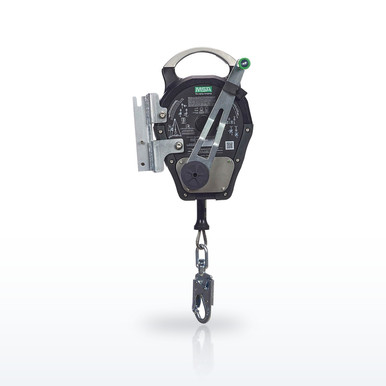
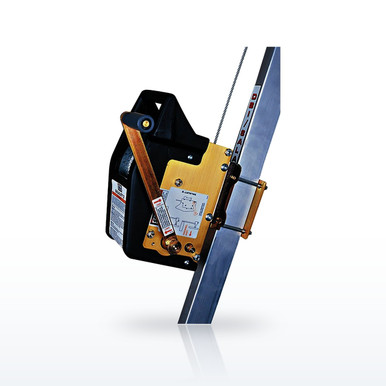
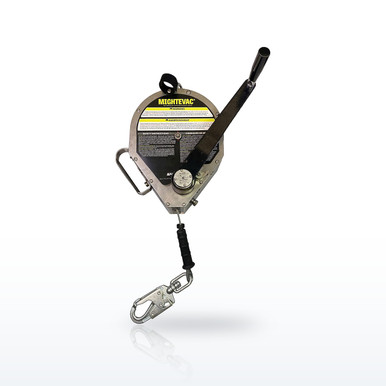
- A lifting device. For a vertical space more than 5 feet deep this is a mechanical device: a personnel-rated winch, or a self-retracting lifeline with a built-in retrieval mode (a 3-way SRL).
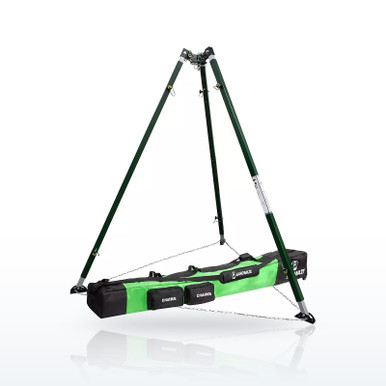
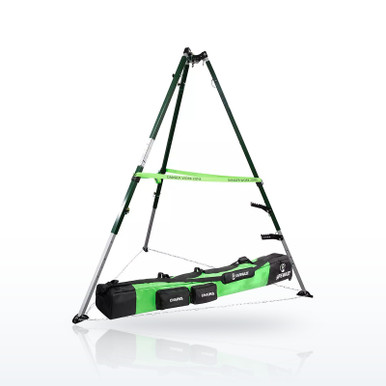
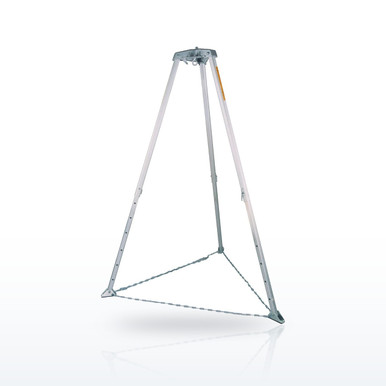
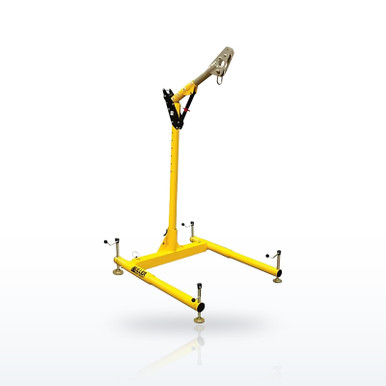
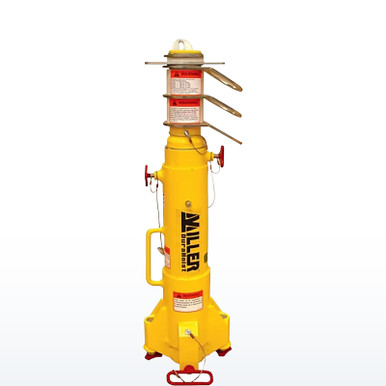
- An anchor outside the space to mount the device on: a tripod over a manhole, a davit arm on a base or sleeve, or a fixed structural point. The anchor is sized by its manufacturer and listed to the ANSI standard on its label.
- An attendant outside the space who stays at the opening, keeps count of entrants and starts the retrieval without entering.
What is the difference between a winch and a 3-way SRL?
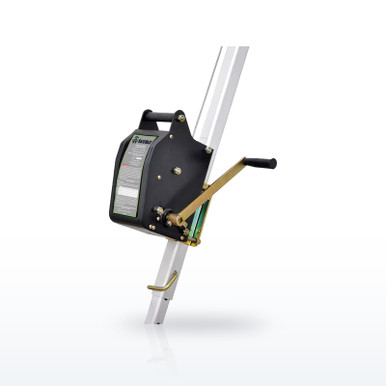
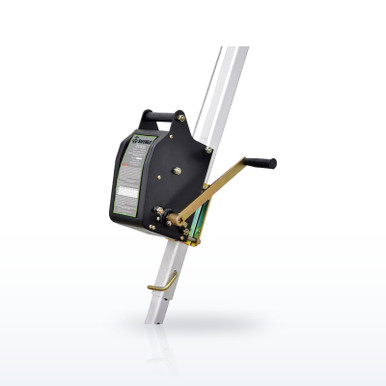
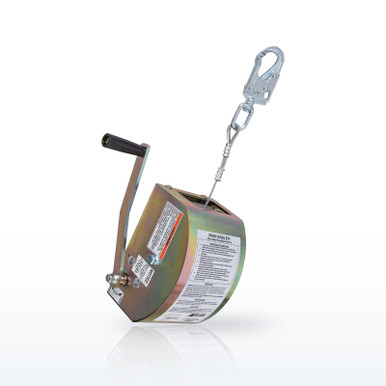
A personnel winch is a hand-cranked hoist. The entrant clips in, and the attendant pays out line on the way down and cranks it back on the way up. It lifts and lowers but does not arrest a fall by itself, so a separate fall arrest device is normally rigged alongside it on the same tripod. A 3-way SRL combines fall arrest with a retrieval mode: during normal entry it works as a self-retracting lifeline and locks if the entrant falls; when a rescue is needed the attendant engages the crank and winds the entrant out. Which one a crew uses depends on the depth and whether the ladder or shaft also presents a fall hazard. Each manufacturer lists the standard its device is certified to and its working load; those are on the labels and spec sheets, not in the OSHA text.
1910.146(k)(3)(ii); ANSI/ASSP Z359.4 (rescue and retrieval devices) and Z359.14 (self-retracting devices) as stated on the manufacturer spec sheets for the devices below.What else does the rescue part of the standard cover?
The employer’s procedures have to cover summoning rescue, rescuing entrants, giving emergency care and preventing unauthorized people from attempting a rescue. If the rescue service is an outside team, the employer still has to evaluate it, tell it the hazards and give it access to the spaces to practice. And if an injured entrant was exposed to a chemical with a Safety Data Sheet on site, that SDS goes with them to the medical facility.
1910.146(d)(9); 1910.146(k)(1); 1910.146(k)(4); 1926.1211(a) and (d).Tripods, winches, retrieval SRLs and retrieval harnesses
29 items · prices liveThe standard, working load and line length are as published by the manufacturer for each device. Winches labeled for materials only are not retrieval devices and are left out. Free shipping on orders over $199.
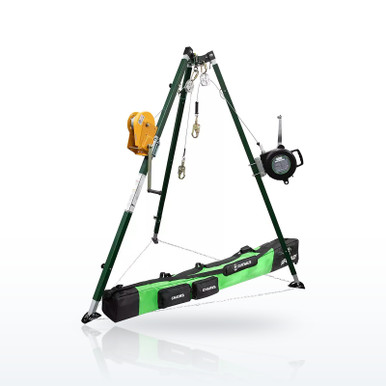
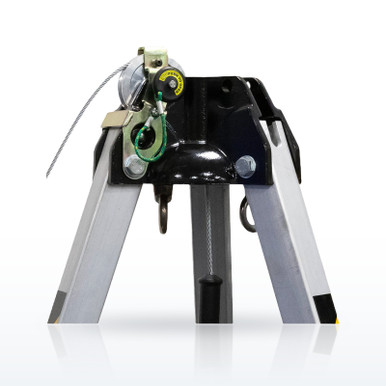
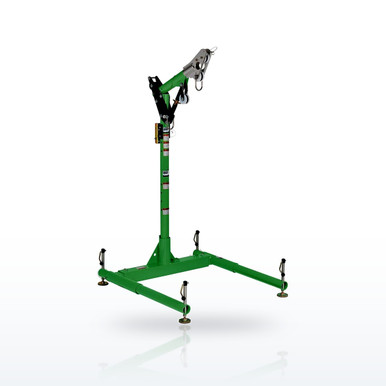
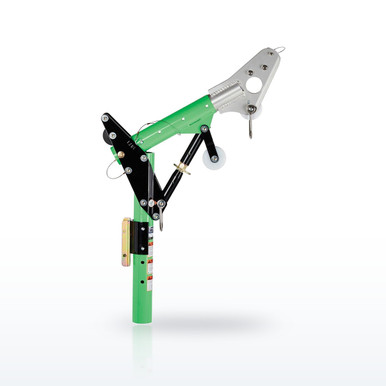
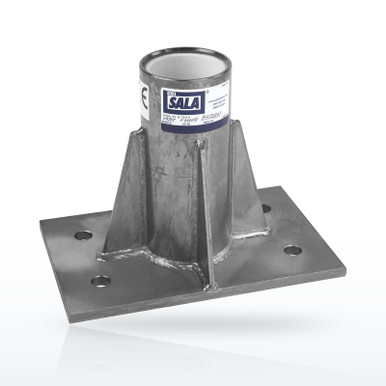
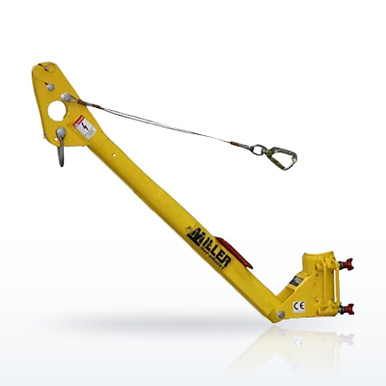
Davit bases, sleeves and mounting brackets for a specific structure are in the fall protection finder.
Questions people ask
Does OSHA require a tripod for confined space entry?
Not by name. It requires a mechanical device to retrieve personnel from a vertical permit space more than 5 feet deep. A tripod with a winch or 3-way SRL is the usual way to meet that (1910.146(k)(3)(ii); 1926.1211(c)(2)).
Can the attendant enter the space to rescue someone?
Not unless the attendant has been trained and equipped as a rescuer and relieved by another attendant. The retrieval system exists so the attendant can start a non-entry rescue from outside (1910.146(i)(4) and its note; (i)(9)).
Where does the retrieval line attach to the harness?
Center of the back near shoulder level, above the head, or another point the employer can show gives a small enough profile to pull the entrant out (1910.146(k)(3)(i)).
Are wristlets allowed instead of a harness?
Only if the employer can demonstrate a harness is infeasible or creates a greater hazard and wristlets are the safest and most effective alternative (1910.146(k)(3)(i)).
Can we skip the retrieval system for a horizontal entry?
Only if the employer determines the retrieval equipment would increase the overall risk of entry or would not contribute to the rescue, for example a line that would snag in a tank with internal baffles. That determination has to be made for the space (1910.146(k)(3)).
How often do in-house rescue teams have to practice?
At least once every 12 months, with a simulated rescue using dummies, manikins or people in spaces representative of the ones they would rescue from (1910.146(k)(2)(iv)).
Does a material winch count?
No. The mechanical device has to be rated for retrieving personnel. Material winches are labeled by their manufacturers for loads, not people.
Standards and ratings on this page are as published in the documents named and by the manufacturers named. The employer’s hazard assessment and written program decide what applies at a given workplace. Verify a rating on the product and its spec sheet before use.