
Disposable coveralls for asbestos and lead: what the standards require
Both standards require the employer to provide and require coveralls or similar whole-body clothing, plus head coverings, gloves and foot coverings, whenever a worker’s exposure is above the limit, and for asbestos also whenever a required negative exposure assessment has not been done or the job is a Class I removal of more than 25 linear or 10 square feet of insulation or surfacing material. The clothing is taken off only in the change area, bagged in sealed, labeled, impermeable containers, and either laundered under controls or thrown away. Lead clothing must be provided clean at least weekly, and daily where exposure is over 200 micrograms per cubic meter. Disposable coveralls meet both standards because they are worn once and bagged; a hooded style with attached boots is the usual choice because it covers the head and feet the rules name and leaves nothing to launder.
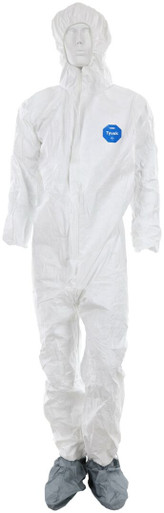
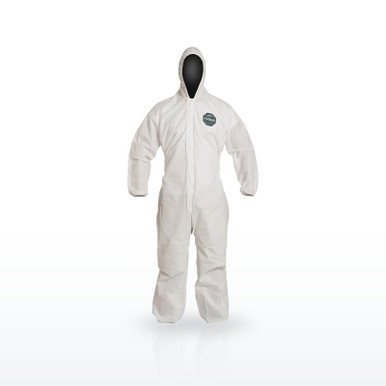
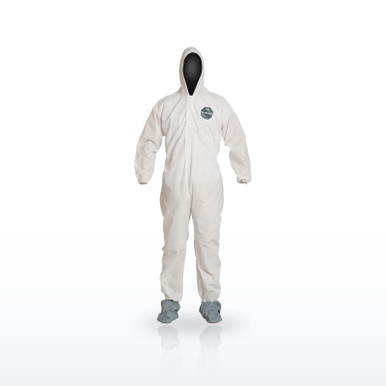
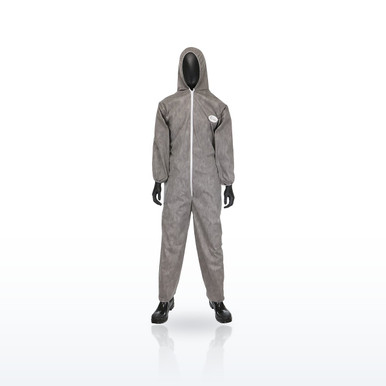
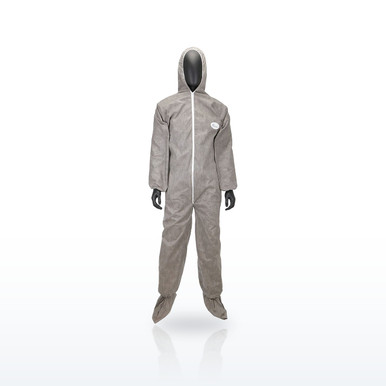
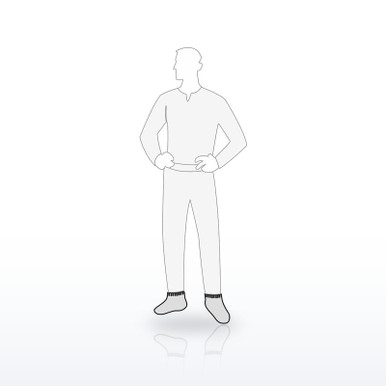
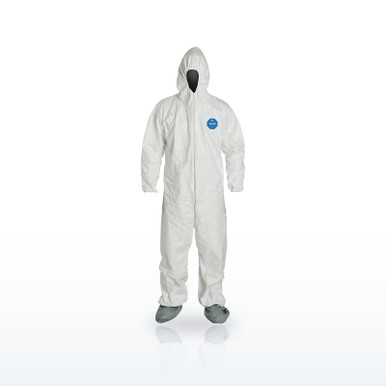 DuPont Tyvek 400 coverall, hood and bootsRespirator-fit hood, attached boots, elastic wrists. Lead and asbestos abatement is a DuPont-listed use.
Why does the clothing rule exist? Asbestos fibers and lead dust do not hurt the skin. The clothing rule is about where the dust goes next. A worker who leaves a regulated area in dusty clothes carries fibers into the truck, the lunch area and the house, where family members breathe them; lead dust on clothes was one of the main routes of childhood lead poisoning in construction families. So both standards treat the clothing as contaminated waste: it is removed in a controlled place, sealed in a labeled container, and never shaken out, blown off or taken home.
What do the two standards require?
The clothing paragraphs, side by side.
What is a Class I, II, III or IV asbestos job?
The construction asbestos standard sorts work into four classes. Class I is removing thermal system insulation (pipe and boiler lagging) and surfacing material (sprayed fireproofing, acoustic plaster). Class II is removing other asbestos-containing material: floor tile, roofing, siding, transite, gaskets. Class III is repair and maintenance that disturbs asbestos, such as drilling or cutting into it. Class IV is housekeeping and cleanup of asbestos dust and debris after the other classes. The clothing paragraph applies by exposure to all of them, and automatically to Class I jobs over the 25 linear or 10 square foot threshold.
29 CFR 1926.1101(b), definitions of Class I, II, III and IV asbestos work; 1926.1101(i)(1).For Class I over that threshold, the employer also has to build a decontamination area next to the regulated area, in series: an equipment room with labeled bags and containers for contaminated gear, a shower, and a clean change room with a locker for each worker. Workers enter through the clean room, suit up, and leave by removing gross contamination and bagging the coverall in the equipment room with the respirator still on, then showering before the clean room. That order is what makes the coverall disposable: it comes off in the dirty room and goes straight into the bag.
29 CFR 1926.1101(j)(1)(i)(A) through (C), (j)(1)(ii) and (j)(1)(iii).What does the lead standard add?
Lead work on construction sites, which includes demolition and renovation of painted steel and old buildings, abrasive blasting, torch cutting and welding on painted steel, has its own clothing rules with numbers attached. Clothing is provided clean and dry at least weekly, and daily when the exposure is over 200 micrograms per cubic meter as an 8-hour average without regard to respirators. The employer cleans, launders or disposes of it, repairs or replaces it, and tells anyone who launders it, in writing, about the hazards of lead. Clothing comes off at the end of the shift only in the change area and goes in a closed container that stops lead dust getting out, labeled with the lead danger label. Blowing or shaking the lead off is prohibited.
29 CFR 1926.62(g)(2)(i) through (viii).The hygiene rules run alongside: no food, drink, tobacco or cosmetics where exposure is above the PEL, a clean change area with separate storage for street clothes and work clothes, showers where feasible, a lunch area kept as free of lead as practicable, and hand and face washing at the end of the shift where there are no showers. Taking lead-dusted clothing home is exactly what the change area and the closed container are there to stop.
29 CFR 1926.62(i)(1) through (i)(5).Which coverall features match the rules?
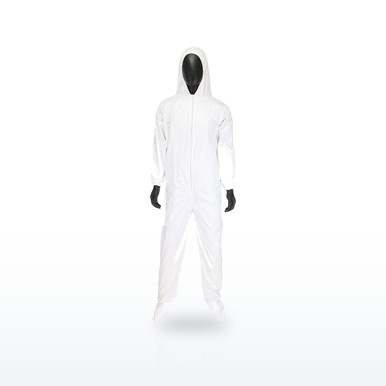
- Attached hood: covers the head covering requirement in both standards and seals over a respirator. Hood-and-boot styles have a chin flap that seals the hood to a full-face or half-mask respirator.
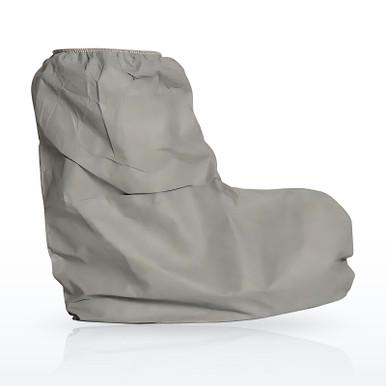
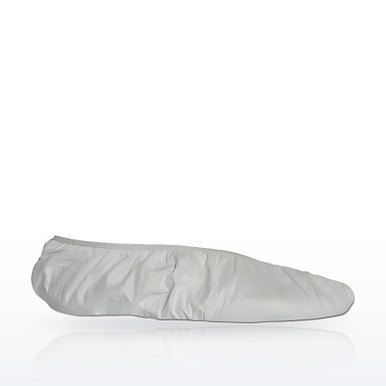
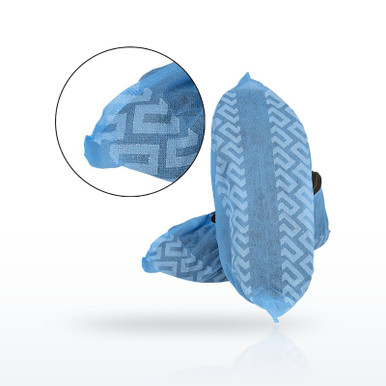
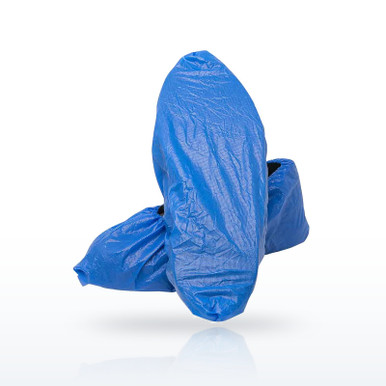
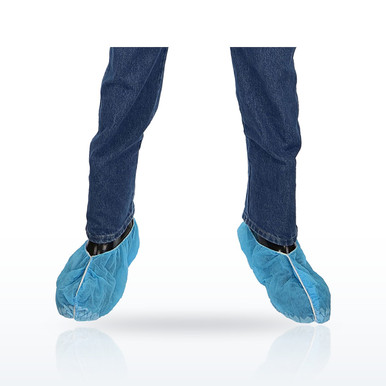
- Attached boots or socks, or separate shoe covers: the foot covering in the asbestos rule and the shoes or disposable shoe coverlets in the lead rule. Separate covers go over the work boot so the boot stays in the equipment room.
- Elastic wrists and ankles, taped at the glove and boot: keeps dust from running up the sleeve and makes the gross-decon step faster.
- Particle barrier in the fabric: Tyvek 400 is rated by DuPont for particles down to 1.0 micron and lists lead and asbestos abatement as an application. SMS and microporous film coveralls are rated by their makers for dry particles and are also used; the employer’s exposure assessment and the abatement plan decide.
- Zipper storm flap: an open zipper is a dust path. A flap over it, or a style with a double zipper, closes it.
- One size up: abatement means crawling and reaching. A torn coverall on a Class I job means a trip back through decon.
What about mold, silica and other dusts?
Neither clothing paragraph applies, but the general PPE rule does: the employer assesses the hazard and provides what is needed. Mold remediation guidance and silica work plans commonly call for the same hooded disposable coveralls, for the same reason, keeping the dust off clothes and out of the truck. The silica standard itself regulates exposure through engineering controls and respirators and does not have a clothing paragraph.
29 CFR 1910.132(d)(1) and 1926.95(a); 1926.1153 (respirable crystalline silica in construction) contains no protective clothing requirement.Disposable coveralls and shoe covers for abatement
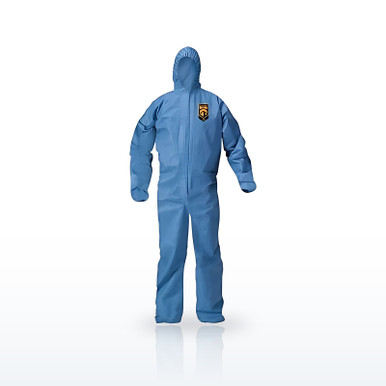
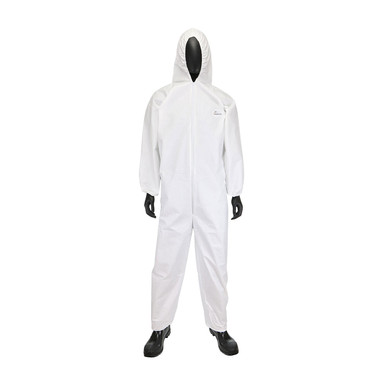
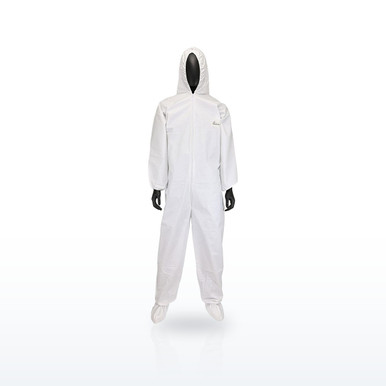
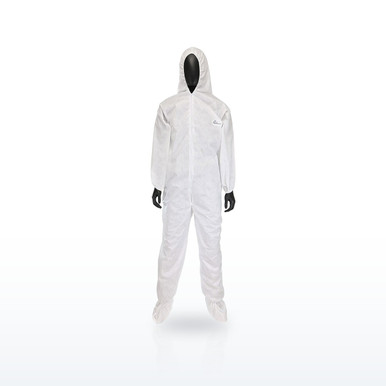
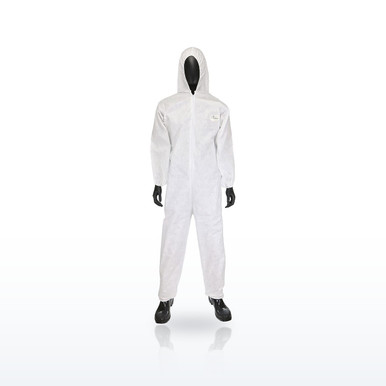
21 items · prices liveFabric and features are as published by the manufacturer. Hooded styles are listed first; attached boots, chin flap and seam type are on the product page. Sold by the case unless noted. Contractor Direct orders ship free.
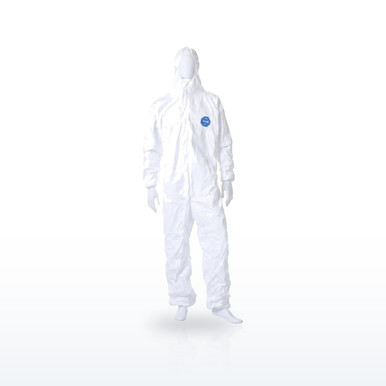
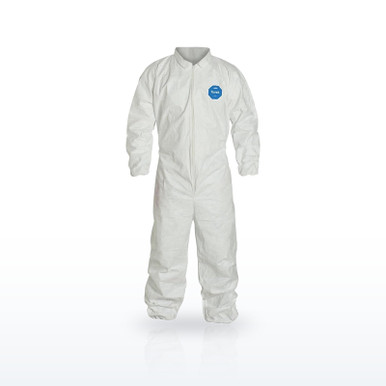
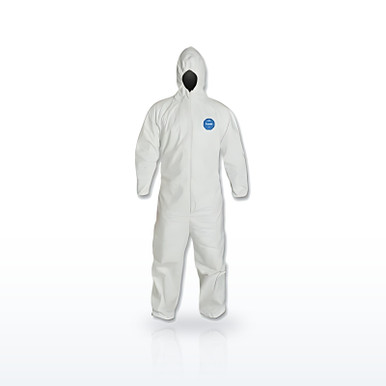
HEPA-filter respirators, decon bags and labels, and asbestos and lead warning signs are in the respirator finder and the safety signs category.
Questions people ask
Does OSHA require Tyvek suits for asbestos?
OSHA requires coveralls or similar whole-body clothing with head and foot coverings when exposure is over the limits, no negative exposure assessment exists, or on a Class I job over 25 linear or 10 square feet (1926.1101(i)(1)). It does not name a brand; a disposable coverall that is bagged after use is the usual way to meet it.
What does the lead standard require for clothing?
Coveralls or similar full-body clothing, gloves, hats and shoes or disposable shoe coverlets when exposure is over 50 micrograms per cubic meter, provided clean at least weekly and daily over 200 (1926.62(g)).
Can you wash asbestos coveralls?
Only under controls that keep fibers below the limits, and the launderer must be told (1926.1101(i)(2)). Disposable coveralls avoid the question: they go in the sealed bag.
Can you shake out or blow off a dusty coverall?
Not for lead or asbestos. Both standards prohibit removing dust by blowing or shaking (1926.62(g)(2)(viii) and 1910.1001(h)(3)(ii)).
Where do you take the coverall off?
In the change area or, for a Class I asbestos job, the equipment room of the decontamination unit, with the respirator still on, before the shower (1926.1101(j)(1)(iii); 1926.62(g)(2)(iv)).
Do I need shoe covers for lead work?
The rule asks for shoes or disposable shoe coverlets (1926.62(g)(1)(ii)). Dedicated work shoes that stay in the change area, or disposable covers over your boots, both meet it.
Who pays for abatement coveralls?
The employer, at no cost to the employee (1926.62(g)(1); 1926.1101(i)(1) and 1926.95(d)).
Is a Tyvek suit enough for asbestos?
The suit handles the clothing rule. Asbestos work also requires the respirator, the regulated area, the decontamination unit on Class I jobs and the training; the coverall is one piece of it.
Standards and ratings on this page are as published in the documents named and by the manufacturers named. The employer’s hazard assessment and written program decide what applies at a given workplace. Verify a rating on the product and its spec sheet before use.