
Shoe covers and boot covers: when they are required
OSHA names shoe covers in four places. The bloodborne pathogens standard requires shoe covers or boots where gross contamination with blood can reasonably be expected. The lead standard lists shoes or disposable shoe coverlets as required protective clothing above the exposure limit. The asbestos standards require foot coverings with the coveralls. The hazmat appendix lists disposable outer boot covers as an optional item at Levels B, C and D. Everywhere else they are a hazard-assessment decision under the general PPE rule: the employer looks at what gets on the floor and decides. In practice that means cleanrooms, food plants, labs, abatement, crime and biohazard cleanup, and any job where a worker would otherwise track a contaminant from a controlled area into a clean one.
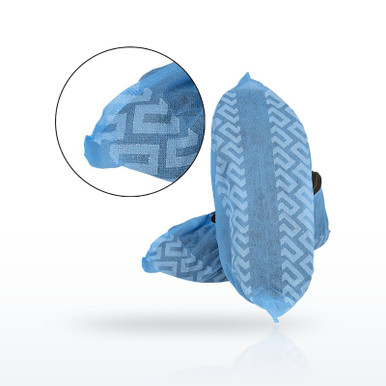
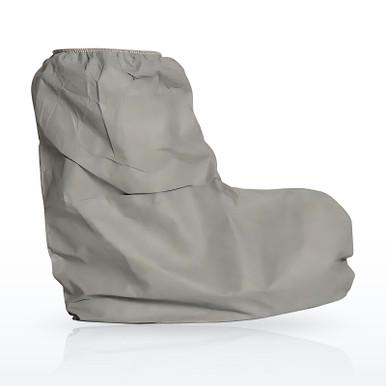 DuPont Tyvek 400 FC skid-resistant shoe and boot coversFriction-coated sole, 5 inch shoe or 18 inch boot height.
Why cover the shoe instead of changing it? Shoes are the one piece of clothing that touches the contaminated surface every step and then walks out of the area. A cover goes on at the line, comes off at the line and goes in the bag, so the boot underneath never carries lead dust, asbestos fibers, blood or cleanroom particles across it. It is cheaper and faster than dedicated boots for each zone, and on a Class I asbestos job, where the boot stays in the equipment room, it is what lets the worker walk to the shower.
Where does OSHA name shoe covers?
The four standards, with the trigger for each.
When are shoe covers a hazard-assessment choice?
The general PPE rule requires the employer to assess the workplace for hazards, select PPE that protects against them, communicate the choice, see that it fits, and certify the assessment in writing. Shoe covers come out of that assessment wherever something on the floor should not leave the room or should not get on the worker’s own footwear: wet chemical floors, animal facilities, food processing lines, paint booths, mold remediation, and sewage or flood cleanup. Nothing in the standard says shoe covers by name for these; the hazard assessment and the written certification are the record of why they were chosen.
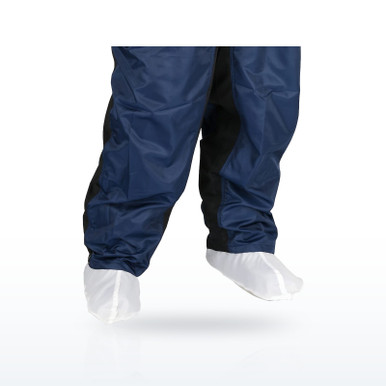
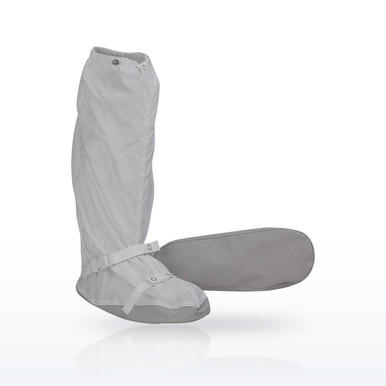
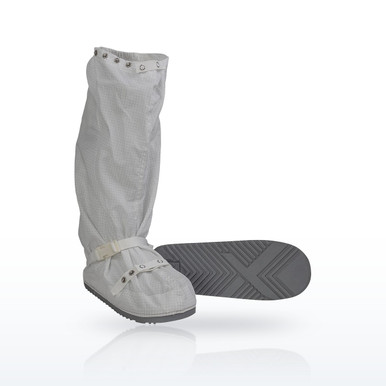
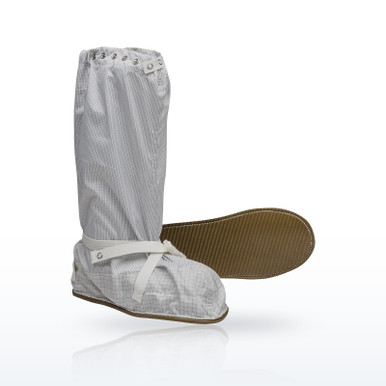
29 CFR 1910.132(a), (d)(1)(i) through (iii) and (d)(2); 1926.95(a) for construction.Cleanroom shoe covers are a product rule, not a safety rule. They protect the product and the room from the worker rather than the reverse, and the fabric is chosen for low lint and static control (ISO 14644 cleanroom classes, ESD-safe soles) rather than for a barrier. They are listed below because the same crews buy both.
Uniform Technology cleanroom shoe cover product data, as published by the manufacturer.Disposable shoe covers vs boot covers vs overshoes: which is which?
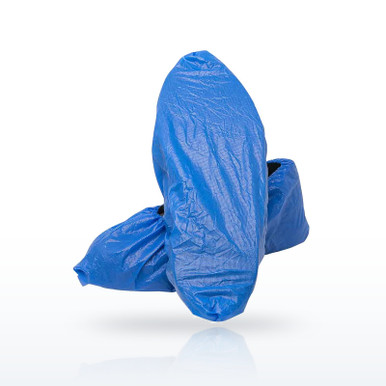
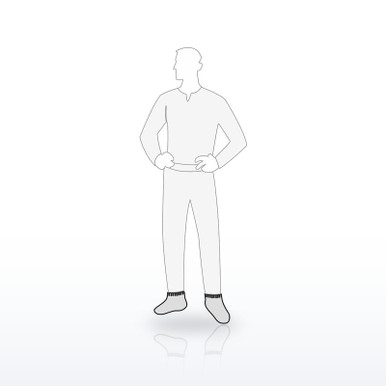
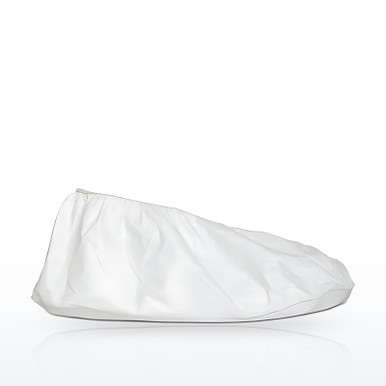
- Shoe cover: an elastic-top slipper, about 5 to 8 inches high, that covers the shoe and stops at the ankle. Spunbond polypropylene for dry dust and cleanliness, polyethylene for wet floors, microporous film or Tyvek for abatement and biohazard. Single use.
- Boot cover: the same idea at 16 to 18 inches, pulled up over the boot shaft and often tied or taped to the coverall. Chosen where the floor is wet or the dust is deep, and for Class I asbestos work where the boot has to be fully covered.
- Skid-resistant covers: a textured or friction-coated sole. Plain polyethylene and polypropylene covers are slippery on smooth floors; DuPont, PIP and Liberty each make a non-skid version, and it is the one to use on tile, sealed concrete or wet floors.
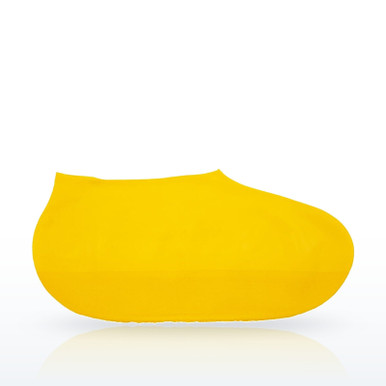
- Disposable latex overshoe: a stretch rubber boot that goes over the work boot, waterproof, for a few shifts of wet or muddy work; the Tingley Boot Saver is this.
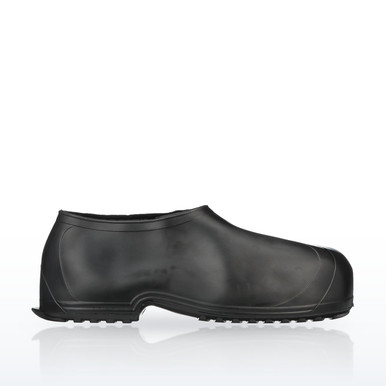
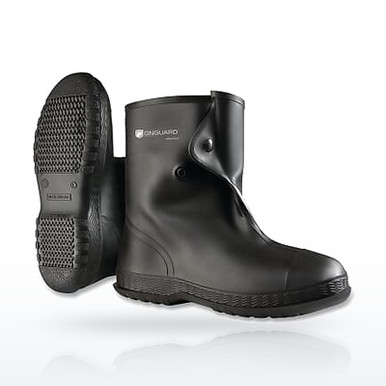
- Rubber or PVC overshoe: a reusable waterproof pull-on over the work boot, for rain, mud, wash-down and chemical splash; cleated soles for traction. Not disposable, and not a substitute for a safety-toe boot unless rated as one.
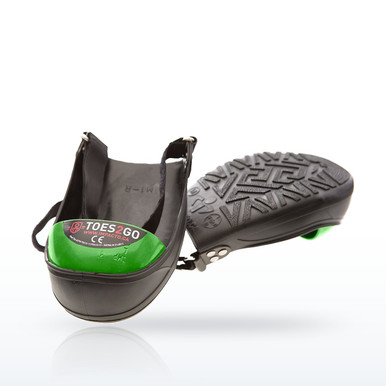
- Steel-toe overshoe: a PVC overshoe with a steel toe cap, for visitors and short tasks where a safety toe is needed over street shoes; the Impacto TOES2GO is rated to ASTM F2413 by its maker.
How are shoe covers put on and taken off?
- Put them on at the entry line. Sit or hold a rail; a shoe cover going on while standing on one foot is a fall. The elastic goes over the whole shoe, heel last.
- For boot covers, pull the shaft up and tape it to the coverall leg if the job is wet or dusty. The tape goes on the outside and comes off with the cover.
- Take them off at the exit line, dirty side in. Peel the cover down over the heel and off the toe, folding it into itself so the contaminated outside is inside, and drop it straight in the bag or bin.
- Never step back across the line in the covers, and never wear them out of the area; that defeats the point of them.
- Wash hands after. For lead and bloodborne work this is a rule; for everything else it is good sense.
Shoe covers, boot covers and overshoes
16 items · prices liveMaterial and sole are as published by the manufacturer. Disposable covers are sold by the case; overshoes by the pair. Sizes and case counts are on each product page. Free shipping on orders over $199.
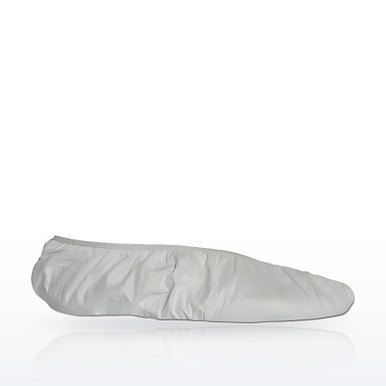
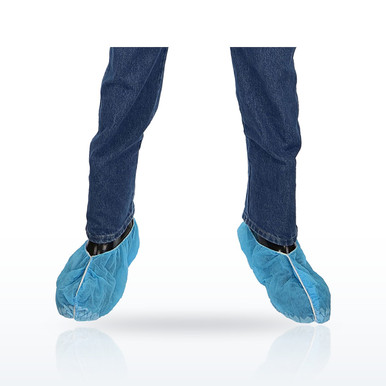
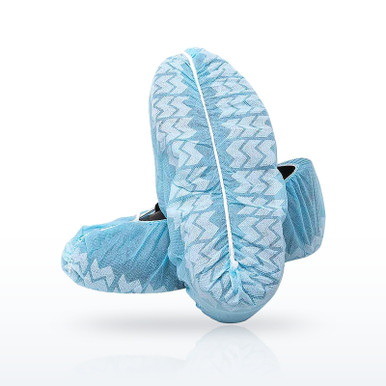
Chemical-resistant boots and safety-toe footwear are in the footwear category.
Questions people ask
Does OSHA require shoe covers?
In specific standards: bloodborne pathogens where gross contamination is expected (1910.1030(d)(3)(xii)), lead above the PEL (1926.62(g)(1)(ii)), and asbestos as foot coverings (1926.1101(i)(1)). Elsewhere they come from the employer’s hazard assessment (1910.132(d)).
Are shoe covers required for lead work?
The standard requires shoes or disposable shoe coverlets above the PEL, provided by the employer. Dedicated shoes that stay in the change area also satisfy it.
What is the difference between a shoe cover and a boot cover?
Height. A shoe cover stops at the ankle; a boot cover runs 16 to 18 inches up the boot shaft and is used where the floor is wet or the dust is deep.
Are disposable shoe covers slippery?
Plain polyethylene and polypropylene covers can be on smooth floors. Skid-resistant versions have a textured or friction-coated sole.
Can shoe covers be reused?
Disposable covers are single use and go in the bag at the exit line. Rubber, PVC and latex overshoes are made to be worn more than once.
Who pays for shoe covers?
When they are required PPE, the employer, at no cost to the employee (1910.132(h)(1); 1926.95(d)(1)).
Is a steel-toe overshoe the same as a safety boot?
It is a toe cap over a street shoe, rated by its maker to the same ASTM F2413 impact and compression test. It covers the toe, not the rest of the foot, and is sold for visitors and short tasks.
Standards and ratings on this page are as published in the documents named and by the manufacturers named. The employer’s hazard assessment and written program decide what applies at a given workplace. Verify a rating on the product and its spec sheet before use.