
What is cross-sensitivity on a Draeger tube, and how is it listed?
A Draeger tube is calibrated to one substance. If only that substance is present, the reading depends on the measuring range and the ambient conditions. If other substances are present too, some of them react with the reagent as well, and the handbook calls this cross-sensitivity: it defines which other substances affect the indicating behavior of the tube, and which have been checked and have no effect. Every tube entry in the handbook carries a cross-sensitivity paragraph, and every tube page on this site prints it. The Formaldehyde 0.2/a entry, for example, states that styrene, vinyl acetate, acetaldehyde, acrolein, diesel fuel and furfuryl alcohol are also indicated, with a yellow-brown color instead of pink, and that 500 ppm octane, 5 ppm nitric oxide and 5 ppm nitrogen dioxide have no effect (handbook pp. 116, 181).
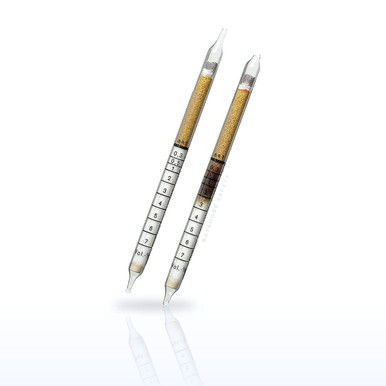
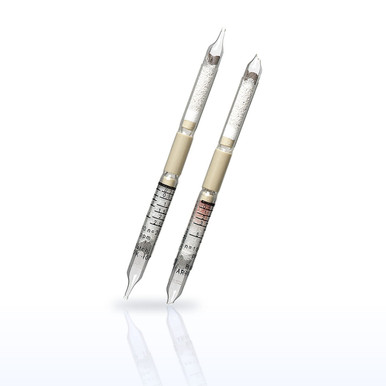 Draeger Formaldehyde 0.2/a Detector Tubes, Box of 10Its handbook entry lists six substances that also react and three that do not
Why does a tube built for one gas react to another? The reaction principle in each entry is a chemical reaction between the gas and the reagent, and other molecules can take part in it. The handbook describes three design answers: pre-layers in the tube that retain interfering substances, adsorb moisture or convert substances; a separate pre-tube joined to the indicating tube by a hose, which does the same job (the Formaldehyde 0.2/a and Halogenated Hydrocarbons 100/a tubes are the handbook’s examples); and, in the MicroTube system, pre-layers that filter out other substances so only the target reaches the result (pp. 36–37, 80). Where the interference cannot be removed, the entry states it, often with a different color so it can be told apart.
How a cross-sensitivity line reads, from the handbook entries
Examples from entries on this site
- Formaldehyde 0.2/a (6733081): styrene, vinyl acetate, acetaldehyde, acrolein, diesel fuel, furfuryl alcohol also indicated (yellow-brown); 500 ppm octane, 5 ppm NO, 5 ppm NO2 no effect.
- Ammonia 5/a (CH20501): other basic substances such as organic amines also indicated; 300 ppm nitrous fumes, 2000 ppm SO2, 2000 ppm H2S no effect.
- Every tube page prints the cross-sensitivity paragraph of its handbook entry under the specifications table, with the page cited.
Tubes whose entries list cross-sensitivities
5 items · prices liveRead the paragraph on each tube page before measuring in a mixed atmosphere. Orders ship in 1–2 business days.
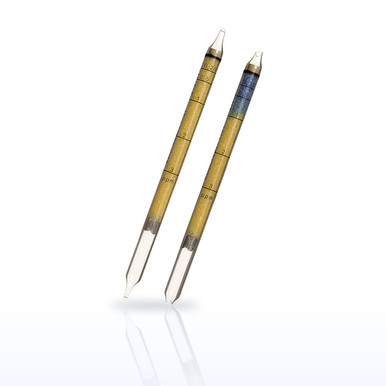
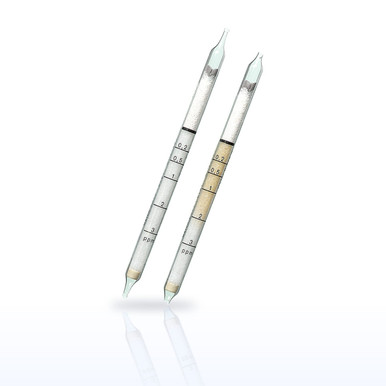
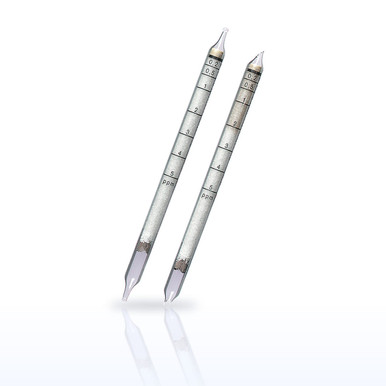
Every Draeger tube we list, with the handbook data, is on the Draeger tubes A–Z chart; each gas has its own page with the OSHA and NIOSH limits.
Questions people ask
What does cross-sensitivity mean on a Draeger tube?
That substances other than the one the tube is calibrated to can affect its reading; the handbook entry names which do and which were tested with no effect (p. 116).
Can a cross-sensitive substance be told apart?
Sometimes by color: entries state when another substance gives a different discoloration, as styrene does on the formaldehyde tube (p. 181).
How does Draeger reduce interference?
Pre-layers and pre-tubes that retain, adsorb or convert interfering substances, and in MicroTubes pre-layers that filter them out (pp. 36–37, 80).
Is a substance that is not listed safe to ignore?
The handbook states the effect has been checked for the specified substances; an unlisted one has not necessarily been tested.
Where is the cross-sensitivity for my tube?
In its handbook entry and on its product page on this site, under the specifications table.
Related guides
How to read a Draeger tube: the stain, the scale and the three cases the handbook describesReading a tubeDraeger MicroTubes vs short-term tubes: the ppb system and when the handbook describes eachMicroTubesDraeger tubes in heat, cold, humidity and at altitude: what the handbook says to correctTemperature, humidity, pressureDraeger tubes by gas and range: all 183 tubes for 98 gases on one pageTubes by gas and rangeStandards and ratings on this page are as published in the documents named and by the manufacturers named. The employer’s hazard assessment and written program decide what applies at a given workplace. Verify a rating on the product and its spec sheet before use.