
Draeger Formaldehyde Detector Tubes
3 Draeger short-term detector tubes for Formaldehyde, measuring ranges from Activation tube for the Formaldehyde 0.2/a tube, extends its range down to 0.04 ppm (not a measuring tube) up to 2 to 40 ppm. Ranges, pump strokes, measuring times and color changes as published in the Dräger-Tubes & MicroTubes Handbook, 22nd edition (pp. 181–182). Ships in 1–2 business days.
Every Draeger tube for Formaldehyde
| Part number | Tube | Measuring range | Strokes (n) | Measuring time | Color change | Pack | Price | ||
|---|---|---|---|---|---|---|---|---|---|
 | 6733081 | Draeger Formaldehyde 0.2/a Detector Tubes, Box of 10 | 0.5 to 5 ppm / 0.2 to 2.5 ppm | 10 / 20 | approx. 1.5 min / approx. 3 min | white → pink | Box of 10 | $128.95 | |
 | 8101751 | Draeger Formaldehyde 2/a Detector Tubes, Box of 10 | 2 to 40 ppm | 5 | approx. 30 s | white → pink | Box of 10 | $129.57 | |
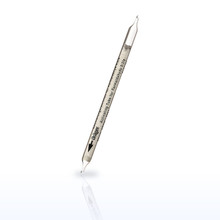 | 8101141 | Draeger Activation Tubes for Formaldehyde 0.2/a, Box of 10 | Activation tube for the Formaldehyde 0.2/a tube, extends its range down to 0.04 ppm (not a measuring tube) | Box of 10 | $96.58 |
Two ranges on one tube? The range depends on the number of pump strokes. How pump strokes set the range on a Draeger tube.
Source: Dräger-Tubes & MicroTubes Handbook, 22nd edition (order no. 90 92 086), pp. 181–182, Dräger Safety AG & Co. KGaA. Each tube page carries the full handbook entry: standard deviation, temperature and humidity limits, reaction principle and cross-sensitivities.
Draeger MicroTubes for Formaldehyde (X-act 7000)
| MicroTube | Measuring range | Price |
|---|---|---|
| Draeger Formaldehyde MicroTubes for X-act 7000 | 5-150 ppb; 0.15-3 ppm | $121.77 |
MicroTubes are read electronically on the Draeger X-act 7000, not on a hand pump.
Formaldehyde exposure limits
| Limit | Value |
|---|---|
| OSHA PEL | [1910.1048] TWA 0.75 ppm ST 2 ppm |
| NIOSH REL | Ca TWA 0.016 ppm C 0.1 ppm [15-minute] |
| NIOSH IDLH | Ca [20 ppm] |
| CAS number | 50-00-0 |
| Formula | HCHO |
| Other names | Methanal, Methyl aldehyde, Methylene oxide |
| Conversion | 1 ppm = 1.23 mg/m³ |
Source: NIOSH Pocket Guide to Chemical Hazards, Formaldehyde (OSHA PEL from 29 CFR 1910.1000 Table Z as listed there). TWA = 8-hour time-weighted average, ST = short-term (15-minute), C = ceiling, Ca = NIOSH potential occupational carcinogen. NIOSH physical description: Nearly colorless gas with a pungent, suffocating odor. [Note: Often used in an aqueous solution (see specific listing for Formalin).]
Draeger short-term tubes are read on a Draeger accuro or X-act 5000 tube pump. Per the handbook (pp. 28–29), Draeger tubes and Draeger pumps are matched at the factory and form a single unit; other makers' pumps and tubes are not interchangeable with them. All Draeger tubes A–Z.
Guides: Draeger tubes by gas and range · tube ranges and the OSHA and NIOSH limits · what Draeger tubes measure · what the tube names mean · how to read a tube · the accuro pump.
Draeger Formaldehyde tube questions
Which Draeger tubes measure Formaldehyde? 6733081 (0.5 to 5 ppm / 0.2 to 2.5 ppm), 8101751 (2 to 40 ppm), 8101141 (Activation tube for the Formaldehyde 0.2/a tube, extends its range down to 0.04 ppm (not a measuring tube)).
What is the lowest range Draeger tube for Formaldehyde? 6733081, 0.5 to 5 ppm / 0.2 to 2.5 ppm, 10 / 20 strokes.
What is the OSHA exposure limit for Formaldehyde? OSHA PEL [1910.1048] TWA 0.75 ppm ST 2 ppm; NIOSH REL Ca TWA 0.016 ppm C 0.1 ppm [15-minute]; IDLH Ca [20 ppm] (NIOSH Pocket Guide).
Which pump reads Draeger Formaldehyde tubes? The Draeger accuro hand pump or the X-act 5000 pump. MicroTubes, where listed, are read on the X-act 7000.
Do Draeger Formaldehyde tubes expire? Yes. The expiration date (month and year) is printed on the package; the handbook states a typical shelf life for the customer of up to two years, stored sealed at the temperature on the package strip (handbook section 2.13).
The ratings, test results and standards shown here are the manufacturers' published values, reproduced as published. Nothing on this page is a recommendation by Bayshore Safety that any product is suitable for a particular task, hazard or workplace. Selecting safety products and protective equipment is the responsibility of the end user and the employer, based on their own hazard assessment and the regulations that apply to their work. Confirm every value on the manufacturer's own documentation before use.