
How loud is 85 decibels, and why is it the number that matters?
85 decibels is about as loud as heavy traffic from the sidewalk, a kitchen blender across the room, or a gas lawn mower from 25 feet: loud enough that you raise your voice to talk to someone an arm’s length away. It is the number that matters because that is where hearing damage begins with long exposure. OSHA’s action level is 85 dBA averaged over an 8-hour shift: at that point the employer must start a hearing conservation program with monitoring, hearing tests, training and hearing protection offered. At 90 dBA the protection becomes mandatory. NIOSH puts the safe limit at 85 for 8 hours and cuts the time in half for every 3 dB above it.
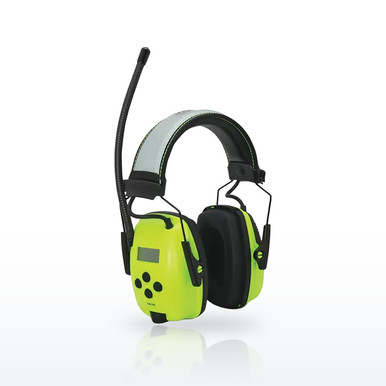
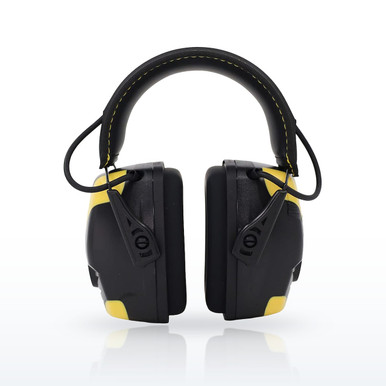 Howard Leight Impact Pro 1030943 Over-The-Head Electronic Earmuffs, NRR 30Earmuffs rated NRR 30 and above
Why is 85 the line? Hearing loss from noise is gradual, painless and permanent: the hair cells in the inner ear that die do not grow back. Studies that followed workers for decades found measurable loss in a meaningful share of people exposed at 85 dBA for a working lifetime, and much more at 90 and above. OSHA set 90 as the legal limit in 1971 and added the 85 action level in 1983; NIOSH has recommended 85 as the limit since 1972. Everyone agrees the damage starts around 85; they differ on how much risk the law should accept.
What does each decibel level sound like?
Typical measurements at the listener’s ear. Actual tools and rooms vary; a sound level meter is the only way to know yours.
How does the decibel scale work?
Decibels are logarithmic, which is why small numbers mean big changes. Every 3 dB doubles the sound energy, so 88 dB is twice the energy of 85 and 91 is four times; that is why the exposure-time tables halve the allowed time every 3 dB (NIOSH) or 5 dB (OSHA). Every 10 dB is ten times the energy and sounds about twice as loud to a person. Two identical machines running side by side are 3 dB louder than one, not twice the number. The A in dBA means the measurement is weighted to the frequencies the human ear hears best, which is the scale all the exposure rules use.
29 CFR 1910.95(b) and Appendix A (exchange rate, A-weighting); NIOSH Criteria Document 1998 (3-dB exchange rate).How long can you be exposed? OSHA and NIOSH compared
| Sound level (dBA) | OSHA permissible time (Table G-16) | NIOSH recommended limit |
|---|---|---|
| 85 | Action level: 16 hours (program required at 8 hours) | 8 hours |
| 88 | 10.6 hours | 4 hours |
| 90 | 8 hours (permissible exposure limit) | 2 hours 31 minutes |
| 92 | 6 hours | 1 hour 35 minutes |
| 95 | 4 hours | 47 minutes |
| 97 | 3 hours | 30 minutes |
| 100 | 2 hours | 15 minutes |
| 102 | 1.5 hours | 9 minutes |
| 105 | 1 hour | 4 minutes 43 seconds |
| 110 | 30 minutes | 1 minute 29 seconds |
| 115 | 15 minutes (OSHA ceiling for continuous noise) | 28 seconds |
OSHA uses a 5-dB exchange rate (the time halves every 5 dB) and a 90-dBA limit; NIOSH uses a 3-dB exchange rate and an 85-dBA limit, which is why the NIOSH times fall so much faster. The OSHA times above 90 are the legal maximums without protection; the 85 action level triggers the hearing conservation program. Exposures at different levels across a day are added as a fraction of each level’s allowed time; a dose of 100 percent is the limit. Many employers, and Cal/OSHA, follow the OSHA rule but adopt NIOSH’s 85 for their own programs.
29 CFR 1910.95 Table G-16 and Appendix A (mixed exposures, dose); 29 CFR 1910.95(c)(1) (action level, 85 dBA 8-hour TWA); NIOSH Criteria Document 1998, Table 1-1.
What does OSHA require at 85, and at 90?
- At 85 dBA 8-hour TWA (the action level): a hearing conservation program. Noise monitoring; a baseline audiogram within 6 months and an annual one after; training every year; hearing protectors made available free, with a choice of types, and fitted; records.
- At 85 with a standard threshold shift on the audiogram, or for workers not yet baselined: hearing protection must be worn, not just offered.
- At 90 dBA 8-hour TWA (the permissible exposure limit): feasible engineering and administrative controls to bring the noise down, and hearing protection worn until they do.
- Impulse noise: never above 140 dB peak.
How loud are common tools and jobs?
- Circular saw, table saw: 100 to 105 dBA at the operator.
- Chainsaw: 110 to 120. Jackhammer: 100 to 115. Impact wrench: 100 to 110.
- Angle grinder: 95 to 105. Belt sander: 90 to 95. Drill: 85 to 95.
- Lawn mower, leaf blower: 90 to 100 at the operator.
- Forklift, tractor cab: 85 to 95. Dump truck cab: 85 to 90.
- Manufacturing floor with presses: 90 to 100. Warehouse with conveyors: 80 to 88.
- Firearms: 140 to 170 peak; a single shot can cause permanent damage.
How do you know if your workplace is over 85?
The rough test: if you have to raise your voice to be understood by someone 3 feet away, you are around 85 or above. The real test is measurement. OSHA requires monitoring whenever exposures may equal or exceed the action level, using a sound level meter for area readings or a dosimeter the worker wears for a full shift, and repeating it when production or equipment changes. A smartphone app gives a ballpark but is not acceptable for compliance; NIOSH’s own app is the exception for screening on iOS with a calibrated external microphone.
29 CFR 1910.95(d) (monitoring) and (e) (employee notification); NIOSH Sound Level Meter app documentation.Ear plugs and earmuffs by NRR
23 items · prices liveNRR is the EPA-labeled rating the manufacturer publishes; the protection you get depends on fit, and OSHA and NIOSH derate the label for planning. Free shipping on orders over $199.
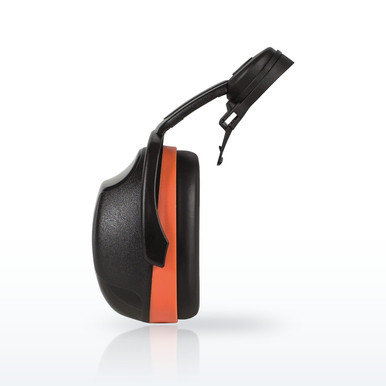
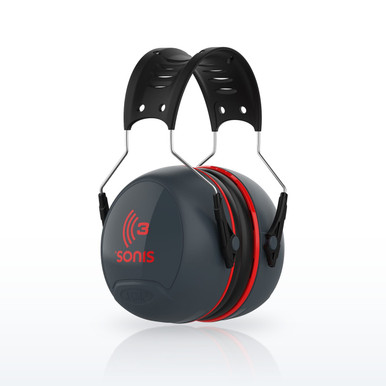
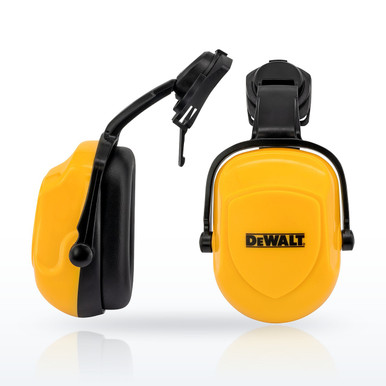
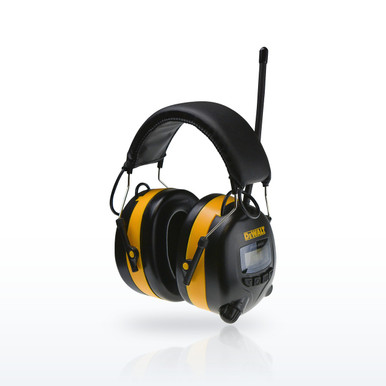
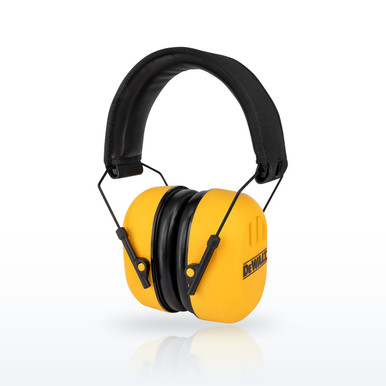
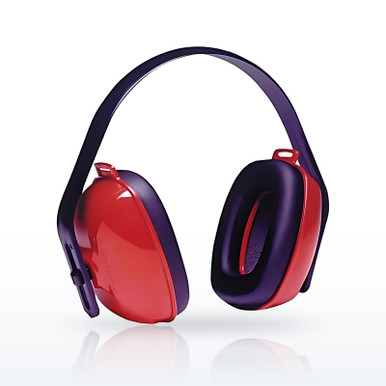
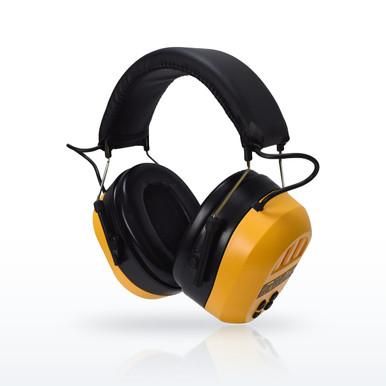

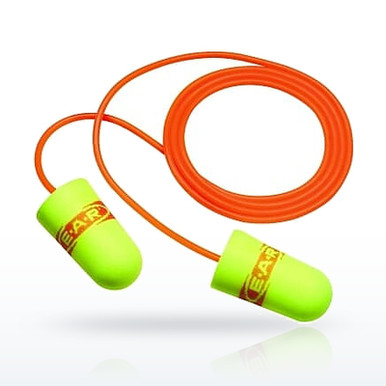
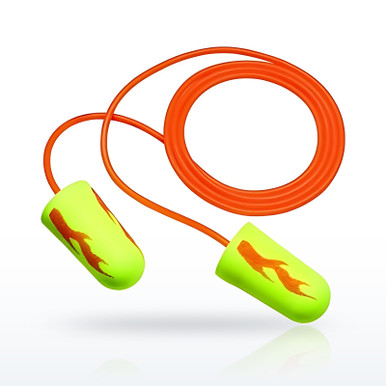
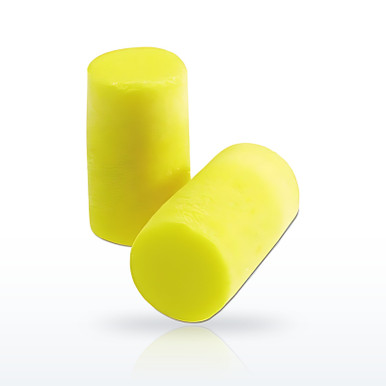
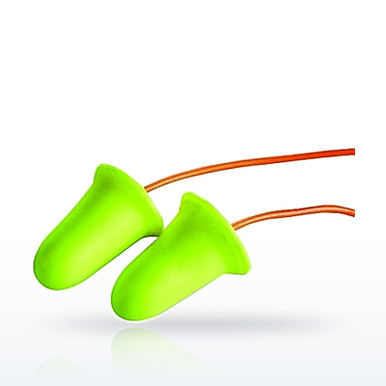
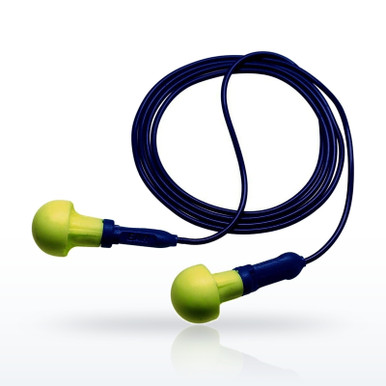
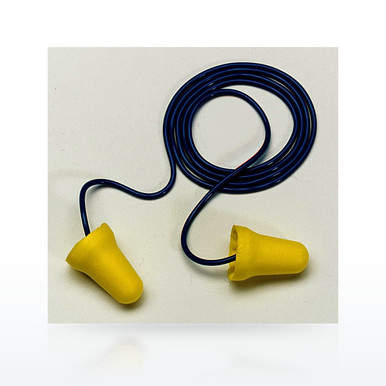
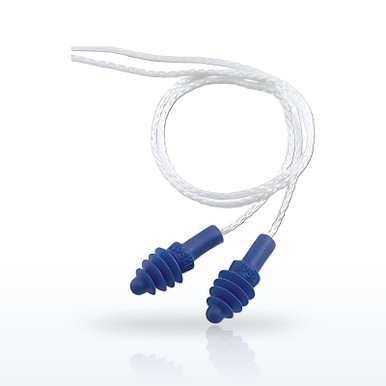
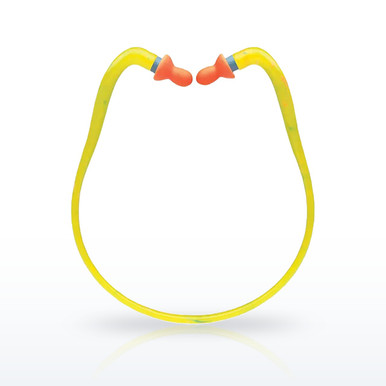
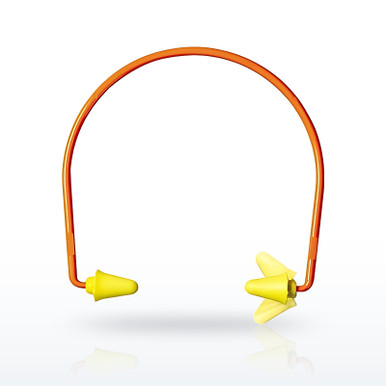
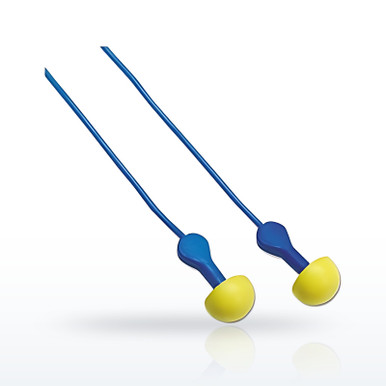
Cap-mounted muffs, banded plugs and dispensers are on the hearing protection finder.
Questions people ask
Is 85 decibels loud?
Loud enough to make you raise your voice at arm’s length: heavy traffic, a blender, a lawn mower at a distance. It is the level where hearing damage starts with a working day of exposure.
How many decibels cause hearing damage?
Sustained exposure at 85 dBA and above over years; faster as the level rises. Above about 120 dB a single exposure can cause damage, and 140 dB peak is OSHA’s absolute ceiling.
What is the OSHA decibel limit?
90 dBA averaged over 8 hours is the permissible exposure limit; 85 dBA is the action level that triggers a hearing conservation program. (1910.95.)
How long can you listen to 85 decibels safely?
NIOSH: 8 hours a day. OSHA treats 85 as the action level, with the legal 8-hour limit at 90. Every 3 dB higher halves the NIOSH time.
How loud is 90 decibels?
A lawn mower at the handle, a leaf blower, a belt sander, a subway platform. OSHA’s 8-hour limit; NIOSH allows about 2.5 hours.
How loud is 100 decibels?
A chainsaw or a circular saw cutting, a jackhammer a few feet away. OSHA allows 2 hours; NIOSH 15 minutes.
What is the difference between dB and dBA?
dBA is decibels weighted to the frequencies the ear hears best; every workplace exposure rule uses dBA. Plain dB without weighting overstates low-frequency noise.
How do I measure the noise at my job?
A sound level meter for a spot reading or a dosimeter worn for the shift. OSHA requires monitoring when exposures may reach 85 dBA. (1910.95(d).)
Standards and ratings on this page are as published in the documents named and by the manufacturers named. The employer’s hazard assessment and written program decide what applies at a given workplace. Verify a rating on the product and its spec sheet before use.