
How to treat a burn at work: first aid and burn dressings
Stop the burning, then cool it. Get the person away from the heat, and put the burn under cool running water right away and keep it there for at least 10 minutes, ideally 20. Not ice, and not for more than 40 minutes. Take off rings, watches and anything tight before the swelling starts, but do not pull off clothing stuck to the skin. Cover the burn loosely with a clean, dry dressing; a gel-soaked burn dressing cools and covers in one step where running water is not at hand. Call 911 for any burn that goes through the skin, looks dry, leathery or charred, is bigger than about 3 inches across, wraps around a limb, is on the face, hands, feet, genitals or a major joint, or came from electricity or a strong chemical. A chemical burn is flushed at the eyewash or shower for 15 minutes, not dressed.
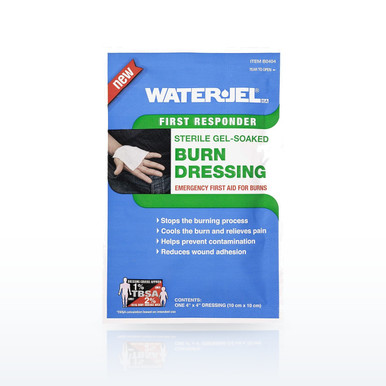 Water-Jel 4 x 4 inch burn dressingGel-soaked sterile dressing; the Z308.1 Class A burn dressing item
Why is cooling the whole first step? Skin keeps cooking after the heat source is gone. The tissue under a burn stays hot enough to deepen the injury for minutes, and a burn that would have blistered and healed becomes one that needs a graft. Cool running water pulls that heat out, eases the pain and washes off anything still on the skin. The Red Cross advisory puts the minimum at 10 minutes because shorter cooling has not been shown to help, and caps it at 40 because a person under cold water that long gets hypothermic. Ice is out for the same reason: it damages the tissue it touches.
What are the first aid steps for a burn?
For a thermal burn (heat, steam, hot metal, flame). Chemical and electrical burns have their own notes below.
Which burns need 911?
- Goes through all layers of skin, or the skin looks dry, leathery, white, brown, black or charred.
- Bigger than about 3 inches (8 cm) across.
- On the face, hands, feet, genitals, buttocks or a major joint, or wraps all the way around an arm or leg.
- Caused by electricity or lightning, or by a strong acid or caustic.
- Came with smoke or heat inhaled: hoarse voice, coughing, soot around the mouth, burns inside the mouth.
- The person is very young, elderly, or has trouble breathing or signs of shock.
What does a gel-soaked burn dressing do, and why is it in the kit?
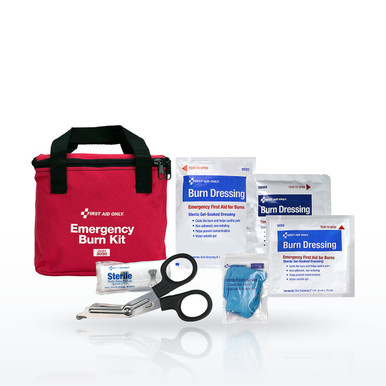
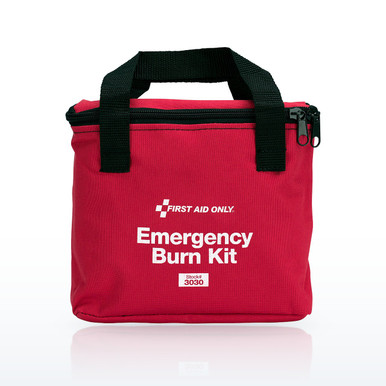
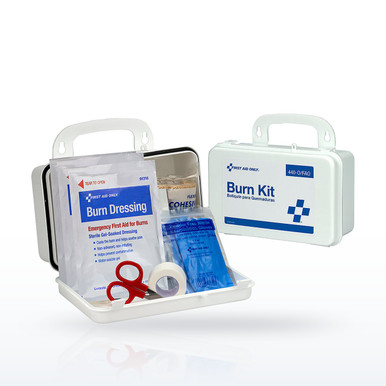
A burn dressing is a sterile pad soaked in a water-based gel. Laid on a burn it does three things: cools the tissue by conduction and evaporation, keeps air off the exposed nerve endings (which is where most of the pain comes from), and covers the wound without sticking, so it can be lifted at the clinic without tearing the new surface. The gel is clear, so a nurse can see the burn through it. It is the item for the minute between the splash and the sink, and for the jobsite where there is no running water. It does not replace cooling under water when water is there; use the water first, then the dressing to cover.
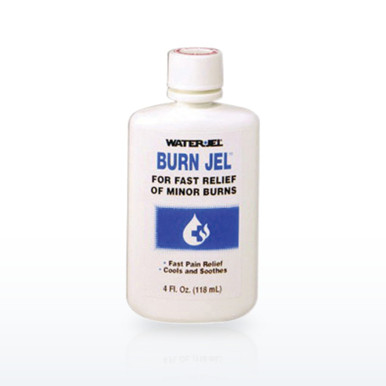
Manufacturer product data for the Water-Jel and First Aid Only burn dressings in the band (gel-soaked, cools, non-adherent); ANSI/ISEA Z308.1-2021 Table 1.ANSI Z308.1-2021 puts one 4 x 4 inch gel-soaked burn dressing and ten 1/32-ounce burn treatment packets in a Class A kit, and two dressings and twenty-five packets in a Class B kit. The packets are a burn gel for small burns, usually with lidocaine to numb the pain. Where burns are a regular injury, a kitchen, a weld shop, a boiler room, a hot-dip line, the standard’s guidance is to add to the minimum: larger dressings (8 x 18 and face-size), a burn kit at the hazard, and a heat shield blanket where clothing can catch fire.
ANSI/ISEA Z308.1-2021 Table 1 (burn dressing 4 x 4 in, 1 in Class A and 2 in Class B; burn treatment 1/32 oz, 10 and 25) and hazard assessment guidance; manufacturer data for the burn kits in the band.What about chemical and electrical burns?
A chemical burn is not dressed first; it is flushed. Brush off any dry chemical, strip the soaked clothing, and get the person under the eyewash or drench shower for a full 15 minutes while someone reads the safety data sheet. That is what 1910.151(c) requires the station for. Do not try to neutralize an acid with a base or the reverse; the heat of the reaction adds a thermal burn. After the flush, cover loosely and get medical care.
29 CFR 1910.151(c); ANSI/ISEA Z358.1-2014 (15-minute flush); SDS section 4 (first aid measures) for the chemical involved.An electrical burn is small on the outside and can be large on the inside, with a heart rhythm problem on top. Do not touch the person until the power is off or they are clear of the source. Check breathing, start CPR if needed, cover the entry and exit burns loosely, and call 911 for every electrical burn.
Mayo Clinic, Burns: first aid (electrical burns: seek emergency care); American Red Cross first aid guidance.What does OSHA require for burns?
Nothing burn-specific. 1910.151(b) requires a trained person and adequate supplies unless a clinic is close by, and OSHA’s appendix points to Z308.1 for what adequate means. The burn items above are how the standard meets the rule. A burn that needs more than first aid, meaning anything beyond cleaning, a dressing and non-prescription pain relief, is a recordable injury under Part 1904 once a physician treats it, which is a separate matter from the first aid itself.
29 CFR 1910.151(b) and Appendix A; 29 CFR 1904.7(b)(5) (first aid definition for recordkeeping).Burn dressings, gels and burn kits
11 items · prices liveItem type is as labeled by the manufacturer. Sizes, gel ingredients and case counts are on each product page. Contractor Direct orders ship free.
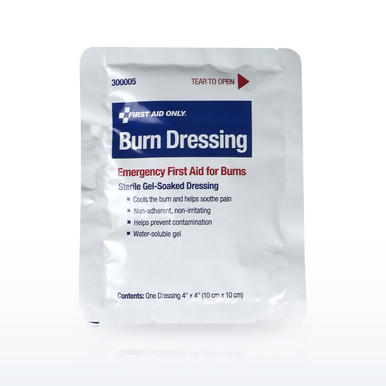
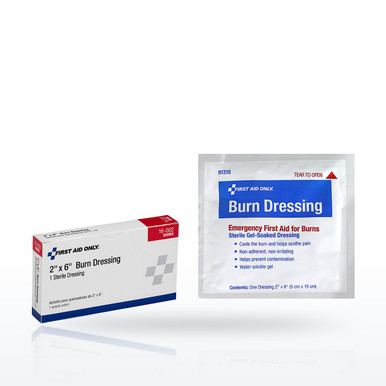
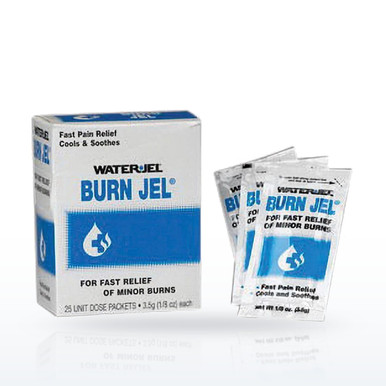
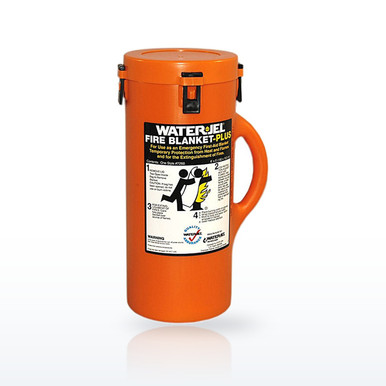
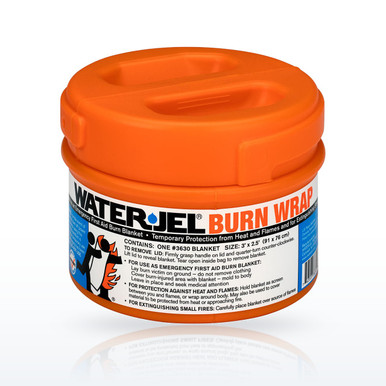
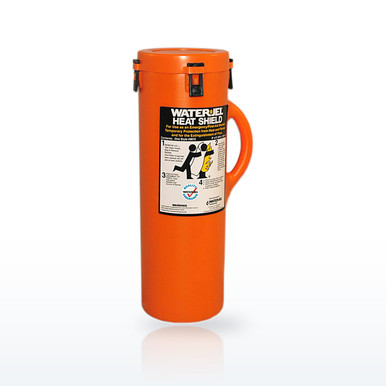
Full first aid kits with the Z308.1 burn items inside are in the first aid finder.
Questions people ask
How long should you run cool water on a burn?
At least 10 minutes and ideally 20, under the Red Cross advisory, and not beyond 40 minutes because of hypothermia. Cool water, not cold, and never ice.
Should you put ice on a burn?
No. The Red Cross advisory says not to use ice, an ice pack or a bag of ice; it can worsen the injury. Cool running water does the job.
Should you put butter or ointment on a burn?
Not on anything more than a minor burn. Grease traps heat and has to be washed off at the clinic. Cool it, then cover it loosely.
Do you pop burn blisters?
No. The blister is a sterile cover over the new skin. Leave it, cover it, and let a clinician decide.
When is a burn an emergency?
Full-thickness (dry, leathery, charred, white or dark), bigger than about 3 inches, on the face, hands, feet, genitals or a joint, wrapping a limb, electrical or chemical, or with smoke inhaled. Call 911.
What is a gel-soaked burn dressing?
A sterile pad carrying a water-based gel that cools the burn, keeps air off it and does not stick. ANSI Z308.1 requires one 4 x 4 inch dressing in a Class A kit and two in a Class B kit.
How do you treat a chemical burn?
Flush at the eyewash or drench shower for 15 minutes, remove contaminated clothing, read the SDS, then cover loosely and get care. Do not try to neutralize it.
How many burn items does an ANSI first aid kit need?
Class A: one 4 x 4 gel-soaked burn dressing and ten 1/32-ounce burn treatment packets. Class B: two dressings and twenty-five packets. Add more where burns are a regular hazard.
Related guides
What should be in a workplace first aid kit?The Z308.1 minimum fillOSHA eyewash station requirementsWhere chemical burns are flushedEmergency showersFlow, height and temperatureFirst aid provider under OSHAWhen a trained person is requiredIs welding dangerous?The burn and other hazards of hot workStandards and ratings on this page are as published in the documents named and by the manufacturers named. The employer’s hazard assessment and written program decide what applies at a given workplace. Verify a rating on the product and its spec sheet before use.