
Cowhide vs goatskin vs pigskin vs deerskin: what the leather type and grade on a work glove mean
A leather work glove is described by three things the manufacturer publishes: the animal (cowhide, goatskin, pigskin, deerskin, elkskin, kidskin, sheepskin), the cut of the hide (top grain, the outer layer with the natural grain surface, or split, the inner layer left when the grain is split off), and the grade, which is the manufacturer’s own sort of the hides by surface quality and consistency (PIP uses Economy, Regular, Industry, Superior and Premium). PIP’s data lists all three per style, so a glove reads, for example, “Top Grain Goatskin, Premium Grade” or “Split Cowhide, Economy Grade”. None of those words is a test rating; where a leather glove has been cut-tested the ANSI/ISEA 105 level is listed separately, and several PIP leather gloves carry A4 to A9 ratings from an aramid or steel-core lining.
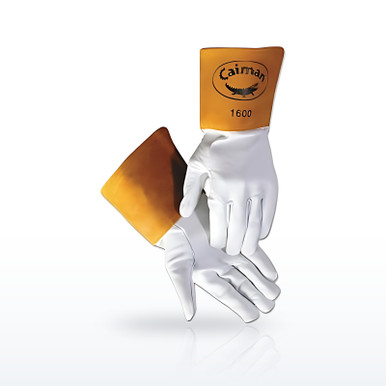 Caiman 1600 Goat Grain Leather/Cowhide Cuff Unlined Welding GlovesTop grain goatskin glove with the manufacturer’s leather type and grade (PIP data)
Why the hide matters. Leather is sold by what the animal gives: cowhide is the thickest and the most common, goatskin has the highest tensile strength for its weight and stays supple when it gets wet and dries, pigskin breathes through its pore pattern and also dries soft, and deerskin and elkskin are the softest and are used where feel matters. Top grain keeps the tight outer fibers and resists abrasion and water better than a split from the same hide; a split is thicker, cheaper and the usual choice for a palm patch or a welding gauntlet where heat, not feel, is the point. The grade is the manufacturer sorting hides by blemishes and consistency, which is why two gloves of the same leather can differ in price and in how evenly they wear.
The leathers as the manufacturer lists them
PIP product data, Leather Type column; the descriptions are the common trade descriptions of each hide.
PIP’s leather grades and what they describe
| Grade (manufacturer’s term) | What it means in the line | Typical styles in the data |
|---|---|---|
| Economy | Lowest-cost sort of the hide; more surface variation | Split cowhide leather palm gloves (84-, 85- series), pigskin drivers |
| Regular | Standard sort | Split and top grain cowhide leather palm gloves (83-, 86-, 87- series) |
| Industry | Mid-grade sort | Split cowhide leather palm gloves (85-7500 series) |
| Superior | Higher sort of the hide | Split cowhide leather palm gloves (82-, 500, 600, 900 series) |
| Premium | Top sort, most consistent surface | Top grain cowhide, goatskin, deerskin and elkskin drivers and welding gloves |
The grade is the manufacturer’s own classification, not an industry standard; it is listed so that two gloves of the same leather can be compared.
PIP Rich Product Data, October 2026 (Leather Grade column).
MCR Safety’s leather grades and cuts
MCR Safety grades the leather on every glove page with a letter: Premium A+ and A, Select B+ and B, and Competitive Value C+, C, D and E, and names the hide (cowhide, pigskin, goatskin, deerskin, elkskin, buffalo) and the pattern (drivers or leather palm). Its welding guide explains the cut: grain leather is the smooth outer side of the hide, for durability and dexterity; split leather is the rougher inner side, in side split (the most durable), shoulder split (more economical) and belly split (the least consistent). The MCR Safety Big Jake, MCR Safety Mustang, MCR Safety Road Hustler and MCR Safety Cut Pro leather gloves on this site carry the grade MCR Safety prints.
MCR Safety, “Welding Guide”, page 2 (leather material breakdown: grain and split, side, shoulder and belly split); MCR Safety product pages and specification sheets for the styles shown, fetched Nov 6 2026Portwest’s leathers
Portwest names the hide and cut on its leather gloves: cow split leather on the A210 and A220 leather-palm gloves and the A500 and A540 welding gauntlets, goat grain leather on the A260 and A261 drivers gloves and the Portwest Anti-Impact A747 and A748, and cow grain leather on the A745 impact glove. It publishes no leather grade letter, so the band shows the hide and cut only.
Portwest product pages and US data sheets for the styles shown (documents.portwest.com), fetched Nov 7 2026Grain, split and the hides, as Radians describes them
Radians’ knowledge base separates grain from split leather this way: grain comes from the top of the hide where the hair follicles were removed and is smooth; split is made by splitting the grain away from the underside of the hide, which turns one hide into two and is rough to the touch. Radians puts it plainly: specify grain leather for longevity, split for cost savings when outfitting temporary workers for intermittent jobs. By hide, Radians lists cowhide as the most common and moderately priced, durable with good abrasion resistance, warmer than pigskin or goatskin, more heat resistant, and stiff when it gets wet; pigskin as the most breathable, softer with use, able to take moisture without stiffening and to be laundered without losing shape; goatskin as the strongest and most durable with excellent abrasion resistance, one of the softest leathers and suited to dexterity. The Leather Type and Leather Grade lines on each Radians leather glove page carry the hide and grade for that style.
Radians Knowledge Base, Hand Protection Solutions (radians.com/kb-hand-protection, radians.com, fetched Nov 8 2026)More questions people ask
Is deerskin good for gloves, and is pigskin?
Both are hides the manufacturers on this site cut gloves from, and the guide’s description of each is the answer. Deerskin (and elkskin) is the softest, used where feel matters, which is why MCR Safety’s welding guide pairs it with TIG; it stays soft after wetting and drying; it is thinner and dearer than cowhide and wears faster on rough work. Pigskin breathes through its pore pattern, dries soft after wetting, and resists abrasion well for its weight, which is why it appears on drivers and cold-weather gloves (Caiman’s 1354 pigskin winter glove carries an EN 511 contact cold 3). Neither is a rating; the ANSI/ISEA 105 abrasion and puncture levels the manufacturer prints on a given glove are the figures to compare.
Answers from the sources named above and in the byline.Questions people ask
What is the difference between top grain and split leather?
Top grain is the outer layer of the hide with the natural grain surface; split is the inner layer left after the grain is split off. Grain resists abrasion and water better; split is thicker and cheaper and is used for palms and welding gauntlets.
Are cowhide or pigskin gloves better, and what about goatskin?
This site does not rank them. Goatskin has the higher tensile strength for its weight and stays supple after wetting; cowhide is thicker and more abrasion resistant. The manufacturer lists the hide, the cut and the grade per glove.
What does premium grade leather mean?
PIP’s top sort of a hide by surface quality and consistency; Economy, Regular, Industry and Superior are the lower sorts in its data. It is the manufacturer’s term, not a standard.
Are leather gloves cut resistant?
Only where the manufacturer lists an ANSI/ISEA 105 level; PIP’s cut-rated leather gloves carry an aramid or steel-core lining and the level is on the product page.
How do you clean leather work gloves?
By hide and grade as the manufacturer states; the leather care guide covers it.
Will leather gloves shrink if they get wet?
Leather that is soaked and then dried with heat stiffens and shrinks; the manufacturers’ care instructions say to let a wet leather glove dry slowly at room temperature, away from heaters and sun, and to work it by hand as it dries. Cowhide and goatskin recover; thin kidskin and deerskin lose their softness faster.
How do you clean leather welding gloves?
Brush off dry spatter and dirt, wipe with a damp cloth and a little mild soap, and air dry away from heat; no machine washing and no dryer, which hardens and shrinks the leather. Replace a glove with a burn-through, a split seam or leather that has gone hard, because the heat protection is in intact leather.
Are leather work gloves better than coated gloves?
They do different jobs. Leather is the abrasion, heat and spark glove: it takes sparks and rough material that cut a knit, and it carries no cut level unless the manufacturer lines it with a cut-resistant yarn and tests it. A coated knit carries the cut level, the grip and the breathability. The hide, cut and grade on a leather glove page are descriptions; the ANSI level, where one is stated, is the rating.
What are the toughest leather work gloves?
By the manufacturers’ own sorts: top grain over split for abrasion and water, and the higher grade within a hide (PIP’s Premium and Superior; MCR Safety’s Premium A+ and A, then Select B+ and B, then Competitive Value C+ to E). MCR Safety’s welding guide names side split as the most durable of the split cuts, shoulder split as more economical and belly split as the least consistent.
Are leather gloves shock resistant?
No. A leather work glove carries no voltage rating. Leather protectors are worn over ASTM D120 rubber insulating gloves to protect the rubber, and the rubber glove is the electrical protection; the electrical gloves guide covers the classes and the testing OSHA 1910.137 requires.
Do MIG welding gloves work for stick welding?
MCR Safety’s welding guide pairs most stick welding with split leather for heat and durability and MIG and TIG with a grain cut for feel, and names cow and pig leather for stick and MIG, elk for stick, goat for MIG and TIG and deer for TIG. A thin grain MIG glove in a stick arc gives up heat protection; the hide, cuff and lining on each product page are what MCR Safety states.
Why are leather gloves so expensive?
Hide, cut and grade. Top grain costs more than split because each hide yields one grain layer; goatskin, deerskin and elkskin cost more than cowhide because the hides are smaller and softer; and the manufacturer's grade (PIP's Economy through Premium, MCR Safety's A+ through E) sorts the hides by surface quality, so a premium-grade top grain goatskin driver and an economy split cowhide palm are at opposite ends. Kevlar stitching, a lining and a cut-resistant liner add to it. The product page prints the leather type, cut and grade so the price can be read against them.
Is deer skin good for gloves?
Deerskin is the softest hide the manufacturers use, for feel (MCR Safety pairs it with TIG welding); it stays soft after wetting and wears faster than cowhide on rough work. The glove’s own abrasion and puncture levels are the figures.
Is pig leather good for gloves?
Pigskin breathes through its pores, dries soft after wetting and resists abrasion well for its weight; it is used on drivers and winter gloves (Caiman 1354, EN 511 contact cold 3).
Are faux leather gloves good?
Synthetic leather (a polyurethane-coated microfiber, sold under names such as Clarino) is the palm of most mechanics gloves; it is thin, even and washable and carries whatever ANSI/ISEA 105 levels the glove tests to (MCR Safety lists puncture 2 to 3 and abrasion 3 to 5 on its synthetic mechanics gloves). It has no grain and does not break in like hide.
Do leather gloves show fingerprints, and is it safe to drive in them?
A glove leaves no fingerprint, which is why inspection and handling gloves exist; driving gloves are a thin grain leather cut for feel on the wheel, and none of the work gloves here is sold as a driving glove. “Drivers glove” in work-glove catalogs is a slip-on grain leather pattern, not a motoring glove.
Are there men’s leather work gloves made in the USA?
A few: the product pages that carry a Made in USA line say so (MCR Safety marks some styles). Most leather work gloves from the four lines here are made overseas and the page does not state otherwise.
The ratings, test results and standards shown here are the manufacturers' published values, reproduced as published. Nothing on this page is a recommendation by Bayshore Safety that any product is suitable for a particular task, hazard or workplace. Selecting safety products and protective equipment is the responsibility of the end user and the employer, based on their own hazard assessment and the regulations that apply to their work. Confirm every value on the manufacturer's own documentation before use.