
Safety guides · 20 guides on lockout, signs and hazcom
Lockout, signs and HazCom guides
Plain words first, the standard cited under it, and the products that carry the rating with live prices. 20 guides, each with the question people type as its heading. Bayshore Safety, industrial safety and PPE supplier since 2017.
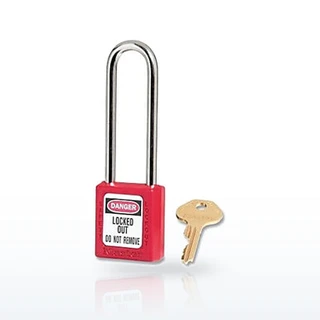
Arc flash and electrical hazard signs: what has to be on the labelThree documents put signs on electrical equipment.NFPA 70E-2024; NEC (NFPA 70) 2023; 29 CFR 1910.303, 1910.335 and 1910.145, current e-CFRFloor marking colors: what OSHA requires and the common standardOSHA requires that permanent aisles and passageways be appropriately marked.29 CFR 1910.176(a), 1910.144(a), 1910.22(a) and 1910.37(b) (current e-CFR); OSHA letter ofLockout devices by energy type: breakers, valves, plugs and cablesA lockout device holds an energy-isolating device in the off or closed position so it cannot be operated until the lock comes off.29 CFR 1910.147 (control of hazardous energy) and 1910.303(f)(4), current e-CFRLockout vs tagout: when a tag alone is allowedA lock physically keeps the breaker, switch or valve from being operated.29 CFR 1910.147 and Appendix A (current e-CFR); 29 CFR 1910.333(b)(2) for electrical workMachine guarding signs and tags: what OSHA requires, and what a sign cannot replaceOSHA’s machine guarding rule requires a physical guard, not a sign.29 CFR 1910.212, 1910.145 and 1910.147, current e-CFR; ANSI Z535 signal-word colors as pubOSHA electrical panel labeling requirementsOSHA requires that every circuit breaker and disconnect be legibly marked to show what it controls, unless that is obvious from where it is, and that the marking stand up to the environment.29 CFR 1910.303 and 1910.335 (current e-CFR); NFPA 70, National Electrical Code, 2023 editOSHA safety sign requirements: danger, warning, caution and noticeOSHA sorts safety signs by how bad the hazard is.29 CFR 1910.145 and Appendix A to 1910.145(f) (current e-CFR); 29 CFR 1926.200; ANSI Z535.OSHA secondary container labeling requirementsWhen a chemical is poured from its shipped container into a spray bottle, a bucket, a drum or a tank, that new container is a secondary container and OSHA requires it to be labeled.29 CFR 1910.1200(f) and Appendix C (current e-CFR, including the May 2024 update)Periodic inspection of lockout procedures: what 1910.147(c)(6) requiresAt least once a year, the employer has to check that each energy control procedure is being followed and still works.29 CFR 1910.147 (control of hazardous energy), current e-CFRThe lockout/tagout procedure step by stepLockout/tagout has two halves, and OSHA fixes the order of both.29 CFR 1910.147 and Appendix A (current e-CFR); 29 CFR 1910.333(b)(2) for electrical workTraffic cone sizes and MUTCD requirements by road speedThe MUTCD sets two minimum heights.MUTCD 11th Edition (FHWA, December 2023), Part 6, Sections 6K.01, 6K.03 and 6K.04; MUTCD 2What color codes does OSHA require? Red, yellow and the ANSI Z535 colorsOSHA mandates two colors by name.29 CFR 1910.144 and 1910.145 (current e-CFR); ANSI Z535.1-2006(R2011) as incorporated by rWhat do the GHS pictograms mean?A GHS pictogram is a black symbol on a white background inside a red diamond.29 CFR 1910.1200(c), (f) and Appendix C (current e-CFR, including the May 2024 update); OSWhat is a barricade, and when does OSHA require one?A barricade is a physical barrier set up to keep people or vehicles out of an area: an A-frame, a plastic or wood Type I, II or III barricade with striped rails, a jersey barrier, a fence panel, a line of cones.29 CFR 1926.200 to 1926.203; 29 CFR 1926.651(l); MUTCD 11th edition (2023), Part 6What is a GHS label, and what are the six required elements?A GHS label is the standardized hazard label that OSHA’s Hazard Communication Standard requires on every container of a hazardous chemical shipped into or used in a workplace.29 CFR 1910.1200(f) and Appendix C (as amended May 20, 2024)What is a group lockout, and how do lockout hasps work?A group lockout is how a crew, craft or department locks out one machine so that each person is as protected as if they had put their own lock on every isolating point.29 CFR 1910.147 (control of hazardous energy), current e-CFRWhat is a LOTO lock, and what makes it different from a padlock?A LOTO lock is a padlock built to meet the lockout standard: it is used only for lockout, every lock has a different key, it is marked with the name of the person who applied it, and it cannot be left open with the key o29 CFR 1910.147 (control of hazardous energy), current e-CFRWhat is lockout/tagout (LOTO)? OSHA 1910.147 explainedLockout/tagout is the OSHA procedure that keeps a machine from starting up, or stored energy from releasing, while someone is working on it.29 CFR 1910.147 (control of hazardous energy)What is the Hazard Communication Standard, and what does it require?The Hazard Communication Standard, HazCom or the right-to-know rule, is OSHA’s requirement that workers be told about the chemicals they work with.29 CFR 1910.1200 (as amended May 20, 2024); 29 CFR 1926.59Who needs lockout/tagout training? Authorized vs affected employeesThree groups.29 CFR 1910.147 (control of hazardous energy), current e-CFR