
Safety guides · 15 guides on head
Head guides
Plain words first, the standard cited under it, and the products that carry the rating with live prices. 15 guides, each with the question people type as its heading. Bayshore Safety, industrial safety and PPE supplier since 2017.
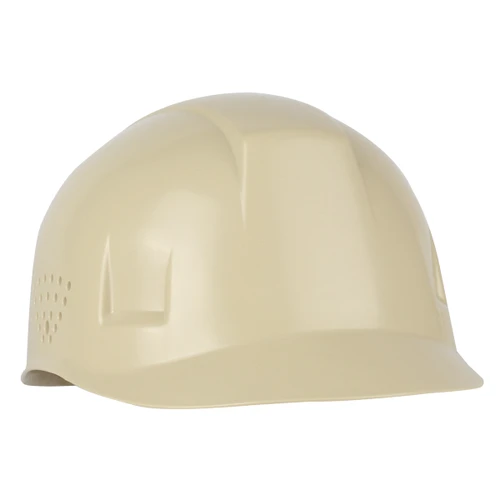
Bump cap vs hard hat: when a bump cap is allowedA bump cap protects against bumping your own head on something fixed: a low beam, a pipe, the underside of a vehicle.ANSI/ISEA Z89.1-2014 (R2019); EN 812:2012; 29 CFR 1910.135, 1926.100 and 1910.132(d)Class G, Class E and Class C hard hats: the electrical ratingsThe letter on a hard hat label is its electrical rating under ANSI Z89.1.ANSI/ISEA Z89.1-2014 (R2019); 29 CFR 1910.135 and 1926.100Do hard hats expire? Service life, the date stamp, and when to replace oneHard hats do not carry an expiration date, and neither OSHA nor ANSI Z89.1 sets one.ANSI/ISEA Z89.1-2014 (R2019); 29 CFR 1910.135; manufacturer instructions (3M, MSA, PIP, HoFull-brim vs cap-style hard hatsThe brim is the only difference.ANSI/ISEA Z89.1-2014 (R2019); manufacturer spec dataHard hat inspection: what to check and how oftenInspect a hard hat before every use, and both halves of it: the shell and the suspension.ANSI/ISEA Z89.1-2009 Appendix A (text verified; the edition incorporated by reference in 2Hard hats for cold weather: winter liners and what they do to fitA winter liner made for a hard hat is allowed under it.OSHA standard interpretation, April 17, 2006 (cold-weather headwear under hard hats); 29 CHigh-visibility hard hats and lamp brackets: what the standard saysANSI/ISEA Z89.1 has an optional high-visibility designation, marked HV after the Type and Class.ANSI/ISEA Z89.1-2009 (text verified; incorporated by reference in 29 CFR 1910.135 and 1926How to assemble a hard hat suspensionA hard hat suspension is the strap cradle inside the shell.ANSI/ISEA Z89.1-2014 (R2019); manufacturer user instructions (3M H-700/H-800, PIP, MSA)How to wear a hard hat correctly, and can you wear it backwards?A hard hat works only when it sits the way it was tested: level on the head, brim forward, suspension snug enough that the hat stays put when you nod or bend over, and the crown empty so the straps have room to stretch uANSI/ISEA Z89.1-2014 (R2019); OSHA letters of interpretation of July 22, 1992 and April 17OSHA hard hat requirements: what 1910.135 and 1926.100 sayOSHA has two hard hat rules, one for general industry and one for construction, and they say nearly the same thing.29 CFR 1910.135 and 29 CFR 1926.100 (current e-CFR text); ANSI/ISEA Z89.1-2014 (R2019)Safety helmet vs hard hat: what the chin strap and Type II changeA safety helmet is the climbing-style hat: close-fitting shell, foam liner, little or no brim, and a chin strap.ANSI/ISEA Z89.1-2014 (R2019); EN 12492:2012; EN 397:2012+A1:2012Type I vs Type II hard hats: what the types meanThe Type on a hard hat label says where the hat is tested to take a blow.ANSI/ISEA Z89.1-2014 (R2019); 29 CFR 1910.135 and 1926.100Vented hard hats: what the ventilation does to the electrical classVent holes take the electrical rating away.ANSI/ISEA Z89.1-2009 (text verified; incorporated by reference in 29 CFR 1910.135 and 1926What are hard hats made of? HDPE, polycarbonate, fiberglass and ABSMost hard hats are high-density polyethylene (HDPE): light, cheap, non-conductive, and good enough for the Z89.1 impact test and the Class E proof test, but it softens in heat and ages in sun.ANSI/ISEA Z89.1-2014 (R2019); manufacturer spec data (MSA, PIP, Honeywell Fibre-Metal, JSPWhat do hard hat colors mean on a jobsite?There is no law or standard that assigns a meaning to hard hat colors.ANSI/ISEA Z89.1-2014 (R2019); 29 CFR 1910.135 and 1926.100