
Respirators for welding fumes: what OSHA and NIOSH require
OSHA’s welding rule starts with ventilation, not respirators. Mechanical ventilation is required in small or low-ceiling spaces, and local exhaust, airline respirators or both are required for specific metals: lead, cadmium, beryllium, mercury and zinc indoors or in confined spaces. A respirator is required whenever the fume in the welder’s breathing zone exceeds an exposure limit after ventilation: 5 micrograms per cubic meter for chromium VI from stainless, 50 for lead, a 5 milligram ceiling for manganese. Welding fume is a particulate, so an N95 or P100 filter handles the metal; gases from shielding and coatings need a cartridge or supplied air. Once required, 1910.134 applies in full.
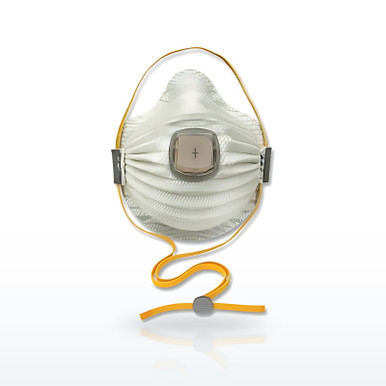
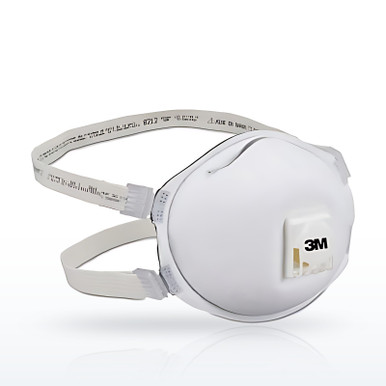 3M N95 welding and metal pouring respiratorN95 filtering facepiece labeled by the manufacturer for welding and metal pouring
Why is welding fume a respirator problem? Welding vaporizes metal at the arc, and the vapor condenses into particles far smaller than dust, which reach the deepest part of the lung. What is in the fume depends on the wire, rod, flux and base metal: iron and manganese from mild steel, chromium and nickel from stainless, zinc from galvanized, lead and cadmium from some coatings. OSHA sets separate limits for each, and the welding rule names the ones that must have local exhaust or an airline respirator regardless of measurement. The rule is written around ventilation first because a hood at the arc removes the fume before anyone breathes it; the respirator is the control for what the hood misses.
What does OSHA’s welding rule say about ventilation and respirators?
The health and ventilation rules in 1910.252(c), which apply to arc and gas welding and cutting.
When does the fume itself require a respirator?
When the welder’s exposure, measured in the breathing zone over the shift, exceeds the OSHA limit for a fume component after ventilation has done what it can. The welding rule sends you to the limits in 1910.1000 for most metals. Iron oxide fume, the main component of mild-steel fume, is limited to 10 milligrams per cubic meter as an 8-hour average. Manganese fume has a ceiling of 5 milligrams per cubic meter that may not be exceeded at any time. Zinc oxide fume, from galvanized steel, is 5 milligrams per cubic meter. NIOSH’s manganese limit is lower, 1 milligram per cubic meter, and NIOSH reports that welders at low manganese levels perform more poorly on tests of brain function.
1910.1000 Table Z-1: iron oxide fume 10 mg/m3, manganese fume (C) 5 mg/m3, zinc oxide fume 5 mg/m3; 1910.1000(a)(1) ceiling values; NIOSH, Welding and Manganese (REL 1 mg/m3 TWA).Stainless steel is the one with its own standard. Welding stainless produces hexavalent chromium, and the chromium VI standard limits it to 5 micrograms per cubic meter as an 8-hour average, with an action level of 2.5. The employer must determine each welder’s exposure, use engineering and work-practice controls first, and supplement with respirators when controls cannot get to the limit, during maintenance and repair, for the first 30 days before controls are in, or in emergencies. Lead has its own standard too, with a limit of 50 micrograms per cubic meter. These are tiny numbers: a few hundredths of a gram in a room of air.
1910.1026(c) PEL 5 µg/m3; (b) action level 2.5 µg/m3; (d)(1) exposure determination; (f)(1)(i) controls first; (g)(1)(i) through (v) when respirators are required; (g)(2) program under 1910.134. 1910.1025(c)(1) lead PEL 50 µg/m3.The only way to know where a given booth or jobsite sits against these numbers is air sampling. Where the employer cannot identify or reasonably estimate the exposure, the respirator standard requires treating the atmosphere as immediately dangerous to life or health, which forces supplied air. That is the standard’s way of saying: measure, or assume the worst.
1910.134(d)(1)(iii).Which respirator type covers welding fume?
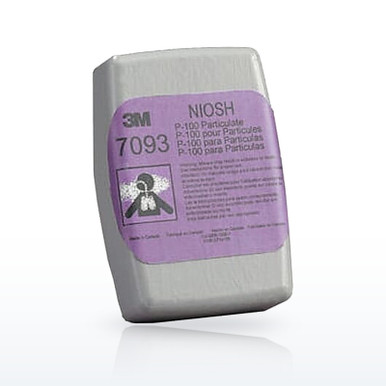
- Metal fume is a particulate, so a NIOSH particulate filter is the right element: N95 for mild steel and galvanized at modest exposures, P100 where exposure is higher or the metal is more toxic. Welding does not generate oil mist, so N-series filters are allowed; R or P filters are used where cutting oils or lubricants are also in the air.
- Protection factor decides the facepiece. A half mask or N95 gives an assigned protection factor of 10; a full facepiece 50; a PAPR welding helmet with a loose-fitting hood or helmet 25, or 1,000 where the manufacturer has tested it to that level; a continuous-flow supplied-air helmet 25 or 1,000 on the same basis. Divide the measured exposure by the limit: that is the protection factor you need, and the facepiece must meet or exceed it.
- Gases are a separate question. Ozone and nitrogen oxides from the arc, carbon monoxide from carbon-dioxide shielding gas, and vapors from coatings and solvents are not stopped by a particulate filter. Where they exceed their limits the respirator needs the matching cartridge with a change schedule, or supplied air.
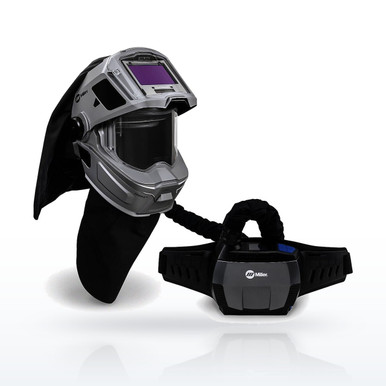
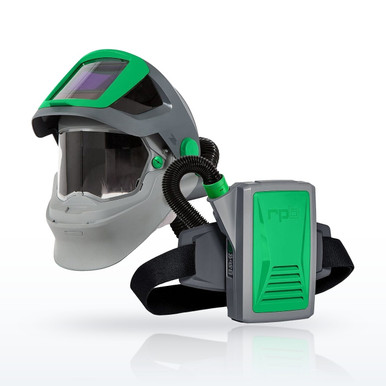
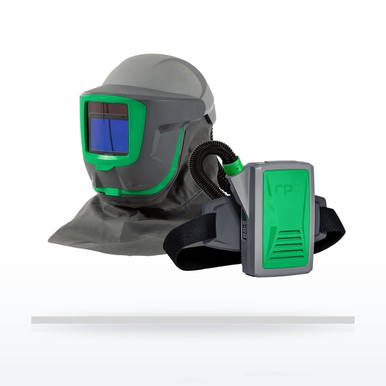
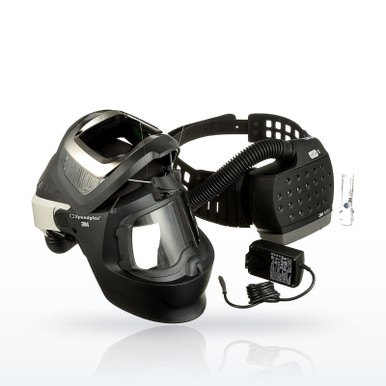
- A PAPR or supplied-air welding helmet puts the respirator under the welding hood and is the common answer where a half mask under a hood is uncomfortable for a full shift or where fit cannot be maintained. A loose-fitting PAPR hood or helmet needs no fit test and can be worn with a beard.
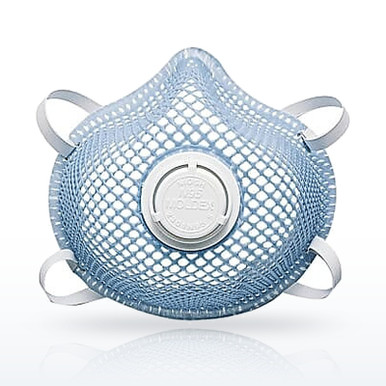
- An N95 with an exhalation valve or a flame-resistant shell is labeled by its manufacturer for welding; the NIOSH filter class is the same N95. The welding label refers to the shell and valve, not to a higher rating.
What has to be in place before the welder puts it on?
Everything 1910.134 requires for any required respirator: a written program, a medical evaluation, a fit test on a tight-fitting facepiece before first use and every year, training, a seal check every time, cleaning and storage procedures, and no facial hair in the seal of a tight-fitting mask. The chromium VI and lead standards each say the respirator program must follow 1910.134. Under the welding rule, respirators for cadmium, lead and mercury must be NIOSH-approved under 42 CFR 84, which in practice is any respirator sold as NIOSH-approved today.
1910.134(c)(1), (e)(1), (f)(2), (k)(1) and (k)(3), (g)(1)(iii), (h)(1), (g)(1)(i)(A); 1910.1026(g)(2); 1910.1025(f)(2); 1910.252(c)(7)(iii), (c)(9)(i), (c)(10).Welding respirators, filters and powered helmets
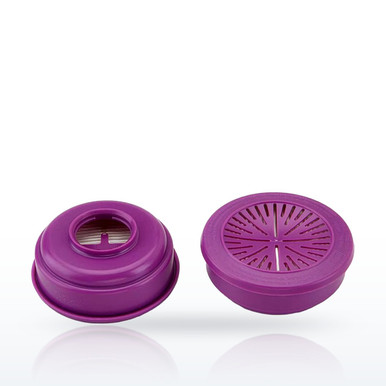
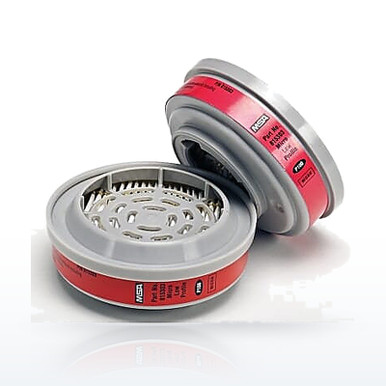
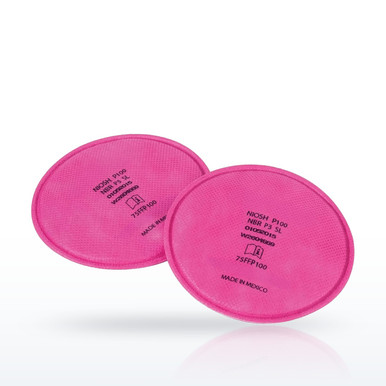
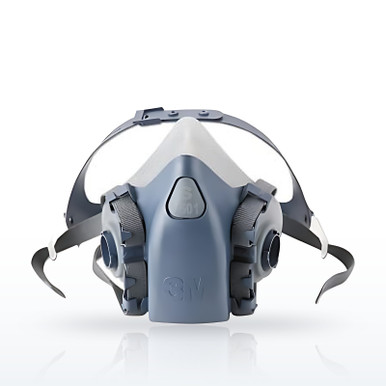
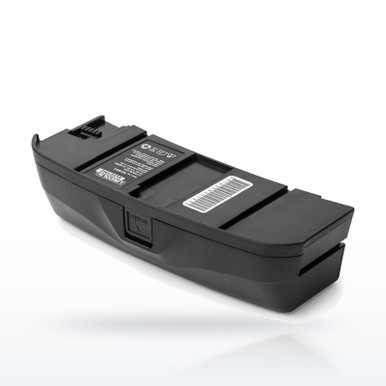
30 items · prices liveNIOSH filter class is as printed on each product’s approval label; welding helmets and PAPR units are listed as labeled by the manufacturer. Contractor Direct orders ship free.
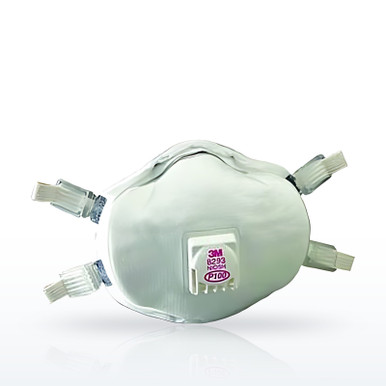
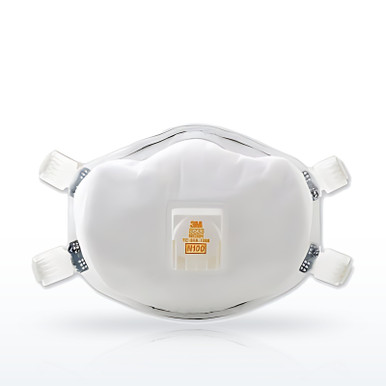
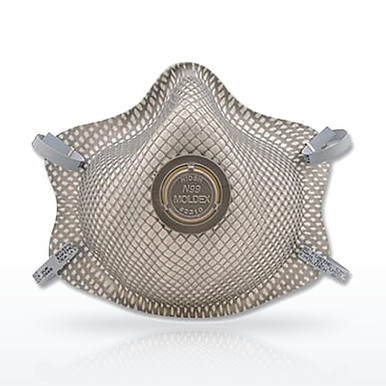





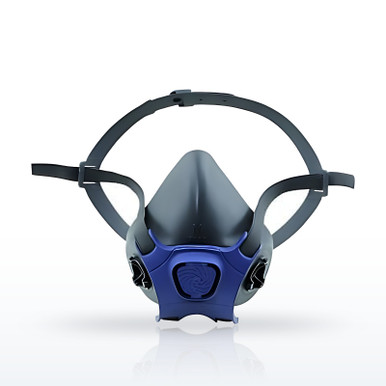

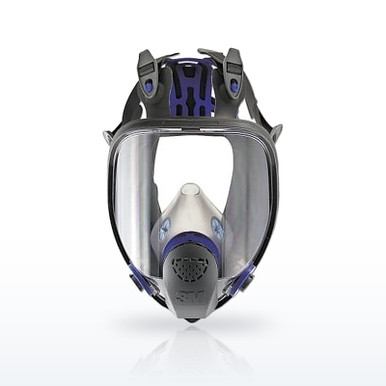
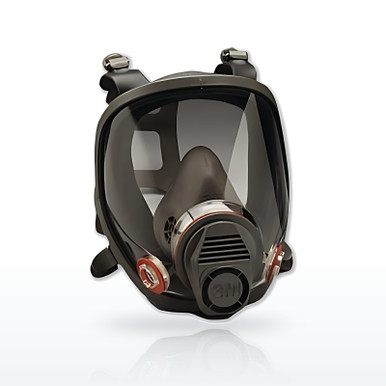
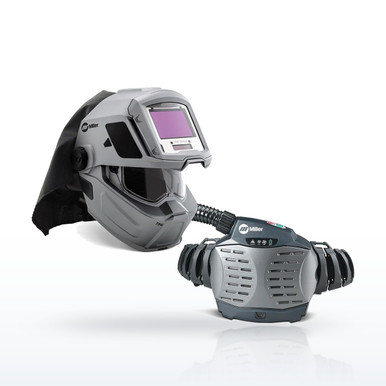

Welding helmets, lenses and leathers are in the welding finder; fume extractors are quoted on request.
Questions people ask
Does OSHA require a respirator for welding?
Not automatically. OSHA requires ventilation in small, low or confined spaces and local exhaust or airline respirators for lead, cadmium, beryllium, mercury and zinc work indoors. A respirator is required whenever measured exposure to a fume component exceeds its limit after ventilation. (1910.252(c); 1910.1000; 1910.1026.)
Is an N95 enough for welding?
For mild steel at modest exposure, an N95 is a NIOSH particulate filter with a protection factor of 10 and is often what the air sampling supports. For stainless, lead or heavy fume, the numbers usually call for a P100, a full facepiece or a PAPR. The air sample decides.
What respirator for welding galvanized steel?
Zinc oxide fume is limited to 5 mg/m3. Indoors the welding rule requires local exhaust hoods or booths for zinc; a particulate respirator covers what the hood misses. In a confined space the confined-space ventilation rules apply.
What respirator for welding stainless steel?
The chromium VI standard applies: limit 5 micrograms per cubic meter. Exposure must be determined, engineering controls used first, and respirators supplied where controls cannot reach the limit. A P100 on a half or full facepiece, or a PAPR helmet, is the usual particulate protection; the facepiece is chosen by the protection factor the measurement requires.
Can I wear a half mask under a welding helmet?
Yes, and low-profile half masks are made for it. It still needs a fit test, a seal check each time and a clean-shaven seal. Where that is a problem, a PAPR welding helmet with a loose-fitting hood or helmet needs neither.
Does a PAPR welding helmet need a fit test?
A loose-fitting PAPR hood or helmet does not; a tight-fitting PAPR facepiece does. (1910.134(f).)
What is the OSHA limit for manganese in welding fume?
A ceiling of 5 mg/m3 that may never be exceeded. NIOSH’s limit is 1 mg/m3 averaged over the shift. (1910.1000 Table Z-1; NIOSH.)
When is supplied air required for welding?
In a confined space where adequate ventilation is impossible, for beryllium work, and for lead, cadmium or mercury indoors where local exhaust is not used. In an atmosphere immediately dangerous to life, a pressure-demand SCBA or combination SAR. (1910.252(c)(4), (c)(7) through (c)(10).)
Standards and ratings on this page are as published in the documents named and by the manufacturers named. The employer’s hazard assessment and written program decide what applies at a given workplace. Verify a rating on the product and its spec sheet before use.