
What is a hazmat suit, and what are the EPA protection levels A to D?
A hazmat suit is chemical protective clothing worn with a respirator during hazardous waste work or an emergency release. The levels come from the OSHA hazardous waste rule, which adopted the EPA scheme. Level A is a totally encapsulating, gas-tight suit over a self-contained breathing apparatus, for the highest skin and breathing hazard. Level B keeps the SCBA but drops to a hooded splash suit, for a severe breathing hazard with a smaller skin hazard. Level C is a hooded splash suit with an air-purifying respirator, used only when the contaminant and its concentration are known and will not harm skin. Level D is a work uniform with no respirator: coveralls, safety boots and eye protection, for a site with no known hazard in the air.
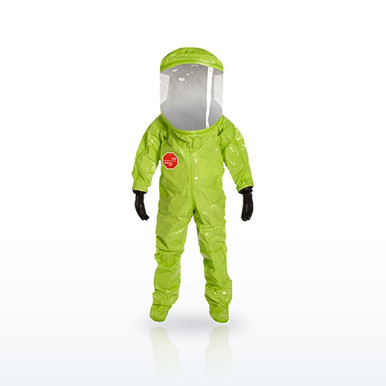 DuPont Tychem 10000 encapsulated Level A suitGas-tight rear entry, expanded back for SCBA, 28 mil fabric.
Why are there four levels instead of one suit? The suit and the respirator are chosen together, and the respirator is the harder decision. Breathing a toxic gas kills faster than getting it on the skin, so the levels are built around the respirator first: supplied air for A and B, an air-purifying respirator for C, none for D. The suit then matches what the skin can be exposed to. Appendix B exists so that every site uses the same four words to describe the same four ensembles, and so a crew arriving from another company knows what Level B means without a briefing.
What does each level require?
Appendix B lists the equipment for each level in Part A. Items marked optional are "as applicable" to the site.
When is each level used?
Level A is for the highest skin, eye and breathing hazard: a substance that is known or suspected to harm skin, a high chance of splash, immersion or unexpected vapor, or work in a confined, poorly ventilated space where that substance may be present. The standard separately requires a totally encapsulating suit wherever skin absorption of a substance could cause death or immediate serious harm.
1910.120 Appendix B, Part B, I; 1910.120(g)(3)(iv).Level B is for a severe breathing hazard with a smaller skin hazard: the substance is identified and needs supplied air, the air has less than 19.5 percent oxygen, or a direct-reading instrument shows vapors that are not expected to harm the skin or be absorbed through it. Level B is the minimum level for an initial site entry until the hazards have been measured.
1910.120 Appendix B, Part B, II; 1910.120(c)(5)(iii) and (iv) on initial entry.Level C is for a known contaminant at a measured concentration, where an air-purifying respirator with the right cartridge can remove it and the substance will not harm exposed skin. All the conditions for using an air-purifying respirator under 1910.134 have to be met, which means the air has enough oxygen and the concentration is within the respirator’s rating.
1910.120 Appendix B, Part B, III; 1910.134(d), respirator selection.Level D is a work uniform, not a protective ensemble. It is used only where the air contains no known hazard and the work rules out splashes, immersion or an unexpected inhalation of or contact with a hazardous chemical. Many Level D coveralls are the same disposable garments worn for dirty work anywhere else.
1910.120 Appendix B, Part B, IV.Who decides the level?
The employer, through the site safety and health plan. The standard requires PPE to be selected from an evaluation of the equipment’s performance against the hazards identified at the site, and the written PPE program has to cover selection, limitations, mission duration, decontamination, training, donning and doffing, inspection and heat stress. Appendix B itself says the levels are a starting point; the actual ensemble may combine items from different levels as the hazards require.
1910.120(g)(3)(i) and (ii); 1910.120(g)(5)(i) through (x); Appendix B introduction.A totally encapsulating suit used for Level A has its own rules: it must hold positive pressure inside and must not let more than 0.5 percent of a test gas leak in during the test in Appendix A. The suit manufacturer runs that test; DuPont pressure tests each Tychem 10000 suit to ASTM F1052.
1910.120(g)(4)(i) through (iii); 1910.120 Appendix A; DuPont Tychem 10000 TK554T product data.What are hazmat suits made of?
- Tychem 10000: multi-layer barrier films laminated to both sides of a polyester substrate, 28 mil thick. DuPont reports at least 30 minutes of barrier against 322 challenge chemicals with no observed breakthrough. The encapsulated Level A suits are made of it.
- Tychem 5000: a multi-layer barrier film on a polypropylene base, 18 mil, for heavy liquid splash in hazmat response and waste cleanup. Taped seams.
- Tychem 4000: Saranex 23-P film laminated to Tyvek, 12 mil. At least 30 minutes of protection against more than 124 chemicals. Used for PCB cleanup, waste handling and remediation.
- Tychem 2000: Tyvek coated with 1.25 mil of polyethylene, 10 mil total. At least 30 minutes against more than 40 chemicals. Light splash only.
- Tyvek 400: flash-spun high-density polyethylene with no coating, a barrier to particles down to 1.0 micron and light liquid splash. Not a chemical barrier; it is the Level D coverall, and the disposable layer worn over a Level A or B suit.
- None of these fabrics is flame resistant, except the SFR styles. They ignite and burn, and are not for use in flammable atmospheres.
What else goes with the suit?
The respirator is chosen under the respiratory protection standard, with a written program, medical evaluation and fit testing. Hazardous waste work and emergency response also require training before the first day on site, and a medical surveillance program for anyone who wears a respirator 30 days or more a year. The suit alone does not make a Level A, B or C entry legal.
1910.120(g)(3)(iii) and 1910.134; 1910.120(e)(3)(i), 40 hours of initial training for general site workers; 1910.120(f)(2)(ii), medical surveillance for respirator wearers of 30 days or more a year.Chemical protective suits and coveralls
19 items · prices liveFabric and the manufacturer’s hazard statement are as published by DuPont for each garment. The protection level of an ensemble is set by the employer’s site plan, not by any single garment. Seams, hood, socks and sizes are on each product page. Free shipping on orders over $199.
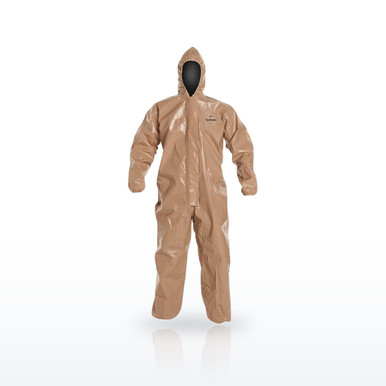
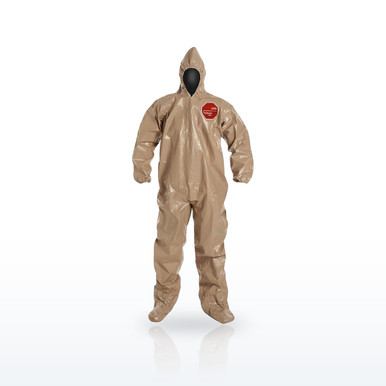
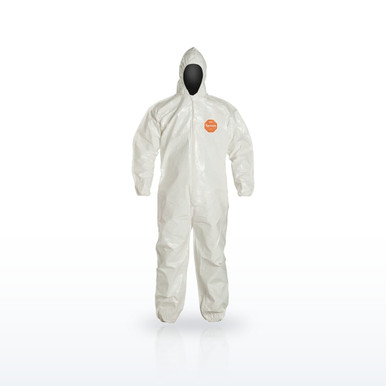
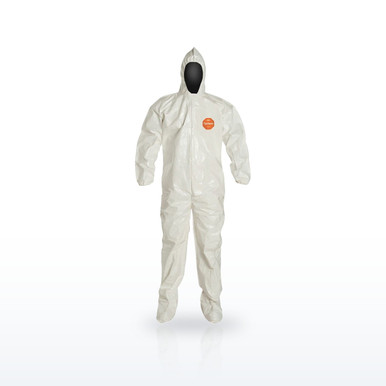
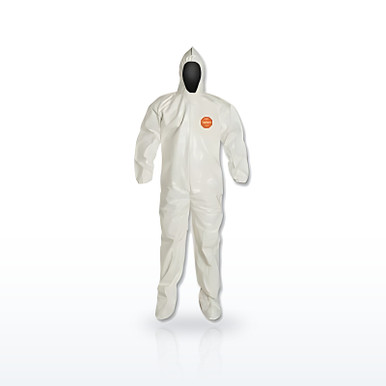
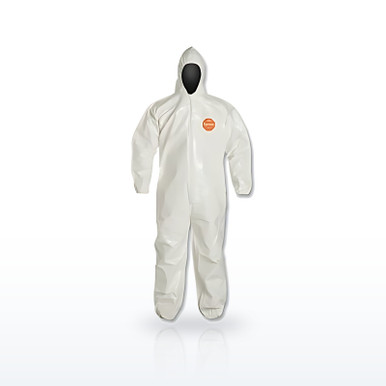
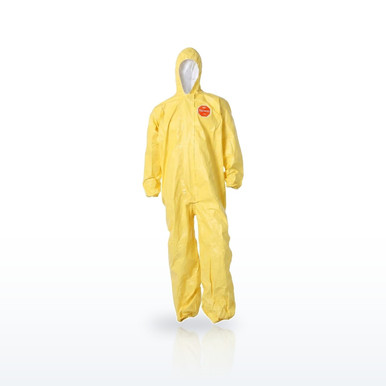
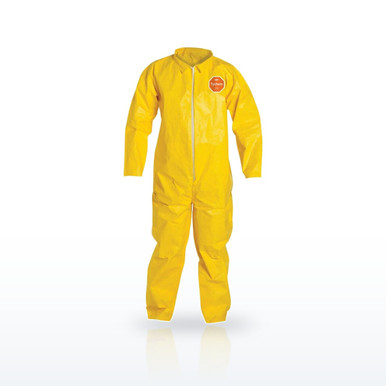
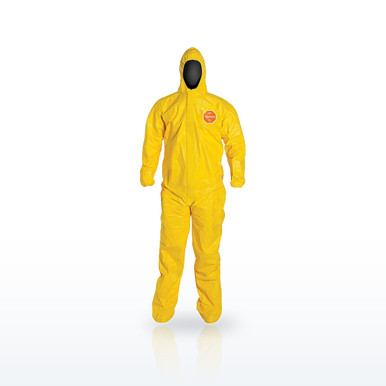
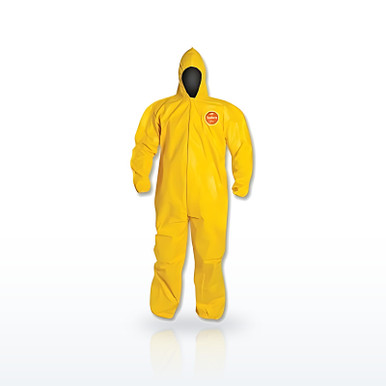
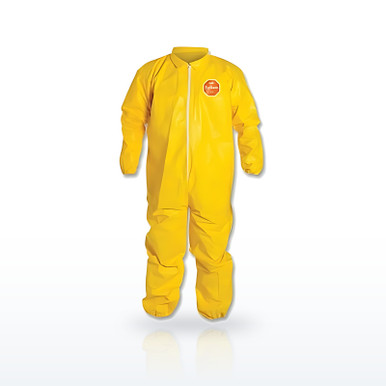
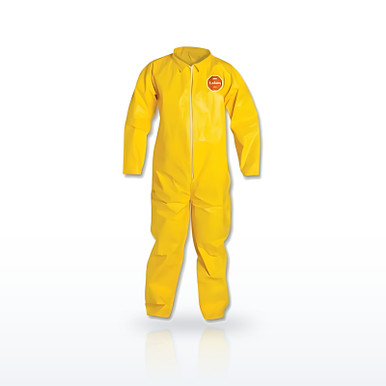
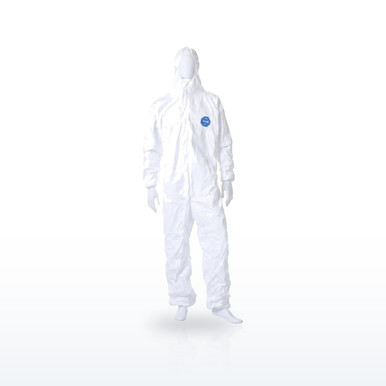
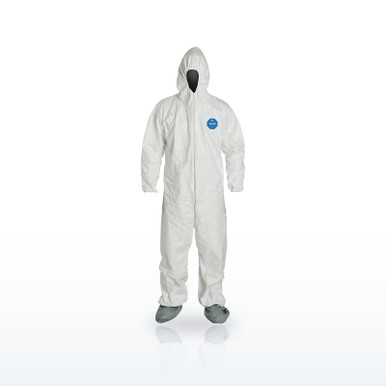
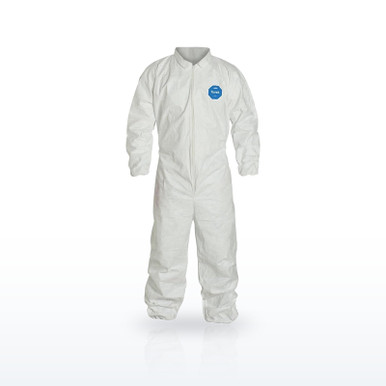
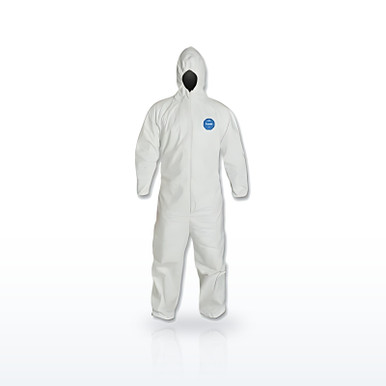
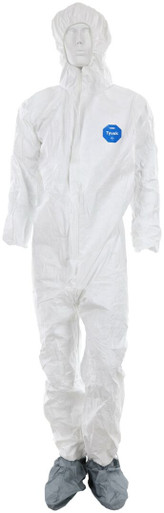
Chemical-resistant gloves and boots to complete an ensemble are in the chemical glove finder and the footwear category. SCBA is quoted on request: call (925) 215-7337.
Questions people ask
What is a hazmat suit?
Chemical protective clothing worn with a respirator for hazardous waste operations or an emergency release. The term covers everything from a gas-tight encapsulating suit to a hooded splash coverall; the level tells you which.
What is the difference between Level A and Level B?
Both use a positive-pressure SCBA or supplied-air respirator. Level A adds a totally encapsulating, gas-tight suit for a skin hazard; Level B uses a hooded splash suit because the skin hazard is lower. (1910.120 Appendix B, Part A and B.)
What is the difference between Level B and Level C?
The respirator. Level B needs supplied air; Level C uses an air-purifying respirator, which is allowed only when the contaminant and its concentration are known, oxygen is adequate and the cartridge removes it. The clothing can be the same hooded splash suit.
Is a Tyvek suit a hazmat suit?
Tyvek 400 is a particle and light-splash barrier, not a chemical barrier. It is the coverall for Level D and the disposable layer worn over a Level A or B suit. Chemical splash protection comes from Tychem fabrics.
Who sets the protection level on a site?
The employer, in the site safety and health plan, from an evaluation of the hazards and the equipment’s performance. (1910.120(g)(3).)
Does a Level A suit need to be tested?
Yes. It must hold positive pressure and leak no more than 0.5 percent inward under the Appendix A test. (1910.120(g)(4).)
Can a hazmat suit be worn near fire or sparks?
Not unless it is an SFR style. DuPont states that Tychem and Tyvek garments other than the SFR versions ignite and continue to burn, and are not for flammable atmospheres.
Does Level D need a respirator?
No. Level D is coveralls, safety footwear and eye protection for a site with no known airborne hazard. If a respirator is needed, the site is not Level D.
Standards and ratings on this page are as published in the documents named and by the manufacturers named. The employer’s hazard assessment and written program decide what applies at a given workplace. Verify a rating on the product and its spec sheet before use.