
Spill pallets and drum containment: sizing to the 10 percent rule
The rule is one sentence: the containment under your containers must hold 10 percent of the total volume of all of them, or the full volume of the largest one, whichever is greater. For drums that almost always means the largest drum wins. Four 55-gallon drums total 220 gallons; 10 percent is 22; the largest drum is 55; so the pallet needs a 55-gallon sump. The 10 percent figure only takes over once you have more than ten drums of one size on the same containment: twenty 55-gallon drums total 1,100, 10 percent is 110, and that beats 55. A spill pallet is sold by drum count and sump capacity, and the sump capacity is the number you check against the rule.
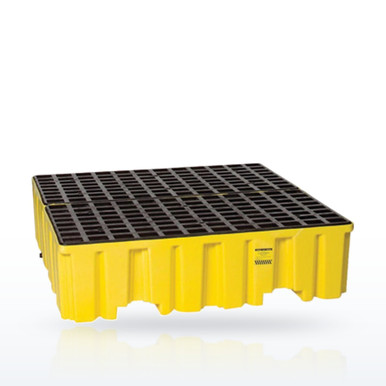
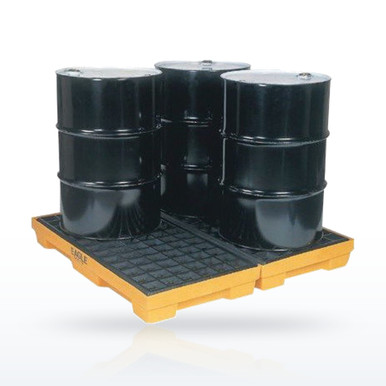
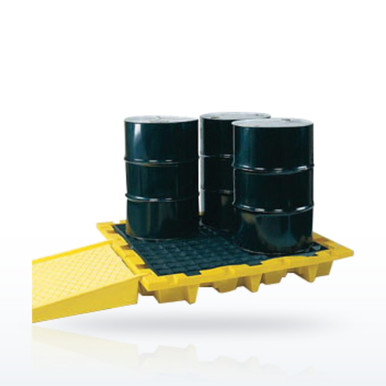 EAGLE 1646 4-drum nestable spill pallet66-gallon sump; holds a full 55-gallon drum
Why is it the largest container and not just 10 percent? Because the thing that fails is one container, not a tenth of all of them. A forklift punctures one drum and the whole drum drains. The 10 percent half of the rule covers the other failure: many containers weeping a little at once, or a fire-sprinkler event over a big storage area. For a pallet with a handful of drums the single-drum failure is the bigger number; for a warehouse floor with a hundred drums the 10 percent is. The rule says take whichever is larger so both failures are covered.
How does the arithmetic work?
Total volume times 10 percent, compared with the largest container. Pick the bigger number. Then find a pallet whose sump capacity is at least that.
What else does 264.175(b) require of a spill pallet?
- An impervious base: the sump must be free of cracks or gaps and able to hold the leak and any rain until it is found and removed. Polyethylene pallets are molded as one piece for this reason; check the manufacturer’s chemical compatibility for what you store.
- Drums kept out of the liquid: the base must be sloped to drain away from the containers, or the containers elevated. The removable grate on a spill pallet is what meets this; keep it in place.
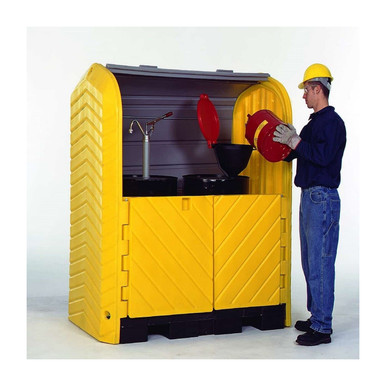
- Rain kept out, or capacity for it: outdoors, use a covered pallet (hard cover or soft cover), or add the rain volume to the sump capacity you buy.
- Empty the sump: spilled liquid and rain must be removed in time to prevent overflow. A drain plug on the sump makes this simpler; pump or drain it and manage what comes out as the waste it is.
- Inspect: the rule’s base, drainage and capacity requirements assume someone looks. Put the pallet on the weekly walk.
What about drums of oil under the SPCC rule?
A facility with more than 1,320 gallons of oil above ground, in containers of 55 gallons and up, is under the EPA’s oil rule, and its drums and totes count as mobile or portable containers. For those, the sizing is the largest single container or compartment plus freeboard for rain, not the 10 percent test. The answer for a pallet of 55-gallon drums comes out the same, 55 gallons, with a cover or extra capacity if the pallet is outdoors. A 4-drum pallet at 66 gallons meets it indoors.
40 CFR 112.1(d)(2)(ii); 112.8(c)(11): secondary means of containment, such as a dike or catchment basin, sufficient to contain the capacity of the largest single compartment or container with sufficient freeboard for precipitation.How do you pick the pallet once you have the number?
- Sump capacity first: at least the number from the arithmetic. More is fine; the rule sets a floor.
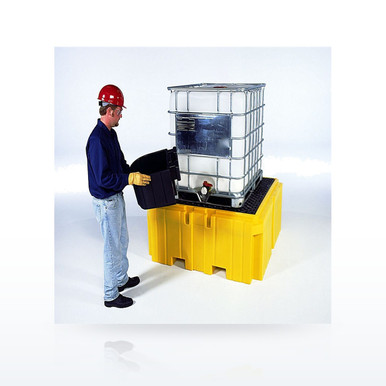
- Drum count second: pallets are sold for 1, 2, 4 and 8 drums, and for 1 or 2 IBC totes. Do not put more drums on a pallet than it is rated for; the sump figure assumes the rated count.
- Load rating: a full 55-gallon drum of oil weighs about 450 pounds and of some chemicals over 600. The manufacturer publishes a uniformly distributed load; forklift use needs a pallet built for it.
- Drain or no drain: a drain plug makes emptying easy; no drain removes a leak point. Either meets the rule.
- Low profile or standard height: low-profile pallets suit hand trucks and drum dollies; standard pallets are forklift height. Ramps are sold for both.
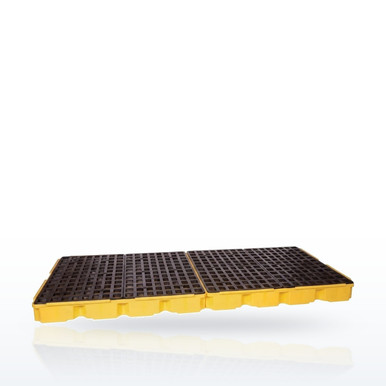
- Modular platforms link together to cover a floor; the sump capacity you count is the capacity of the linked set as the manufacturer rates it, not one section.
Spill pallets and drum containment by sump capacity
14 items · prices liveSump capacity and drum count are as published by the manufacturer for each pallet; see the product page and spec sheet. Compare the capacity to the number from the arithmetic above. Free shipping on orders over $199.
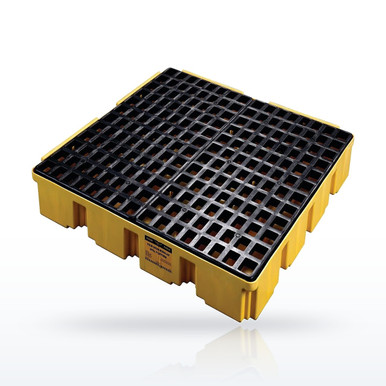
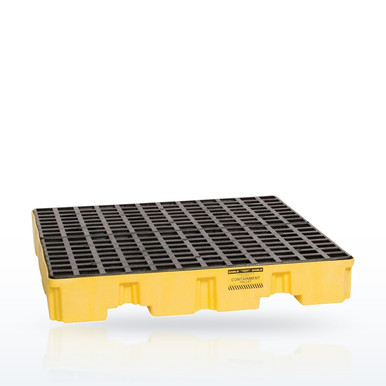
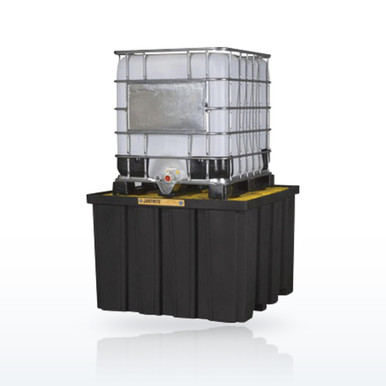
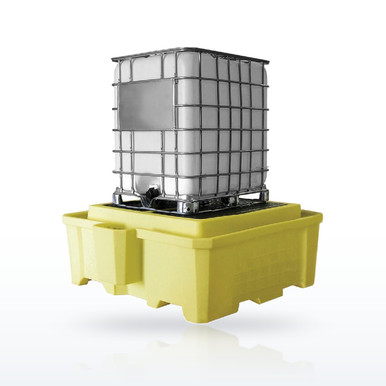
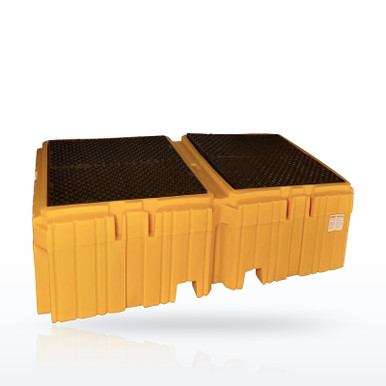
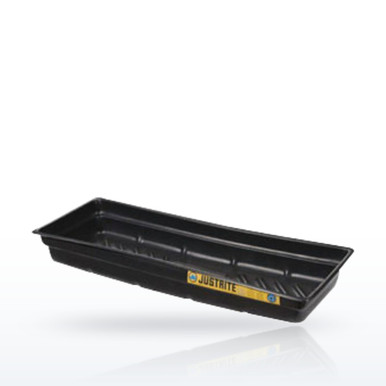
Berms for tanks and equipment and drain covers are in the spill control finder. Pallets for drum counts not shown are quoted on request: call (925) 215-7337.
Questions people ask
What is the 10 percent rule for spill pallets?
Containment must hold 10 percent of the total volume of all the containers on it, or the full volume of the largest container, whichever is greater. (40 CFR 264.175(b)(3).)
How much containment do I need for four 55-gallon drums?
55 gallons: 10 percent of 220 is 22, and the largest drum is 55, so 55 wins. A 4-drum pallet with a 60 to 66 gallon sump meets it.
How much containment do I need for one IBC tote?
275 gallons for a standard tote, because the largest container is the whole tote. IBC pallets are sold at 365 and 385 gallons and up.
When does the 10 percent beat the largest container?
When there are more than ten containers of the same size on one containment. Eleven 55-gallon drums total 605; 10 percent is 60.5, which is more than 55.
Do drums of solids count?
No. The rule says containers that do not contain free liquids need not be considered in the capacity calculation. (40 CFR 264.175(b)(3).)
Does a spill pallet have to be covered outdoors?
The rule requires run-on to be prevented or the extra capacity provided, and the oil rule requires freeboard for rain. A covered pallet is the usual way to meet that outdoors.
What is the 110 percent rule?
A figure from some state and local rules and permits. The federal container rule says 10 percent or the largest container; the federal oil rule says the largest container plus freeboard. Where a stricter local figure applies, it governs.
Does the 10 percent rule apply to my shop?
It is written for hazardous waste container storage at permitted facilities (40 CFR 264.175). Most states, inspectors and manufacturers apply the same arithmetic to any drum storage, and stormwater permits and fire codes often require containment too, so it is the safe design number anywhere.
Standards and ratings on this page are as published in the documents named and by the manufacturers named. The employer’s hazard assessment and written program decide what applies at a given workplace. Verify a rating on the product and its spec sheet before use.