
What is secondary containment, and when does the EPA require it?
Secondary containment is a second barrier around the first one. The drum, tank or tote is the primary container; the pallet sump, berm, dike or tray under it is the secondary container, there to catch what leaks when the first one fails. The EPA requires it in two places. Hazardous waste container storage areas at permitted facilities need a containment system that holds 10 percent of the total volume of the containers or the volume of the largest container, whichever is greater. Facilities with more than 1,320 gallons of oil above ground need, under their SPCC plan, containment for the entire capacity of the largest single container plus room for rain. Most state and local rules borrow one of those two figures.
 UltraTech Ultra-Spill Pallet P4 Hi-Load, 4 drums66-gallon sump holds a full 55-gallon drum
Why does the rule assume the container will fail? Because enough of them do. A forklift tine through a drum, a bung left open, a tote valve bumped, a tank seam that lets go on a cold morning. The container rules are written on the assumption that the first barrier is not perfect, and they ask for a second barrier big enough that one failure stays on the property. The arithmetic is simple on purpose: a number anyone can check by looking at the drums and reading the sump capacity on the pallet.
What does 40 CFR 264.175 require for hazardous waste containers?
The container storage rule for permitted treatment, storage and disposal facilities. It is also the figure manufacturers and inspectors use to size drum containment everywhere else.
What does the SPCC rule require for oil?
The oil rule applies to a non-transportation facility that stores more than 1,320 gallons of oil above ground in containers of 55 gallons and up, or more than 42,000 gallons underground, and that could reasonably be expected to discharge oil to navigable waters or shorelines. Oil means petroleum and also animal fats, vegetable oils and synthetic oils. Such a facility needs a written spill prevention, control and countermeasure plan, and the plan must provide containment or diversionary structures to keep a discharge from reaching water. The listed methods for an onshore facility are dikes, berms or retaining walls, curbing or drip pans, sumps and collection systems, drainage systems, weirs and booms, diversion and retention ponds, and sorbent materials.
40 CFR 112.1(b) and (d)(2); 112.2 (definition of oil); 112.3 (plan requirement); 112.7(c) and (c)(1).Two sizing paragraphs apply. Bulk storage containers, which are tanks and the like, need secondary containment for the entire capacity of the largest single container with sufficient freeboard for precipitation, in a diked area sufficiently impervious to contain the oil. Mobile and portable containers, which are drums, totes and skid tanks, must be positioned to prevent a discharge and furnished with containment such as a dike or catchment basin sufficient for the largest single compartment or container, again with freeboard for rain. Mobile refuelers and tank trucks are excepted from both sizing paragraphs but still fall under the general containment duty.
40 CFR 112.8(c)(2); 112.8(c)(11); 112.7(c).Containment that is open to the sky collects rain, so the rule adds how to get rid of it: a manual open-and-closed valve, never a flapper valve, opened only after the accumulation has been inspected and found clean, with a record of each drainage. The EPA has said it considers a 25-year, 24-hour storm an appropriate design figure for freeboard at most facilities, though the rule itself leaves the number to the plan.
40 CFR 112.8(b)(1) and (b)(2); EPA SPCC guidance on sufficient freeboard.How do the two rules compare in practice?
- Four 55-gallon drums of hazardous waste: 10 percent of 220 is 22; the largest drum is 55; containment is 55 gallons. A 4-drum pallet with a 66-gallon sump meets it.
- Four 55-gallon drums of oil at an SPCC facility: the largest container is 55 gallons; add freeboard if outdoors. The same 66-gallon pallet meets it indoors; outdoors, a covered pallet or a berm with room for rain.
- Twenty drums of hazardous waste: 10 percent of 1,100 is 110, which beats 55, so 110 gallons. Five 4-drum pallets at 66 gallons each give 330 gallons spread across them, more than enough, as long as each pallet holds its own largest drum.
- One 275-gallon IBC tote, either rule: 275 gallons, since the tote is the largest container. An IBC pallet rated 365 or 385 gallons meets it.
- Two 275-gallon totes side by side: hazardous waste, 10 percent of 550 is 55 and the largest tote is 275, so 275; oil, 275 plus freeboard. A twin-IBC pallet at 535 gallons meets both.
- A 500-gallon fuel tank on a stand: SPCC, 500 gallons plus freeboard. A berm or a dike, not a pallet.
Where else does secondary containment come up?
OSHA, on hazardous waste sites, requires a spill containment program able to contain and isolate the entire volume of a hazardous substance being transferred wherever major spills may occur. Stormwater permits, for construction sites of an acre or more and industrial facilities in the listed categories, require a pollution prevention plan that describes how fuel and chemicals are kept out of runoff, and containment under tanks and drums is the standard measure. State hazardous waste programs, fire codes and local water agencies add their own containment rules, some with larger figures; where they do, the stricter rule governs. The federal numbers above are the floor.
29 CFR 1910.120(j)(1)(viii); 40 CFR 122.26(b)(14) and (b)(15); EPA 2021 Multi-Sector General Permit and 2022 Construction General Permit, SWPPP requirements; state and local codes as adopted.Spill pallets, trays, IBC pallets and berms by sump capacity
23 items · prices liveSump capacity and drum count are as published by the manufacturer for each item; see the product page and spec sheet. Compare the capacity to the largest container you will store. Free shipping on orders over $199.
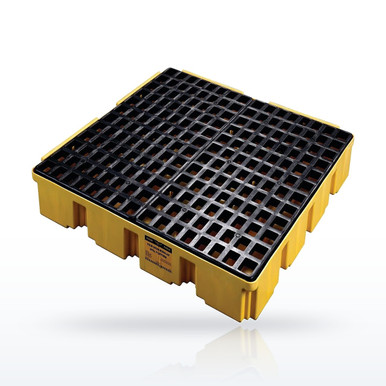
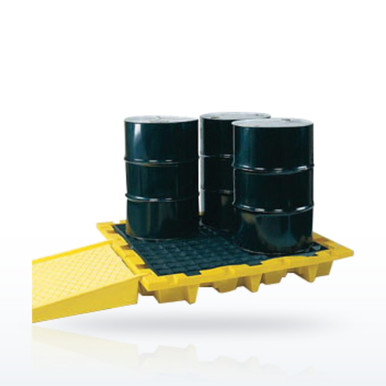
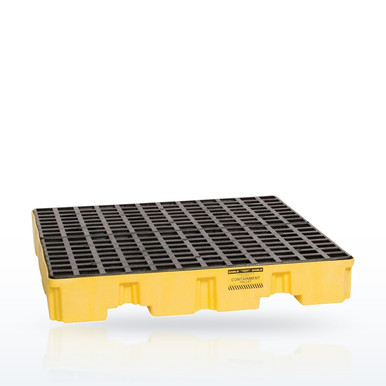
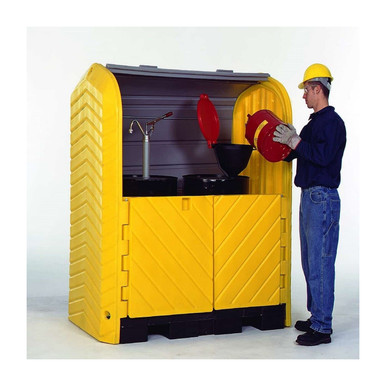
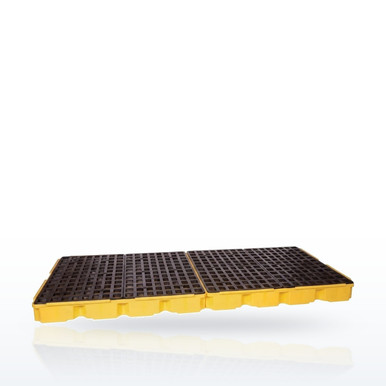
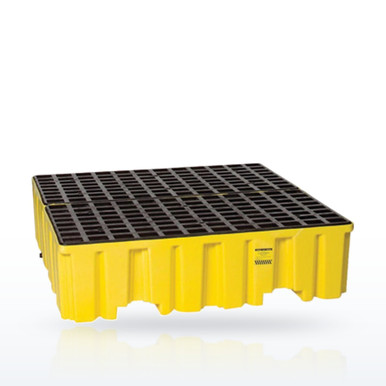
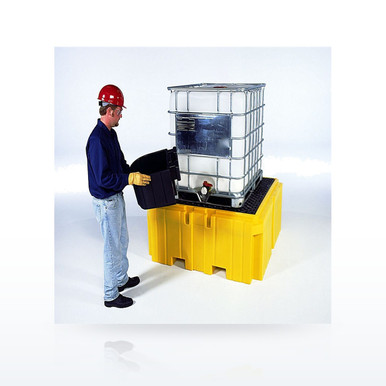
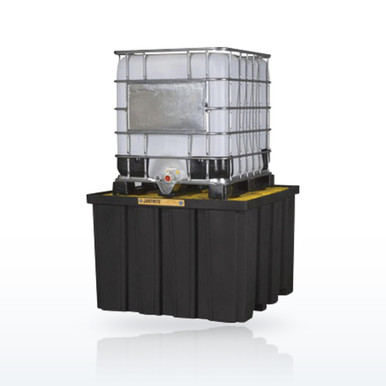
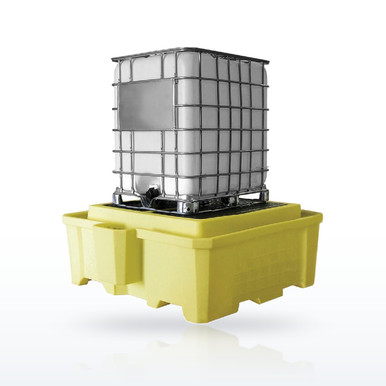
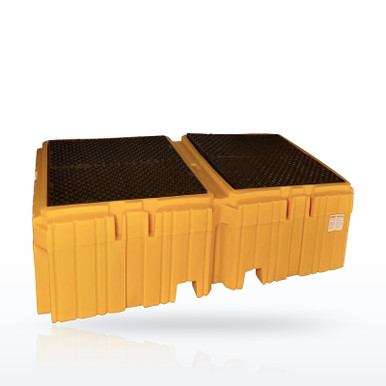
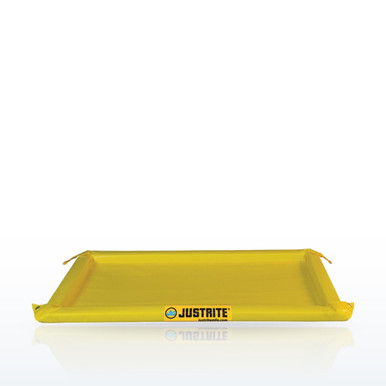
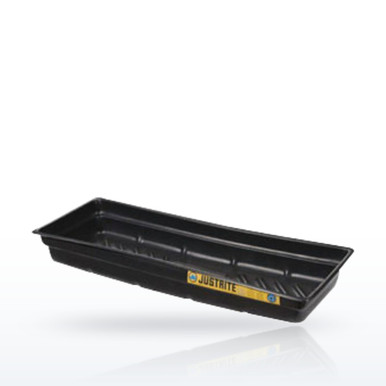
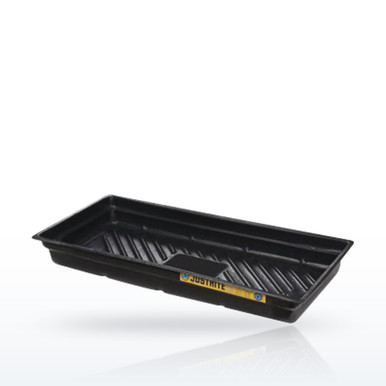
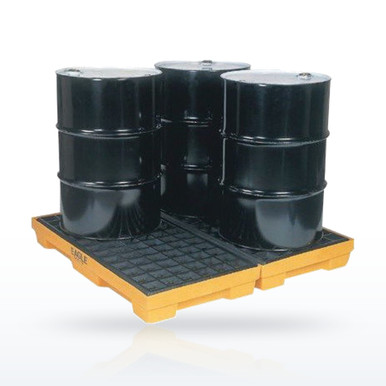
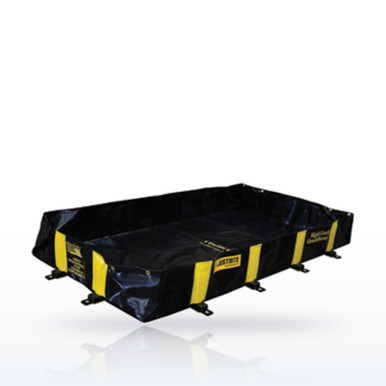
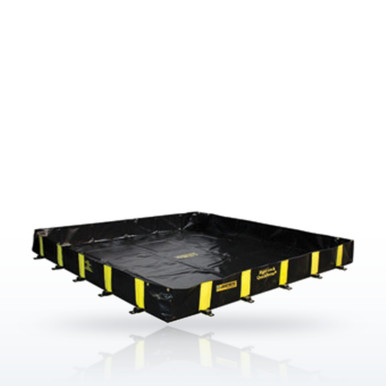
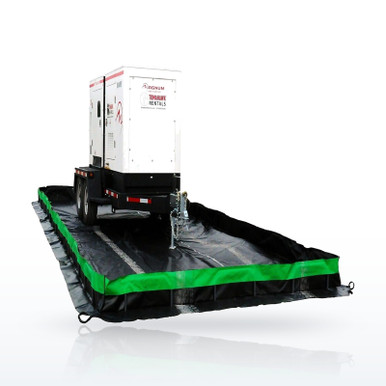
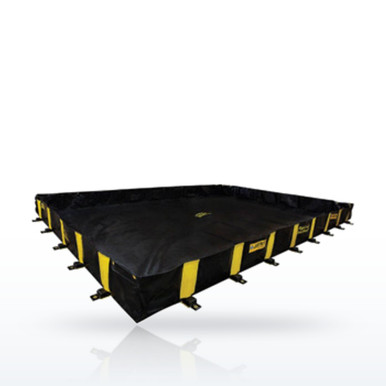


Larger berms, drain covers and sorbents are in the spill control finder. Drum counts not listed are quoted on request: call (925) 215-7337.
Questions people ask
What is the difference between primary and secondary containment?
Primary containment is the drum, tank or tote the liquid is in. Secondary containment is the sump, pallet, berm or dike under or around it that catches the liquid if the primary container leaks.
What is the 10 percent rule for secondary containment?
The hazardous waste container rule: the containment must hold 10 percent of the total volume of all the containers or the volume of the largest container, whichever is greater. (40 CFR 264.175(b)(3).)
What is the 110 percent rule?
A figure that appears in some state rules, permits and fire-code checklists, not in the two federal rules above, which say 10 percent or the largest container (hazardous waste) and the largest container plus freeboard for rain (oil). Where a state or local rule asks for more, it governs.
Does the EPA require secondary containment for drums?
For hazardous waste containers at a permitted storage facility, yes (40 CFR 264.175). For oil drums at a facility over the 1,320-gallon SPCC threshold, yes (40 CFR 112.8(c)(11)). For other drums, federal rules do not, but state rules, stormwater permits and fire codes often do.
Does secondary containment have to be covered?
No federal rule requires a cover. The hazardous waste rule requires run-on to be kept out or sized for, and the oil rule requires freeboard for rain and a manual valve to drain it. A cover is one way to meet those.
Does a spill pallet count as secondary containment?
Yes, when its sump capacity meets the rule for the drums on it and it is kept empty. The grate keeps the drums above what collects, which the hazardous waste rule requires if the base is not sloped to drain.
How big does an IBC tote spill pallet need to be?
At least the capacity of the tote, 275 gallons for the common size, under either rule, plus freeboard outdoors under the oil rule.
Who needs an SPCC plan?
A non-transportation facility with more than 1,320 gallons of oil above ground (counting containers of 55 gallons and up) or more than 42,000 gallons underground, that could reasonably be expected to discharge to navigable waters. (40 CFR 112.1.)
Standards and ratings on this page are as published in the documents named and by the manufacturers named. The employer’s hazard assessment and written program decide what applies at a given workplace. Verify a rating on the product and its spec sheet before use.