
What toxic fumes come from welding stainless steel, and what protects you?
Stainless steel is iron alloyed with chromium and usually nickel. The arc turns some of that chromium into hexavalent chromium, Cr(VI), a lung carcinogen with its own OSHA standard and a permissible limit of 5 micrograms per cubic meter. The fume also carries nickel, manganese and iron oxide particles, and the arc makes ozone and nitrogen dioxide in the air around it. What protects you, in the order OSHA requires: keep your head out of the plume, local exhaust at the arc, and where the air still exceeds the limits, a NIOSH-certified respirator under a written 1910.134 program. A half mask with N95 or P100 filters has an assigned protection factor of 10; a loose-fitting PAPR welding helmet 25, or 1,000 where the maker has test data to support it.
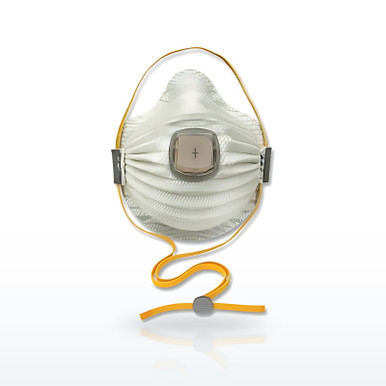
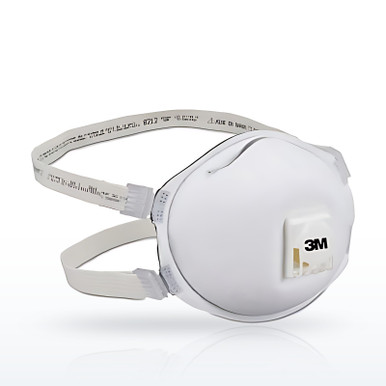 3M N95 welding and metal pouring respiratorsNIOSH N95 with nuisance ozone relief, as published by 3M
Why does stainless get its own set of rules? Mild steel fume is mostly iron oxide and manganese; it is not harmless, but it has no cancer standard behind it. Stainless adds chromium at 10 to 30 percent of the alloy, and welding oxidizes part of it to the hexavalent form, which is the form that causes lung cancer, nasal damage and skin ulcers. OSHA wrote 1910.1026 in 2006 for exactly this exposure, with a limit 200 times tighter than the Table Z-1 limit for chromium metal, and a list of duties that start as soon as a welder’s air reaches half the limit. Nickel in the fume is a second carcinogen with its own Table Z-1 limit.
What is in stainless steel welding fume, and what are the limits?
OSHA permissible exposure limits, 8-hour time-weighted averages unless marked as a ceiling.
What does the hexavalent chromium standard require of a stainless welding shop?
- Measure. The employer determines each exposed welder’s 8-hour exposure by air sampling or objective data. Below the action level, monitoring can end; at or above it, repeat every 6 months; above the PEL, every 3 months. Results go to the employee in writing within 15 work days.
- Control at the source. Engineering and work-practice controls, local exhaust and positioning, come first and must bring exposure to or below the PEL where feasible. Rotating welders to spread the dose is prohibited.
- Respirators where controls fall short. Required while controls are installed, where they are infeasible or not enough, for short jobs under 30 days a year where the employer chooses not to install controls, and in emergencies. A written 1910.134 program is mandatory when they are required.
- Clothing and hygiene. Where skin or eye contact is likely, protective clothing at no cost, removed at the end of the shift, bagged and labeled for laundering, never cleaned by blowing or shaking. Washing facilities, and no eating, drinking or smoking where contact occurs.
- Housekeeping. Surfaces kept free of accumulation, HEPA vacuuming rather than dry sweeping, and no compressed air for cleanup unless captured by ventilation.
- Medical surveillance. Offered to anyone at or above the action level for 30 or more days a year, within 30 days of assignment and annually after, with a skin and respiratory exam.
- A regulated area wherever exposure exceeds the PEL, marked and limited to authorized people.
Which respirator meets the limit?
Welding fume is a particulate, so the respirator is a particulate filter or a supplied-air unit. OSHA accepts any NIOSH-certified particulate filter under 42 CFR 84 for particulates: N95, N99, N100, R95, P95, P100 all qualify for fume, which is not an oil aerosol. What decides between them is the assigned protection factor of the respirator the filter sits in, and the concentration measured outside the mask. A half mask, disposable or elastomeric, carries an APF of 10: it is adequate up to 10 times the PEL, 50 micrograms per cubic meter of Cr(VI). A full facepiece is 50. A powered air-purifying respirator with a loose-fitting hood or welding helmet is 25, and 1,000 only where the employer has the manufacturer’s test evidence; without it, the helmet is treated as a loose-fitting facepiece at 25. A tight-fitting PAPR full facepiece is 1,000.
29 CFR 1910.134(d)(3)(iv)(B) particulate filters certified under 42 CFR 84; 1910.134(d)(3)(i)(A) Table 1, Assigned Protection Factors, with footnote 4 on helmets and hoods; 1910.134(d)(3)(i)(B) maximum use concentration; 1910.1026(c).How that plays out by respirator class: a disposable or elastomeric half mask with N95 or P100 filters is the APF 10 class, used where sampling shows exposure under 10 times the PEL and the wearer passes a fit test; an elastomeric mask differs from a disposable only in that the facepiece is reused and the filters change. A PAPR welding helmet is the loose-fitting class: it needs no fit test, works with a beard, and carries its own shade filter, which is why the fume rules move many stainless shops there. Every tight-fitting mask needs a fit test and a clean-shaven seal. In a confined space where ventilation cannot be provided, the welding standard requires an airline respirator.
29 CFR 1910.134(f) fit testing and (g)(1)(i)(A) facial hair; Table 1 footnote 4; 1910.252(c)(4)(ii); manufacturer product data for the units listed below.What does the welding standard itself say about stainless?
Two paragraphs. Cutting stainless with oxygen and flux or iron powder, or with gas-shielded arc, must be done with mechanical ventilation adequate to remove the fume. And on fluorine fluxes, the standard notes that local exhaust or airline respirators have proved desirable for all production welding on stainless steels unless air samples show fluorides below the limit. The construction standard adds that inert-gas metal-arc welding on stainless in an enclosed space requires local exhaust or airline respirators because of nitrogen dioxide, and that the general ventilation rate, 2,000 cubic feet per minute per welder, applies in small or low-ceiling spaces for any metal.
29 CFR 1910.252(c)(12) cutting of stainless steels; (c)(5)(ii) fluorine compounds; (c)(2)(i) and (ii) ventilation; 1926.353(d)(1)(iv) and (c)(2).What reduces the fume before it reaches the mask?
- Keep the head out of the plume: position the work so the fume rises away from the face, and stay upwind outdoors.
- Local exhaust at the arc: a fume extraction gun or a movable hood within a few inches of the weld; OSHA’s hood table starts at 150 cubic feet per minute at 4 to 6 inches from the arc.
- Clean the base metal of coatings and solvent residue; chlorinated solvent vapor near an arc makes phosgene.
- Choose the process with that in mind: flux-cored makes the most fume, then stick, then MIG, then TIG, in OSHA’s order; the gas-shielded processes make less particulate and more ozone.
- Do not weld stainless in a confined space without ventilation, and never use oxygen for ventilation.
Welding respirators, filters and PAPR helmets
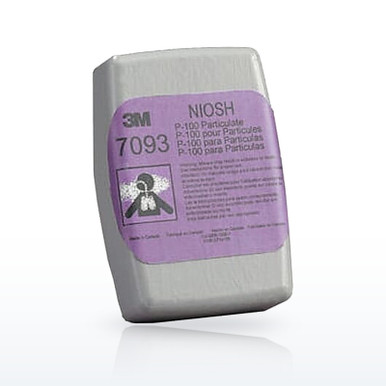
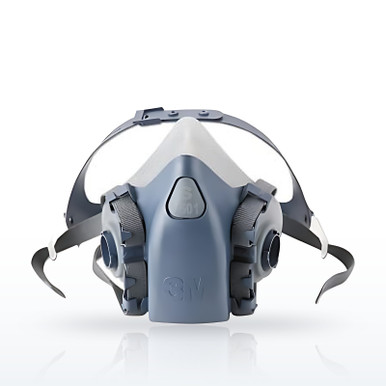
25 items · prices liveFilter class and NIOSH approval are as published by the manufacturer on each product page; each item’s own class is shown. The assigned protection factor comes from the respirator type under 1910.134 Table 1, not from the filter. Contractor Direct orders ship free.
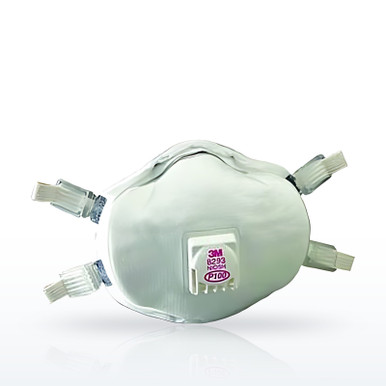
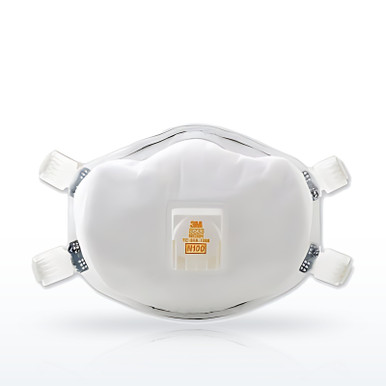
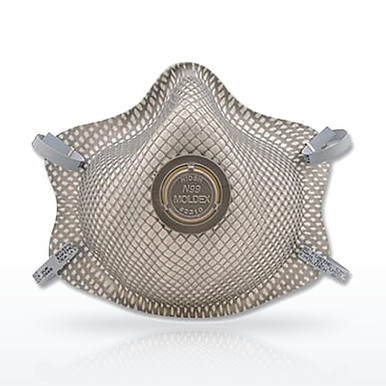



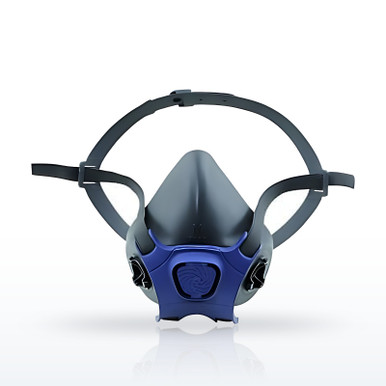

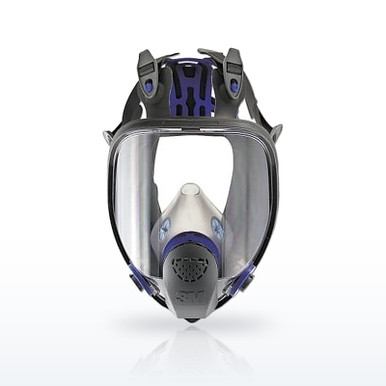
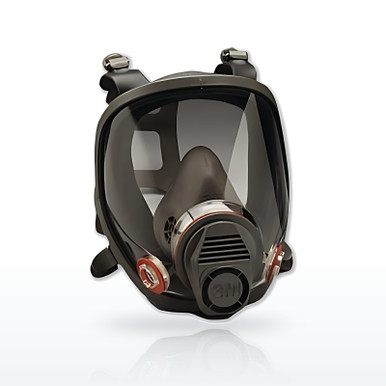

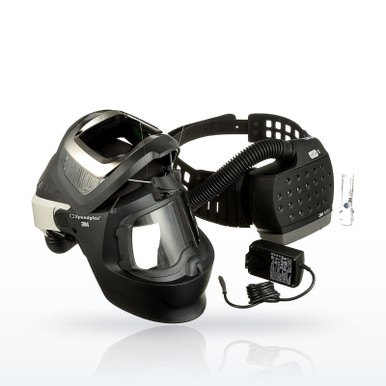
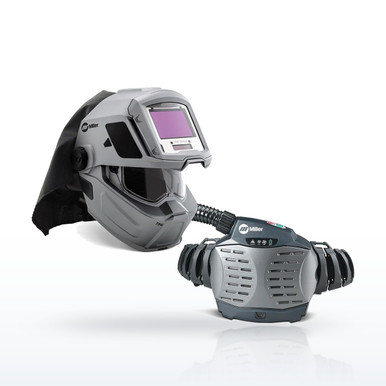
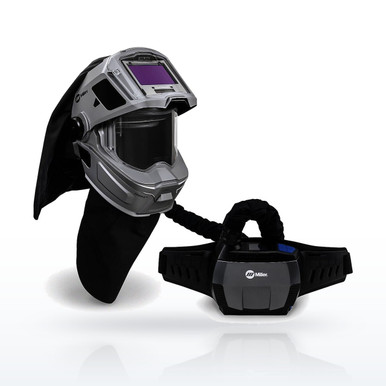
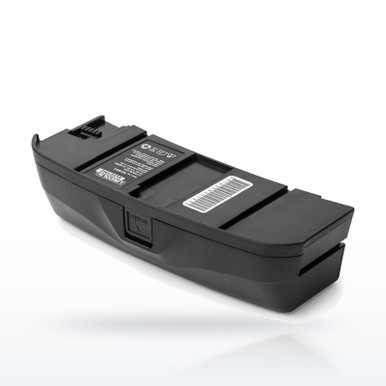
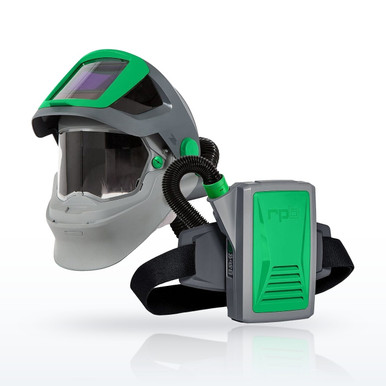
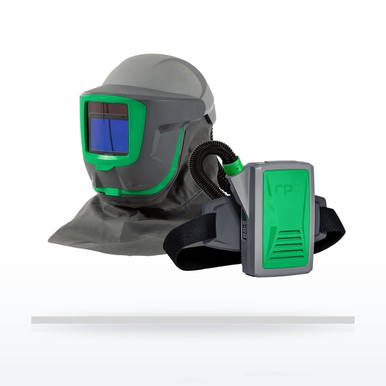

Fit-test kits, cartridges for solvent vapor and supplied-air systems are in the respirator finder.
Questions people ask
Is welding stainless steel bad for your lungs?
The fume contains hexavalent chromium and nickel, both carcinogens, plus manganese and iron oxide. OSHA regulates Cr(VI) at 5 micrograms per cubic meter under 1910.1026. With local exhaust and, where needed, a respirator, exposure can be kept under the limit; without them it often is not.
What is hexavalent chromium?
Chromium with a valence of plus six. Stainless steel contains chromium metal; the heat of the arc oxidizes part of it to Cr(VI), which is the toxic, cancer-causing form. (1910.1026(b).)
What respirator do I need for welding stainless?
A NIOSH-certified particulate respirator chosen by the employer’s air sampling: a half mask (N95 or P100) covers up to 10 times the PEL, a loose-fitting PAPR welding helmet 25 times or more where the maker has the test data. Any required respirator is used under a 1910.134 program with fit testing for tight-fitting masks.
Will an N95 protect against welding fumes?
An N95 filter stops welding fume particles; the limit is the half-mask seal, which gives an APF of 10 whether the filter is N95 or P100. It is adequate where exposure is under 10 times the limit and the mask is fit tested. (1910.134 Table 1 and (d)(3)(iv).)
Can I weld stainless with a beard?
Not in a tight-fitting respirator; 1910.134(g)(1)(i)(A) does not allow facial hair in the seal. A loose-fitting PAPR welding helmet does not rely on a face seal.
What is the action level for hexavalent chromium?
2.5 micrograms per cubic meter as an 8-hour average, half the PEL. At or above it, periodic monitoring and medical surveillance apply. (1910.1026(b) and (k).)
Does OSHA require ventilation for stainless welding?
Mechanical ventilation when cutting stainless, and in any small, low-ceiling or confined space for any metal; local exhaust or airline respirators for inert-gas metal-arc on stainless in enclosed construction spaces. (1910.252(c)(12), (c)(2); 1926.353(d)(1)(iv).)
What is metal fume fever, and does stainless cause it?
Metal fume fever is the flu-like illness from zinc oxide fume, mainly from welding galvanized steel. Stainless fume causes a different set of effects: airway irritation, and with long exposure, cancer. (OSHA Fact Sheet 3647.)
Standards and ratings on this page are as published in the documents named and by the manufacturers named. The employer’s hazard assessment and written program decide what applies at a given workplace. Verify a rating on the product and its spec sheet before use.