
Drain covers and spill response for storm drains
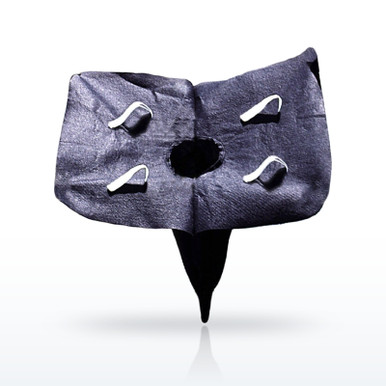
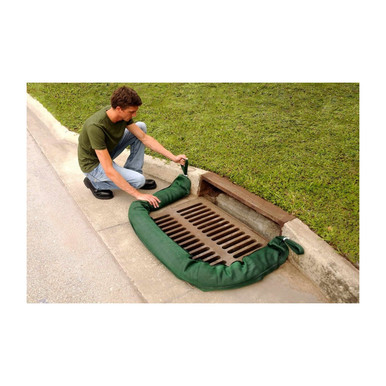
A storm drain does not go to a treatment plant. It goes to the creek, the bay or the river, usually with nothing in between. So the moment a spill reaches one, it stops being a mess on your lot and becomes a discharge of a pollutant to waters of the United States: an oil sheen on the water is reportable to the National Response Center the moment you know of it, and a permit holder has violated the permit. A drain cover is a heavy, flexible polyurethane mat that you drop over the grate to seal it in seconds, so the spill pools on the pavement where sorbent can take it. It is the one spill item that is measured in seconds, and it belongs at the fuel island and the dock, not in the storeroom.
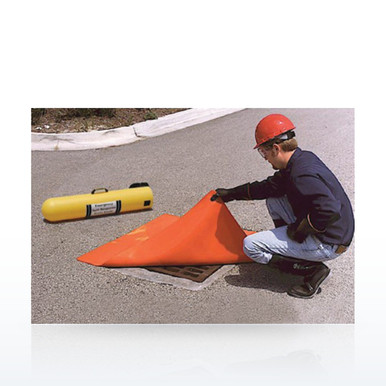
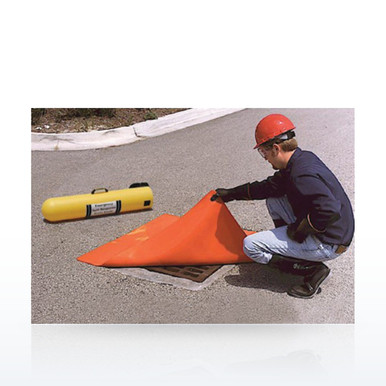
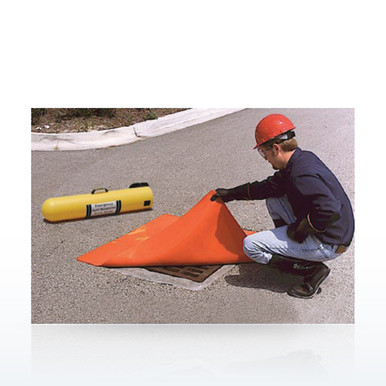 UltraTech Ultra-Drain Seal drain cover, 36 x 36 inPolyurethane mat seals a grate on contact
Why is the drain the line? Everything on the pavement is still yours. Sorbent picks it up, the bag goes to the hauler, and the only record is your own. A storm drain is a pipe to a waterway, and the law treats what goes down it as a discharge to that waterway. The Clean Water Act prohibits discharging a pollutant to those waters without a permit, oil that makes a sheen has to be reported to the federal government at once, and a stormwater permit holder has promised in its plan that this would not happen. One mat on the grate keeps all of that from starting.
What do the rules say about spills and storm drains?
Four rules meet at the grate.
What kinds of drain protection are there?
- Drain cover mats (drain seals): a dense polyurethane sheet, about 3/8 inch thick, 18 by 18 inches up to 48 by 48 inches, that seals to a grate or a flat surface by its own weight and tack. For a spill in progress. Reusable after cleaning; the manufacturer publishes chemical compatibility and the size has to cover the grate with margin on every side.
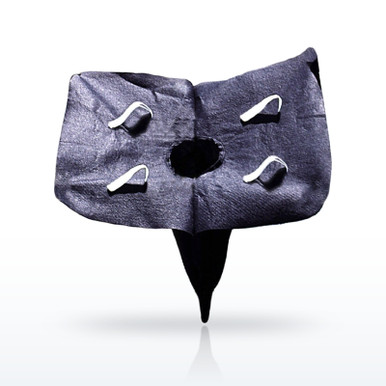
- Catch basin inserts (drain guards): a geotextile bag hung under the grate inside the catch basin that filters sediment, and with an oil-absorbent layer, oil and sheen, from runoff that flows through. For day-to-day stormwater control under a permit, not for sealing a drain during a spill; the manufacturer rates the sediment and oil capacity and it is replaced when full.
- Filter socks: a long sorbent-filled tube laid around a drain inlet or across a flow path to slow runoff and hold sediment and oil. For construction and yard inlets where a grate cannot be sealed.
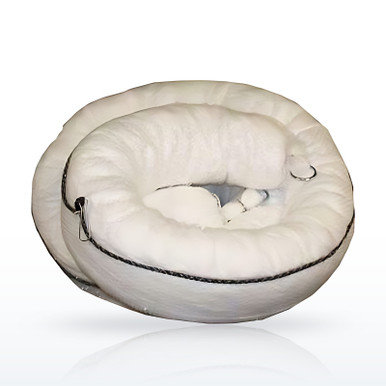
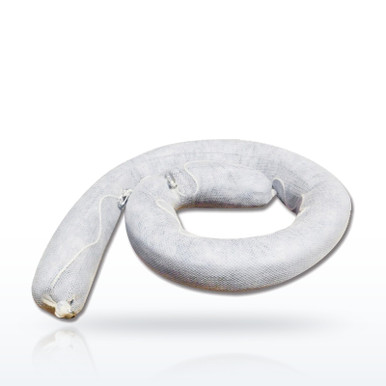
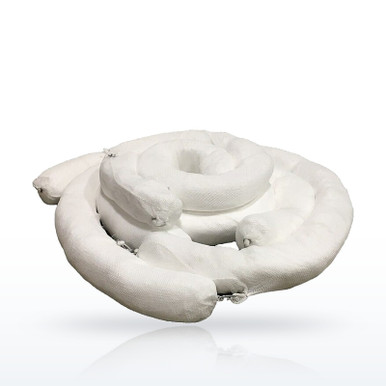
- Sorbent socks and booms: oil-only socks ringed around a drain or floated across a channel. A sock does not seal a grate; it slows and absorbs. Use it with a mat, not instead of one.
- Permanent inlet valves and shut-offs: for a fuel island or a dock, some facilities fit a drain with a valve that is closed during fueling and transfers. The SPCC rule describes diked areas drained only through manual open-and-closed valves after inspection.
What do you do when a spill is heading for a storm drain?
- Cover the drain first. Before the source, before the sorbent. Drop the mat over the grate and press it down. If you have no mat, a sorbent sock ringed around the inlet, or dirt or sand bermed against the flow, buys time.
- Stop the source. Close the valve, right the container, shut the pump.
- Contain what is moving. Socks or a berm on the downhill side, so the spill pools instead of running.
- Absorb and pick up. Oil-only sorbent outdoors, since there is usually water on the pavement; hazmat sorbent for chemicals. Dry methods only: no hosing, no washing down, no wringing pads into the drain.
- If any reached the drain, report. Oil that reaches water and makes a sheen: the National Response Center, 800-424-8802, immediately. Your state and the local stormwater authority have their own notification rules and most want a call the same day. A permit holder records the spill and the corrective action in the SWPPP.
- Clean the mat and put it back. Wipe or wash the mat per the manufacturer, inspect it, and return it to its station at the drain. Restock the socks and pads that were used.
Where do drain covers belong, and how many?
One per storm drain in a spill area, kept at that drain, not in a central kit: the fuel island, the loading dock, the drum storage pad, the wash rack, the equipment staging area, the parking spot where the fuel truck sits. Measure the grate and buy the mat one size up so there is margin on every side; mats come in 18, 36 and 48 inch squares. Label the storm drains themselves; the EPA’s plan guidance calls drain labeling a good measure for teaching employees which drains go where. Put the mats on the inspection walk with the spill kits.
EPA SWPPP guide for industrial operators (2021), sections 4.B and 4.D; sizes as published by the manufacturer for the drain seals shown below.Drain covers, catch basin inserts and socks for storm drains
14 items · prices liveSize, material and capacity are as published by the manufacturer for each item; see the product page and spec sheet. Mats are sized to cover the grate with margin on every side. Free shipping on orders over $199.

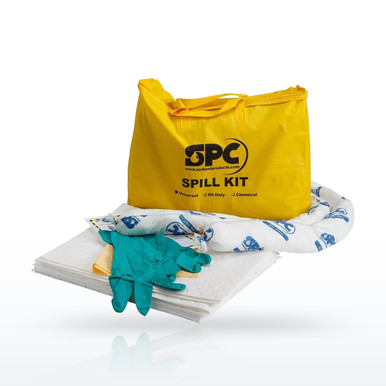
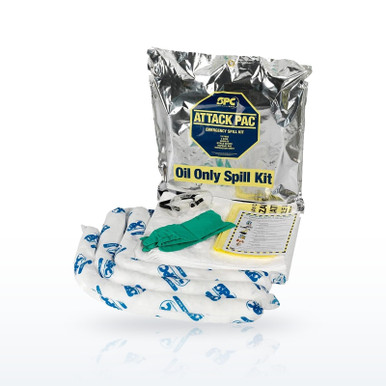
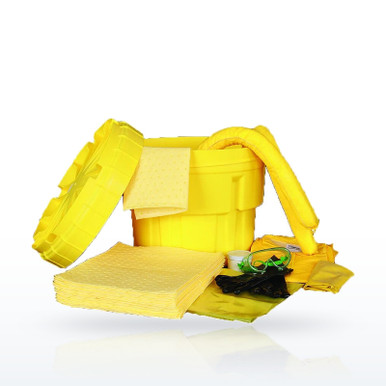
Spill kits that include a drain cover, and berms for the fuel island, are in the spill control finder.
Questions people ask
What happens if oil goes down a storm drain?
It reaches a waterway. If it causes a sheen, it is a harmful quantity under the Clean Water Act and the person in charge must notify the National Response Center immediately. (40 CFR 110.3 and 110.6.) State and local rules add their own reporting and penalties.
What is a drain cover mat made of?
Dense polyurethane, about 3/8 inch thick, that seals to the grate by its own weight and surface tack. It is reusable after cleaning. Chemical compatibility is on the manufacturer sheet.
What size drain cover do I need?
Larger than the grate on every side. Measure the grate; mats come in 18, 36 and 48 inch squares and the margin is what makes the seal.
What is the difference between a drain cover and a catch basin insert?
A cover seals the drain shut during a spill. An insert hangs inside the catch basin and filters sediment and oil out of normal runoff; water still flows through it. A permit site often has both.
Do I need a stormwater permit?
If the facility is in one of the industrial categories in 40 CFR 122.26(b)(14), or the site is construction disturbing an acre or more, yes, under the EPA general permits or your state’s equivalent. The permit requires a SWPPP.
Does a SWPPP require spill kits?
It requires spill prevention and response procedures and the control measures to carry them out. The EPA’s guidance for writing the plan says to keep spill kits on site near where spills may occur and to clean up with dry methods.
Can I wash a spill into the storm drain with a hose?
No. That turns a cleanup into a discharge. Use dry methods: sorbents, scoops and bags.
Who do I call if a spill reaches a creek?
The National Response Center, 800-424-8802, for oil or a hazardous substance, immediately. Then your state spill line and the local stormwater authority per your plan.
Standards and ratings on this page are as published in the documents named and by the manufacturers named. The employer’s hazard assessment and written program decide what applies at a given workplace. Verify a rating on the product and its spec sheet before use.