
What is a spill kit, and what should be in one?
A spill kit is a container, a bucket, a bag, a drum or a wheeled bin, packed with everything one person needs to contain and clean up a spill of a known size: sorbent socks to ring it, pads or loose sorbent to soak it up, a pillow or two for the deep spot, gloves and eye protection, bags and ties to carry the waste out, and a label for the bag. Kits come in three fills. Universal takes oils, coolants and water-based liquids. Oil-only takes fuel and oil and repels water, for outdoors and wet floors. Hazmat takes acids, caustics and aggressive chemicals. The kit is sized in gallons to the largest container that could let go where it sits.
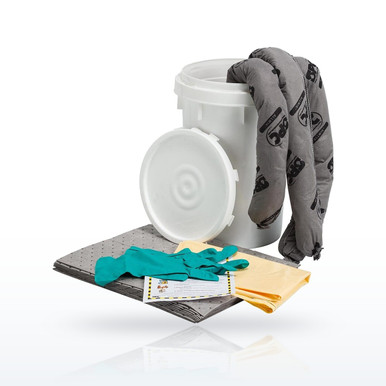 Brady AllWik universal spill kit, 6.5-gallon bucketUniversal pads, socks, pillows, gloves and bags; absorbs 9 gallons
Why a kit and not a shelf of sorbent? Because a spill is cleaned up by whoever is standing there, in the first 2 minutes, with whatever is within reach. A kit puts the socks, the pads, the gloves and the bag in one container at the place the spill will happen, so the first person on it does not have to go looking, guess at the PPE, or carry a dripping pad across the shop to find a bag. It also makes the inspection simple: the kit is either full and sealed or it is not.
What should be in a spill kit?
No standard lists the contents of a general spill kit; manufacturers pack them to the same pattern. A complete kit has each of these.
Which kind of spill kit: universal, oil-only or hazmat?
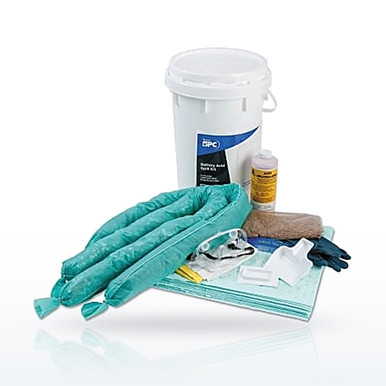
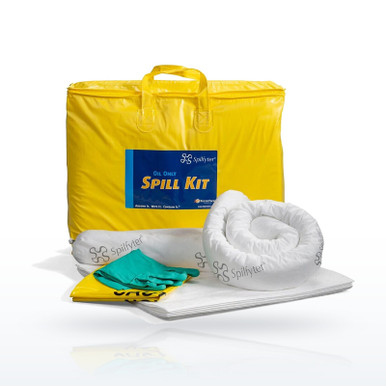
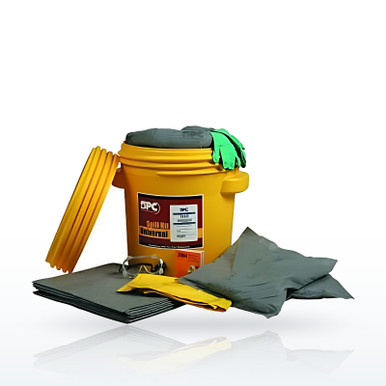
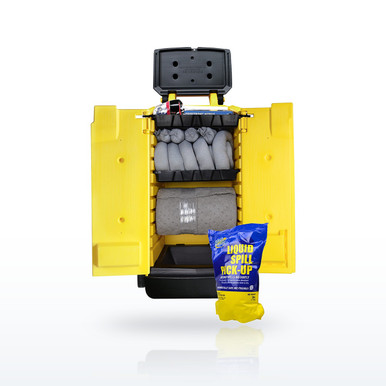
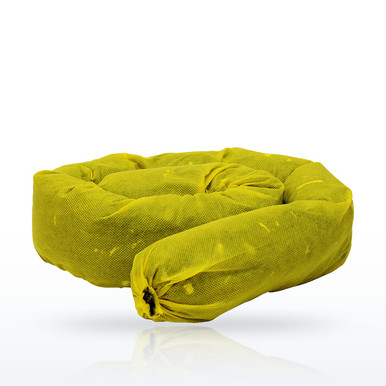
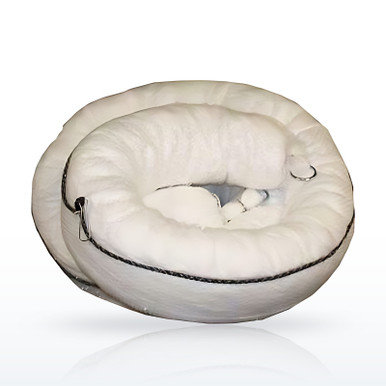
Universal (gray) kits absorb everything: oil, coolant, water, solvents and mild chemicals. They are the shop, warehouse and maintenance kit, and the kit for a mixed storage room, as long as the floor is dry and the chemicals are not aggressive. Oil-only (white) kits absorb petroleum and repel water, so they are the kit for the fuel island, the yard, the truck and anywhere a spill will meet rain or standing water. Hazmat (yellow or pink) kits absorb acids, caustics, oxidizers and unknowns, and usually add neutralizer, goggles and a seal; they are the kit for the battery room, the lab, the treatment plant and the chemical store. When one kit has to cover both oil and chemicals, hazmat covers both; oil-only covers neither water-based liquid nor acids.
Manufacturer sorbent and kit selection data; sorbent type as published for each kit shown below. The color coding is a trade convention, not a requirement of any standard.How big a spill kit do you need?
Size to the largest single container that could fail where the kit is kept, not to the usual drip. A 5-gallon pail of hydraulic oil at a workbench: a 5 to 7 gallon kit. One or two 55-gallon drums: a 20 to 30 gallon kit will handle a punctured drum draining on a pallet, and a 55-gallon kit handles the whole drum. A tank or a tote: a 55 to 95 gallon kit or more, plus a berm or drain cover so the spill is contained while the sorbent works. Kit ratings are the manufacturer’s absorbed-gallons figure for the sorbent inside, and a kit on a real floor picks up less than its rating, so round up. If the largest spill is bigger than any kit, the kit is for the first minutes and the plan is for the rest.
Kit capacities as published by the manufacturers of the kits shown below; 29 CFR 1910.120(j)(1)(viii) (where major spills may occur, a spill containment program to contain and isolate the entire volume being transferred).Put the kit where the spill will be, in the open, marked, and not locked: the fuel island, the drum rack, the dock, the battery charging area, the service truck. One kit per spill location beats one big kit in the storeroom. Inspect it on a schedule, reseal it after use, and restock it the same day it is used.
EPA, Developing Your Stormwater Pollution Prevention Plan: A Guide for Industrial Operators (2021), section 4.D (spill kits located near areas where spills may occur or where a rapid response can be made); 40 CFR 112.7(e) (inspections on a written schedule, records kept 3 years, for SPCC facilities).Which rules put a spill kit on site?
- OSHA’s hazardous waste and emergency response standard: where drums and containers are handled on a covered site, suitable absorbent and DOT salvage drums must be kept available where spills, leaks or ruptures may occur.
- OSHA’s walking-working surface rule: floors are kept free of hazards including leaks and spills, and workroom floors clean and as dry as feasible. The kit is how the spill gets off the floor.
- OSHA hazard communication: the SDS for each chemical, with its accidental release measures, is readily accessible on each shift, and employees are trained on the protective measures including emergency procedures.
- The EPA’s SPCC rule for facilities with more than 1,320 gallons of oil: the plan lists sorbent materials among the containment methods and must describe the countermeasures for discovery, response and cleanup of a discharge.
- Stormwater permits: the pollution prevention plan under an industrial or construction stormwater permit has to describe spill prevention and response procedures, and the EPA’s guide for those plans tells operators to keep spill kits on site near where spills may occur.
Spill kits by sorbent type
20 items · prices liveSorbent type and absorbed-gallon capacity are as published by the manufacturer for each kit; contents are on the product page. Free shipping on orders over $199.
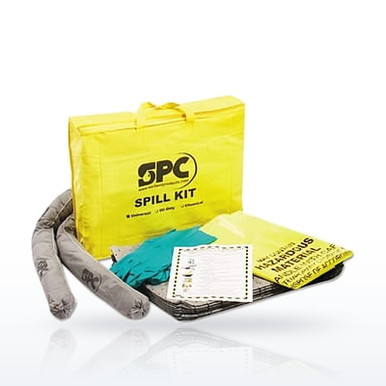
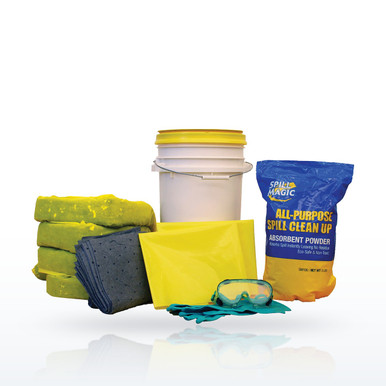
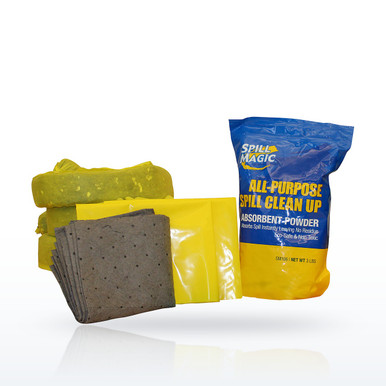
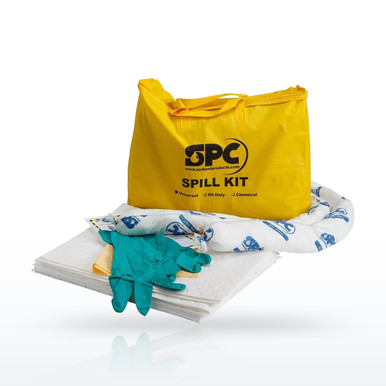
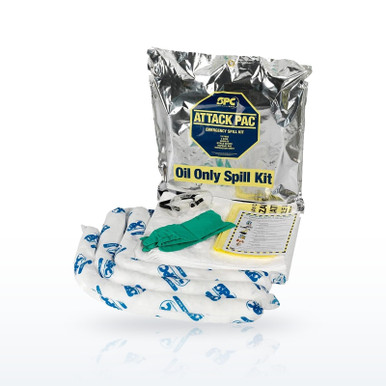
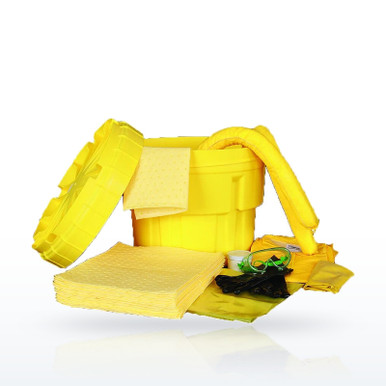
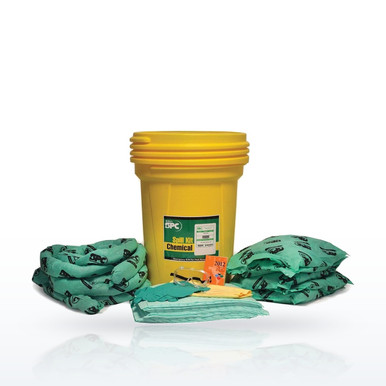
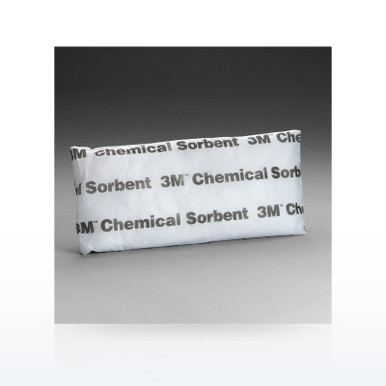
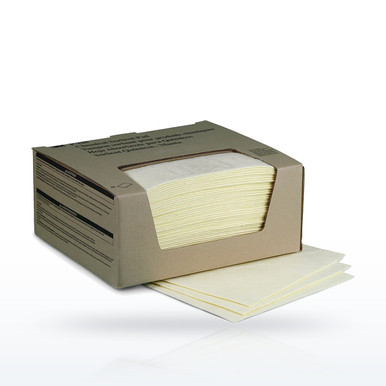
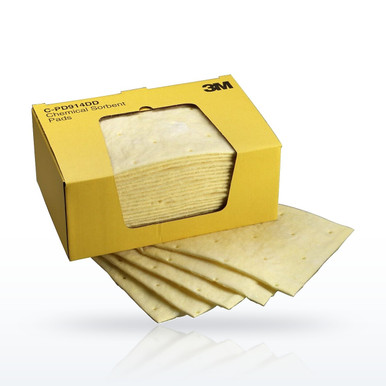

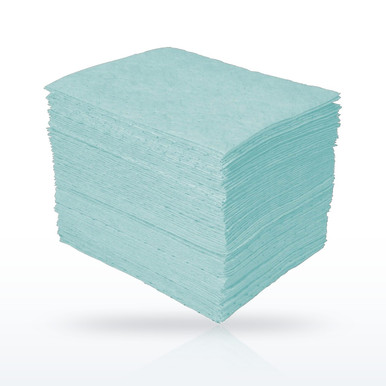

Bloodborne pathogen spill kits are in the first aid finder. Berms, drain covers and spill pallets to pair with a kit are in the spill control finder.
Questions people ask
What is in a spill kit?
Sorbent socks, pads and pillows (and loose sorbent in some), gloves and eye protection, disposal bags with ties and a label, all in a bucket, bag, drum or bin. Hazmat kits add goggles, neutralizer and a tamper seal.
What are the three types of spill kit?
Universal (gray) for oils, coolants and water-based liquids; oil-only (white) for fuel and oil where there is water; hazmat (yellow or pink) for acids, caustics and aggressive chemicals.
How do I know what size spill kit to buy?
Match the kit’s absorbed-gallon rating to the largest single container that could fail where the kit is kept, and round up, because a kit on a real floor picks up less than its lab rating.
Does OSHA require spill kits?
Not by the name spill kit for an ordinary workplace. OSHA requires absorbent and salvage drums where containers are handled on hazardous waste sites, floors kept free of spills, and the SDS and PPE for every chemical. The kit is how those are met. (1910.120(j)(1)(vii); 1910.22(a)(3); 1910.1200; 1910.132.)
Does the EPA require spill kits?
An SPCC plan must describe the facility’s discharge countermeasures and may use sorbent materials as containment, and a stormwater permit’s pollution prevention plan must describe spill response. The EPA’s guidance says to keep kits near where spills may occur. (40 CFR 112.7(a)(3) and (c)(1).)
Where should spill kits be located?
At each place a spill can happen: fuel island, drum storage, loading dock, maintenance bay, battery area, and on service trucks. Visible, marked, not locked.
How often should a spill kit be inspected?
On a written schedule, and after every use. An SPCC facility keeps inspection records for 3 years (40 CFR 112.7(e)). Monthly is the usual interval in a plan.
Can I build my own spill kit?
Yes. Pack the same contents into an overpack drum or a pail: socks, pads, pillows, gloves, goggles, bags, ties, label, and a scoop if you add loose sorbent. Buy the sorbent by the case from the band above.
Related guides
What are sorbents?Pads, socks, booms, and oil-only vs universal vs hazmatHow to clean up a chemical spillThe steps, the PPE and disposalHow to clean up an oil or diesel spillStop, contain, absorb, disposeBloodborne pathogensThe standard behind BBP spill kitsDrain covers and storm drainsKeeping a spill out of the drainStandards and ratings on this page are as published in the documents named and by the manufacturers named. The employer’s hazard assessment and written program decide what applies at a given workplace. Verify a rating on the product and its spec sheet before use.