
What is TWA, STEL and ceiling on an exposure limit?
An exposure limit comes in three shapes. A TWA (time-weighted average) is the average concentration over a full shift, 8 hours for OSHA, so short peaks are allowed if the average stays under the number. A STEL (short-term exposure limit) is a 15-minute average that may not be exceeded at any time in the shift, even if the 8-hour average is fine. A ceiling is a level that may not be exceeded at all, not for a second. A substance can carry one, two or all three. A gas monitor with a display keeps a running TWA and STEL from its readings and alarms on each one, alongside the instantaneous low and high alarms that most people think of as the only alarms.
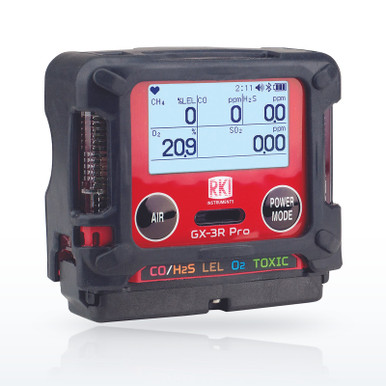
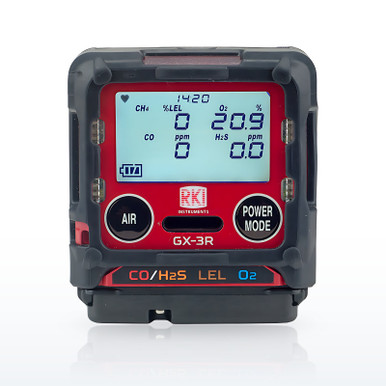
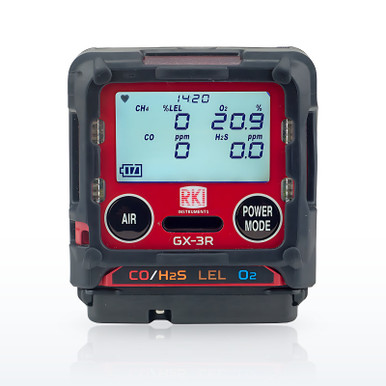
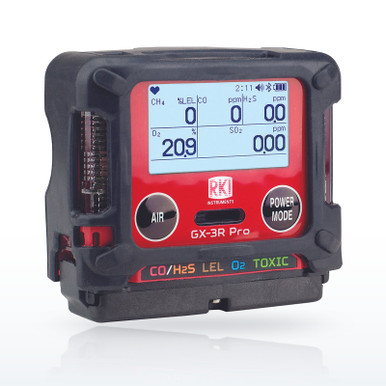
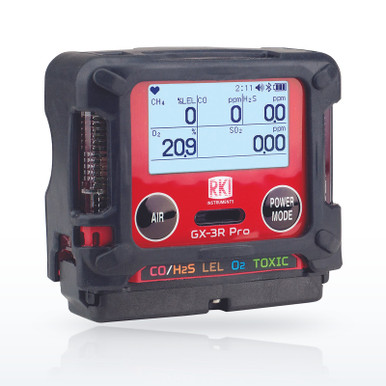
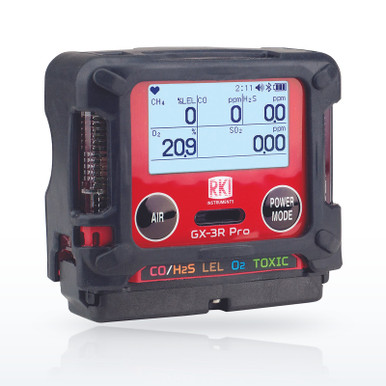
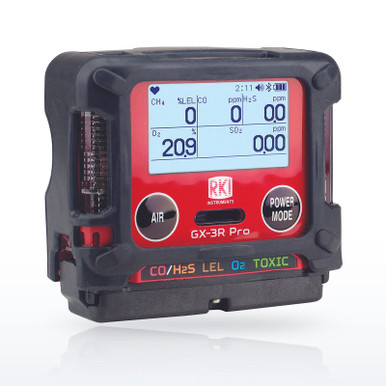
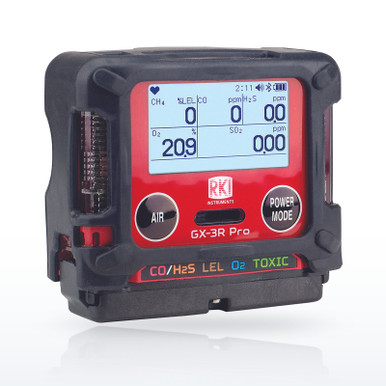
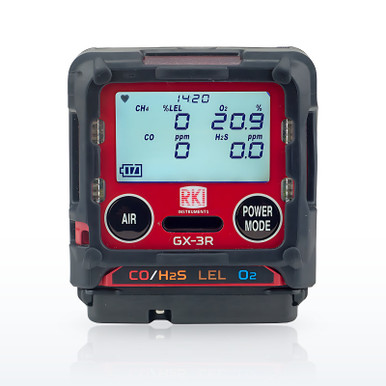 RKI Instruments 72-RA-C-56 Multi-Gas Detectors, GX-3R 4-Gas Monitor LEL/O2/H2S/COFour-gas monitor with TWA and STEL alarms on the toxic channels
Why three kinds of limit instead of one number? Because gases hurt people in different ways. Some do their damage slowly, by the total dose over years, and for those an average over the shift is the right measure. Some cause harm in minutes at a high enough level even if the day’s average is low, and for those a 15-minute cap is added. A few act so fast, or irritate so sharply, that no excursion is acceptable, and those get a ceiling. OSHA’s tables carry mostly 8-hour averages because they were adopted when OSHA was created, from the 1968 ACGIH list; the ceilings in Table Z-2 and the handful of STELs in substance-specific standards came later, one chemical at a time.
What do TWA, STEL, ceiling and peak mean?
The definitions below are OSHA’s where OSHA has one, and NIOSH’s where the term comes from the recommended limits.
How is an 8-hour TWA calculated?
Multiply each concentration by the time spent at it, add them up, and divide by 8. OSHA writes it as E = (Ca Ta + Cb Tb + ... Cn Tn) divided by 8, where C is the concentration during a period of constant exposure and T is the hours at that concentration. Worked example for carbon monoxide, PEL 50 ppm: 2 hours at 100 ppm, 2 hours at 40 ppm and 4 hours at 10 ppm gives (200 + 80 + 40) / 8 = 40 ppm. Under the limit, even though the first 2 hours were double it. The division is always by 8, so a 10-hour shift at a steady level produces a higher number than the level itself: 10 hours at 45 ppm is 450 / 8 = 56 ppm, over the limit.
29 CFR 1910.1000(d)(1)(i), the cumulative exposure formula; Table Z-1, carbon monoxide 50 ppm.For mixtures of substances that act on the body the same way, OSHA adds the fractions: each concentration divided by its own limit, summed, and the total may not exceed 1. Two solvents each at half their limit add up to a full exposure.
29 CFR 1910.1000(d)(2)(i), the mixture formula (Em not to exceed unity).How does a gas monitor compute TWA and STEL?
A monitor with a display reads each toxic channel continuously and keeps three running numbers. The instantaneous reading drives the low and high alarms. The STEL is the average of the last 15 minutes, updated continuously. The TWA is the accumulated exposure since the monitor was turned on, divided by 8 hours, which means it starts at zero and climbs through the shift. When any of the three crosses its set point, the monitor alarms and the display shows which one: a TWA alarm with the instantaneous reading well under the high alarm is normal late in a shift of steady low exposure. Clearing the monitor or turning it off resets the TWA, so the worker who turns the unit off at lunch has thrown away half the day.
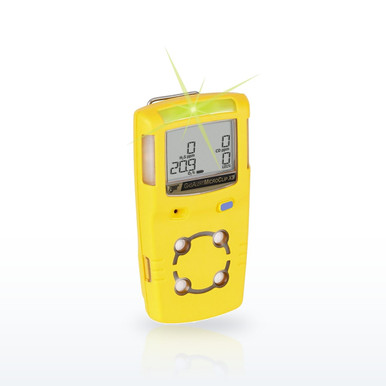
Manufacturer published data: Industrial Scientific GasBadge Pro (records STEL and TWA); MSA ALTAIR Pro (STEL and TWA alarm set points shown on the product page); the 8-hour divisor follows 1910.1000(d)(1)(i).Maintenance-free single-gas clips without a display alarm on the instantaneous level only. For a crew whose exposure is steady and low, a clip at 10 ppm low alarm will never sound, while a monitor computing the ACGIH 1 ppm TWA would. Which one the program needs depends on which limit the program adopted.
Honeywell BW Clip published product data (alarm set points fixed by version); MSA ALTAIR product data.Which limits apply to the common monitored gases?
- Carbon monoxide: OSHA 50 ppm TWA (Table Z-1, no ceiling). NIOSH 35 ppm TWA with a 200 ppm ceiling. That is why CO monitors commonly ship with 35 low and 200 high: they are set to NIOSH, not OSHA.
- Hydrogen sulfide: OSHA has no TWA in general industry; a 20 ppm ceiling with a 50 ppm 10-minute peak (Table Z-2). NIOSH 10 ppm ceiling for 10 minutes. ACGIH 1 ppm TWA, 5 ppm STEL.
- Sulfur dioxide: OSHA 5 ppm TWA (Table Z-1). Chlorine: OSHA 1 ppm ceiling (Table Z-1, marked C). Nitrogen dioxide: OSHA 5 ppm ceiling (Table Z-1, marked C).
- Ammonia: OSHA 50 ppm TWA (Table Z-1). Hydrogen cyanide: OSHA 10 ppm TWA with a skin notation (Table Z-1).
- Oxygen and LEL have no exposure limit of this kind. Oxygen is a range, 19.5 to 23.5 percent, and combustible gas is a percent of the lower explosive limit, both from the confined-space standard, both instantaneous.
Monitors that display TWA and STEL
24 items · prices liveGases detected are as published by the manufacturer. Whether a model displays TWA and STEL readings and which alarm set points it ships with are on each product page and manual. Free shipping on orders over $199.
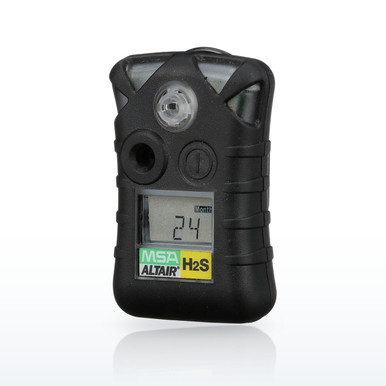
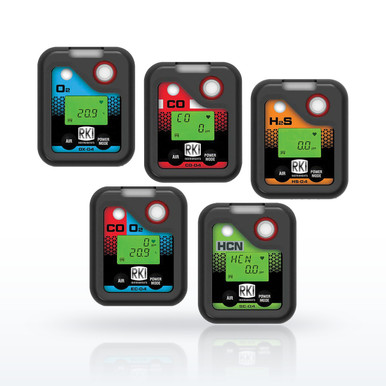
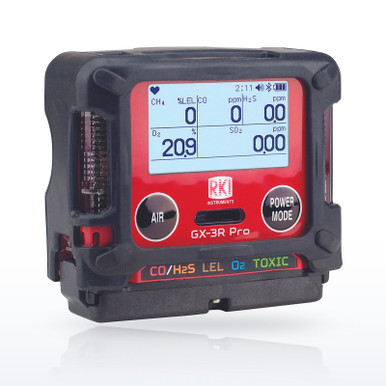
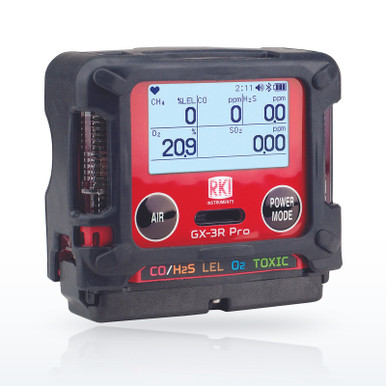
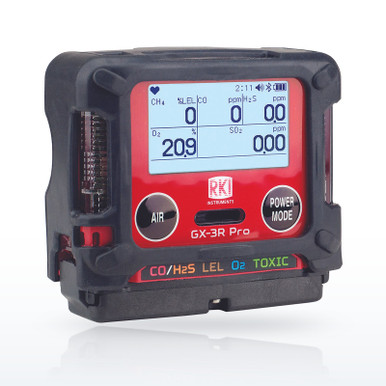
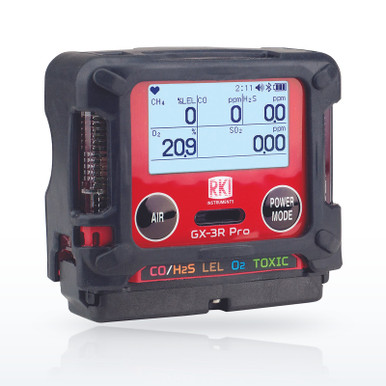
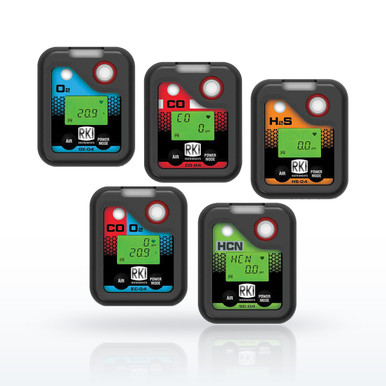
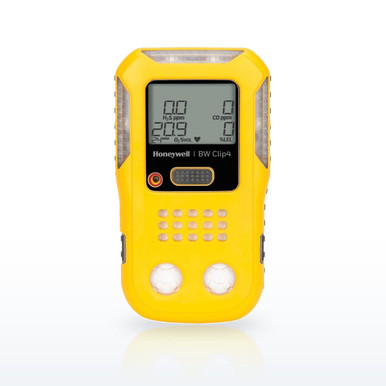
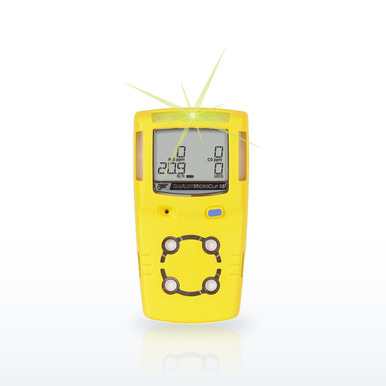
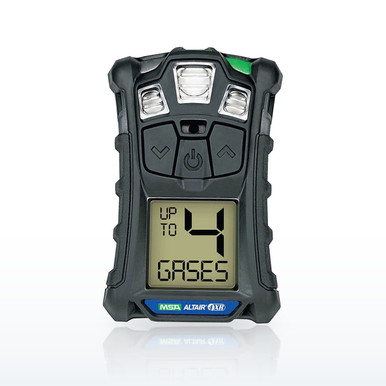
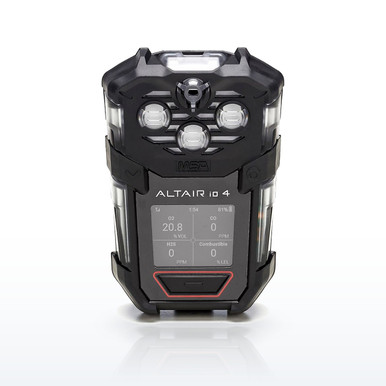
Maintenance-free clips with instantaneous alarms only, calibration gas and docks are in the gas detection finder.
Questions people ask
What does TWA stand for?
Time-weighted average: the average concentration over the shift, 8 hours for OSHA limits and up to 10 hours for NIOSH recommendations.
What does STEL stand for?
Short-term exposure limit: a 15-minute average that may not be exceeded at any time during the day, even when the 8-hour average is under the limit.
What is a ceiling limit?
A concentration that may not be exceeded at any time. OSHA marks it with a C in Table Z-1. Where instantaneous measurement is not feasible, it is assessed over 15 minutes. (1910.1000(a)(1).)
How do you calculate an 8-hour TWA?
Concentration times hours for each period, added up, divided by 8. (1910.1000(d)(1)(i).) Two hours at 100 ppm and six at zero is a 25 ppm TWA.
Does a 12-hour shift change the TWA?
OSHA still divides by 8, so a 12-hour shift at a steady level gives a TWA 1.5 times the level. Many programs adjust the limit downward for extended shifts; the standard itself does not.
What is the difference between STEL and ceiling?
A STEL is a 15-minute average and may be reached a limited number of times a day. A ceiling is an instantaneous cap that is never to be exceeded.
What does a TWA alarm on a gas monitor mean?
The accumulated exposure since the monitor was turned on, divided by 8 hours, has reached the set point. The instantaneous reading may be low; the dose for the day is not.
Why does my CO monitor alarm at 35 ppm when the OSHA limit is 50?
Because it is set to the NIOSH recommended limit, 35 ppm TWA, which is what most manufacturers ship. The employer can change it.
Standards and ratings on this page are as published in the documents named and by the manufacturers named. The employer’s hazard assessment and written program decide what applies at a given workplace. Verify a rating on the product and its spec sheet before use.